
Homework Answers

Add Answer to:
2.) Complete each of the following, assuming reaction in a Lewis acid/base sense. Include formal charges....
68 MOLECULE DRAWA LEWIs STRUCTURE (INCLUDE ALL NON-ZERO FORMAL CHARGES ID NaE MOECULA SHAPE AROUND EACH CENTRAL ATO...
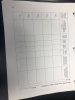 68 MOLECULE DRAWA LEWIs STRUCTURE (INCLUDE ALL NON-ZERO FORMAL CHARGES ID NaE MOECULA SHAPE AROUND EACH CENTRAL ATOM-RE DAW TO SH0W sAPE DEA ALL HsNANCE FORMS RALL POALE oMIERS tCATE AL Non-ERO CLASSFY -WRITE IN MATION TOTAL ТотAL. AS POLAR AT EACH oF VALENCE CENTRAL BONDS BONDS FORMALCHARCES NONPOLAR ATOM ELECTRON Но" H2O2 CH4O С-На
20. 3 marks) Add charges to the following molecules where necessary c) CH3-N-H CH3H CH3 21....
 20. 3 marks) Add charges to the following molecules where necessary c) CH3-N-H CH3H CH3 21. (2 marks) Label the reactants in these acid-base reactions as "LA" for Lewis Acids (electrophiles) or "LB" for Lewis Bases (nucleophiles). reactions. Used curved arrows to show the movement of electron pairs in the CH3-NH, CH-CH2-cl: CH-NH2-CH2-CH3 + --+ + :C1: Cl: -
Draw a Lewis structure for each conjugate acid or base. Write in any non-zero formal charges...
 Draw a Lewis structure for each conjugate acid or base. Write in
any non-zero formal charges and make sure all atoms in your
structures fully satisfy the octet rule.
molecule 1 conjugate base of molecule 1 Н Click and drag to start drawing a structure. Η Η Η Η molecule 2 conjugate base of molecule 2 H-¢-6-H Click and drag to start drawing a structure.
Draw a Lewis structure for each conjugate acid or base. Write in
any non-zero formal charges and make sure all atoms in your
structures fully satisfy the octet rule.
molecule 1 conjugate base of molecule 1 Н Click and drag to start drawing a structure. Η Η Η Η molecule 2 conjugate base of molecule 2 H-¢-6-H Click and drag to start drawing a structure.
Determine the products for the acid base reactions (include lone pairs and formal charges) indicate whether...
 Determine the products for the acid base reactions
(include lone pairs and formal charges) indicate whether each is a
protonation or deprotonation. then rewrite the first 2 and include
mechanistic arrows to form the products
9. Determine the products for the acid-base reactions show below charges!). Indicate whether each reaction is a protonation or a the products of these acid base reactions have in common? NH HCI OH NaOH OH NaHCO3 OH NaOH 10. Rewrite the first 2 reactions above...
Determine the products for the acid base reactions
(include lone pairs and formal charges) indicate whether each is a
protonation or deprotonation. then rewrite the first 2 and include
mechanistic arrows to form the products
9. Determine the products for the acid-base reactions show below charges!). Indicate whether each reaction is a protonation or a the products of these acid base reactions have in common? NH HCI OH NaOH OH NaHCO3 OH NaOH 10. Rewrite the first 2 reactions above...
what is the acid? base? how would you determine this? which one is soluble in water(the...
 what is the acid? base? how would you determine this? which
one is soluble in water(the one that is charged)? which one is
soluble in Et2O? draw electron pushing arrows to show base
attacking acod. draw products.
Organic Chemistry I Lab CHEM 2211L School of Science & TUNIUI Georgia Gwinnett College REMEMBER: • ALWAYS draw the Lewis Dot Structures, with all lone electrons - helps you figure out which compound attacks/is attacked. • Neutral, non-charged organic compounds are almost always...
what is the acid? base? how would you determine this? which
one is soluble in water(the one that is charged)? which one is
soluble in Et2O? draw electron pushing arrows to show base
attacking acod. draw products.
Organic Chemistry I Lab CHEM 2211L School of Science & TUNIUI Georgia Gwinnett College REMEMBER: • ALWAYS draw the Lewis Dot Structures, with all lone electrons - helps you figure out which compound attacks/is attacked. • Neutral, non-charged organic compounds are almost always...
Provide a curved arrow mechanism for the following Sn2 reaction. Include lone pairs and formal charges...
 Provide a curved arrow mechanism for the following Sn2 reaction. Include lone pairs and formal charges in your answer. Enter your answer in form: A+B + C+D. Do not show Nation in your mechanism. Na CN -CN + NaCl Edit Provide a curved arrow mechanism and predict the product for the following Sn2 reaction. Include lone pairs and formal charges in your answer. Enter your answer in form: A+B + C+D. no contarem metatum et vente en rose to do...
Please include complete answers only, thank you. a. Draw the structural formula of each of the...
 Please include complete answers only, thank you.
a. Draw the structural formula of each of the following compounds. b. According to the character of the bold, enlarged carbon(s) label each compound "basic", "electrophilic" or "nucleophilic". c. Diagram electron pushing (resonance), and inductive effects d. Give a brief narrative (one or two short sentences) to explain what your diagrams show regarding your choice (base, electrophile, or nucleophile): 16% (2% each) (CH3)2N=C(CH3)2CI (CH3)2C=CHCH=CHN(CH3)2 CH2=CH(OH) H(C=NH)CH=CH2 CH2=CHCHENH KCH3CH(C=O)CH3 CH3CH2(C=O)Br CH3CH2(C=O)H
Please include complete answers only, thank you.
a. Draw the structural formula of each of the following compounds. b. According to the character of the bold, enlarged carbon(s) label each compound "basic", "electrophilic" or "nucleophilic". c. Diagram electron pushing (resonance), and inductive effects d. Give a brief narrative (one or two short sentences) to explain what your diagrams show regarding your choice (base, electrophile, or nucleophile): 16% (2% each) (CH3)2N=C(CH3)2CI (CH3)2C=CHCH=CHN(CH3)2 CH2=CH(OH) H(C=NH)CH=CH2 CH2=CHCHENH KCH3CH(C=O)CH3 CH3CH2(C=O)Br CH3CH2(C=O)H
ch 22 Draw a resonance structure, complete with all formal charges and lone (unshared) electron pairs,...
 ch 22
Draw a resonance structure, complete with all formal charges and lone (unshared) electron pairs, that shows the resonance interaction of the carboxy with the para position in benzoic acid. OH benzoic acid • You do not have to consider stereochemistry. • Include all valence lone pairs in your answer. • In cases where there is more than one answer, just draw one. с P opy to // [Review Topics IReferences Draw a resonance structure, complete with all formal...
ch 22
Draw a resonance structure, complete with all formal charges and lone (unshared) electron pairs, that shows the resonance interaction of the carboxy with the para position in benzoic acid. OH benzoic acid • You do not have to consider stereochemistry. • Include all valence lone pairs in your answer. • In cases where there is more than one answer, just draw one. с P opy to // [Review Topics IReferences Draw a resonance structure, complete with all formal...
Provide a curved arrow mechanism for the following Sn2 reaction. Include lone pairs and formal charges...
 Provide a curved arrow mechanism for the following Sn2 reaction. Include lone pairs and formal charges in your answer. Enter your answer in form: A+B + C+D. Do not show Nation in your mechanism. Na CN -CI -CN + NaCl Edit
5) For each of the following, if an acid-base reaction takes place, draw the products and...
 5) For each of the following, if an acid-base reaction takes place, draw the products and label the reactants appropriately as acid or base. If no reaction is expected, omit the labelling and simply write NR as the product. a) OH + H2SO4- b) CH3CH2OH+NaNH2 c) OH d) OH Θ OCH2CH3 e) CHHs lh Inhal the oridizing agent and reducing
 68 MOLECULE DRAWA LEWIs STRUCTURE (INCLUDE ALL NON-ZERO FORMAL CHARGES ID NaE MOECULA SHAPE AROUND EACH CENTRAL ATOM-RE DAW TO SH0W sAPE DEA ALL HsNANCE FORMS RALL POALE oMIERS tCATE AL Non-ERO CLASSFY -WRITE IN MATION TOTAL ТотAL. AS POLAR AT EACH oF VALENCE CENTRAL BONDS BONDS FORMALCHARCES NONPOLAR ATOM ELECTRON Но" H2O2 CH4O С-На
 20. 3 marks) Add charges to the following molecules where necessary c) CH3-N-H CH3H CH3 21. (2 marks) Label the reactants in these acid-base reactions as "LA" for Lewis Acids (electrophiles) or "LB" for Lewis Bases (nucleophiles). reactions. Used curved arrows to show the movement of electron pairs in the CH3-NH, CH-CH2-cl: CH-NH2-CH2-CH3 + --+ + :C1: Cl: -
 Draw a Lewis structure for each conjugate acid or base. Write in
any non-zero formal charges and make sure all atoms in your
structures fully satisfy the octet rule.
molecule 1 conjugate base of molecule 1 Н Click and drag to start drawing a structure. Η Η Η Η molecule 2 conjugate base of molecule 2 H-¢-6-H Click and drag to start drawing a structure.
Draw a Lewis structure for each conjugate acid or base. Write in
any non-zero formal charges and make sure all atoms in your
structures fully satisfy the octet rule.
molecule 1 conjugate base of molecule 1 Н Click and drag to start drawing a structure. Η Η Η Η molecule 2 conjugate base of molecule 2 H-¢-6-H Click and drag to start drawing a structure.
 Determine the products for the acid base reactions
(include lone pairs and formal charges) indicate whether each is a
protonation or deprotonation. then rewrite the first 2 and include
mechanistic arrows to form the products
9. Determine the products for the acid-base reactions show below charges!). Indicate whether each reaction is a protonation or a the products of these acid base reactions have in common? NH HCI OH NaOH OH NaHCO3 OH NaOH 10. Rewrite the first 2 reactions above...
Determine the products for the acid base reactions
(include lone pairs and formal charges) indicate whether each is a
protonation or deprotonation. then rewrite the first 2 and include
mechanistic arrows to form the products
9. Determine the products for the acid-base reactions show below charges!). Indicate whether each reaction is a protonation or a the products of these acid base reactions have in common? NH HCI OH NaOH OH NaHCO3 OH NaOH 10. Rewrite the first 2 reactions above...
 what is the acid? base? how would you determine this? which
one is soluble in water(the one that is charged)? which one is
soluble in Et2O? draw electron pushing arrows to show base
attacking acod. draw products.
Organic Chemistry I Lab CHEM 2211L School of Science & TUNIUI Georgia Gwinnett College REMEMBER: • ALWAYS draw the Lewis Dot Structures, with all lone electrons - helps you figure out which compound attacks/is attacked. • Neutral, non-charged organic compounds are almost always...
what is the acid? base? how would you determine this? which
one is soluble in water(the one that is charged)? which one is
soluble in Et2O? draw electron pushing arrows to show base
attacking acod. draw products.
Organic Chemistry I Lab CHEM 2211L School of Science & TUNIUI Georgia Gwinnett College REMEMBER: • ALWAYS draw the Lewis Dot Structures, with all lone electrons - helps you figure out which compound attacks/is attacked. • Neutral, non-charged organic compounds are almost always...
 Provide a curved arrow mechanism for the following Sn2 reaction. Include lone pairs and formal charges in your answer. Enter your answer in form: A+B + C+D. Do not show Nation in your mechanism. Na CN -CN + NaCl Edit Provide a curved arrow mechanism and predict the product for the following Sn2 reaction. Include lone pairs and formal charges in your answer. Enter your answer in form: A+B + C+D. no contarem metatum et vente en rose to do...
 Please include complete answers only, thank you.
a. Draw the structural formula of each of the following compounds. b. According to the character of the bold, enlarged carbon(s) label each compound "basic", "electrophilic" or "nucleophilic". c. Diagram electron pushing (resonance), and inductive effects d. Give a brief narrative (one or two short sentences) to explain what your diagrams show regarding your choice (base, electrophile, or nucleophile): 16% (2% each) (CH3)2N=C(CH3)2CI (CH3)2C=CHCH=CHN(CH3)2 CH2=CH(OH) H(C=NH)CH=CH2 CH2=CHCHENH KCH3CH(C=O)CH3 CH3CH2(C=O)Br CH3CH2(C=O)H
Please include complete answers only, thank you.
a. Draw the structural formula of each of the following compounds. b. According to the character of the bold, enlarged carbon(s) label each compound "basic", "electrophilic" or "nucleophilic". c. Diagram electron pushing (resonance), and inductive effects d. Give a brief narrative (one or two short sentences) to explain what your diagrams show regarding your choice (base, electrophile, or nucleophile): 16% (2% each) (CH3)2N=C(CH3)2CI (CH3)2C=CHCH=CHN(CH3)2 CH2=CH(OH) H(C=NH)CH=CH2 CH2=CHCHENH KCH3CH(C=O)CH3 CH3CH2(C=O)Br CH3CH2(C=O)H
 ch 22
Draw a resonance structure, complete with all formal charges and lone (unshared) electron pairs, that shows the resonance interaction of the carboxy with the para position in benzoic acid. OH benzoic acid • You do not have to consider stereochemistry. • Include all valence lone pairs in your answer. • In cases where there is more than one answer, just draw one. с P opy to // [Review Topics IReferences Draw a resonance structure, complete with all formal...
ch 22
Draw a resonance structure, complete with all formal charges and lone (unshared) electron pairs, that shows the resonance interaction of the carboxy with the para position in benzoic acid. OH benzoic acid • You do not have to consider stereochemistry. • Include all valence lone pairs in your answer. • In cases where there is more than one answer, just draw one. с P opy to // [Review Topics IReferences Draw a resonance structure, complete with all formal...
 Provide a curved arrow mechanism for the following Sn2 reaction. Include lone pairs and formal charges in your answer. Enter your answer in form: A+B + C+D. Do not show Nation in your mechanism. Na CN -CI -CN + NaCl Edit
 5) For each of the following, if an acid-base reaction takes place, draw the products and label the reactants appropriately as acid or base. If no reaction is expected, omit the labelling and simply write NR as the product. a) OH + H2SO4- b) CH3CH2OH+NaNH2 c) OH d) OH Θ OCH2CH3 e) CHHs lh Inhal the oridizing agent and reducing
Most questions answered within 3 hours.
-
Where is the error in this code sequence?
String s1 = "Hello";
String s2 = "ello";...
asked 10 months ago -
Financial data for Joel de Paris, Inc., for last year
follow:
Joel de Paris, Inc.
Balance...
asked 10 months ago -
Consider this reaction:
Al2(SO4)3 (aq)+ BaCl3
(aq) Al2Cl6 (aq)- +
3BaSO4(s) . What is the...
asked 10 months ago -
Suppose that Savneet is considering increasing her
recent random sample from 20 car rentals to 40...
asked 10 months ago -
Trucks arrive at an unloading terminal at an average rate of 120
per hour.
Trucks arrive...
asked 10 months ago -
Why are methanol and ethanol completely soluble in water while
octanol is not very little soluble....
asked 10 months ago -
A facilities manager at a university reads in a research report
that the mean amount of...
asked 10 months ago -
When the CuSO4 is rehydrated by adding water to the anhydrous
compound, is this an endothermic...
asked 10 months ago -
A ray of sunlight is passing from diamond into crown glass; the
angle of incidence is...
asked 10 months ago -
A block of mass 0.249 kg is placed on top of a light, vertical
spring of...
asked 10 months ago -
how do the kidneys compensate in the presences of acidosis
a) trigger hyperventilate
b) reserve acid...
asked 10 months ago -
Question 501 pts
The rental rate of capital to the firm increases. Which of the
following...
asked 10 months ago