
Homework Answers
Add Answer to:
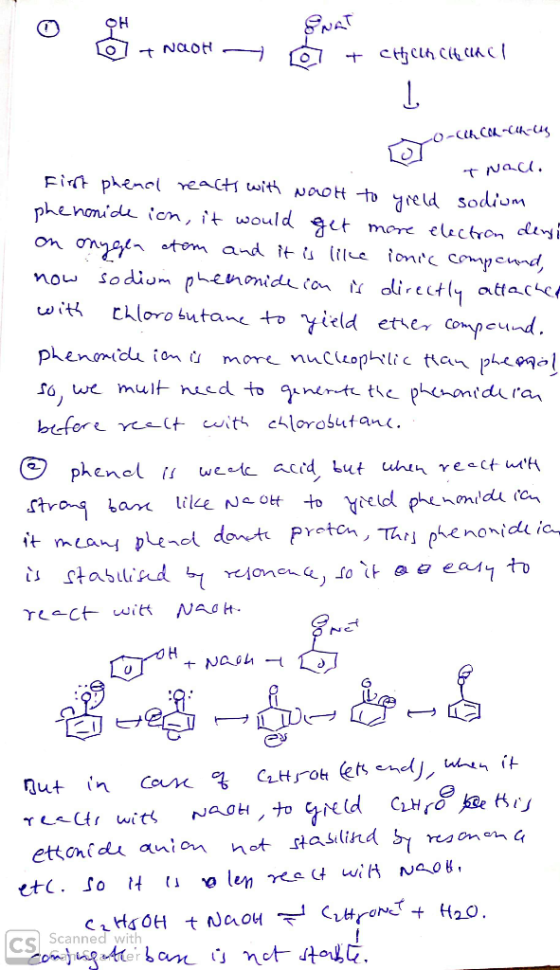
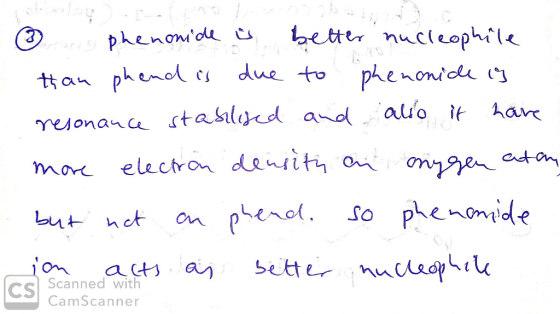
1. Why is it important to mix the phenol with sodium hydroxide before adding the chlorobutane?...
Please give detailed answers to the pre and post lab questions. Thank you! NUCLEOPHILIC DISPLACEMENT- FORMATION...
 Please give detailed answers to the pre and post lab questions.
Thank you!
NUCLEOPHILIC DISPLACEMENT- FORMATION OF AN ETHER BY AN SN2 REACTION Bond formation by use of an SN2 reaction is very important for organic and biological synthesis. Many new bonds formed make use of this versatile reaction pathway. In this reaction, one partner is the nucleophile and the other partner is the electrophile. The electrophile will have a leaving group that will be lost in the reaction. In...
Please give detailed answers to the pre and post lab questions.
Thank you!
NUCLEOPHILIC DISPLACEMENT- FORMATION OF AN ETHER BY AN SN2 REACTION Bond formation by use of an SN2 reaction is very important for organic and biological synthesis. Many new bonds formed make use of this versatile reaction pathway. In this reaction, one partner is the nucleophile and the other partner is the electrophile. The electrophile will have a leaving group that will be lost in the reaction. In...
Why is it essential to mix the paracetamol with sodium hydroxide before adding of 1-bromobutane? Use...
Why is it essential to mix the paracetamol with sodium hydroxide before adding of 1-bromobutane? Use the equation to describe the reaction process.
Step 1: React phenol with sodium hydroxide Step 2: Add 2-Chlorobutane The product(s) is/are __________. an ether...
Step 1: React phenol with sodium hydroxide Step 2: Add 2-Chlorobutane The product(s) is/are __________. an ether an alcohol an ether and an alkene an alkene an alcohol and an alkene In the reaction above, which type of reaction is occurring? free radical halogenation acid-base followed by SN2 and E2 SN1 oxidation-reduction oxidation reduction followed by SN1
Orgo lab formation of ether by sn2 rxn Why is it important to fully cool the...
 Orgo lab formation of ether by sn2 rxn
Why is it important to fully cool the product in an ice bath prior to isolation by suction filtration? Why do you need to rinse your product with ice water instead of room temperature water? Based on what you have learned in lecture, what would happen if you used 2-iodo-2-methylpropune as your electrophile in this reaction? Based on what you have learned in lecture, w hat would be the impact of changing...
Orgo lab formation of ether by sn2 rxn
Why is it important to fully cool the product in an ice bath prior to isolation by suction filtration? Why do you need to rinse your product with ice water instead of room temperature water? Based on what you have learned in lecture, what would happen if you used 2-iodo-2-methylpropune as your electrophile in this reaction? Based on what you have learned in lecture, w hat would be the impact of changing...
Please calculate the percent yield if my actual yield was 0.06g NUCLEOPHILIC DISPLACEMENT- FORMATION OF AN...
 Please calculate the percent yield if my actual yield was
0.06g
NUCLEOPHILIC DISPLACEMENT- FORMATION OF AN ETHER BY AN SN2 REACTION Bond formation by use of an SN2 reaction is very important for organic and biological synthesis. Many new bonds formed make use of this versatile reaction pathway. In this reaction, one partner is the nucleophile and the other partner is the electrophile. The electrophile will have a leaving group that will be lost in the reaction. In the SN2...
Please calculate the percent yield if my actual yield was
0.06g
NUCLEOPHILIC DISPLACEMENT- FORMATION OF AN ETHER BY AN SN2 REACTION Bond formation by use of an SN2 reaction is very important for organic and biological synthesis. Many new bonds formed make use of this versatile reaction pathway. In this reaction, one partner is the nucleophile and the other partner is the electrophile. The electrophile will have a leaving group that will be lost in the reaction. In the SN2...
1.Friedel-Crafts acylation of ortho-nitrotoluene with acetyl chloride and aluminum trichloride gives: A.a mixture of acetophenones with...
1.Friedel-Crafts acylation of ortho-nitrotoluene with acetyl chloride and aluminum trichloride gives: A.a mixture of acetophenones with the nitro group always ortho or para to the carbonyl. B.almost exclusively a single product, 3-nitro-4-methyl-acetophenone. C.2-methyl-acetophenone by nitro group displacement. D.no reaction since the nitro group is so deactivating. 2.You decide to make meta-nitrophenol by doing which of the following steps? A.Reacting phenol with fuming nitric acid in an ice bath. B.Reacting benzene with fuming nitric acid, then reacting the product with chlorine/iron,...
saponification of coconut oil with NaOH 1. What is the nucleophile in this reaction? hydroxide??? 2. Why doesn’t sodium...
 saponification of coconut oil with NaOH
1. What is the nucleophile in this reaction?
hydroxide???
2. Why doesn’t sodium acetate act as soap?
Sodium acetate cannot be used as soap because there is no
non-polar hydrocarbon side component long enough to bind nonpolar
dirt fats or oils. Without this organic component it cannot be used
as soap.???
3. Detergents contain compounds that have a sulfonate group
instead of a carboxylate. Why do detergents work better than soaps
at all pH...
saponification of coconut oil with NaOH
1. What is the nucleophile in this reaction?
hydroxide???
2. Why doesn’t sodium acetate act as soap?
Sodium acetate cannot be used as soap because there is no
non-polar hydrocarbon side component long enough to bind nonpolar
dirt fats or oils. Without this organic component it cannot be used
as soap.???
3. Detergents contain compounds that have a sulfonate group
instead of a carboxylate. Why do detergents work better than soaps
at all pH...
Why is it important to completely dissolve both the alkene and alkyne before adding the pyridiumium...
Why is it important to completely dissolve both the alkene and alkyne before adding the pyridiumium tribromide to the reaction vial. Why is this important? Hint: the alkene and alkyne do not have the same solubility in acetic acid. this is the experiment, In the fume hood, measure 2.0 mL of glacial acetic acid into your 10 mL microscale reaction vial. Add trans-stilbene (135 mg, 0.75 mmol) and diphenylacetlyene (135 mg, 0.75 mmol). Add a stir bar and place the...
1. In both the sodium iodide test and the silver nitrate test, why does 2-bromobutane react faster...
 1. In both the sodium iodide
test and the silver nitrate test, why does 2-bromobutane react
faster than 2-chlorobutane?
Bromine is a better leaving group since it is a weaker base than
chlorine is.
2. a. Why does benzyl chloride react under both
SN1 and SN2 conditions?
Benzyl
chloride is a primary alkyl halide, hence reactive under SN2
conditions.
The
primary carbocation formed due to the departure of Cl- is
stabilized by the pi electrons in the benzene ring.
b. Why is...
1. In both the sodium iodide
test and the silver nitrate test, why does 2-bromobutane react
faster than 2-chlorobutane?
Bromine is a better leaving group since it is a weaker base than
chlorine is.
2. a. Why does benzyl chloride react under both
SN1 and SN2 conditions?
Benzyl
chloride is a primary alkyl halide, hence reactive under SN2
conditions.
The
primary carbocation formed due to the departure of Cl- is
stabilized by the pi electrons in the benzene ring.
b. Why is...
what is the theoretical yield and what is the percent yield? In a 125-mL Erlenmeyer flask...
 what is the theoretical yield and what is the percent
yield?
In a 125-mL Erlenmeyer flask containing a magnetic stirring bar, mix 0.05 md benzaldehyde with the theoretical quantity of acetone, and add one-half the ture to a solution of 5 g of sodium hydroxide dissolved in 50 mL of water and 40 mL of ethanol at room temperature (<25°C). After 15 minutes of stirring ada remainder of the aldehyde-ketone mixture and rinse the container with a little ethanol to...
what is the theoretical yield and what is the percent
yield?
In a 125-mL Erlenmeyer flask containing a magnetic stirring bar, mix 0.05 md benzaldehyde with the theoretical quantity of acetone, and add one-half the ture to a solution of 5 g of sodium hydroxide dissolved in 50 mL of water and 40 mL of ethanol at room temperature (<25°C). After 15 minutes of stirring ada remainder of the aldehyde-ketone mixture and rinse the container with a little ethanol to...
 Please give detailed answers to the pre and post lab questions.
Thank you!
NUCLEOPHILIC DISPLACEMENT- FORMATION OF AN ETHER BY AN SN2 REACTION Bond formation by use of an SN2 reaction is very important for organic and biological synthesis. Many new bonds formed make use of this versatile reaction pathway. In this reaction, one partner is the nucleophile and the other partner is the electrophile. The electrophile will have a leaving group that will be lost in the reaction. In...
Please give detailed answers to the pre and post lab questions.
Thank you!
NUCLEOPHILIC DISPLACEMENT- FORMATION OF AN ETHER BY AN SN2 REACTION Bond formation by use of an SN2 reaction is very important for organic and biological synthesis. Many new bonds formed make use of this versatile reaction pathway. In this reaction, one partner is the nucleophile and the other partner is the electrophile. The electrophile will have a leaving group that will be lost in the reaction. In...
 Orgo lab formation of ether by sn2 rxn
Why is it important to fully cool the product in an ice bath prior to isolation by suction filtration? Why do you need to rinse your product with ice water instead of room temperature water? Based on what you have learned in lecture, what would happen if you used 2-iodo-2-methylpropune as your electrophile in this reaction? Based on what you have learned in lecture, w hat would be the impact of changing...
Orgo lab formation of ether by sn2 rxn
Why is it important to fully cool the product in an ice bath prior to isolation by suction filtration? Why do you need to rinse your product with ice water instead of room temperature water? Based on what you have learned in lecture, what would happen if you used 2-iodo-2-methylpropune as your electrophile in this reaction? Based on what you have learned in lecture, w hat would be the impact of changing...
 Please calculate the percent yield if my actual yield was
0.06g
NUCLEOPHILIC DISPLACEMENT- FORMATION OF AN ETHER BY AN SN2 REACTION Bond formation by use of an SN2 reaction is very important for organic and biological synthesis. Many new bonds formed make use of this versatile reaction pathway. In this reaction, one partner is the nucleophile and the other partner is the electrophile. The electrophile will have a leaving group that will be lost in the reaction. In the SN2...
Please calculate the percent yield if my actual yield was
0.06g
NUCLEOPHILIC DISPLACEMENT- FORMATION OF AN ETHER BY AN SN2 REACTION Bond formation by use of an SN2 reaction is very important for organic and biological synthesis. Many new bonds formed make use of this versatile reaction pathway. In this reaction, one partner is the nucleophile and the other partner is the electrophile. The electrophile will have a leaving group that will be lost in the reaction. In the SN2...
 saponification of coconut oil with NaOH
1. What is the nucleophile in this reaction?
hydroxide???
2. Why doesn’t sodium acetate act as soap?
Sodium acetate cannot be used as soap because there is no
non-polar hydrocarbon side component long enough to bind nonpolar
dirt fats or oils. Without this organic component it cannot be used
as soap.???
3. Detergents contain compounds that have a sulfonate group
instead of a carboxylate. Why do detergents work better than soaps
at all pH...
saponification of coconut oil with NaOH
1. What is the nucleophile in this reaction?
hydroxide???
2. Why doesn’t sodium acetate act as soap?
Sodium acetate cannot be used as soap because there is no
non-polar hydrocarbon side component long enough to bind nonpolar
dirt fats or oils. Without this organic component it cannot be used
as soap.???
3. Detergents contain compounds that have a sulfonate group
instead of a carboxylate. Why do detergents work better than soaps
at all pH...
 1. In both the sodium iodide
test and the silver nitrate test, why does 2-bromobutane react
faster than 2-chlorobutane?
Bromine is a better leaving group since it is a weaker base than
chlorine is.
2. a. Why does benzyl chloride react under both
SN1 and SN2 conditions?
Benzyl
chloride is a primary alkyl halide, hence reactive under SN2
conditions.
The
primary carbocation formed due to the departure of Cl- is
stabilized by the pi electrons in the benzene ring.
b. Why is...
1. In both the sodium iodide
test and the silver nitrate test, why does 2-bromobutane react
faster than 2-chlorobutane?
Bromine is a better leaving group since it is a weaker base than
chlorine is.
2. a. Why does benzyl chloride react under both
SN1 and SN2 conditions?
Benzyl
chloride is a primary alkyl halide, hence reactive under SN2
conditions.
The
primary carbocation formed due to the departure of Cl- is
stabilized by the pi electrons in the benzene ring.
b. Why is...
 what is the theoretical yield and what is the percent
yield?
In a 125-mL Erlenmeyer flask containing a magnetic stirring bar, mix 0.05 md benzaldehyde with the theoretical quantity of acetone, and add one-half the ture to a solution of 5 g of sodium hydroxide dissolved in 50 mL of water and 40 mL of ethanol at room temperature (<25°C). After 15 minutes of stirring ada remainder of the aldehyde-ketone mixture and rinse the container with a little ethanol to...
what is the theoretical yield and what is the percent
yield?
In a 125-mL Erlenmeyer flask containing a magnetic stirring bar, mix 0.05 md benzaldehyde with the theoretical quantity of acetone, and add one-half the ture to a solution of 5 g of sodium hydroxide dissolved in 50 mL of water and 40 mL of ethanol at room temperature (<25°C). After 15 minutes of stirring ada remainder of the aldehyde-ketone mixture and rinse the container with a little ethanol to...
Most questions answered within 3 hours.
-
Where is the error in this code sequence?
String s1 = "Hello";
String s2 = "ello";...
asked 11 months ago -
Financial data for Joel de Paris, Inc., for last year
follow:
Joel de Paris, Inc.
Balance...
asked 11 months ago -
Consider this reaction:
Al2(SO4)3 (aq)+ BaCl3
(aq) Al2Cl6 (aq)- +
3BaSO4(s) . What is the...
asked 11 months ago -
Suppose that Savneet is considering increasing her
recent random sample from 20 car rentals to 40...
asked 11 months ago -
Trucks arrive at an unloading terminal at an average rate of 120
per hour.
Trucks arrive...
asked 11 months ago -
Why are methanol and ethanol completely soluble in water while
octanol is not very little soluble....
asked 11 months ago -
A facilities manager at a university reads in a research report
that the mean amount of...
asked 11 months ago -
When the CuSO4 is rehydrated by adding water to the anhydrous
compound, is this an endothermic...
asked 11 months ago -
A ray of sunlight is passing from diamond into crown glass; the
angle of incidence is...
asked 11 months ago -
A block of mass 0.249 kg is placed on top of a light, vertical
spring of...
asked 11 months ago -
how do the kidneys compensate in the presences of acidosis
a) trigger hyperventilate
b) reserve acid...
asked 11 months ago -
Question 501 pts
The rental rate of capital to the firm increases. Which of the
following...
asked 11 months ago