
And I believe the solution should be something like this
Homework Answers

Add Answer to:
And I believe the solution should be something like this
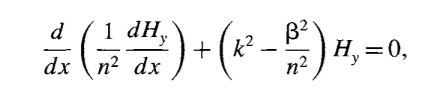
1. Derive the y-component of the...
We can expect the solution u(x,y) to be in the form X(x)Y(y). or I believe that...
 We can expect the solution u(x,y) to be in the form
X(x)Y(y).
or
I believe that these are the correct forms of X(x) and Y(y).
2. Laplace's equation Consider Laplace's equation on the rectangle with 0 < x < L and 0 < < H: PDE BC BC BC u(x,0) 0, u(z, H) = g(z). (10) where a mixture of Dirichlet and Neumann boundary conditions is specified, and only one of the sides has a boundary condition that is nonhomogeneous...
We can expect the solution u(x,y) to be in the form
X(x)Y(y).
or
I believe that these are the correct forms of X(x) and Y(y).
2. Laplace's equation Consider Laplace's equation on the rectangle with 0 < x < L and 0 < < H: PDE BC BC BC u(x,0) 0, u(z, H) = g(z). (10) where a mixture of Dirichlet and Neumann boundary conditions is specified, and only one of the sides has a boundary condition that is nonhomogeneous...
Derive the moment generating function of y= a x1+b x2, where y~ N( a 1 +...
Derive the moment generating function of y= a x1+b x2, where y~ N( a 1 + b2 , a2 12 +b222 + 2ab cov(x1, x2) ), not both a and b equal to zero. We were unable to transcribe this imageWe were unable to transcribe this imageWe were unable to transcribe this imageWe were unable to transcribe this image
Which of the following is the solution to the differential equation with the initial condition y(1)...
 Which of the following is the solution to the differential
equation
with the initial condition y(1) = -1/2
A.
B.
C.
D.
We were unable to transcribe this imageWe were unable to transcribe this imageWe were unable to transcribe this imageWe were unable to transcribe this imageWe were unable to transcribe this image
Which of the following is the solution to the differential
equation
with the initial condition y(1) = -1/2
A.
B.
C.
D.
We were unable to transcribe this imageWe were unable to transcribe this imageWe were unable to transcribe this imageWe were unable to transcribe this imageWe were unable to transcribe this image
Let a particle of unit mass be subject to a force where x is its displacement...
 Let a particle of unit mass be subject to a force
where x is its displacement from the coordinate origin and the
mass = 2 kg.
a) Derive an equation for
in terms of x.
b) Derive an equation for
, and find the equation for the phase space trajectory, y(x)
I believe Y is the equation given in the beginning of
the problem
3х 1+ 2х We were unable to transcribe this imageWe were unable to transcribe this imageWe...
Let a particle of unit mass be subject to a force
where x is its displacement from the coordinate origin and the
mass = 2 kg.
a) Derive an equation for
in terms of x.
b) Derive an equation for
, and find the equation for the phase space trajectory, y(x)
I believe Y is the equation given in the beginning of
the problem
3х 1+ 2х We were unable to transcribe this imageWe were unable to transcribe this imageWe...
Can I get a solution for this question? It's quite hard to solve. There is no reference about and I don't get w...
Can I get a solution for this question? It's quite hard to solve. There is no reference about and I don't get what this question's purpose is. Is alpha the alpha from bernoulli's equation? Question: An approximate equation for the velocity distribution in a pipe with turbulent flow is where Vmax is the centerline velocity, is the distance from the wall of the pipe, r is the radius of the pipe, and n is an exponent that depends on the...
find the solution of the inhomogeneous system for y" +p(t)y' +q(t)y = f(t), a second order...
find the solution of the inhomogeneous system for y" +p(t)y' +q(t)y = f(t), a second order scalar equation with p, q, f continuous on interval I, for which (to ) = 0, to on I We were unable to transcribe this imageWe were unable to transcribe this imageWe were unable to transcribe this image
a) By direct substitution determine which of the following functions satisfy the wave equation. 1. g(x,...
a) By direct substitution determine which of the following functions satisfy the wave equation. 1. g(x, t) = Acos(kx − t) where A, k, are positive constants. 2. h(x, t) = Ae where A, k, are positive constants. 3. p(x, t) = Asinh(kx − t) where A, k, are positive constants. 4. q(x, t) = Ae where A, a, are positive constants. 5. An arbitrary function: f(x, t) = f(kx−t) where k and are positive constants. (Hint: Be careful with...
Let two variables and are bivariately normally distributed with mean vector component and and co-variance matrix...
Let two variables and are bivariately normally distributed with mean vector component and and co-variance matrix shown below: . (a) What is the probability distribution function of joint Gaussian ? (Show it with and ) (b) What is the eigenvalues of co-variance matrix ? (c) Given the condition that the sum of squared values of each eigenvector are equal to 1, what is the eigenvectors of co-variance matrix ? please help with all parts! thank you! X1 We were unable...
I answered a & b But I need the answer of C and D by using...
 I answered a & b
But I need the answer of C and D by using MATLAB
software
Given the electric network shown in Figure. a) Derive the mathematical model of the following electrical network b) Drive transfer function os) c) Find the step response analytically and by using MATLAB. d) Plot the response of the systems. Vi(s) 1 92 1 H We were unable to transcribe this imageWe were unable to transcribe this imageWe were unable to transcribe this...
I answered a & b
But I need the answer of C and D by using MATLAB
software
Given the electric network shown in Figure. a) Derive the mathematical model of the following electrical network b) Drive transfer function os) c) Find the step response analytically and by using MATLAB. d) Plot the response of the systems. Vi(s) 1 92 1 H We were unable to transcribe this imageWe were unable to transcribe this imageWe were unable to transcribe this...
Solution , estimate the temperature at which FeOs can be reduced to Using data in Appendix 1 ron,...
 solution , estimate the temperature at which FeOs can be reduced to Using data in Appendix 1 ron, using hydrogen gas as a reducing agent (assume H O(g) is the other product). We were unable to transcribe this imageWe were unable to transcribe this imageWe were unable to transcribe this imageWe were unable to transcribe this imageWe were unable to transcribe this image
solution , estimate the temperature at which FeOs can be reduced to Using data in Appendix 1...
solution , estimate the temperature at which FeOs can be reduced to Using data in Appendix 1 ron, using hydrogen gas as a reducing agent (assume H O(g) is the other product). We were unable to transcribe this imageWe were unable to transcribe this imageWe were unable to transcribe this imageWe were unable to transcribe this imageWe were unable to transcribe this image
solution , estimate the temperature at which FeOs can be reduced to Using data in Appendix 1...
 We can expect the solution u(x,y) to be in the form
X(x)Y(y).
or
I believe that these are the correct forms of X(x) and Y(y).
2. Laplace's equation Consider Laplace's equation on the rectangle with 0 < x < L and 0 < < H: PDE BC BC BC u(x,0) 0, u(z, H) = g(z). (10) where a mixture of Dirichlet and Neumann boundary conditions is specified, and only one of the sides has a boundary condition that is nonhomogeneous...
We can expect the solution u(x,y) to be in the form
X(x)Y(y).
or
I believe that these are the correct forms of X(x) and Y(y).
2. Laplace's equation Consider Laplace's equation on the rectangle with 0 < x < L and 0 < < H: PDE BC BC BC u(x,0) 0, u(z, H) = g(z). (10) where a mixture of Dirichlet and Neumann boundary conditions is specified, and only one of the sides has a boundary condition that is nonhomogeneous...
 Which of the following is the solution to the differential
equation
with the initial condition y(1) = -1/2
A.
B.
C.
D.
We were unable to transcribe this imageWe were unable to transcribe this imageWe were unable to transcribe this imageWe were unable to transcribe this imageWe were unable to transcribe this image
Which of the following is the solution to the differential
equation
with the initial condition y(1) = -1/2
A.
B.
C.
D.
We were unable to transcribe this imageWe were unable to transcribe this imageWe were unable to transcribe this imageWe were unable to transcribe this imageWe were unable to transcribe this image
 Let a particle of unit mass be subject to a force
where x is its displacement from the coordinate origin and the
mass = 2 kg.
a) Derive an equation for
in terms of x.
b) Derive an equation for
, and find the equation for the phase space trajectory, y(x)
I believe Y is the equation given in the beginning of
the problem
3х 1+ 2х We were unable to transcribe this imageWe were unable to transcribe this imageWe...
Let a particle of unit mass be subject to a force
where x is its displacement from the coordinate origin and the
mass = 2 kg.
a) Derive an equation for
in terms of x.
b) Derive an equation for
, and find the equation for the phase space trajectory, y(x)
I believe Y is the equation given in the beginning of
the problem
3х 1+ 2х We were unable to transcribe this imageWe were unable to transcribe this imageWe...
 I answered a & b
But I need the answer of C and D by using MATLAB
software
Given the electric network shown in Figure. a) Derive the mathematical model of the following electrical network b) Drive transfer function os) c) Find the step response analytically and by using MATLAB. d) Plot the response of the systems. Vi(s) 1 92 1 H We were unable to transcribe this imageWe were unable to transcribe this imageWe were unable to transcribe this...
I answered a & b
But I need the answer of C and D by using MATLAB
software
Given the electric network shown in Figure. a) Derive the mathematical model of the following electrical network b) Drive transfer function os) c) Find the step response analytically and by using MATLAB. d) Plot the response of the systems. Vi(s) 1 92 1 H We were unable to transcribe this imageWe were unable to transcribe this imageWe were unable to transcribe this...
 solution , estimate the temperature at which FeOs can be reduced to Using data in Appendix 1 ron, using hydrogen gas as a reducing agent (assume H O(g) is the other product). We were unable to transcribe this imageWe were unable to transcribe this imageWe were unable to transcribe this imageWe were unable to transcribe this imageWe were unable to transcribe this image
solution , estimate the temperature at which FeOs can be reduced to Using data in Appendix 1...
solution , estimate the temperature at which FeOs can be reduced to Using data in Appendix 1 ron, using hydrogen gas as a reducing agent (assume H O(g) is the other product). We were unable to transcribe this imageWe were unable to transcribe this imageWe were unable to transcribe this imageWe were unable to transcribe this imageWe were unable to transcribe this image
solution , estimate the temperature at which FeOs can be reduced to Using data in Appendix 1...
Most questions answered within 3 hours.
-
Where is the error in this code sequence?
String s1 = "Hello";
String s2 = "ello";...
asked 10 months ago -
Financial data for Joel de Paris, Inc., for last year
follow:
Joel de Paris, Inc.
Balance...
asked 10 months ago -
Consider this reaction:
Al2(SO4)3 (aq)+ BaCl3
(aq) Al2Cl6 (aq)- +
3BaSO4(s) . What is the...
asked 10 months ago -
Suppose that Savneet is considering increasing her
recent random sample from 20 car rentals to 40...
asked 10 months ago -
Trucks arrive at an unloading terminal at an average rate of 120
per hour.
Trucks arrive...
asked 10 months ago -
Why are methanol and ethanol completely soluble in water while
octanol is not very little soluble....
asked 10 months ago -
A facilities manager at a university reads in a research report
that the mean amount of...
asked 10 months ago -
When the CuSO4 is rehydrated by adding water to the anhydrous
compound, is this an endothermic...
asked 10 months ago -
A ray of sunlight is passing from diamond into crown glass; the
angle of incidence is...
asked 10 months ago -
A block of mass 0.249 kg is placed on top of a light, vertical
spring of...
asked 10 months ago -
how do the kidneys compensate in the presences of acidosis
a) trigger hyperventilate
b) reserve acid...
asked 10 months ago -
Question 501 pts
The rental rate of capital to the firm increases. Which of the
following...
asked 10 months ago