
Homework Answers
![rate K3 CH20] [N204] Kz [H20] K Kt ΓΗΝΟ1 H2012NO]2 K, K2 K3 [HNO2J EHa01ENO72](http://img.homeworklib.com/questions/17d0f5a0-7805-11ea-bdc8-8d58574ce4de.png?x-oss-process=image/resize,w_560) Clearly the third step is the
slowest step and thus it is the rate determining step . The rate
law expression has been solved in the given figure above..
Clearly the third step is the
slowest step and thus it is the rate determining step . The rate
law expression has been solved in the given figure above..
Add Answer to:
8. Find the rate law of the reaction: keff 3HNO2 H2O + 2NO + H+ +...
- For the reaction 2NO + O2 + 2NO the following reaction mechanism have been suggested;...
 - For the reaction 2NO + O2 + 2NO the following reaction mechanism have been suggested; steps: NO + NON2O2 Fast step 2: N2O2 + O2 k2 2NO Slow and the apparent rate law was found to be R = kerr [NO] What would be the estimated effective activation energy, El. value, if the activation energies for forward and backward reactions in step 1 are 82 kJ mol" and 205 kJ moll, respectively, and the activation energy of step 2...
please help:) thank you 58 The rate for the following to be 0.22M NO2 I min....
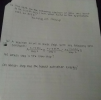 please help:) thank you
58 The rate for the following to be 0.22M NO2 I min. w rate at 320K? ollowing reaction at book was found 102 1 min. what would be the approximate N204 Lg) - ZNO2Lg) the following rate St. A reaction occurs in three steps with constants: KI=0. 3M K2=0.05M, Step 1 (a) which step is the slow step? AK D 3M B K2=00SM ( +3=4.5MD Ck3=4.50 Step 2 Step 3 (b) which step has the lowest...
please help:) thank you
58 The rate for the following to be 0.22M NO2 I min. w rate at 320K? ollowing reaction at book was found 102 1 min. what would be the approximate N204 Lg) - ZNO2Lg) the following rate St. A reaction occurs in three steps with constants: KI=0. 3M K2=0.05M, Step 1 (a) which step is the slow step? AK D 3M B K2=00SM ( +3=4.5MD Ck3=4.50 Step 2 Step 3 (b) which step has the lowest...
The rate law for the reaction 2NO2 + O3 → N2O5 + O2 is rate =...
The rate law for the reaction 2NO2 + O3 → N2O5 + O2 is rate = k[NO2][O3]. Which one of the following mechanisms is consistent with this rate law? A) NO2 + NO2 → N2O4 (fast) N2O4 + O3 → N2O5 + O2 (slow) B) NO2 + O3 → NO5 (fast) NO5 + NO5 → N2O5 + 5/2O2 (slow) C) NO2 + O3 → NO3 + O2 (slow) NO3 + NO2 → N2O5 (fast) D) NO2 + NO2 → N2O2...
Select all that apply. The rate law for the reaction 2NO(g) + Cl2(g) → 2NOCI(g) is...
 Select all that apply. The rate law for the reaction 2NO(g) + Cl2(g) → 2NOCI(g) is given by R-k[NO][C121 If the following is the mechanism for the reaction, NO(g) + Cl2(g) → NOC12(g) NOCI,(g) + NO(g) → 2NOCI(g) which of the following statements accurately describes this reaction? Check all that apply. 2nd order reaction The first step is the slow step. Doubling [NO] would quadruple the rate. Cutting (Cl) in half would decrease the rate by a factor of two....
1) 2) 3) A proposed mechanism for the reaction 2NO(g) +2H2(g) → N2(g) + 2H2O(g): Step...
 1)
2)
3)
A proposed mechanism for the reaction 2NO(g) +2H2(g) → N2(g) + 2H2O(g): Step 1: 2NO(g) + N2O2(g) (very fast, reversible) Step 2: N2O2(g) + H2(g) N20(g) + H20(g) (slow) Step 3: N2O(g) + H2(g) →N2(g) +H2O(g) (fast) What is the rate law for the overall reaction? Ok[NO2 Ok[NO]2[H212 O k[NO]2[H2] Ok[N20][H2] k[NO]1/2[H2] 2NO(g) +Cl2 (g) → NOCI (8) Experiment concentration of NO (M) 0.09 0.045 0.045 concentration of Cl2(M) Rate (M/s) 0.01 3.40 x 10⁻⁴ 8.50 x...
1)
2)
3)
A proposed mechanism for the reaction 2NO(g) +2H2(g) → N2(g) + 2H2O(g): Step 1: 2NO(g) + N2O2(g) (very fast, reversible) Step 2: N2O2(g) + H2(g) N20(g) + H20(g) (slow) Step 3: N2O(g) + H2(g) →N2(g) +H2O(g) (fast) What is the rate law for the overall reaction? Ok[NO2 Ok[NO]2[H212 O k[NO]2[H2] Ok[N20][H2] k[NO]1/2[H2] 2NO(g) +Cl2 (g) → NOCI (8) Experiment concentration of NO (M) 0.09 0.045 0.045 concentration of Cl2(M) Rate (M/s) 0.01 3.40 x 10⁻⁴ 8.50 x...
Reaction Mechanism Review CHM 1120 NO + H₂ + N + NON +H2O + N2O step...
 Reaction Mechanism Review CHM 1120 NO + H₂ + N + NON +H2O + N2O step 1 NO+Hp --> N + H2O (slow) step 2 N+NO --> NO ZNO + H2H₂O + N2O bimolecular Unimolecular Rate = K[NO] + [tz step 1 NO-NO-> NO: +sowotworola + H 2 + 8 + 16 - JÓz + x + 46 +H2O + N20 step 2. step 3 NO2 + H2 --> NO + H2O N+NO -> NO ZNO +H2 H2O + N20...
The experimental rate law for the reaction 2H2(g) + 2 NO(g) → N2(g) +2 H2O(g) is...
 The experimental rate law for the reaction 2H2(g) + 2 NO(g) → N2(g) +2 H2O(g) is d[N2) = kods[Hz][NO] Below is a proposed mechanism: H2(g) + NO(g) + NO(g) = N2O(g) + H2O(g) H2(g) + N2O(g) = N2(g) + H2O(g) ki k2 (a) Under what conditions does this mechanism give the observed rate law? Express kobs in terms of the rate constants for the individual steps of the mechanism. A second proposed mechanism is: NO(g) + NO(g) = N2O2(g) N2O2(g)...
2. For reaction (E), write the expression for the steady-state concentration of N2O2, [N2O2]ss. What is...
 2. For reaction (E), write the expression for the steady-state concentration of N2O2, [N2O2]ss. What is the steady-state concentration of N2O2 given a concentration of [NO] = 1 ppb and [H2] = 500 ppb? Solve for the production rate (molecules cms-1) of N20. Assume the number density of air molecules is 2.5x10¹⁹ molecules cm3. The following reaction mechanisms we have discussed to some degree during class: (A) HNO3 → OH + NO2 (ka = 0.12 s-1) (B) CO+O → CO2...
8. The rate law for the reaction H2O2 + 2H+212 + 2H2O is rate-k[H202][1]. The following...
 8. The rate law for the reaction H2O2 + 2H+212 + 2H2O is rate-k[H202][1]. The following mechanism has been suggested. H2O2+1 - HOI + OH - slow OH + H H20 fast HỘI + H+ + + I2 + H2O fast Identify all intermediates included in this mechanism. A) H and I D) Honly B) H and HOI E) H20 and OH C) HOI and OH 9. Which of the following statements is false? A) A catalyst increases the rate...
6 The decomposition of ozone in the upper atmosphere is catalyzed by NO. The overall reaction...
 6 The decomposition of ozone in the upper atmosphere is catalyzed by NO. The overall reaction and rate law are: rate k[O][NO] Os(g)+O(g)+20;(g); Write a possible mechanism that is consistent with rate law and identify an intermediate in the reaction. 7. A possible mechanism for the iodide ion catalyzed decomposition of hydrogen peroxide in aqueous solution is: -slow H2O:(aq) +I(aq)H;O(1) + 0I°(aq) -fast H20:(aq) +Or(aq)H:O()) +02(g)+l'(aq) What is: iv) the catalyst? iv) the intermediate ii) the rate law i) the...
 - For the reaction 2NO + O2 + 2NO the following reaction mechanism have been suggested; steps: NO + NON2O2 Fast step 2: N2O2 + O2 k2 2NO Slow and the apparent rate law was found to be R = kerr [NO] What would be the estimated effective activation energy, El. value, if the activation energies for forward and backward reactions in step 1 are 82 kJ mol" and 205 kJ moll, respectively, and the activation energy of step 2...
 please help:) thank you
58 The rate for the following to be 0.22M NO2 I min. w rate at 320K? ollowing reaction at book was found 102 1 min. what would be the approximate N204 Lg) - ZNO2Lg) the following rate St. A reaction occurs in three steps with constants: KI=0. 3M K2=0.05M, Step 1 (a) which step is the slow step? AK D 3M B K2=00SM ( +3=4.5MD Ck3=4.50 Step 2 Step 3 (b) which step has the lowest...
please help:) thank you
58 The rate for the following to be 0.22M NO2 I min. w rate at 320K? ollowing reaction at book was found 102 1 min. what would be the approximate N204 Lg) - ZNO2Lg) the following rate St. A reaction occurs in three steps with constants: KI=0. 3M K2=0.05M, Step 1 (a) which step is the slow step? AK D 3M B K2=00SM ( +3=4.5MD Ck3=4.50 Step 2 Step 3 (b) which step has the lowest...
 Select all that apply. The rate law for the reaction 2NO(g) + Cl2(g) → 2NOCI(g) is given by R-k[NO][C121 If the following is the mechanism for the reaction, NO(g) + Cl2(g) → NOC12(g) NOCI,(g) + NO(g) → 2NOCI(g) which of the following statements accurately describes this reaction? Check all that apply. 2nd order reaction The first step is the slow step. Doubling [NO] would quadruple the rate. Cutting (Cl) in half would decrease the rate by a factor of two....
 1)
2)
3)
A proposed mechanism for the reaction 2NO(g) +2H2(g) → N2(g) + 2H2O(g): Step 1: 2NO(g) + N2O2(g) (very fast, reversible) Step 2: N2O2(g) + H2(g) N20(g) + H20(g) (slow) Step 3: N2O(g) + H2(g) →N2(g) +H2O(g) (fast) What is the rate law for the overall reaction? Ok[NO2 Ok[NO]2[H212 O k[NO]2[H2] Ok[N20][H2] k[NO]1/2[H2] 2NO(g) +Cl2 (g) → NOCI (8) Experiment concentration of NO (M) 0.09 0.045 0.045 concentration of Cl2(M) Rate (M/s) 0.01 3.40 x 10⁻⁴ 8.50 x...
1)
2)
3)
A proposed mechanism for the reaction 2NO(g) +2H2(g) → N2(g) + 2H2O(g): Step 1: 2NO(g) + N2O2(g) (very fast, reversible) Step 2: N2O2(g) + H2(g) N20(g) + H20(g) (slow) Step 3: N2O(g) + H2(g) →N2(g) +H2O(g) (fast) What is the rate law for the overall reaction? Ok[NO2 Ok[NO]2[H212 O k[NO]2[H2] Ok[N20][H2] k[NO]1/2[H2] 2NO(g) +Cl2 (g) → NOCI (8) Experiment concentration of NO (M) 0.09 0.045 0.045 concentration of Cl2(M) Rate (M/s) 0.01 3.40 x 10⁻⁴ 8.50 x...
 Reaction Mechanism Review CHM 1120 NO + H₂ + N + NON +H2O + N2O step 1 NO+Hp --> N + H2O (slow) step 2 N+NO --> NO ZNO + H2H₂O + N2O bimolecular Unimolecular Rate = K[NO] + [tz step 1 NO-NO-> NO: +sowotworola + H 2 + 8 + 16 - JÓz + x + 46 +H2O + N20 step 2. step 3 NO2 + H2 --> NO + H2O N+NO -> NO ZNO +H2 H2O + N20...
 The experimental rate law for the reaction 2H2(g) + 2 NO(g) → N2(g) +2 H2O(g) is d[N2) = kods[Hz][NO] Below is a proposed mechanism: H2(g) + NO(g) + NO(g) = N2O(g) + H2O(g) H2(g) + N2O(g) = N2(g) + H2O(g) ki k2 (a) Under what conditions does this mechanism give the observed rate law? Express kobs in terms of the rate constants for the individual steps of the mechanism. A second proposed mechanism is: NO(g) + NO(g) = N2O2(g) N2O2(g)...
 2. For reaction (E), write the expression for the steady-state concentration of N2O2, [N2O2]ss. What is the steady-state concentration of N2O2 given a concentration of [NO] = 1 ppb and [H2] = 500 ppb? Solve for the production rate (molecules cms-1) of N20. Assume the number density of air molecules is 2.5x10¹⁹ molecules cm3. The following reaction mechanisms we have discussed to some degree during class: (A) HNO3 → OH + NO2 (ka = 0.12 s-1) (B) CO+O → CO2...
 8. The rate law for the reaction H2O2 + 2H+212 + 2H2O is rate-k[H202][1]. The following mechanism has been suggested. H2O2+1 - HOI + OH - slow OH + H H20 fast HỘI + H+ + + I2 + H2O fast Identify all intermediates included in this mechanism. A) H and I D) Honly B) H and HOI E) H20 and OH C) HOI and OH 9. Which of the following statements is false? A) A catalyst increases the rate...
 6 The decomposition of ozone in the upper atmosphere is catalyzed by NO. The overall reaction and rate law are: rate k[O][NO] Os(g)+O(g)+20;(g); Write a possible mechanism that is consistent with rate law and identify an intermediate in the reaction. 7. A possible mechanism for the iodide ion catalyzed decomposition of hydrogen peroxide in aqueous solution is: -slow H2O:(aq) +I(aq)H;O(1) + 0I°(aq) -fast H20:(aq) +Or(aq)H:O()) +02(g)+l'(aq) What is: iv) the catalyst? iv) the intermediate ii) the rate law i) the...
Most questions answered within 3 hours.
-
Where is the error in this code sequence?
String s1 = "Hello";
String s2 = "ello";...
asked 11 months ago -
Financial data for Joel de Paris, Inc., for last year
follow:
Joel de Paris, Inc.
Balance...
asked 11 months ago -
Consider this reaction:
Al2(SO4)3 (aq)+ BaCl3
(aq) Al2Cl6 (aq)- +
3BaSO4(s) . What is the...
asked 11 months ago -
Suppose that Savneet is considering increasing her
recent random sample from 20 car rentals to 40...
asked 11 months ago -
Trucks arrive at an unloading terminal at an average rate of 120
per hour.
Trucks arrive...
asked 11 months ago -
Why are methanol and ethanol completely soluble in water while
octanol is not very little soluble....
asked 11 months ago -
A facilities manager at a university reads in a research report
that the mean amount of...
asked 11 months ago -
When the CuSO4 is rehydrated by adding water to the anhydrous
compound, is this an endothermic...
asked 11 months ago -
A ray of sunlight is passing from diamond into crown glass; the
angle of incidence is...
asked 11 months ago -
A block of mass 0.249 kg is placed on top of a light, vertical
spring of...
asked 11 months ago -
how do the kidneys compensate in the presences of acidosis
a) trigger hyperventilate
b) reserve acid...
asked 11 months ago -
Question 501 pts
The rental rate of capital to the firm increases. Which of the
following...
asked 11 months ago