
Homework Answers
Answer : The answer is option C : C and D.
Allocation is efficient when indifference curves are tangent with each other. Here at points C and D the indifference curves are tangent with each other. Hence except options C and D other options are not correct. Therefore, options C and D are the correct answer.
Add Answer to:
E) general equilibrium analysis. Clot Ikaw Clothing SA Lamad 15) Refer to the Figure just above....
Supply A & Demand • 10 11 Dexto 1. Refer to Figure above. Show the consumer...
 Supply A & Demand • 10 11 Dexto 1. Refer to Figure above. Show the consumer surplus measured by the area at the equilibrium. 2. Refer to figure above. Show the producer surplus measured by the area at the equilibrium 3. Refer to Figure above. Show the total surplus measured by the area at the equilibrium. 4. Refer to Figure above. Is the equilibrium allocation of resources efficient at the equilibrium? Why?
Refer to figure above, if price goes from equilibrium to P1, producer surplus will change to area: a. E - C. b. C + E c. E - F d. B - F
 Refer to figure above, if price goes from equilibrium to P1, producer surplus will change to area:a. E - C. b. C + Ec. E - Fd. B - F.
Kad Lars's Fond 16) Refer to the Figure just above. The initial allocation of resources is...
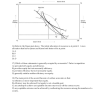 Kad Lars's Fond 16) Refer to the Figure just above. The initial allocation of resources is at point K. A new allocation that leaves James and Karen both better off is at point: Α) Α B) B C) D) D 17) Which of these statements is generally accepted by economists? Perfect competition A) provides both equity and efficiency B) provides equity but not necessarily efficiency, C) provides efficiency but not necessarily equity. D) generally satisfies neither efficiency nor equity. 18)...
Question 15 (4 points) Refer to the following figure to answer the questions that follow. According...
 Question 15 (4 points)
Refer to the following figure to answer the questions that
follow.
According to the figure, if the government increases spending by
only $4 billion in an effort to shift aggregate demand enough to
return to long-run equilibrium, the marginal propensity to consume
must be equal to:
a. 1.57.
b. 0.75.
c. 0.6.
d. 1.33.
e. 0.8.
Question 15 (4 points)
Refer to the following figure to answer the questions that
follow.
According to the figure, if the government increases spending by
only $4 billion in an effort to shift aggregate demand enough to
return to long-run equilibrium, the marginal propensity to consume
must be equal to:
a. 1.57.
b. 0.75.
c. 0.6.
d. 1.33.
e. 0.8.
Question1: 1.1 Refer to the figure above. Suppose S and D are the initial supply and...
 Question1:
1.1 Refer to the figure above. Suppose S and D are the
initial supply and demand curves and a tax represented by S' is
imposed on sellers. The distance that represents the per unit
amount of the tax is
A.
EG.
B.
0A.
C.
HJ.
D.
IH.
1.2 Refer to the figure above. If S and D are the
initial supply and demand curves, after the tax represented by S'
is imposed, the equilibrium price...
Question1:
1.1 Refer to the figure above. Suppose S and D are the
initial supply and demand curves and a tax represented by S' is
imposed on sellers. The distance that represents the per unit
amount of the tax is
A.
EG.
B.
0A.
C.
HJ.
D.
IH.
1.2 Refer to the figure above. If S and D are the
initial supply and demand curves, after the tax represented by S'
is imposed, the equilibrium price...
Refer to the table above. If the market is originally in equilibrium and a price ceiling...
 Refer to the table above. If the market is originally in
equilibrium and a price ceiling of $50 is imposed, which of the
following is incorrect?
A. Net surplus in the economy will decrease
B. Producer surplus will decrease
C. Supply will decrease
D. Consumers will purchase less than they would at the
equilibrium price
E. Producers will sell less than they would at the equilibrium
price
Supply P* Gi Demand Qd Qs Quantity
Refer to the table above. If the market is originally in
equilibrium and a price ceiling of $50 is imposed, which of the
following is incorrect?
A. Net surplus in the economy will decrease
B. Producer surplus will decrease
C. Supply will decrease
D. Consumers will purchase less than they would at the
equilibrium price
E. Producers will sell less than they would at the equilibrium
price
Supply P* Gi Demand Qd Qs Quantity
nswer the question(s) below based on the following diagram 14) Refer to the figure above. The quota shown in the di...
 nswer the question(s) below based on the following diagram 14) Refer to the figure above. The quota shown in the diagram equals A) 500 units. B) 1000 units. C) 1200 units D) 200 units. 15) Refer to the figure above. The quota restricts trade by the same amount as a tariff of A) 550. B) $20. C) $30. D) Cannot answer without more information. 16) Refer to the figure above. Quota rents equal A) $5000 B) $10000 C) 56000 Dy$2000....
1. Refer to Figure 1-5. The figure above represents demand and supply in the market for...
 1. Refer to Figure 1-5. The figure above represents demand and
supply in the market for cigarettes. Use the diagram to answer the
following questions.
a. How much is the government tax on each pack of
cigarettes?
b. What portion of the unit tax is paid by consumers?
c. What portion of the unit tax is paid by producers?
d. What is the quantity sold after the imposition of the
tax?
e. What is the after-tax revenue per pack received...
1. Refer to Figure 1-5. The figure above represents demand and
supply in the market for cigarettes. Use the diagram to answer the
following questions.
a. How much is the government tax on each pack of
cigarettes?
b. What portion of the unit tax is paid by consumers?
c. What portion of the unit tax is paid by producers?
d. What is the quantity sold after the imposition of the
tax?
e. What is the after-tax revenue per pack received...
Refer to Question 11 Figure, which shows the sampling distributions of two unbiased point estimators. Which...
 Refer to Question 11 Figure, which shows the sampling distributions of two unbiased point estimators. Which of the following statements is correct? Question 11 Figure: Sampling distribution of & Sampling distribution Parameter e, is relatively more efficient than 6 b. e, is as efficient as e, e2 is relatively more efficient than 9,. d. All of the above.
Question 6: In General Equilibrium, we assume all economic agents are price takers. A monopolist, however,...
Question 6: In General Equilibrium, we assume all economic agents are price takers. A monopolist, however, is not a price taker. If the economy has a monopoly seller of some good, rather than a price taking seller of some good, which of the following is true? (a) The first fundamental theorem of welfare economics still holds (b) The equilibrium price will be equal to the marginal cost of producing the good (c) The allocation that is reached in equilibrium will...
 Supply A & Demand • 10 11 Dexto 1. Refer to Figure above. Show the consumer surplus measured by the area at the equilibrium. 2. Refer to figure above. Show the producer surplus measured by the area at the equilibrium 3. Refer to Figure above. Show the total surplus measured by the area at the equilibrium. 4. Refer to Figure above. Is the equilibrium allocation of resources efficient at the equilibrium? Why?
 Kad Lars's Fond 16) Refer to the Figure just above. The initial allocation of resources is at point K. A new allocation that leaves James and Karen both better off is at point: Α) Α B) B C) D) D 17) Which of these statements is generally accepted by economists? Perfect competition A) provides both equity and efficiency B) provides equity but not necessarily efficiency, C) provides efficiency but not necessarily equity. D) generally satisfies neither efficiency nor equity. 18)...
 Question 15 (4 points)
Refer to the following figure to answer the questions that
follow.
According to the figure, if the government increases spending by
only $4 billion in an effort to shift aggregate demand enough to
return to long-run equilibrium, the marginal propensity to consume
must be equal to:
a. 1.57.
b. 0.75.
c. 0.6.
d. 1.33.
e. 0.8.
Question 15 (4 points)
Refer to the following figure to answer the questions that
follow.
According to the figure, if the government increases spending by
only $4 billion in an effort to shift aggregate demand enough to
return to long-run equilibrium, the marginal propensity to consume
must be equal to:
a. 1.57.
b. 0.75.
c. 0.6.
d. 1.33.
e. 0.8.
 Question1:
1.1 Refer to the figure above. Suppose S and D are the
initial supply and demand curves and a tax represented by S' is
imposed on sellers. The distance that represents the per unit
amount of the tax is
A.
EG.
B.
0A.
C.
HJ.
D.
IH.
1.2 Refer to the figure above. If S and D are the
initial supply and demand curves, after the tax represented by S'
is imposed, the equilibrium price...
Question1:
1.1 Refer to the figure above. Suppose S and D are the
initial supply and demand curves and a tax represented by S' is
imposed on sellers. The distance that represents the per unit
amount of the tax is
A.
EG.
B.
0A.
C.
HJ.
D.
IH.
1.2 Refer to the figure above. If S and D are the
initial supply and demand curves, after the tax represented by S'
is imposed, the equilibrium price...
 Refer to the table above. If the market is originally in
equilibrium and a price ceiling of $50 is imposed, which of the
following is incorrect?
A. Net surplus in the economy will decrease
B. Producer surplus will decrease
C. Supply will decrease
D. Consumers will purchase less than they would at the
equilibrium price
E. Producers will sell less than they would at the equilibrium
price
Supply P* Gi Demand Qd Qs Quantity
Refer to the table above. If the market is originally in
equilibrium and a price ceiling of $50 is imposed, which of the
following is incorrect?
A. Net surplus in the economy will decrease
B. Producer surplus will decrease
C. Supply will decrease
D. Consumers will purchase less than they would at the
equilibrium price
E. Producers will sell less than they would at the equilibrium
price
Supply P* Gi Demand Qd Qs Quantity
 nswer the question(s) below based on the following diagram 14) Refer to the figure above. The quota shown in the diagram equals A) 500 units. B) 1000 units. C) 1200 units D) 200 units. 15) Refer to the figure above. The quota restricts trade by the same amount as a tariff of A) 550. B) $20. C) $30. D) Cannot answer without more information. 16) Refer to the figure above. Quota rents equal A) $5000 B) $10000 C) 56000 Dy$2000....
 1. Refer to Figure 1-5. The figure above represents demand and
supply in the market for cigarettes. Use the diagram to answer the
following questions.
a. How much is the government tax on each pack of
cigarettes?
b. What portion of the unit tax is paid by consumers?
c. What portion of the unit tax is paid by producers?
d. What is the quantity sold after the imposition of the
tax?
e. What is the after-tax revenue per pack received...
1. Refer to Figure 1-5. The figure above represents demand and
supply in the market for cigarettes. Use the diagram to answer the
following questions.
a. How much is the government tax on each pack of
cigarettes?
b. What portion of the unit tax is paid by consumers?
c. What portion of the unit tax is paid by producers?
d. What is the quantity sold after the imposition of the
tax?
e. What is the after-tax revenue per pack received...
 Refer to Question 11 Figure, which shows the sampling distributions of two unbiased point estimators. Which of the following statements is correct? Question 11 Figure: Sampling distribution of & Sampling distribution Parameter e, is relatively more efficient than 6 b. e, is as efficient as e, e2 is relatively more efficient than 9,. d. All of the above.
Most questions answered within 3 hours.
-
Where is the error in this code sequence?
String s1 = "Hello";
String s2 = "ello";...
asked 10 months ago -
Financial data for Joel de Paris, Inc., for last year
follow:
Joel de Paris, Inc.
Balance...
asked 10 months ago -
Consider this reaction:
Al2(SO4)3 (aq)+ BaCl3
(aq) Al2Cl6 (aq)- +
3BaSO4(s) . What is the...
asked 10 months ago -
Suppose that Savneet is considering increasing her
recent random sample from 20 car rentals to 40...
asked 10 months ago -
Trucks arrive at an unloading terminal at an average rate of 120
per hour.
Trucks arrive...
asked 10 months ago -
Why are methanol and ethanol completely soluble in water while
octanol is not very little soluble....
asked 10 months ago -
A facilities manager at a university reads in a research report
that the mean amount of...
asked 10 months ago -
When the CuSO4 is rehydrated by adding water to the anhydrous
compound, is this an endothermic...
asked 10 months ago -
A ray of sunlight is passing from diamond into crown glass; the
angle of incidence is...
asked 10 months ago -
A block of mass 0.249 kg is placed on top of a light, vertical
spring of...
asked 10 months ago -
how do the kidneys compensate in the presences of acidosis
a) trigger hyperventilate
b) reserve acid...
asked 10 months ago -
Question 501 pts
The rental rate of capital to the firm increases. Which of the
following...
asked 10 months ago