
Homework Answers
solution:
According to the question, The objective of the given analysis is to state the minimum requirement for development of economic model that analyzes Peltzman's hypothesis.
Through it shall be noted that the given question state the hypothesis - mandatory seat belt law increased driver fatalities. It also shows the graph indicating the availability of the data on which the hypothesis could be put to test.
Also in addition, the question also state the assumption - that with mandatory seat belt, the driver feel safer and hence would drive more recklessly thereby increasing driver fatalities.
Thus, one could figure out the hypothesis, data and assumption from the question itself.
Thus, at minimum, the economic model that analyze the given hypothesis should at minimum include discussion if the relationship is causal, if any un-observable factors influence endogenous & exogenous variables and whether reverse causality exists.
Therefore, the correct answer is d).
Add Answer to:
4. (30 pts) In 1975, economist Sam Peltzman hypothesized that mandatory seat belt laws (i.e., laws...
4. (30 pts) In 1975, economist Sam Peltzman hypothesized that mandatory seat belt laws (i.e., laws...
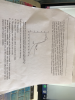 4. (30 pts) In 1975, economist Sam Peltzman hypothesized that mandatory seat belt laws (i.e., laws that require drivers of vehicles to wear seat belts) increased driver fatalities. The idea is that seatbelts make the driver feel safer and therefore will drive more reck- lessly. Below is graphical evidence. It shows that countries without mandatory seat belt laws (the short-dashed line labeled "no law") experienced a larger decline in auto fatalities than the group that had passed mandatory seat belt...
4. (30 pts) In 1975, economist Sam Peltzman hypothesized that mandatory seat belt laws (i.e., laws...
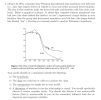 4. (30 pts) In 1975, economist Sam Peltzman hypothesized that mandatory seat belt laws (i.e., laws that require drivers of vehicles to wear seat belts) increased driver fatalities The idea is that seatbelts make the driver feel safer and therefore will drive more reck- lessly. Below is graphical evidence. It shows that countries without mandatory seat belt laws (the short-dashed line labeled "no law") experienced a larger decline in auto fatalities than the group that had passed mandatory seat belt...
4. (30 pts) In 1975, economist Sam Peltzman hypothesized that mandatory seat belt laws (i.e., laws...
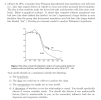 4. (30 pts) In 1975, economist Sam Peltzman hypothesized that mandatory seat belt laws (i.e., laws that require drivers of vehicles to wear seat belts) increased driver fatalities The idea is that seatbelts make the driver feel safer and therefore will drive more reck- lessly. Below is graphical evidence. It shows that countries without mandatory seat belt laws (the short-dashed line labeled "no law") experienced a larger decline in auto fatalities than the group that had passed mandatory seat belt...
 4. (30 pts) In 1975, economist Sam Peltzman hypothesized that mandatory seat belt laws (i.e., laws that require drivers of vehicles to wear seat belts) increased driver fatalities. The idea is that seatbelts make the driver feel safer and therefore will drive more reck- lessly. Below is graphical evidence. It shows that countries without mandatory seat belt laws (the short-dashed line labeled "no law") experienced a larger decline in auto fatalities than the group that had passed mandatory seat belt...
 4. (30 pts) In 1975, economist Sam Peltzman hypothesized that mandatory seat belt laws (i.e., laws that require drivers of vehicles to wear seat belts) increased driver fatalities The idea is that seatbelts make the driver feel safer and therefore will drive more reck- lessly. Below is graphical evidence. It shows that countries without mandatory seat belt laws (the short-dashed line labeled "no law") experienced a larger decline in auto fatalities than the group that had passed mandatory seat belt...
 4. (30 pts) In 1975, economist Sam Peltzman hypothesized that mandatory seat belt laws (i.e., laws that require drivers of vehicles to wear seat belts) increased driver fatalities The idea is that seatbelts make the driver feel safer and therefore will drive more reck- lessly. Below is graphical evidence. It shows that countries without mandatory seat belt laws (the short-dashed line labeled "no law") experienced a larger decline in auto fatalities than the group that had passed mandatory seat belt...
Most questions answered within 3 hours.
-
Where is the error in this code sequence?
String s1 = "Hello";
String s2 = "ello";...
asked 11 months ago -
Financial data for Joel de Paris, Inc., for last year
follow:
Joel de Paris, Inc.
Balance...
asked 11 months ago -
Consider this reaction:
Al2(SO4)3 (aq)+ BaCl3
(aq) Al2Cl6 (aq)- +
3BaSO4(s) . What is the...
asked 11 months ago -
Suppose that Savneet is considering increasing her
recent random sample from 20 car rentals to 40...
asked 11 months ago -
Trucks arrive at an unloading terminal at an average rate of 120
per hour.
Trucks arrive...
asked 11 months ago -
Why are methanol and ethanol completely soluble in water while
octanol is not very little soluble....
asked 11 months ago -
A facilities manager at a university reads in a research report
that the mean amount of...
asked 11 months ago -
When the CuSO4 is rehydrated by adding water to the anhydrous
compound, is this an endothermic...
asked 11 months ago -
A ray of sunlight is passing from diamond into crown glass; the
angle of incidence is...
asked 11 months ago -
A block of mass 0.249 kg is placed on top of a light, vertical
spring of...
asked 11 months ago -
how do the kidneys compensate in the presences of acidosis
a) trigger hyperventilate
b) reserve acid...
asked 11 months ago -
Question 501 pts
The rental rate of capital to the firm increases. Which of the
following...
asked 11 months ago