
Homework Answers
According to the problem, our objective is to estimate the impact of seat belt use on driver fatality.
Therefore, the hypothesis can be constructed as whether the effect of Seat belt use on driver fatality is positive or not.
Assuming the Driver fatality is also affected by some exogenous factors such as fuel consumption, percentage of young males, unemployment rate and police present, we can formulate the economic model as
...........................
(1)
where, i = 1,2..... are the number of countries
t denotes the specified years
Fit is the number of auto fatalities for ith country in t tear.
Xit is the average percentage of drivers who obey the mandatory sit belt laws.
Yit denotes all other exogenous variables
Vit is the error term.
For our analysis we have to collect the data from different country for a specific time period on
(i) number of driver fatality
(ii) Average number of driver who obey the law of using sit belt.
(iii) minimum drinking age, % of young driver, average fuel consumption which are treated as exogenous variables.
we assume a linear relationship exist between the variables and
finally apply Ordinary least square method in order to estimate the
the parameters from equation (1). the value of
indicates the effect of seat belt usage law on driver fatality.
Finally we will find whether the value of is
statistically significant or not.
Add Answer to:
4. (30 pts) In 1975, economist Sam Peltzman hypothesized that mandatory seat belt laws (i.e., laws...
4. (30 pts) In 1975, economist Sam Peltzman hypothesized that mandatory seat belt laws (i.e., laws...
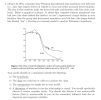 4. (30 pts) In 1975, economist Sam Peltzman hypothesized that mandatory seat belt laws (i.e., laws that require drivers of vehicles to wear seat belts) increased driver fatalities The idea is that seatbelts make the driver feel safer and therefore will drive more reck- lessly. Below is graphical evidence. It shows that countries without mandatory seat belt laws (the short-dashed line labeled "no law") experienced a larger decline in auto fatalities than the group that had passed mandatory seat belt...
4. (30 pts) In 1975, economist Sam Peltzman hypothesized that mandatory seat belt laws (i.e., laws...
 4. (30 pts) In 1975, economist Sam Peltzman hypothesized that mandatory seat belt laws (i.e., laws that require drivers of vehicles to wear seat belts) increased driver fatalities. The idea is that seatbelts make the driver feel safer and therefore will drive more reck- lessly. Below is graphical evidence. It shows that countries without mandatory seat belt laws (the short-dashed line labeled "no law") experienced a larger decline in auto fatalities than the group that had passed mandatory seat belt...
4. (30 pts) In 1975, economist Sam Peltzman hypothesized that mandatory seat belt laws (i.e., laws...
 4. (30 pts) In 1975, economist Sam Peltzman hypothesized that mandatory seat belt laws (i.e., laws that require drivers of vehicles to wear seat belts) increased driver fatalities. The idea is that seatbelts make the driver feel safer and therefore will drive more reck- lessly. Below is graphical evidence. It shows that countries without mandatory seat belt laws (the short-dashed line labeled "no law") experienced a larger decline in auto fatalities than the group that had passed mandatory seat belt...
 4. (30 pts) In 1975, economist Sam Peltzman hypothesized that mandatory seat belt laws (i.e., laws that require drivers of vehicles to wear seat belts) increased driver fatalities The idea is that seatbelts make the driver feel safer and therefore will drive more reck- lessly. Below is graphical evidence. It shows that countries without mandatory seat belt laws (the short-dashed line labeled "no law") experienced a larger decline in auto fatalities than the group that had passed mandatory seat belt...
 4. (30 pts) In 1975, economist Sam Peltzman hypothesized that mandatory seat belt laws (i.e., laws that require drivers of vehicles to wear seat belts) increased driver fatalities. The idea is that seatbelts make the driver feel safer and therefore will drive more reck- lessly. Below is graphical evidence. It shows that countries without mandatory seat belt laws (the short-dashed line labeled "no law") experienced a larger decline in auto fatalities than the group that had passed mandatory seat belt...
 4. (30 pts) In 1975, economist Sam Peltzman hypothesized that mandatory seat belt laws (i.e., laws that require drivers of vehicles to wear seat belts) increased driver fatalities. The idea is that seatbelts make the driver feel safer and therefore will drive more reck- lessly. Below is graphical evidence. It shows that countries without mandatory seat belt laws (the short-dashed line labeled "no law") experienced a larger decline in auto fatalities than the group that had passed mandatory seat belt...
Most questions answered within 3 hours.
-
Where is the error in this code sequence?
String s1 = "Hello";
String s2 = "ello";...
asked 11 months ago -
Financial data for Joel de Paris, Inc., for last year
follow:
Joel de Paris, Inc.
Balance...
asked 11 months ago -
Consider this reaction:
Al2(SO4)3 (aq)+ BaCl3
(aq) Al2Cl6 (aq)- +
3BaSO4(s) . What is the...
asked 11 months ago -
Suppose that Savneet is considering increasing her
recent random sample from 20 car rentals to 40...
asked 11 months ago -
Trucks arrive at an unloading terminal at an average rate of 120
per hour.
Trucks arrive...
asked 11 months ago -
Why are methanol and ethanol completely soluble in water while
octanol is not very little soluble....
asked 11 months ago -
A facilities manager at a university reads in a research report
that the mean amount of...
asked 11 months ago -
When the CuSO4 is rehydrated by adding water to the anhydrous
compound, is this an endothermic...
asked 11 months ago -
A ray of sunlight is passing from diamond into crown glass; the
angle of incidence is...
asked 11 months ago -
A block of mass 0.249 kg is placed on top of a light, vertical
spring of...
asked 11 months ago -
how do the kidneys compensate in the presences of acidosis
a) trigger hyperventilate
b) reserve acid...
asked 11 months ago -
Question 501 pts
The rental rate of capital to the firm increases. Which of the
following...
asked 11 months ago