1) Describe each range of motion and an example of an associated joint for each motion...
1) Describe each range of motion and an example of an associated joint for each motion (do not use the same example).
Homework Answers
Range of motion is the accessible measure of development of a joint, while adaptability is the capacity of delicate tissue structures, for example, muscle, ligament, and connective tissue, to lengthen through the accessible scope of joint movement. Regardless of whether it is experiencing helpful extending during postinjury recovery or during a normal adaptability program, connective tissue is the most significant physical focal point of scope of-movement works out. For great physiologic possibilities to exist, both scope of movement and scope of adaptability should be improved. The connective tissue engaged with the body's reparative procedure after injury or medical procedure regularly restrains typical joint movement. Consequently, understanding the biophysical elements of connective tissue is significant for deciding ideal approaches to build scope of movement on the grounds that histologic proof has demonstrated that fibrosis can happen inside 4 days of the beginning of fixed status. To successfully keep up and improve scope of movement and adaptability, information on both the related tissue structures and the different systems used to encourage extensibility of these structures is basic.
Types of Range of Motion
There are three essential sorts of activities explicit to scope of movement. Detached scope of movement is normally polished on a joint that is dormant. The physical advisor may utilize this activity on a customer who is incapacitated or unfit to activate a particular joint. This kind of activity can help keep firmness from happening. During this activity the patient doesn't play out any development, while the advisor extends the patient's delicate tissues.
Dynamic assistive scope of movement practices are increasingly dynamic, expected for the customer to perform development around the joint with some manual help from the physical specialist or from a tie or band. These activities can frequently feel agonizing, and the muscles can feel powerless. Expanding scope of movement with these activities ought to be a slow headway.
Dynamic scope of movement practices are exceptionally free, performed exclusively by the customer. The physical advisor's job might be essentially to give verbal signals.
|
Movements of the Joints (Table 1) |
||
|
Type of Joint |
Movement |
Example |
|
Pivot |
Uniaxial joint; permits rotational development |
1 Atlantoaxial joint (C1–C2 vertebrae verbalization); proximal radioulnar joint |
|
Hinge |
Uniaxial joint; permits flexion/expansion developments |
Knee; elbow; lower leg; interphalangeal joints of fingers and toes |
|
Condyloid |
Biaxial joint; permits flexion/expansion, snatching/adduction, and circumduction developments |
Metacarpophalangeal (knuckle) joints of fingers; radiocarpal joint of wrist; metatarsophalangeal joints for toes |
|
Saddle |
Biaxial joint; permits flexion/expansion, snatching/adduction, and circumduction developments |
First carpometacarpal joint of the thumb; sternoclavicular joint |
|
Plane |
Multiaxial joint; permits reversal and eversion of foot, or flexion, expansion, and horizontal flexion of the vertebral segment |
Intertarsal joints of foot; prevalent second rate articular procedure verbalizations between vertebrae |
|
Ball-and-socket |
Multiaxial joint; permits flexion/expansion, snatching/adduction, circumduction, and average/parallel turn developments |
Shoulder and hip joints |
Add Answer to:
1) Describe each range of motion and an example of an associated
joint for each motion...
Describe each range of motion and an example of an associated joint for each motion (do...
Describe each range of motion and an example of an associated joint for each motion (do not use the same example). Flexion/extension Abduction/adduction Circumduction Rotation
Note: No handwriting, all typed. Describe each range of motion and an example of an associated...
Note: No handwriting, all typed. Describe each range of motion and an example of an associated joint for each motion (do not use the same example). Flexion/extension Abduction/adduction Circumduction Rotation Identify three serologic tests that may be positive or elevated in rheumatic arthritis. What patient education should you provide? Describe in detail all the stages of the fracture healing process. Identify the problems that are indicated by each of the six P’s characteristic of an impending compartment syndrome. Provide two...
Use y own wo 1) Describe each range of motion and an example of an associated...
 Use y own wo 1) Describe each range of motion and an example of an associated joint for each motion (do not use the same example). a. Flexion/extension b. Abduction/adduction c. Circumduction d. Rotation 2) Identify three serologic tests that may be positive or elevated in rheumatic arthritis. What patient education should you provide? 3) Describe in detail all the stages of the fracture healing process. 4) Identify the problems that are indicated by each of the six P's characteristic...
What is the name of the joint motion? and the approximate range of motion in degrees for...
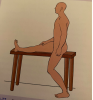 What is the name of the joint motion? and the
approximate range of motion in degrees for the right hip?
What is the name of the joint motion and the approximate range
of motion in degrees for the left knee?
-27
What is the name of the joint motion? and the
approximate range of motion in degrees for the right hip?
What is the name of the joint motion and the approximate range
of motion in degrees for the left knee?
-27
identify the muscles for each degree of freedom in leg and arm + range of motion...
identify the muscles for each degree of freedom in leg and arm + range of motion for each elementary joint . there are 7 DOF in arm and 7 DOF in leg also 7 range of motion in arm and 7 in leg
Describe the human resource challenges associated with international mergers, acquisitions, joint ventures, and offshoring.
Describe the human resource challenges associated with international mergers, acquisitions, joint ventures, and offshoring.
For problems 5-8, the joint is moving through its range of motion. As it does this,...
 For problems 5-8, the joint is moving through its range of motion. As it does this, the angle between the muscle and the long axis of the bone, theta, changes. Assume that the muscle force is a constant 500 N and the distance from axis of rotation to the muscle insertion, d, is 0.02 m. Find the torque for each angle theta. Refer to the figure below. (HINT: Calculate the torque using T = F * sin(angle) * d.) 5....
Let's use the data from Example 11.5 to estimate the difference in mean range of motion...
Let's use the data from Example 11.5 to estimate the difference in mean range of motion prior to treatment and the mean range of motion after ultrasound and stretch treatment for physical therapy patients. The data and the computed differences are shown in the accompanying table. Subject Range of Motion 1 2 3 4 5 6 7 Pre-treatment 31 53 45 57 50 43 32 Post-treatment 32 59 46 64 49 45 40 Difference −1 −6 −1 −7 1 −2...
please help with 1-4. list joints being used and motions occurring at each joint. and which...
 please help with 1-4. list joints being used and
motions occurring at each joint.
and which motions are occurring at eaeh foint. PROCEDURE 1 Identifying Joint Motions of Common Movements 3 Ans Joi Team up with a partner, and have your partner perform each of the following actions. Watch carefully as the actions are being performed, and list the joints that are in motion Ask your instructor if he or she wants you to use the technical name or the...
please help with 1-4. list joints being used and
motions occurring at each joint.
and which motions are occurring at eaeh foint. PROCEDURE 1 Identifying Joint Motions of Common Movements 3 Ans Joi Team up with a partner, and have your partner perform each of the following actions. Watch carefully as the actions are being performed, and list the joints that are in motion Ask your instructor if he or she wants you to use the technical name or the...
1. Be able to classify types of joints. 2. Most of the joints of the appendicular...
 1. Be able to classify types of joints. 2. Most of the joints of the appendicular skeleton are what type of joint? 3. What is the function of Hyaluronic acid? Bursa? 4. Define and give an example of: Plane joint, Ball and socket joint, saddle joint, and hinge joint. Know all the different types of movement. We will do an exercise in class to help you learn these actions. 5. What factors influence the range of motion of a joint?...
 Use y own wo 1) Describe each range of motion and an example of an associated joint for each motion (do not use the same example). a. Flexion/extension b. Abduction/adduction c. Circumduction d. Rotation 2) Identify three serologic tests that may be positive or elevated in rheumatic arthritis. What patient education should you provide? 3) Describe in detail all the stages of the fracture healing process. 4) Identify the problems that are indicated by each of the six P's characteristic...
 What is the name of the joint motion? and the
approximate range of motion in degrees for the right hip?
What is the name of the joint motion and the approximate range
of motion in degrees for the left knee?
-27
What is the name of the joint motion? and the
approximate range of motion in degrees for the right hip?
What is the name of the joint motion and the approximate range
of motion in degrees for the left knee?
-27
 For problems 5-8, the joint is moving through its range of motion. As it does this, the angle between the muscle and the long axis of the bone, theta, changes. Assume that the muscle force is a constant 500 N and the distance from axis of rotation to the muscle insertion, d, is 0.02 m. Find the torque for each angle theta. Refer to the figure below. (HINT: Calculate the torque using T = F * sin(angle) * d.) 5....
 please help with 1-4. list joints being used and
motions occurring at each joint.
and which motions are occurring at eaeh foint. PROCEDURE 1 Identifying Joint Motions of Common Movements 3 Ans Joi Team up with a partner, and have your partner perform each of the following actions. Watch carefully as the actions are being performed, and list the joints that are in motion Ask your instructor if he or she wants you to use the technical name or the...
please help with 1-4. list joints being used and
motions occurring at each joint.
and which motions are occurring at eaeh foint. PROCEDURE 1 Identifying Joint Motions of Common Movements 3 Ans Joi Team up with a partner, and have your partner perform each of the following actions. Watch carefully as the actions are being performed, and list the joints that are in motion Ask your instructor if he or she wants you to use the technical name or the...
 1. Be able to classify types of joints. 2. Most of the joints of the appendicular skeleton are what type of joint? 3. What is the function of Hyaluronic acid? Bursa? 4. Define and give an example of: Plane joint, Ball and socket joint, saddle joint, and hinge joint. Know all the different types of movement. We will do an exercise in class to help you learn these actions. 5. What factors influence the range of motion of a joint?...
Most questions answered within 3 hours.
-
Where is the error in this code sequence?
String s1 = "Hello";
String s2 = "ello";...
asked 10 months ago -
Financial data for Joel de Paris, Inc., for last year
follow:
Joel de Paris, Inc.
Balance...
asked 10 months ago -
Consider this reaction:
Al2(SO4)3 (aq)+ BaCl3
(aq) Al2Cl6 (aq)- +
3BaSO4(s) . What is the...
asked 10 months ago -
Suppose that Savneet is considering increasing her
recent random sample from 20 car rentals to 40...
asked 10 months ago -
Trucks arrive at an unloading terminal at an average rate of 120
per hour.
Trucks arrive...
asked 10 months ago -
Why are methanol and ethanol completely soluble in water while
octanol is not very little soluble....
asked 10 months ago -
A facilities manager at a university reads in a research report
that the mean amount of...
asked 10 months ago -
When the CuSO4 is rehydrated by adding water to the anhydrous
compound, is this an endothermic...
asked 10 months ago -
A ray of sunlight is passing from diamond into crown glass; the
angle of incidence is...
asked 10 months ago -
A block of mass 0.249 kg is placed on top of a light, vertical
spring of...
asked 10 months ago -
how do the kidneys compensate in the presences of acidosis
a) trigger hyperventilate
b) reserve acid...
asked 10 months ago -
Question 501 pts
The rental rate of capital to the firm increases. Which of the
following...
asked 10 months ago