
Homework Answers
Add Answer to:
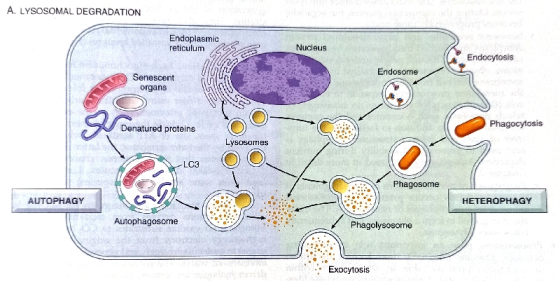
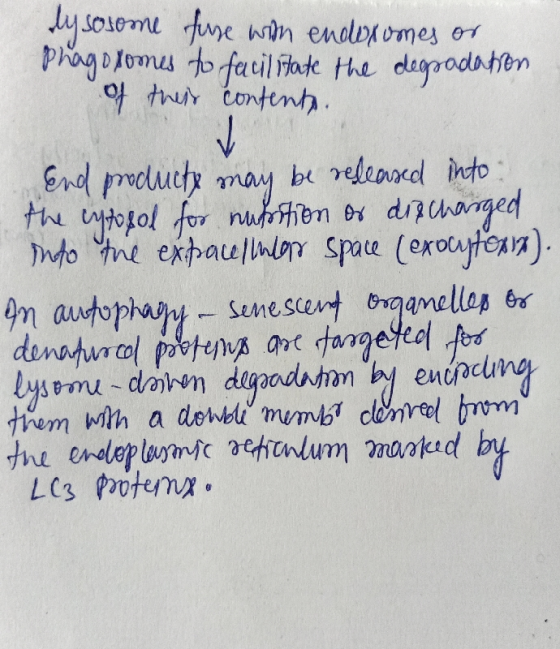
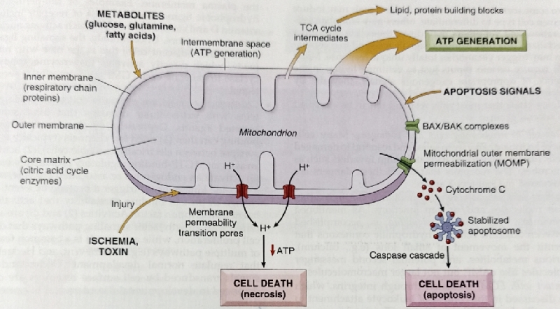
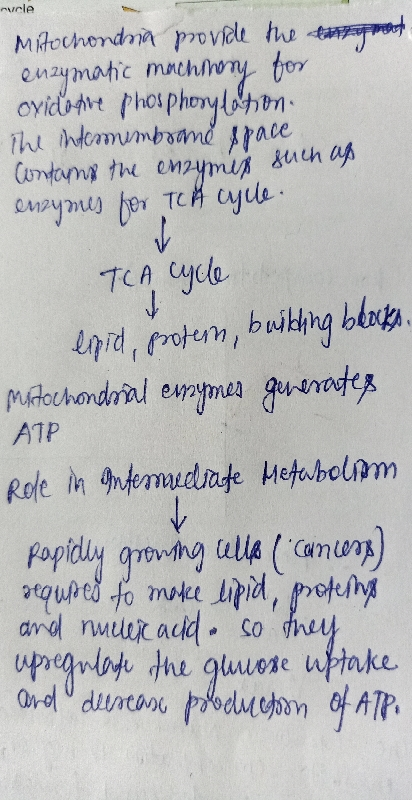
• Trace the path of a lysosomal enzyme from its point of origin (translation) to its...
A particle is revolving in a circular path of radius 7.3 m centered at the origin
 9. A particle is revolving in a circular path of radius 7.3 m centered at the origin. Its speed increased uniformly from 93 m/s to 173 m/s in 2.5 seconds. Express its final net acceleration in terms of polar unit vectors. 10. A particle is revolving in a circular path of radius 8.2 m centered at the origin with a uniform acceleration. Its speed increases by 14.5 m/s every 3.2 seconds. By the time it passes point P on the circle...
11. Deoxyribose 12. 13. 14. 15. 16. Nucleus Point mutation Deletion mutation Exons Translation Nitrogenous bases...
 11. Deoxyribose 12. 13. 14. 15. 16. Nucleus Point mutation Deletion mutation Exons Translation Nitrogenous bases H bonded mRNA A. Molecule that carries instructions for making a protein from a gene in the nucleus to a ribosome in the cytoplasm B. Enzyme that unwinds DNA double helix C. Sugar found in DNA nucleotide D. Process of making a protein E. Substitution of one nucleotide base pair for another F. Rungs (steps) of DNA "ladder" G. Transcription occurs in this part...
A Cycloidal Path A particle with mass m and positive charge q starts from rest at the origin as s...
 Please help, I am
struggling!
A Cycloidal Path A particle with mass m and positive charge q starts from rest at the origin as shown in the figure below. There is a uniform electric field = Eo? and a uniform magnetic field B = BoZ The path of the charged sketched below is a cycloid whose radius of curvature at the top points is twice the y-coordinate at that level. This path is exactly the same as the path of...
Please help, I am
struggling!
A Cycloidal Path A particle with mass m and positive charge q starts from rest at the origin as shown in the figure below. There is a uniform electric field = Eo? and a uniform magnetic field B = BoZ The path of the charged sketched below is a cycloid whose radius of curvature at the top points is twice the y-coordinate at that level. This path is exactly the same as the path of...
E. Cerebrospinal Fluid You should be able to trace the path of the cerebrospinal fluid from...
 E. Cerebrospinal Fluid You should be able to trace the path of the cerebrospinal fluid from its point of origin to where it is reabsorbed into the blood. If you can complete the following paragraph without referring to the text, you know the sequence fairly well. If you can state the sequence from memory, better yet. Ventricles Structures lateral-1 arachnoid granulations-10 third-2 cerebellum-11 fourth-3 cerebrum-12 Passageways choroid plexus—13 acoustic meatus cisterna cerebellomedullaris-14 cerebral aqueduct-5 cisterna superior-15 foramen magnum-6 dura mater-16...
Find the work done by a monatomic ideal gas as it expands from point A to point C along the path shown in the figure
 Find the work done by a monatomic ideal gas as it expands from
point A to point C along the path shown in the figure.If the temperature of the gas is 200 K at point A, what is its
temperature at point C? How much heat has been added to or removed from the gas during
this process?
Find the work done by a monatomic ideal gas as it expands from
point A to point C along the path shown in the figure.If the temperature of the gas is 200 K at point A, what is its
temperature at point C? How much heat has been added to or removed from the gas during
this process?
The figure shows the path taken by a drunk skunk over level ground, from initial point...
 The figure shows the path taken
by a drunk skunk over level ground, from initial point i to final
point f. The angles are θ1 = 31.0°, θ2 = 52.0°, and θ3 = 77.0°, and
the distances are d1 = 5.70 m, d2 = 8.80 m, and d3 = 14.0 m. What
are the (a) magnitude and (b) angle of the skunk's displacement
from i to f? Give the angle as a positive (counterclockwise) or
negative (clockwise) angle of magnitude...
The figure shows the path taken
by a drunk skunk over level ground, from initial point i to final
point f. The angles are θ1 = 31.0°, θ2 = 52.0°, and θ3 = 77.0°, and
the distances are d1 = 5.70 m, d2 = 8.80 m, and d3 = 14.0 m. What
are the (a) magnitude and (b) angle of the skunk's displacement
from i to f? Give the angle as a positive (counterclockwise) or
negative (clockwise) angle of magnitude...
12. Nucleus 13. Point mutation 14. Deletion mutation 15. Exons 16. Translation 17. Nitrogenous bases H...
 12. Nucleus 13. Point mutation 14. Deletion mutation 15. Exons 16. Translation 17. Nitrogenous bases H bonded 18. mRNA B. Enzyme that unwinds DNA double helix C. Sugar found in DNA nucleotide D. Process of making a protein E. Substitution of one nucleotide base pair for another F. Rungs (steps) of DNA "ladder" G. Transcription occurs in this part of the cell H. Enzyme that synthesizes DNA by connecting bases tha are complementary to the original template stra 1. Removing...
(1point) Let r = xi + yj + zk and a = 4i +4j + 2k. (a) Find VG a). (b) Let C be a path from the origin to the point with position vector ro - ai+bj +ck. Find Jc VG a) df (c) If I I roll = 10, what is...
 (1point) Let r = xi + yj + zk and a = 4i +4j + 2k. (a) Find VG a). (b) Let C be a path from the origin to the point with position vector ro - ai+bj +ck. Find Jc VG a) df (c) If I I roll = 10, what is the maximum possible value of IV(F. , dF2 (Be sure you can explain why your answer is correct.) maximum value of Jc VG.ã di
(1point) Let r...
(1point) Let r = xi + yj + zk and a = 4i +4j + 2k. (a) Find VG a). (b) Let C be a path from the origin to the point with position vector ro - ai+bj +ck. Find Jc VG a) df (c) If I I roll = 10, what is the maximum possible value of IV(F. , dF2 (Be sure you can explain why your answer is correct.) maximum value of Jc VG.ã di
(1point) Let r...
allll pleas Question 14 (1 point) Eukaryotes modify a primary RNA transcript to generate a final...
 allll pleas
Question 14 (1 point) Eukaryotes modify a primary RNA transcript to generate a final mRNA product. Which of the following modifications is something that occurs to eukaryotic RNA (which one is correct): OA) removing exons from the transcript B) adding introns into the transcript C) adding a poly(A) tail to the transcript by poly(A) polymerase OD) adding start codons to the transcript after its synthesis E) removing a 5' cap from the transcript Question 18 (1 point) Origins,...
allll pleas
Question 14 (1 point) Eukaryotes modify a primary RNA transcript to generate a final mRNA product. Which of the following modifications is something that occurs to eukaryotic RNA (which one is correct): OA) removing exons from the transcript B) adding introns into the transcript C) adding a poly(A) tail to the transcript by poly(A) polymerase OD) adding start codons to the transcript after its synthesis E) removing a 5' cap from the transcript Question 18 (1 point) Origins,...
(1 point) A stone is thrown from a rooftop at time t 0 seconds. Its position at time t (the components are measured in meters) is given by r()-бі-50+ (24.5-49:2) k. The origin is at the base of...
 (1 point) A stone is thrown from a rooftop at time t 0 seconds. Its position at time t (the components are measured in meters) is given by r()-бі-50+ (24.5-49:2) k. The origin is at the base of the bulding, which is standing on flat ground. Distance is measured in meters. The vector i points east,j points north, and k points up. (a) How high is the rooftop? meters. (b) When does the stone hit the ground? seconds (c) Where...
 11. Deoxyribose 12. 13. 14. 15. 16. Nucleus Point mutation Deletion mutation Exons Translation Nitrogenous bases H bonded mRNA A. Molecule that carries instructions for making a protein from a gene in the nucleus to a ribosome in the cytoplasm B. Enzyme that unwinds DNA double helix C. Sugar found in DNA nucleotide D. Process of making a protein E. Substitution of one nucleotide base pair for another F. Rungs (steps) of DNA "ladder" G. Transcription occurs in this part...
 Please help, I am
struggling!
A Cycloidal Path A particle with mass m and positive charge q starts from rest at the origin as shown in the figure below. There is a uniform electric field = Eo? and a uniform magnetic field B = BoZ The path of the charged sketched below is a cycloid whose radius of curvature at the top points is twice the y-coordinate at that level. This path is exactly the same as the path of...
Please help, I am
struggling!
A Cycloidal Path A particle with mass m and positive charge q starts from rest at the origin as shown in the figure below. There is a uniform electric field = Eo? and a uniform magnetic field B = BoZ The path of the charged sketched below is a cycloid whose radius of curvature at the top points is twice the y-coordinate at that level. This path is exactly the same as the path of...
 E. Cerebrospinal Fluid You should be able to trace the path of the cerebrospinal fluid from its point of origin to where it is reabsorbed into the blood. If you can complete the following paragraph without referring to the text, you know the sequence fairly well. If you can state the sequence from memory, better yet. Ventricles Structures lateral-1 arachnoid granulations-10 third-2 cerebellum-11 fourth-3 cerebrum-12 Passageways choroid plexus—13 acoustic meatus cisterna cerebellomedullaris-14 cerebral aqueduct-5 cisterna superior-15 foramen magnum-6 dura mater-16...
 Find the work done by a monatomic ideal gas as it expands from
point A to point C along the path shown in the figure.If the temperature of the gas is 200 K at point A, what is its
temperature at point C? How much heat has been added to or removed from the gas during
this process?
Find the work done by a monatomic ideal gas as it expands from
point A to point C along the path shown in the figure.If the temperature of the gas is 200 K at point A, what is its
temperature at point C? How much heat has been added to or removed from the gas during
this process?
 The figure shows the path taken
by a drunk skunk over level ground, from initial point i to final
point f. The angles are θ1 = 31.0°, θ2 = 52.0°, and θ3 = 77.0°, and
the distances are d1 = 5.70 m, d2 = 8.80 m, and d3 = 14.0 m. What
are the (a) magnitude and (b) angle of the skunk's displacement
from i to f? Give the angle as a positive (counterclockwise) or
negative (clockwise) angle of magnitude...
The figure shows the path taken
by a drunk skunk over level ground, from initial point i to final
point f. The angles are θ1 = 31.0°, θ2 = 52.0°, and θ3 = 77.0°, and
the distances are d1 = 5.70 m, d2 = 8.80 m, and d3 = 14.0 m. What
are the (a) magnitude and (b) angle of the skunk's displacement
from i to f? Give the angle as a positive (counterclockwise) or
negative (clockwise) angle of magnitude...
 12. Nucleus 13. Point mutation 14. Deletion mutation 15. Exons 16. Translation 17. Nitrogenous bases H bonded 18. mRNA B. Enzyme that unwinds DNA double helix C. Sugar found in DNA nucleotide D. Process of making a protein E. Substitution of one nucleotide base pair for another F. Rungs (steps) of DNA "ladder" G. Transcription occurs in this part of the cell H. Enzyme that synthesizes DNA by connecting bases tha are complementary to the original template stra 1. Removing...
 (1point) Let r = xi + yj + zk and a = 4i +4j + 2k. (a) Find VG a). (b) Let C be a path from the origin to the point with position vector ro - ai+bj +ck. Find Jc VG a) df (c) If I I roll = 10, what is the maximum possible value of IV(F. , dF2 (Be sure you can explain why your answer is correct.) maximum value of Jc VG.ã di
(1point) Let r...
(1point) Let r = xi + yj + zk and a = 4i +4j + 2k. (a) Find VG a). (b) Let C be a path from the origin to the point with position vector ro - ai+bj +ck. Find Jc VG a) df (c) If I I roll = 10, what is the maximum possible value of IV(F. , dF2 (Be sure you can explain why your answer is correct.) maximum value of Jc VG.ã di
(1point) Let r...
 allll pleas
Question 14 (1 point) Eukaryotes modify a primary RNA transcript to generate a final mRNA product. Which of the following modifications is something that occurs to eukaryotic RNA (which one is correct): OA) removing exons from the transcript B) adding introns into the transcript C) adding a poly(A) tail to the transcript by poly(A) polymerase OD) adding start codons to the transcript after its synthesis E) removing a 5' cap from the transcript Question 18 (1 point) Origins,...
allll pleas
Question 14 (1 point) Eukaryotes modify a primary RNA transcript to generate a final mRNA product. Which of the following modifications is something that occurs to eukaryotic RNA (which one is correct): OA) removing exons from the transcript B) adding introns into the transcript C) adding a poly(A) tail to the transcript by poly(A) polymerase OD) adding start codons to the transcript after its synthesis E) removing a 5' cap from the transcript Question 18 (1 point) Origins,...
 (1 point) A stone is thrown from a rooftop at time t 0 seconds. Its position at time t (the components are measured in meters) is given by r()-бі-50+ (24.5-49:2) k. The origin is at the base of the bulding, which is standing on flat ground. Distance is measured in meters. The vector i points east,j points north, and k points up. (a) How high is the rooftop? meters. (b) When does the stone hit the ground? seconds (c) Where...
Most questions answered within 3 hours.
-
Where is the error in this code sequence?
String s1 = "Hello";
String s2 = "ello";...
asked 10 months ago -
Financial data for Joel de Paris, Inc., for last year
follow:
Joel de Paris, Inc.
Balance...
asked 10 months ago -
Consider this reaction:
Al2(SO4)3 (aq)+ BaCl3
(aq) Al2Cl6 (aq)- +
3BaSO4(s) . What is the...
asked 10 months ago -
Suppose that Savneet is considering increasing her
recent random sample from 20 car rentals to 40...
asked 10 months ago -
Trucks arrive at an unloading terminal at an average rate of 120
per hour.
Trucks arrive...
asked 10 months ago -
Why are methanol and ethanol completely soluble in water while
octanol is not very little soluble....
asked 10 months ago -
A facilities manager at a university reads in a research report
that the mean amount of...
asked 10 months ago -
When the CuSO4 is rehydrated by adding water to the anhydrous
compound, is this an endothermic...
asked 10 months ago -
A ray of sunlight is passing from diamond into crown glass; the
angle of incidence is...
asked 10 months ago -
A block of mass 0.249 kg is placed on top of a light, vertical
spring of...
asked 10 months ago -
how do the kidneys compensate in the presences of acidosis
a) trigger hyperventilate
b) reserve acid...
asked 10 months ago -
Question 501 pts
The rental rate of capital to the firm increases. Which of the
following...
asked 10 months ago