
Homework Answers

Add Answer to:
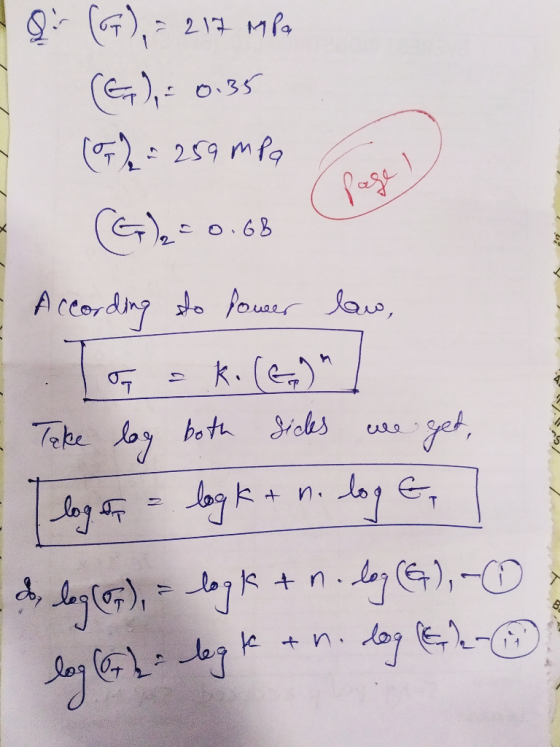
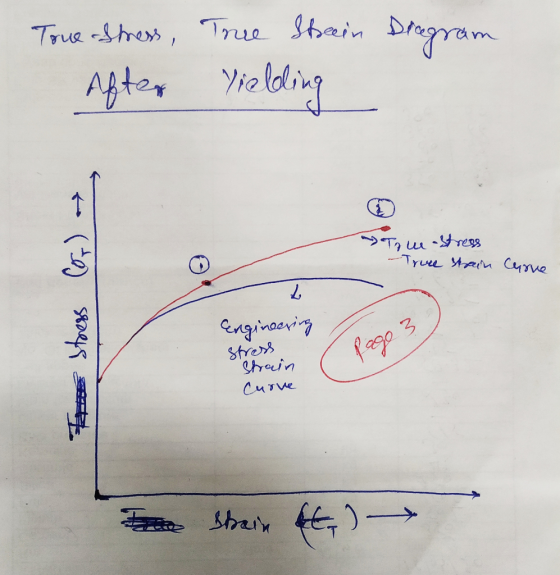
In a tensile test, two pairs of values of stress and strain were measured for the...
Assignment 01 TOT Mechanical Properties of Materials 1. A tensile test specimen has a gage length...
 Assignment 01 TOT Mechanical Properties of Materials 1. A tensile test specimen has a gage length = 50 mm and its cross-sectional area = 100 mm. The specimen yields at 48,000 N, and the corresponding gage length - 50.23 mm. This is the 0.2 ent yield point. The maximum load of 87,000 N is reached at a gage length 64.2 mm. Determine (a) yield strength, (b) modulus of elasticity, and (c) tensile strength. (d) If fracture occurs at a gage...
A tensile test was conducted on a specimen that had an original diameter of 0.5 in. It fractured with an applied load of 71100lb. Determine the true stress and true strain at fracture if measured diam...
A tensile test was conducted on a specimen that had an original diameter of 0.5 in. It fractured with an applied load of 71100lb. Determine the true stress and true strain at fracture if measured diameter of the fracture part was 0.3in. I believe for fracture, true stress and strain are: True strain = ln(original area/final area) True stress = applied load/final area However, Im not quite sure
Figure (a) shows the stress strain relations for two different materials, A and B. Between A...
 Figure (a) shows the stress strain relations for two different materials, A and B. Between A and B, which one has higher strength? stress B strain Figure (a) O A. Material A OB. Material B Figure (a) shows the stress strain relations for two different materials, A and B. Figure (b) is a schematic of the catastrophic failure of a Liberty ship. Between A and B. which material could have been used in construction of the ship and caused this...
5. EVALUATION I. Create a stress-strain diagram for the measured values in table 1 and identify...
 5. EVALUATION I. Create a stress-strain diagram for the measured values in table 1 and identify the mechanical properties of the material. (4 marks) II. Identify the following and label them in the graph. (12 marks) • Young's modulus Yield strength Elongation Ultimate tensile strength THEORETICAL BACKGROUND Equations: Cross-sectional Area (A) Modulus of Elasticity (E) Tensile Strength (ST) Percent Elongation (%EL) d? E = Sy Ey Sr Pu А %EL Extension at fracture Gauge Length Where: A: Cross- Sectional Area...
It is desired to evaluate the tensile properties of an aluminum alloy. A tensile test is...
It is desired to evaluate the tensile properties of an aluminum alloy. A tensile test is performed using a standard cylindrical tensile specimen with a diameter of 12.8 mm and a gauge length of 50.800 mm. The gage length and final diameter of the sample are measured after the sample is removed from the testing machine. The gage length and the diameter of the necked region after the specimen was removed from the testing machine are 60 mm and 9...
I have a question during my Tensile Test of Sturctural Steel. Ive collected all the data, can you calculate the Elastic...
 I have a question during my Tensile Test of Sturctural
Steel.
Ive collected all the data, can you calculate the Elastic
Modulus and referring to the stress strain curve of your samples ,
discuss and compare the results, specify the similarities and
differences if there is any and provide possible reasons.
Thanks
Date of Lab Mark (for tutor only) 1. General information of the sample: Web sample or flange sample? web Specimen dimension (Before Testing) Width, mm Gauge length, mm...
I have a question during my Tensile Test of Sturctural
Steel.
Ive collected all the data, can you calculate the Elastic
Modulus and referring to the stress strain curve of your samples ,
discuss and compare the results, specify the similarities and
differences if there is any and provide possible reasons.
Thanks
Date of Lab Mark (for tutor only) 1. General information of the sample: Web sample or flange sample? web Specimen dimension (Before Testing) Width, mm Gauge length, mm...
PS: Answer only four questions! 1. (a) Define stress and strain obtained from tension test. Using...
 PS: Answer only four questions! 1. (a) Define stress and strain obtained from tension test. Using the stress (0)- strain (8) curve for a metal given in Figure 1 below, determine the following: (i) Yield strength, tensile strength and fracture elongation. Modulus of elasticity. (b) In normal motion, the load exerted on the hip joint in human body is 2.5 times body weight. Calculate the corresponding stress in MPa on an hip joint with a cross-sectional area of 5.7 cm’...
5. The following data were obtained during the true-stress-true-strain test of a nickel specimen: Diameter, in...
 5. The following data were obtained during the true-stress-true-strain test of a nickel specimen: Diameter, in Load, Diameter, in 3,440 3,580 3,670 3,710 3,720 0.252 0.250 0.245 0.240 0.235 0.230 3.570 3,500 3.350 3,150 2,950 2.800 0.201 0.200 0.190 0.180 0.170 0.149 (a) Plot the true-stess-true-strain curve. (b) For the data beyond the maximum load correct for necking by means of Bridgman's correction (c) Determine the following: (1) true stress at maximum load: (2) true fracture strain: (3) true uniform...
use matlab to plot 2-8 The stress-strain data from a tensile test on a cast-iron specimen are Engineering stress, kp...
 use matlab to plot
2-8 The stress-strain data from a tensile test on a cast-iron specimen are Engineering stress, kpsi 5 10 16 19 54 26 32 40 46 49 Engineering strain. | 103in/in 0.20 0.44 0.80 1.0 1.5 5.0 2,0 2,8 3.4 4.0 Plot the stress-strain locus and find the 0.1 percent offset yield strength, and the tangent modulus of elasticity at zero stress and at 20 kpsi
2-8 The stress-strain data from a tensile test on a cast-iron...
use matlab to plot
2-8 The stress-strain data from a tensile test on a cast-iron specimen are Engineering stress, kpsi 5 10 16 19 54 26 32 40 46 49 Engineering strain. | 103in/in 0.20 0.44 0.80 1.0 1.5 5.0 2,0 2,8 3.4 4.0 Plot the stress-strain locus and find the 0.1 percent offset yield strength, and the tangent modulus of elasticity at zero stress and at 20 kpsi
2-8 The stress-strain data from a tensile test on a cast-iron...
Question 1 SAE 1030 has a 923.894 MPa flow curve strength coefficient and 0.326 strain-hardening exponent....
 Question 1 SAE 1030 has a 923.894 MPa flow curve strength coefficient and 0.326 strain-hardening exponent. A tensile test specimen with 106.516 mm gage length is stretched to 449.297 mm. The flow stress when stretched is __ MPa.
 Assignment 01 TOT Mechanical Properties of Materials 1. A tensile test specimen has a gage length = 50 mm and its cross-sectional area = 100 mm. The specimen yields at 48,000 N, and the corresponding gage length - 50.23 mm. This is the 0.2 ent yield point. The maximum load of 87,000 N is reached at a gage length 64.2 mm. Determine (a) yield strength, (b) modulus of elasticity, and (c) tensile strength. (d) If fracture occurs at a gage...
 Figure (a) shows the stress strain relations for two different materials, A and B. Between A and B, which one has higher strength? stress B strain Figure (a) O A. Material A OB. Material B Figure (a) shows the stress strain relations for two different materials, A and B. Figure (b) is a schematic of the catastrophic failure of a Liberty ship. Between A and B. which material could have been used in construction of the ship and caused this...
 5. EVALUATION I. Create a stress-strain diagram for the measured values in table 1 and identify the mechanical properties of the material. (4 marks) II. Identify the following and label them in the graph. (12 marks) • Young's modulus Yield strength Elongation Ultimate tensile strength THEORETICAL BACKGROUND Equations: Cross-sectional Area (A) Modulus of Elasticity (E) Tensile Strength (ST) Percent Elongation (%EL) d? E = Sy Ey Sr Pu А %EL Extension at fracture Gauge Length Where: A: Cross- Sectional Area...
 I have a question during my Tensile Test of Sturctural
Steel.
Ive collected all the data, can you calculate the Elastic
Modulus and referring to the stress strain curve of your samples ,
discuss and compare the results, specify the similarities and
differences if there is any and provide possible reasons.
Thanks
Date of Lab Mark (for tutor only) 1. General information of the sample: Web sample or flange sample? web Specimen dimension (Before Testing) Width, mm Gauge length, mm...
I have a question during my Tensile Test of Sturctural
Steel.
Ive collected all the data, can you calculate the Elastic
Modulus and referring to the stress strain curve of your samples ,
discuss and compare the results, specify the similarities and
differences if there is any and provide possible reasons.
Thanks
Date of Lab Mark (for tutor only) 1. General information of the sample: Web sample or flange sample? web Specimen dimension (Before Testing) Width, mm Gauge length, mm...
 PS: Answer only four questions! 1. (a) Define stress and strain obtained from tension test. Using the stress (0)- strain (8) curve for a metal given in Figure 1 below, determine the following: (i) Yield strength, tensile strength and fracture elongation. Modulus of elasticity. (b) In normal motion, the load exerted on the hip joint in human body is 2.5 times body weight. Calculate the corresponding stress in MPa on an hip joint with a cross-sectional area of 5.7 cm’...
 5. The following data were obtained during the true-stress-true-strain test of a nickel specimen: Diameter, in Load, Diameter, in 3,440 3,580 3,670 3,710 3,720 0.252 0.250 0.245 0.240 0.235 0.230 3.570 3,500 3.350 3,150 2,950 2.800 0.201 0.200 0.190 0.180 0.170 0.149 (a) Plot the true-stess-true-strain curve. (b) For the data beyond the maximum load correct for necking by means of Bridgman's correction (c) Determine the following: (1) true stress at maximum load: (2) true fracture strain: (3) true uniform...
 use matlab to plot
2-8 The stress-strain data from a tensile test on a cast-iron specimen are Engineering stress, kpsi 5 10 16 19 54 26 32 40 46 49 Engineering strain. | 103in/in 0.20 0.44 0.80 1.0 1.5 5.0 2,0 2,8 3.4 4.0 Plot the stress-strain locus and find the 0.1 percent offset yield strength, and the tangent modulus of elasticity at zero stress and at 20 kpsi
2-8 The stress-strain data from a tensile test on a cast-iron...
use matlab to plot
2-8 The stress-strain data from a tensile test on a cast-iron specimen are Engineering stress, kpsi 5 10 16 19 54 26 32 40 46 49 Engineering strain. | 103in/in 0.20 0.44 0.80 1.0 1.5 5.0 2,0 2,8 3.4 4.0 Plot the stress-strain locus and find the 0.1 percent offset yield strength, and the tangent modulus of elasticity at zero stress and at 20 kpsi
2-8 The stress-strain data from a tensile test on a cast-iron...
 Question 1 SAE 1030 has a 923.894 MPa flow curve strength coefficient and 0.326 strain-hardening exponent. A tensile test specimen with 106.516 mm gage length is stretched to 449.297 mm. The flow stress when stretched is __ MPa.
Most questions answered within 3 hours.
-
Where is the error in this code sequence?
String s1 = "Hello";
String s2 = "ello";...
asked 11 months ago -
Financial data for Joel de Paris, Inc., for last year
follow:
Joel de Paris, Inc.
Balance...
asked 11 months ago -
Consider this reaction:
Al2(SO4)3 (aq)+ BaCl3
(aq) Al2Cl6 (aq)- +
3BaSO4(s) . What is the...
asked 11 months ago -
Suppose that Savneet is considering increasing her
recent random sample from 20 car rentals to 40...
asked 11 months ago -
Trucks arrive at an unloading terminal at an average rate of 120
per hour.
Trucks arrive...
asked 11 months ago -
Why are methanol and ethanol completely soluble in water while
octanol is not very little soluble....
asked 11 months ago -
A facilities manager at a university reads in a research report
that the mean amount of...
asked 11 months ago -
When the CuSO4 is rehydrated by adding water to the anhydrous
compound, is this an endothermic...
asked 11 months ago -
A ray of sunlight is passing from diamond into crown glass; the
angle of incidence is...
asked 11 months ago -
A block of mass 0.249 kg is placed on top of a light, vertical
spring of...
asked 11 months ago -
how do the kidneys compensate in the presences of acidosis
a) trigger hyperventilate
b) reserve acid...
asked 11 months ago -
Question 501 pts
The rental rate of capital to the firm increases. Which of the
following...
asked 11 months ago