
Homework Answers
Add Answer to:
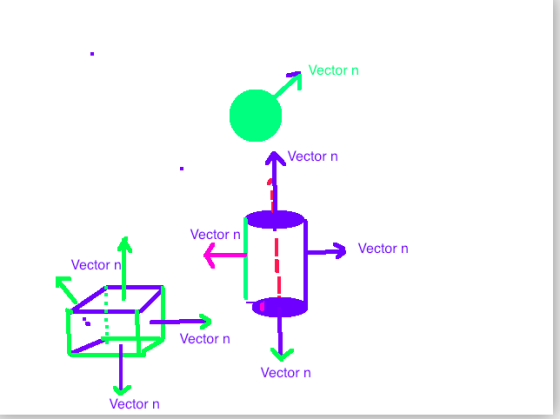
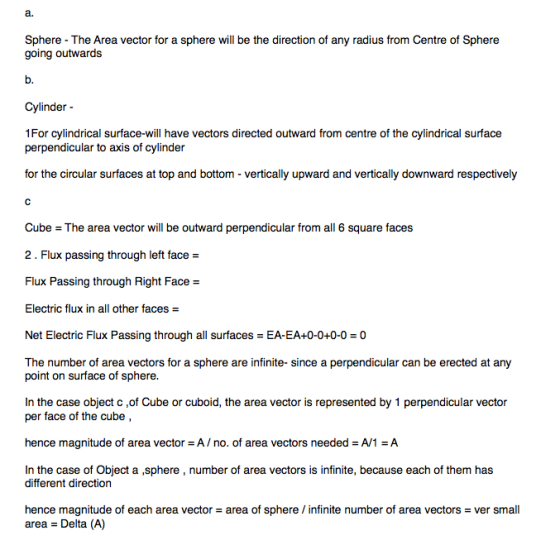
F - Working with Surfaces 1) Three common sur hree common surfaces are shown in Fig...
Two hemispherical surfaces, 1 and 2, of respective radii r1 and r2, are centered at a...
Two hemispherical surfaces, 1 and 2, of respective radii r1 and r2, are centered at a point charge and are facing each other so that their edges define an annular ring (surface 3), as shown. The field at position r⃗ due to the point charge is: E⃗ (r⃗ )=Cr2r^ where C is a constant proportional to the charge, r=∣∣r⃗ ∣∣, and r^=r⃗ /r is the unit vector in the radial direction. a- What is the electric flux Φ3 through the annular...
and : No charur inside but there are charges outside the closed (TLC) Distinguishing between and...
 and : No charur inside but there are charges outside the closed (TLC) Distinguishing between and : No producing an electric field. A cubie Gaussian surface with a side has two horizontal faces and is in a uniform electrie field of 30 N/C which is directed vertically upward. (1) Find the net electric flux through the cube. (Hint: If there are equal numbers of field lines going into and out of a CLOSED surface, the net flux through the surface...
8. At every point on the surface of a sphere of radius 0.4 m the electric...
 8. At every point on the surface of a sphere of radius 0.4 m the electric field is radially outward, with a magnitude of 20N/C. What is the flux through the spherical surface? 9. The flux through an imaginary spherical sur- face is 12 Nm2/C (a) What can you conclude about the charge within this surface? (b) What can you conclude about the charge within the spherical surface if, in addition, the electric field is radial, with the same magnitude...
Learning Goal: To understand the definition of electric flux, and how to calculate it. Flux is...
Learning Goal: To understand the definition of electric flux, and how to calculate it. Flux is the amount of a vector field that "flows" through a surface. We now discuss the electric flux through a surface (a quantity needed in Gauss's law): ΦE=∫E⃗ ⋅dA⃗ , where ΦE is the flux through a surface with differential area element dA⃗ , and E⃗ is the electric field in which the surface lies. There are several important points to consider in this expression:...
1) Consider Fig. 12, which shows an infinite line of charge which contains a uniform charge...
 1) Consider Fig. 12, which shows an infinite line of charge which contains a uniform charge of a coulombs in every meter. You will now use Gauss' Law to derive an equation for the electric field around a line of charge. Fig. 12 Describe the electric field in the region surrounding the charge. (Draw a few sample lines) Is this electric field symmetrical (spherically, cylindrically... Using this information, choose a notional surface enclosing one meter of the line of charge...
2. The image shown is taken from the text book why n danger a) The electric...
 2. The image shown is taken from the text book why n danger a) The electric feld could have broken down and her hair air surrounding her and she would have b) b) The electric field was about to cause a breakdown in the suffocated in the surrounding air and an upward streamer lightning bolt from a pessing cloud c) The electric field surrounding her would soon attract a downward d) The electric field was a would have resulted 8....
Part A.) The electric flux through a spherical surface is 4.0\times 10^4~\text{N}\cdot\text{m}^2/\text{C}4.0×10 4 N⋅m 2...
 Part A.) The electric flux through a spherical surface is
4.0\times 10^4~\text{N}\cdot\text{m}^2/\text{C}4.0×10 4 N⋅m 2
/C. What is the net charge enclosed by the surface?
Part B.) The electric field 10.0 cm from the surface of a copper
ball of radius 5.0 cm is directed toward the ball’s center and has
magnitude 9.0*10^2N/C. How much charge is on the surface of the
ball?
Select the correct answer
a.) 2.2*10^{-10} . b.)-1.25*10^{-10} . c.)-1.0* 10^{-9} .
d.)-4.5* 10^{-10) ....
Part A.) The electric flux through a spherical surface is
4.0\times 10^4~\text{N}\cdot\text{m}^2/\text{C}4.0×10 4 N⋅m 2
/C. What is the net charge enclosed by the surface?
Part B.) The electric field 10.0 cm from the surface of a copper
ball of radius 5.0 cm is directed toward the ball’s center and has
magnitude 9.0*10^2N/C. How much charge is on the surface of the
ball?
Select the correct answer
a.) 2.2*10^{-10} . b.)-1.25*10^{-10} . c.)-1.0* 10^{-9} .
d.)-4.5* 10^{-10) ....
1. (3 points) A charge is at the center of a cube of side length a...
 1. (3 points) A charge is at the center of a cube of side length a . What is the electric flux through the cube due to this charge? 2. (3 points) A charge Q is a distance b above the center of the top face of a cube of side length a. (Note: This charge is outside of the cube.) What is the electric flux through the cube due to this charge? 3. (4 points) A parallel plate capacitor...
1.120 pts) Three resistors are placed in a circuit as shown. What is the equivalent resistance...
 1.120 pts) Three resistors are placed in a circuit as shown. What is the equivalent resistance between the points A and B? 60Ω 30Ω 2. 115 pts] A ring made of conductor swings across a region with uniform magnetic field B pointing into the paper as shown in the figure. Five positions are selected for a single swing from the left to the right. a. At which of the 5 positions, the magnetic flux is 0? 5 1, 2, 3,...
1. In case of Coulomb's law; F# (1/4τεο) (q1g/r') what should be the value of (1/4...
 1. In case of Coulomb's law; F# (1/4τεο) (q1g/r') what should be the value of (1/4 mi? (a) 8.988 x 10° N-mIC (b) 8.854x10*C/N-m2 (c) 8.888 x 10 C2/N-m2 (d) None 2. The electric field (E) produced by a point charge (q) at a distance 'r is? (a) (4τεο) (qy2) (c1/r) (d) None Which is true for the electric field lines? (a) 3. They cross each other (b) They starts from-ve and ends at +ve charges (c) They measure electric...
 and : No charur inside but there are charges outside the closed (TLC) Distinguishing between and : No producing an electric field. A cubie Gaussian surface with a side has two horizontal faces and is in a uniform electrie field of 30 N/C which is directed vertically upward. (1) Find the net electric flux through the cube. (Hint: If there are equal numbers of field lines going into and out of a CLOSED surface, the net flux through the surface...
 8. At every point on the surface of a sphere of radius 0.4 m the electric field is radially outward, with a magnitude of 20N/C. What is the flux through the spherical surface? 9. The flux through an imaginary spherical sur- face is 12 Nm2/C (a) What can you conclude about the charge within this surface? (b) What can you conclude about the charge within the spherical surface if, in addition, the electric field is radial, with the same magnitude...
 1) Consider Fig. 12, which shows an infinite line of charge which contains a uniform charge of a coulombs in every meter. You will now use Gauss' Law to derive an equation for the electric field around a line of charge. Fig. 12 Describe the electric field in the region surrounding the charge. (Draw a few sample lines) Is this electric field symmetrical (spherically, cylindrically... Using this information, choose a notional surface enclosing one meter of the line of charge...
 2. The image shown is taken from the text book why n danger a) The electric feld could have broken down and her hair air surrounding her and she would have b) b) The electric field was about to cause a breakdown in the suffocated in the surrounding air and an upward streamer lightning bolt from a pessing cloud c) The electric field surrounding her would soon attract a downward d) The electric field was a would have resulted 8....
 Part A.) The electric flux through a spherical surface is
4.0\times 10^4~\text{N}\cdot\text{m}^2/\text{C}4.0×10 4 N⋅m 2
/C. What is the net charge enclosed by the surface?
Part B.) The electric field 10.0 cm from the surface of a copper
ball of radius 5.0 cm is directed toward the ball’s center and has
magnitude 9.0*10^2N/C. How much charge is on the surface of the
ball?
Select the correct answer
a.) 2.2*10^{-10} . b.)-1.25*10^{-10} . c.)-1.0* 10^{-9} .
d.)-4.5* 10^{-10) ....
Part A.) The electric flux through a spherical surface is
4.0\times 10^4~\text{N}\cdot\text{m}^2/\text{C}4.0×10 4 N⋅m 2
/C. What is the net charge enclosed by the surface?
Part B.) The electric field 10.0 cm from the surface of a copper
ball of radius 5.0 cm is directed toward the ball’s center and has
magnitude 9.0*10^2N/C. How much charge is on the surface of the
ball?
Select the correct answer
a.) 2.2*10^{-10} . b.)-1.25*10^{-10} . c.)-1.0* 10^{-9} .
d.)-4.5* 10^{-10) ....
 1. (3 points) A charge is at the center of a cube of side length a . What is the electric flux through the cube due to this charge? 2. (3 points) A charge Q is a distance b above the center of the top face of a cube of side length a. (Note: This charge is outside of the cube.) What is the electric flux through the cube due to this charge? 3. (4 points) A parallel plate capacitor...
 1.120 pts) Three resistors are placed in a circuit as shown. What is the equivalent resistance between the points A and B? 60Ω 30Ω 2. 115 pts] A ring made of conductor swings across a region with uniform magnetic field B pointing into the paper as shown in the figure. Five positions are selected for a single swing from the left to the right. a. At which of the 5 positions, the magnetic flux is 0? 5 1, 2, 3,...
 1. In case of Coulomb's law; F# (1/4τεο) (q1g/r') what should be the value of (1/4 mi? (a) 8.988 x 10° N-mIC (b) 8.854x10*C/N-m2 (c) 8.888 x 10 C2/N-m2 (d) None 2. The electric field (E) produced by a point charge (q) at a distance 'r is? (a) (4τεο) (qy2) (c1/r) (d) None Which is true for the electric field lines? (a) 3. They cross each other (b) They starts from-ve and ends at +ve charges (c) They measure electric...
Most questions answered within 3 hours.
-
Where is the error in this code sequence?
String s1 = "Hello";
String s2 = "ello";...
asked 10 months ago -
Financial data for Joel de Paris, Inc., for last year
follow:
Joel de Paris, Inc.
Balance...
asked 10 months ago -
Consider this reaction:
Al2(SO4)3 (aq)+ BaCl3
(aq) Al2Cl6 (aq)- +
3BaSO4(s) . What is the...
asked 10 months ago -
Suppose that Savneet is considering increasing her
recent random sample from 20 car rentals to 40...
asked 10 months ago -
Trucks arrive at an unloading terminal at an average rate of 120
per hour.
Trucks arrive...
asked 10 months ago -
Why are methanol and ethanol completely soluble in water while
octanol is not very little soluble....
asked 10 months ago -
A facilities manager at a university reads in a research report
that the mean amount of...
asked 10 months ago -
When the CuSO4 is rehydrated by adding water to the anhydrous
compound, is this an endothermic...
asked 10 months ago -
A ray of sunlight is passing from diamond into crown glass; the
angle of incidence is...
asked 10 months ago -
A block of mass 0.249 kg is placed on top of a light, vertical
spring of...
asked 10 months ago -
how do the kidneys compensate in the presences of acidosis
a) trigger hyperventilate
b) reserve acid...
asked 10 months ago -
Question 501 pts
The rental rate of capital to the firm increases. Which of the
following...
asked 10 months ago