You want to test whether or not the following sample of 30 observations follows a normal...
You want to test whether or not the following sample of 30 observations follows a normal distribution. The mean of the sample equals 11.83 and the standard deviation equals 4.53.
|
2 |
3 |
5 |
5 |
7 |
8 |
8 |
9 |
9 |
10 |
|
11 |
11 |
12 |
12 |
12 |
12 |
13 |
13 |
13 |
14 |
|
15 |
15 |
15 |
16 |
16 |
17 |
17 |
18 |
18 |
19 |
The p-value is
a. between .025 and .05.
b. greater than .1.
c. between .05 and .1.
d. less than .005.
Homework Answers
Answer : (b) (p value is greater than 0.1)
Applying the one sample t-test, with the value t as
t= (sample mean – hypothesized mean) / standard error of sample mean
sample mean (given) = 11.83
standard deviation = 4.53
n =30
hypothesized mean based on the 30 samples = summation of the values given in the table / n = 11.43
Applying all the values for the t test : t-statistic = 0.484 ;
Comparing the values of the t distribution table, thus the p value = 0.6323 (at 95% of confidence level)
Add Answer to:
You want to test whether or not the following sample of 30
observations follows a normal...
The following data are believed to have come from a normal distribution. Use the goodness of...
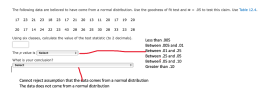 The following data are believed to have come from a normal distribution. Use the goodness of fit test and α-.05 to test this claim. Use Table 12.4. 17 23 21 23 18 23 17 21 20 13 11 20 17 19 20 20 17 14 24 22 23 43 28 26 25 30 28 33 23 28 Using six classes, calculate the value of the test statistic (to 2 decimals). Less than.005 Between .005 and.01 The p value is Select...
#11 At a 5% level of significance, if we want to determine whether or not the...
 #11 At a 5% level of significance, if we want to determine
whether or not the means of the populations are equal, the
conclusion of the test is that:
a. all means are equal.
b. some means may be equal.
c. not all means are equal.
d. some means will never be equal.
#12 If we want to determine whether or not the means of the
populations are equal, the p-value is
a. greater than .1.
b. between .05 to...
#11 At a 5% level of significance, if we want to determine
whether or not the means of the populations are equal, the
conclusion of the test is that:
a. all means are equal.
b. some means may be equal.
c. not all means are equal.
d. some means will never be equal.
#12 If we want to determine whether or not the means of the
populations are equal, the p-value is
a. greater than .1.
b. between .05 to...
#11) At a 5% level of significance, if we want to determine whether or not the...
 #11)
At a 5% level of significance, if we want to determine whether
or not the means of the populations are equal, the conclusion of
the test is that
a.
all means are equal.
b.
some means may be equal.
c.
not all means are equal.
d.
some means will never be equal.
#12
If we want to determine whether or not the means of the
populations are equal, the p-value is
a.
greater than .1.
b.
between .05 to...
#11)
At a 5% level of significance, if we want to determine whether
or not the means of the populations are equal, the conclusion of
the test is that
a.
all means are equal.
b.
some means may be equal.
c.
not all means are equal.
d.
some means will never be equal.
#12
If we want to determine whether or not the means of the
populations are equal, the p-value is
a.
greater than .1.
b.
between .05 to...
vv==v=v=a. report the descriptive statistics for each sample b. report and analyze the ANOVA test for...
vv==v=v=a. report the descriptive statistics for each sample b. report and analyze the ANOVA test for the three cities Florida New York North Carolina 13 14 10 12 9 12 17 15 15 17 12 18 20 16 12 21 24 14 16 18 17 14 14 8 13 15 14 17 17 16 12 20 18 9 11 17 12 23 19 15 19 15 16 17 13 15 14 14 13 9 11 10 14 12 11 13...
Cork price: 16 10 15 10 17 11 14 13 11 14 11 16 18 16...
Cork price: 16 10 15 10 17 11 14 13 11 14 11 16 18 16 10 17 14 14 16 7 10 12 19 15 16 14 9 12 21 13 10 16 12 16 13 17 17 13 14 18 11 12 15 16 13 18 16 17 12 12 14 9 11 14 19 13 11 17 11 13 15 14 18 18 18 12 10 11 13 14 11 14 18 13 13 19 17 14...
s. QUESTION 2 Use minitab Suppose a sample of 20 students were given a diagnostic test...
 s.
QUESTION 2 Use minitab Suppose a sample of 20 students were given a diagnostic test before studying a particular module and then again after completing the module. We want to find out if, in general, our teaching leads to improvements in students' knowledge/skills (i.e. test scores). We can use the results from our sample of students to draw conclusions about the impact of this module in general. 92.MPJ 1) check assumption (fort show your correct 3) find the t-value...
s.
QUESTION 2 Use minitab Suppose a sample of 20 students were given a diagnostic test before studying a particular module and then again after completing the module. We want to find out if, in general, our teaching leads to improvements in students' knowledge/skills (i.e. test scores). We can use the results from our sample of students to draw conclusions about the impact of this module in general. 92.MPJ 1) check assumption (fort show your correct 3) find the t-value...
Cork price: 16 10 15 10 17 11 14 13 11 14 11 16 18 16...
Cork price: 16 10 15 10 17 11 14 13 11 14 11 16 18 16 10 17 14 14 16 7 10 12 19 15 16 14 9 12 21 13 10 16 12 16 13 17 17 13 14 18 11 12 15 16 13 18 16 17 12 12 14 9 11 14 19 13 11 17 11 13 15 14 18 18 18 12 10 11 13 14 11 14 18 13 13 19 17 14...
The accompanying data shows the weekly purchases of printers at a particular electronic store. Using alpha...
 The accompanying data shows the weekly purchases of printers at
a particular electronic store. Using
alpha α equals=0.050
perform a chi-square test to determine if the number of
printers sold per week follows a normal probability distribution.
Note that
x equals=11.2
and
s equals=4.5
Click the icon to view the weekly purchases of printers.
Use the intervals below to calculate the chi-square test
statistic, χ2.
Interval 1:
z
≤−1.0
Interval 2:−1.0
<
z
≤
0
Interval 3:
0
<
z...
The accompanying data shows the weekly purchases of printers at
a particular electronic store. Using
alpha α equals=0.050
perform a chi-square test to determine if the number of
printers sold per week follows a normal probability distribution.
Note that
x equals=11.2
and
s equals=4.5
Click the icon to view the weekly purchases of printers.
Use the intervals below to calculate the chi-square test
statistic, χ2.
Interval 1:
z
≤−1.0
Interval 2:−1.0
<
z
≤
0
Interval 3:
0
<
z...
Please show 6 step process and if possible show chart meaning 4. Suppose that 9 observations...
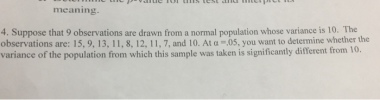 Please show 6 step process and if possible show chart
meaning 4. Suppose that 9 observations are drawn from a normal population whose variance is 10. The observations are: 15, 9, 13, 11, 8, 12, 11, 7, and 10. At a-05, you want to determine whether the variance of the population from which this sample was taken is significantly different from 10.
Please show 6 step process and if possible show chart
meaning 4. Suppose that 9 observations are drawn from a normal population whose variance is 10. The observations are: 15, 9, 13, 11, 8, 12, 11, 7, and 10. At a-05, you want to determine whether the variance of the population from which this sample was taken is significantly different from 10.
For the data listed(assume sample). a.) Find the following: Mean Mode Median Midrange Range Quartiles Variance...
For the data listed(assume sample). a.) Find the following: Mean Mode Median Midrange Range Quartiles Variance Standard Deviation BoxPlot b.) Create a frequency distribution When creating classes use the formula from the Notes on how classes to create. 17 23 14 16 12 26 20 22 14 15 22 18 18 21 21 19 15 21 18 17 15 25 14 30 16 10 20 12 16 17.44 16 14 15 20 20 16 17 16 15 15 19 48...
 The following data are believed to have come from a normal distribution. Use the goodness of fit test and α-.05 to test this claim. Use Table 12.4. 17 23 21 23 18 23 17 21 20 13 11 20 17 19 20 20 17 14 24 22 23 43 28 26 25 30 28 33 23 28 Using six classes, calculate the value of the test statistic (to 2 decimals). Less than.005 Between .005 and.01 The p value is Select...
 #11 At a 5% level of significance, if we want to determine
whether or not the means of the populations are equal, the
conclusion of the test is that:
a. all means are equal.
b. some means may be equal.
c. not all means are equal.
d. some means will never be equal.
#12 If we want to determine whether or not the means of the
populations are equal, the p-value is
a. greater than .1.
b. between .05 to...
#11 At a 5% level of significance, if we want to determine
whether or not the means of the populations are equal, the
conclusion of the test is that:
a. all means are equal.
b. some means may be equal.
c. not all means are equal.
d. some means will never be equal.
#12 If we want to determine whether or not the means of the
populations are equal, the p-value is
a. greater than .1.
b. between .05 to...
 #11)
At a 5% level of significance, if we want to determine whether
or not the means of the populations are equal, the conclusion of
the test is that
a.
all means are equal.
b.
some means may be equal.
c.
not all means are equal.
d.
some means will never be equal.
#12
If we want to determine whether or not the means of the
populations are equal, the p-value is
a.
greater than .1.
b.
between .05 to...
#11)
At a 5% level of significance, if we want to determine whether
or not the means of the populations are equal, the conclusion of
the test is that
a.
all means are equal.
b.
some means may be equal.
c.
not all means are equal.
d.
some means will never be equal.
#12
If we want to determine whether or not the means of the
populations are equal, the p-value is
a.
greater than .1.
b.
between .05 to...
 s.
QUESTION 2 Use minitab Suppose a sample of 20 students were given a diagnostic test before studying a particular module and then again after completing the module. We want to find out if, in general, our teaching leads to improvements in students' knowledge/skills (i.e. test scores). We can use the results from our sample of students to draw conclusions about the impact of this module in general. 92.MPJ 1) check assumption (fort show your correct 3) find the t-value...
s.
QUESTION 2 Use minitab Suppose a sample of 20 students were given a diagnostic test before studying a particular module and then again after completing the module. We want to find out if, in general, our teaching leads to improvements in students' knowledge/skills (i.e. test scores). We can use the results from our sample of students to draw conclusions about the impact of this module in general. 92.MPJ 1) check assumption (fort show your correct 3) find the t-value...
 The accompanying data shows the weekly purchases of printers at
a particular electronic store. Using
alpha α equals=0.050
perform a chi-square test to determine if the number of
printers sold per week follows a normal probability distribution.
Note that
x equals=11.2
and
s equals=4.5
Click the icon to view the weekly purchases of printers.
Use the intervals below to calculate the chi-square test
statistic, χ2.
Interval 1:
z
≤−1.0
Interval 2:−1.0
<
z
≤
0
Interval 3:
0
<
z...
The accompanying data shows the weekly purchases of printers at
a particular electronic store. Using
alpha α equals=0.050
perform a chi-square test to determine if the number of
printers sold per week follows a normal probability distribution.
Note that
x equals=11.2
and
s equals=4.5
Click the icon to view the weekly purchases of printers.
Use the intervals below to calculate the chi-square test
statistic, χ2.
Interval 1:
z
≤−1.0
Interval 2:−1.0
<
z
≤
0
Interval 3:
0
<
z...
 Please show 6 step process and if possible show chart
meaning 4. Suppose that 9 observations are drawn from a normal population whose variance is 10. The observations are: 15, 9, 13, 11, 8, 12, 11, 7, and 10. At a-05, you want to determine whether the variance of the population from which this sample was taken is significantly different from 10.
Please show 6 step process and if possible show chart
meaning 4. Suppose that 9 observations are drawn from a normal population whose variance is 10. The observations are: 15, 9, 13, 11, 8, 12, 11, 7, and 10. At a-05, you want to determine whether the variance of the population from which this sample was taken is significantly different from 10.
Most questions answered within 3 hours.
-
Where is the error in this code sequence?
String s1 = "Hello";
String s2 = "ello";...
asked 11 months ago -
Financial data for Joel de Paris, Inc., for last year
follow:
Joel de Paris, Inc.
Balance...
asked 11 months ago -
Consider this reaction:
Al2(SO4)3 (aq)+ BaCl3
(aq) Al2Cl6 (aq)- +
3BaSO4(s) . What is the...
asked 11 months ago -
Suppose that Savneet is considering increasing her
recent random sample from 20 car rentals to 40...
asked 11 months ago -
Trucks arrive at an unloading terminal at an average rate of 120
per hour.
Trucks arrive...
asked 11 months ago -
Why are methanol and ethanol completely soluble in water while
octanol is not very little soluble....
asked 11 months ago -
A facilities manager at a university reads in a research report
that the mean amount of...
asked 11 months ago -
When the CuSO4 is rehydrated by adding water to the anhydrous
compound, is this an endothermic...
asked 11 months ago -
A ray of sunlight is passing from diamond into crown glass; the
angle of incidence is...
asked 11 months ago -
A block of mass 0.249 kg is placed on top of a light, vertical
spring of...
asked 11 months ago -
how do the kidneys compensate in the presences of acidosis
a) trigger hyperventilate
b) reserve acid...
asked 11 months ago -
Question 501 pts
The rental rate of capital to the firm increases. Which of the
following...
asked 11 months ago