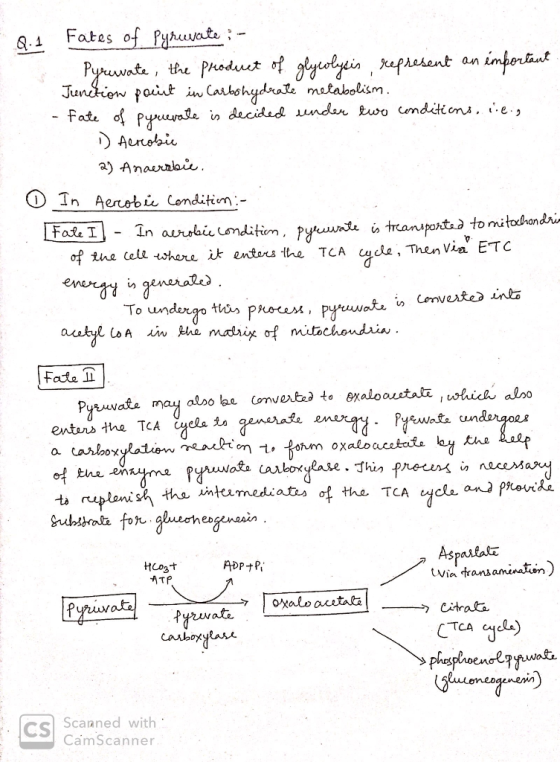
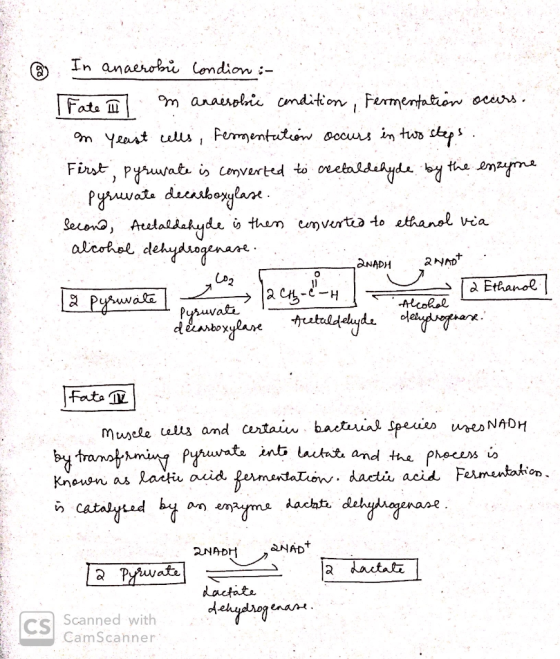
1. Discuss the four fates of pyruvate (one to CAC cycle). 2. Discuss the 10 steps...
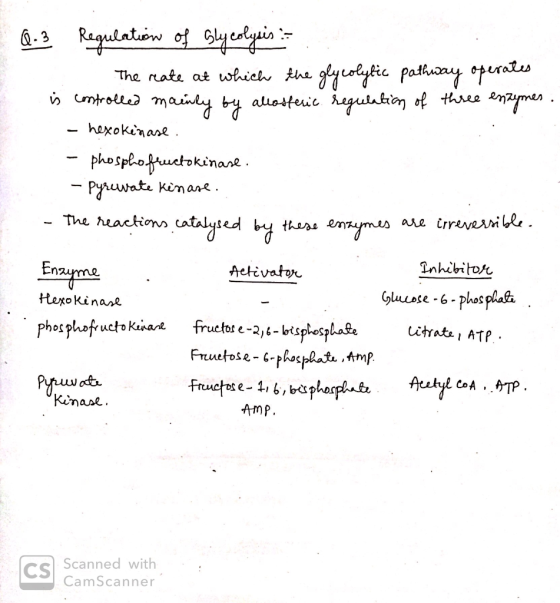
1. Discuss the four fates of pyruvate (one to CAC cycle). 2. Discuss the 10 steps of glycolysis including structures, cofactors, enzymes, irreversible steps and committed steps. 3. Discuss the regulation of glycolysis including ATP, AMP, ADP, and F2,6 BPG. 4. The three bypass steps (4 total) for gluconeogenesis 5. How do insulin, glucagon and epinephrine regulate glycogen synthesis and degradation? 6. PPP pathway: the stage I, the stoichiometry of step II and the enzymes 7. The four scenarios of PPP regulation: 1) need NADPH only; 2) need R5P only; 3) need both; 4) need NADPH and ATP.
Homework Answers

![애 Step-6 oxidation ZNAD 4 tant a Glyceraldebydle - 3-phosphatel POHC-Ćy-440 530 1 QMADI TOP; dehydrogenase Ganadtant *] 1, 9](http://img.homeworklib.com/questions/aa55f8c0-9ca0-11ea-a8af-492377a46bc2.png?x-oss-process=image/resize,w_560)
Add Answer to:
1. Discuss the four fates of pyruvate (one to CAC cycle). 2.
Discuss the 10 steps...
Can any one do 2 and 3 Pyruvate kinase is one of the irreversible steps of...
 Can any one do 2 and 3
Pyruvate kinase is one of the irreversible steps of glycolysis. The human genome has four genes that encode different pyruvate kinases, including a muscle specific form and a liver specific form. The liver specific form differs from the muscle specific form since it has additional regulation through phosphorylation by protein kinase A and allosteric regulation by the amino acid alanine. A V. vs. [S] plot of liver pyruvate kinase is shown below. hi...
Can any one do 2 and 3
Pyruvate kinase is one of the irreversible steps of glycolysis. The human genome has four genes that encode different pyruvate kinases, including a muscle specific form and a liver specific form. The liver specific form differs from the muscle specific form since it has additional regulation through phosphorylation by protein kinase A and allosteric regulation by the amino acid alanine. A V. vs. [S] plot of liver pyruvate kinase is shown below. hi...
Easy question, 30 min timed assignment, please answer ASAP, thanks. 1. Glycerol from hydrolysis of triacylglycerols...
 Easy question, 30 min timed assignment, please answer ASAP,
thanks.
1. Glycerol from hydrolysis of triacylglycerols enters gluconeogenesis at. a. glyceraldehyde-3-phosphate. b. dihydroxyacetone phosphate. c. 1,3-bisphosphoglycerate. d. 3-phosphoglycerate. e. 2-phosphoglycerate. or tissue prefers to use ketone bodies such as acetoacetate as a source of fuel instead of glucose? a. heart muscle c. brain d. liver e. stomach b. adrenal cortex 3. The key enzyme in glycogen degradation is a. glycogen phosphatase. b. glycogen hydrolase. c. glycogen phosphorylase A d. glycogen...
Easy question, 30 min timed assignment, please answer ASAP,
thanks.
1. Glycerol from hydrolysis of triacylglycerols enters gluconeogenesis at. a. glyceraldehyde-3-phosphate. b. dihydroxyacetone phosphate. c. 1,3-bisphosphoglycerate. d. 3-phosphoglycerate. e. 2-phosphoglycerate. or tissue prefers to use ketone bodies such as acetoacetate as a source of fuel instead of glucose? a. heart muscle c. brain d. liver e. stomach b. adrenal cortex 3. The key enzyme in glycogen degradation is a. glycogen phosphatase. b. glycogen hydrolase. c. glycogen phosphorylase A d. glycogen...
6:35 PM Fri Apr 19 16% 242:37:15 Exit 24. In a coupled reaction that requires electrons, NADH may...
 6:35 PM Fri Apr 19 16% 242:37:15 Exit 24. In a coupled reaction that requires electrons, NADH may be oxidized to what? NADH2 NAD+ NADPH NADP 25 The high energy bond formed from the reaction between CoA and a two carbon donor is called sulfhydryl phosphodiester thioester secondary amide Submit 6:35 PM Fri Apr 19 令16% Exit 242:36:58 Б18. There are 10 reactions in glycolysis. How many reactions does it take to make glucose in gluconeogenesis? 10 12 19. Pyruvate...
28. Which one of the following statements is true? a) The brain b) Muscle cannot use...
 28. Which one of the following statements is true? a) The brain b) Muscle cannot use fatty acids as an energy source. c) The brain exports ketone bodies as fuels for other tissues d) Fatty acids cannot be used as an energy source in humans e) as an energy source, but can use ketone bodies enzymes of the Glyoxylate cycle Heart muscle stores fuel as glycogen. 29. An intermediate found in gluconeogenesis and not in glycolysoxaloacetate a) 2-phosphoglycerate b) phosphoenolpyruvate...
Do expect the cell to produce more ATP from one glucose molecule or from one fatty...
 Do expect the cell to produce more ATP from one glucose molecule or from one fatty acid molecule? Explain your answer. Indicate whether the following statements are true or false. If a statement is false, explain why it is false The proteins of the electron-transport chain remove a pair of high-energy electrons from the cofactors, NADH and FADH_2, after which the electrons move across the inner mitochondrial membrane to maintain the voltage gradient. Gluconeogenesis is a linear reaction pathway that...
1. According to the paper, what does lactate dehydrogenase (LDH) do and what does it allow...
 1. According to the paper, what does lactate dehydrogenase
(LDH) do and what does it allow to happen within the myofiber? (5
points)
2. According to the paper, what is the major disadvantage of
relying on glycolysis during high-intensity exercise? (5
points)
3. Using Figure 1 in the paper, briefly describe the different
sources of ATP production at 50% versus 90% AND explain whether you
believe this depiction of ATP production applies to a Type IIX
myofiber in a human....
1. According to the paper, what does lactate dehydrogenase
(LDH) do and what does it allow to happen within the myofiber? (5
points)
2. According to the paper, what is the major disadvantage of
relying on glycolysis during high-intensity exercise? (5
points)
3. Using Figure 1 in the paper, briefly describe the different
sources of ATP production at 50% versus 90% AND explain whether you
believe this depiction of ATP production applies to a Type IIX
myofiber in a human....
 Can any one do 2 and 3
Pyruvate kinase is one of the irreversible steps of glycolysis. The human genome has four genes that encode different pyruvate kinases, including a muscle specific form and a liver specific form. The liver specific form differs from the muscle specific form since it has additional regulation through phosphorylation by protein kinase A and allosteric regulation by the amino acid alanine. A V. vs. [S] plot of liver pyruvate kinase is shown below. hi...
Can any one do 2 and 3
Pyruvate kinase is one of the irreversible steps of glycolysis. The human genome has four genes that encode different pyruvate kinases, including a muscle specific form and a liver specific form. The liver specific form differs from the muscle specific form since it has additional regulation through phosphorylation by protein kinase A and allosteric regulation by the amino acid alanine. A V. vs. [S] plot of liver pyruvate kinase is shown below. hi...
 Easy question, 30 min timed assignment, please answer ASAP,
thanks.
1. Glycerol from hydrolysis of triacylglycerols enters gluconeogenesis at. a. glyceraldehyde-3-phosphate. b. dihydroxyacetone phosphate. c. 1,3-bisphosphoglycerate. d. 3-phosphoglycerate. e. 2-phosphoglycerate. or tissue prefers to use ketone bodies such as acetoacetate as a source of fuel instead of glucose? a. heart muscle c. brain d. liver e. stomach b. adrenal cortex 3. The key enzyme in glycogen degradation is a. glycogen phosphatase. b. glycogen hydrolase. c. glycogen phosphorylase A d. glycogen...
Easy question, 30 min timed assignment, please answer ASAP,
thanks.
1. Glycerol from hydrolysis of triacylglycerols enters gluconeogenesis at. a. glyceraldehyde-3-phosphate. b. dihydroxyacetone phosphate. c. 1,3-bisphosphoglycerate. d. 3-phosphoglycerate. e. 2-phosphoglycerate. or tissue prefers to use ketone bodies such as acetoacetate as a source of fuel instead of glucose? a. heart muscle c. brain d. liver e. stomach b. adrenal cortex 3. The key enzyme in glycogen degradation is a. glycogen phosphatase. b. glycogen hydrolase. c. glycogen phosphorylase A d. glycogen...
 6:35 PM Fri Apr 19 16% 242:37:15 Exit 24. In a coupled reaction that requires electrons, NADH may be oxidized to what? NADH2 NAD+ NADPH NADP 25 The high energy bond formed from the reaction between CoA and a two carbon donor is called sulfhydryl phosphodiester thioester secondary amide Submit 6:35 PM Fri Apr 19 令16% Exit 242:36:58 Б18. There are 10 reactions in glycolysis. How many reactions does it take to make glucose in gluconeogenesis? 10 12 19. Pyruvate...
 28. Which one of the following statements is true? a) The brain b) Muscle cannot use fatty acids as an energy source. c) The brain exports ketone bodies as fuels for other tissues d) Fatty acids cannot be used as an energy source in humans e) as an energy source, but can use ketone bodies enzymes of the Glyoxylate cycle Heart muscle stores fuel as glycogen. 29. An intermediate found in gluconeogenesis and not in glycolysoxaloacetate a) 2-phosphoglycerate b) phosphoenolpyruvate...
 Do expect the cell to produce more ATP from one glucose molecule or from one fatty acid molecule? Explain your answer. Indicate whether the following statements are true or false. If a statement is false, explain why it is false The proteins of the electron-transport chain remove a pair of high-energy electrons from the cofactors, NADH and FADH_2, after which the electrons move across the inner mitochondrial membrane to maintain the voltage gradient. Gluconeogenesis is a linear reaction pathway that...
 1. According to the paper, what does lactate dehydrogenase
(LDH) do and what does it allow to happen within the myofiber? (5
points)
2. According to the paper, what is the major disadvantage of
relying on glycolysis during high-intensity exercise? (5
points)
3. Using Figure 1 in the paper, briefly describe the different
sources of ATP production at 50% versus 90% AND explain whether you
believe this depiction of ATP production applies to a Type IIX
myofiber in a human....
1. According to the paper, what does lactate dehydrogenase
(LDH) do and what does it allow to happen within the myofiber? (5
points)
2. According to the paper, what is the major disadvantage of
relying on glycolysis during high-intensity exercise? (5
points)
3. Using Figure 1 in the paper, briefly describe the different
sources of ATP production at 50% versus 90% AND explain whether you
believe this depiction of ATP production applies to a Type IIX
myofiber in a human....
Most questions answered within 3 hours.
-
Where is the error in this code sequence?
String s1 = "Hello";
String s2 = "ello";...
asked 11 months ago -
Financial data for Joel de Paris, Inc., for last year
follow:
Joel de Paris, Inc.
Balance...
asked 11 months ago -
Consider this reaction:
Al2(SO4)3 (aq)+ BaCl3
(aq) Al2Cl6 (aq)- +
3BaSO4(s) . What is the...
asked 11 months ago -
Suppose that Savneet is considering increasing her
recent random sample from 20 car rentals to 40...
asked 11 months ago -
Trucks arrive at an unloading terminal at an average rate of 120
per hour.
Trucks arrive...
asked 11 months ago -
Why are methanol and ethanol completely soluble in water while
octanol is not very little soluble....
asked 11 months ago -
A facilities manager at a university reads in a research report
that the mean amount of...
asked 11 months ago -
When the CuSO4 is rehydrated by adding water to the anhydrous
compound, is this an endothermic...
asked 11 months ago -
A ray of sunlight is passing from diamond into crown glass; the
angle of incidence is...
asked 11 months ago -
A block of mass 0.249 kg is placed on top of a light, vertical
spring of...
asked 11 months ago -
how do the kidneys compensate in the presences of acidosis
a) trigger hyperventilate
b) reserve acid...
asked 11 months ago -
Question 501 pts
The rental rate of capital to the firm increases. Which of the
following...
asked 11 months ago