
Homework Answers
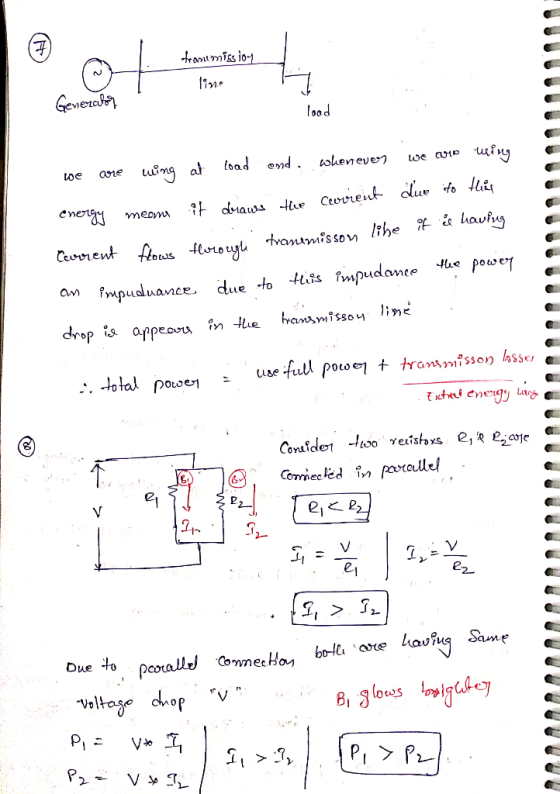
if you have any doubts please comment
thank you
Add Answer to:
7.) Sometimes you might hear that an appliance "uses up a lot of electricity" (such as...
Need help with this please Lab 14 Electricity Bill Worksheet Background knowledge. The power of an...
 Need help with this please
Lab 14 Electricity Bill Worksheet Background knowledge. The power of an electrical appliance is measured in watt (W). One watt is a measure of the energy used up in one second. The unit used for calculating power consumption is the kilowatt-hour (kWh). In order to calculate power consumed by an electrical appliance, we first convert the power to kilowatt (kW). For example, 800 W=0.8 kW, 2000 W = 2.0 kW and so on. One unit...
Need help with this please
Lab 14 Electricity Bill Worksheet Background knowledge. The power of an electrical appliance is measured in watt (W). One watt is a measure of the energy used up in one second. The unit used for calculating power consumption is the kilowatt-hour (kWh). In order to calculate power consumed by an electrical appliance, we first convert the power to kilowatt (kW). For example, 800 W=0.8 kW, 2000 W = 2.0 kW and so on. One unit...
A Investigation #11: Non-Identical Bulbs in Series and Parallel All of the circuits you have investigated...
 A Investigation #11: Non-Identical Bulbs in Series and Parallel All of the circuits you have investigated so far have involved identical bulbs. If two bulbs are identical and one bulb is brighter, then the brighter bulb must have a larger current thru it. Furthermore, the larger current must be caused by a larger potential difference. In this investigation, you will study circuits for which the bulbs are not identical. We will illustrate that two Spherical bulbs are not identical by...
5. A light emitting diode (LED) is a diode that lights up when a current flows across it. The sym...
 5. A light emitting diode (LED) is a diode that lights up when a current flows across it. The symbol for an LED is shown below (sometimes wiggly arrows are used to represent the light instead.) For this question we will assume we are working with LEDs that have a turn-on voltage of VoN-1V and a reverse breakdown voltage of VBR-8V a. You hook up a single LED to a power supply that can put out vol tage from -10...
1. In class we derived how a transformer can up or downregulate the voltage in an...
 1. In class we derived how a transformer can up or downregulate
the voltage in an electrical circuit with an alternating
current.
(a) Use the conservation of energy to deduce how the currents I1
and I2 must be related if you know the ratio of ε1/ε2 (for the
purpose of calculating the power delivered by a circuit ignore any
complications due to the fact that I(t) and ε(t) are
time-varying).
(b) In class I argued that power transmission is more...
1. In class we derived how a transformer can up or downregulate
the voltage in an electrical circuit with an alternating
current.
(a) Use the conservation of energy to deduce how the currents I1
and I2 must be related if you know the ratio of ε1/ε2 (for the
purpose of calculating the power delivered by a circuit ignore any
complications due to the fact that I(t) and ε(t) are
time-varying).
(b) In class I argued that power transmission is more...
Physics 1410 Lab 6 DC 2019, need help with lab questions Chapter 6 DC Electricity n...
 Physics 1410 Lab 6 DC 2019, need help with lab questions
Chapter 6 DC Electricity n this laboratory session we shall examine the relationships among the motion of electrons (current), the effect which causes them to move (voltage, i.e. potential difference), and the frictional effects which hinder their motion (resistance). Since we cannot use any of our senses to detect the presence of electrical effects we need one or more detectors to tell us that a current or potential difference...
Physics 1410 Lab 6 DC 2019, need help with lab questions
Chapter 6 DC Electricity n this laboratory session we shall examine the relationships among the motion of electrons (current), the effect which causes them to move (voltage, i.e. potential difference), and the frictional effects which hinder their motion (resistance). Since we cannot use any of our senses to detect the presence of electrical effects we need one or more detectors to tell us that a current or potential difference...
- A circuit with an equivalent resistance of 5.0 uses 125 J of energy each second....
 - A circuit with an equivalent resistance of 5.0 uses 125 J of energy each second. What voltage is used to power this circuit? a) 5 V b) 15 V c) 25 V d) 45 V e) 625 V Two cylindrical resistors, A and B, are made from two different materials and have the same resistance. Resistor A has a conductivity of A = 10 03. The resistors are manufactured with the same length. The radius of Resistor A (A)...
6. A circuit with an equivalent resistance of 5.0 2 uses 125 J of energy each...
 6. A circuit with an equivalent resistance of 5.0 2 uses 125 J of energy each second. What voltage is used to power this circuit? a) 5V b) 15 V c) 25 V d) 45 V e) 625 V 7. Two cylindrical resistors, A and B, are made from two different materials and have the same resistance. Resistor A has a conductivity of A = 10 03. The resistors are manufactured with the same length. The radius of Resistor A...
EG 171 Test Chapters 7 Date: 214れ ,3& Name 24. The amount by which the actual...
 EG 171 Test Chapters 7 Date: 214れ ,3& Name 24. The amount by which the actual resistance can differ from the color-coded value is the: a. temperatare coefficient b. power rating e differiential resistance D tolerance 25. The resistance value of a chip resistor is determined from the size of the resistor three digit number printed on the body d. color-code c. three letters printed on the body True/False Indicate whether the statement is true or false 26. The practical...
You sometimes create a spark when you touch a doorknob after shuffling your feet on a...
 You sometimes create a spark when you touch a doorknob after
shuffling your feet on a carpet. Why? The air always has a few free
electrons that have been kicked out of atoms by cosmic rays. If an
electric field is present, a free electron is accelerated until it
collides with an air molecule. It will transfer its kinetic energy
to the molecule, then accelerate, then collide, then accelerate,
collide, and so on. If the electron’s kinetic energy just before...
You sometimes create a spark when you touch a doorknob after
shuffling your feet on a carpet. Why? The air always has a few free
electrons that have been kicked out of atoms by cosmic rays. If an
electric field is present, a free electron is accelerated until it
collides with an air molecule. It will transfer its kinetic energy
to the molecule, then accelerate, then collide, then accelerate,
collide, and so on. If the electron’s kinetic energy just before...
You sometimes create a spark when you touch a doorknob after shuffling your feet on a...
 You sometimes create a spark when you touch a doorknob after
shuffling your feet on a carpet. Why? The air always has a few free
electrons that have been kicked out of atoms by cosmic rays. If an
electric field is present, a free electron is accelerated until it
collides with an air molecule. It will transfer its kinetic energy
to the molecule, then accelerate, then collide, then accelerate,
collide, and so on. If the electron
You sometimes create a...
You sometimes create a spark when you touch a doorknob after
shuffling your feet on a carpet. Why? The air always has a few free
electrons that have been kicked out of atoms by cosmic rays. If an
electric field is present, a free electron is accelerated until it
collides with an air molecule. It will transfer its kinetic energy
to the molecule, then accelerate, then collide, then accelerate,
collide, and so on. If the electron
You sometimes create a...
 Need help with this please
Lab 14 Electricity Bill Worksheet Background knowledge. The power of an electrical appliance is measured in watt (W). One watt is a measure of the energy used up in one second. The unit used for calculating power consumption is the kilowatt-hour (kWh). In order to calculate power consumed by an electrical appliance, we first convert the power to kilowatt (kW). For example, 800 W=0.8 kW, 2000 W = 2.0 kW and so on. One unit...
Need help with this please
Lab 14 Electricity Bill Worksheet Background knowledge. The power of an electrical appliance is measured in watt (W). One watt is a measure of the energy used up in one second. The unit used for calculating power consumption is the kilowatt-hour (kWh). In order to calculate power consumed by an electrical appliance, we first convert the power to kilowatt (kW). For example, 800 W=0.8 kW, 2000 W = 2.0 kW and so on. One unit...
 A Investigation #11: Non-Identical Bulbs in Series and Parallel All of the circuits you have investigated so far have involved identical bulbs. If two bulbs are identical and one bulb is brighter, then the brighter bulb must have a larger current thru it. Furthermore, the larger current must be caused by a larger potential difference. In this investigation, you will study circuits for which the bulbs are not identical. We will illustrate that two Spherical bulbs are not identical by...
 5. A light emitting diode (LED) is a diode that lights up when a current flows across it. The symbol for an LED is shown below (sometimes wiggly arrows are used to represent the light instead.) For this question we will assume we are working with LEDs that have a turn-on voltage of VoN-1V and a reverse breakdown voltage of VBR-8V a. You hook up a single LED to a power supply that can put out vol tage from -10...
 1. In class we derived how a transformer can up or downregulate
the voltage in an electrical circuit with an alternating
current.
(a) Use the conservation of energy to deduce how the currents I1
and I2 must be related if you know the ratio of ε1/ε2 (for the
purpose of calculating the power delivered by a circuit ignore any
complications due to the fact that I(t) and ε(t) are
time-varying).
(b) In class I argued that power transmission is more...
1. In class we derived how a transformer can up or downregulate
the voltage in an electrical circuit with an alternating
current.
(a) Use the conservation of energy to deduce how the currents I1
and I2 must be related if you know the ratio of ε1/ε2 (for the
purpose of calculating the power delivered by a circuit ignore any
complications due to the fact that I(t) and ε(t) are
time-varying).
(b) In class I argued that power transmission is more...
 Physics 1410 Lab 6 DC 2019, need help with lab questions
Chapter 6 DC Electricity n this laboratory session we shall examine the relationships among the motion of electrons (current), the effect which causes them to move (voltage, i.e. potential difference), and the frictional effects which hinder their motion (resistance). Since we cannot use any of our senses to detect the presence of electrical effects we need one or more detectors to tell us that a current or potential difference...
Physics 1410 Lab 6 DC 2019, need help with lab questions
Chapter 6 DC Electricity n this laboratory session we shall examine the relationships among the motion of electrons (current), the effect which causes them to move (voltage, i.e. potential difference), and the frictional effects which hinder their motion (resistance). Since we cannot use any of our senses to detect the presence of electrical effects we need one or more detectors to tell us that a current or potential difference...
 - A circuit with an equivalent resistance of 5.0 uses 125 J of energy each second. What voltage is used to power this circuit? a) 5 V b) 15 V c) 25 V d) 45 V e) 625 V Two cylindrical resistors, A and B, are made from two different materials and have the same resistance. Resistor A has a conductivity of A = 10 03. The resistors are manufactured with the same length. The radius of Resistor A (A)...
 6. A circuit with an equivalent resistance of 5.0 2 uses 125 J of energy each second. What voltage is used to power this circuit? a) 5V b) 15 V c) 25 V d) 45 V e) 625 V 7. Two cylindrical resistors, A and B, are made from two different materials and have the same resistance. Resistor A has a conductivity of A = 10 03. The resistors are manufactured with the same length. The radius of Resistor A...
 EG 171 Test Chapters 7 Date: 214れ ,3& Name 24. The amount by which the actual resistance can differ from the color-coded value is the: a. temperatare coefficient b. power rating e differiential resistance D tolerance 25. The resistance value of a chip resistor is determined from the size of the resistor three digit number printed on the body d. color-code c. three letters printed on the body True/False Indicate whether the statement is true or false 26. The practical...
 You sometimes create a spark when you touch a doorknob after
shuffling your feet on a carpet. Why? The air always has a few free
electrons that have been kicked out of atoms by cosmic rays. If an
electric field is present, a free electron is accelerated until it
collides with an air molecule. It will transfer its kinetic energy
to the molecule, then accelerate, then collide, then accelerate,
collide, and so on. If the electron’s kinetic energy just before...
You sometimes create a spark when you touch a doorknob after
shuffling your feet on a carpet. Why? The air always has a few free
electrons that have been kicked out of atoms by cosmic rays. If an
electric field is present, a free electron is accelerated until it
collides with an air molecule. It will transfer its kinetic energy
to the molecule, then accelerate, then collide, then accelerate,
collide, and so on. If the electron’s kinetic energy just before...
 You sometimes create a spark when you touch a doorknob after
shuffling your feet on a carpet. Why? The air always has a few free
electrons that have been kicked out of atoms by cosmic rays. If an
electric field is present, a free electron is accelerated until it
collides with an air molecule. It will transfer its kinetic energy
to the molecule, then accelerate, then collide, then accelerate,
collide, and so on. If the electron
You sometimes create a...
You sometimes create a spark when you touch a doorknob after
shuffling your feet on a carpet. Why? The air always has a few free
electrons that have been kicked out of atoms by cosmic rays. If an
electric field is present, a free electron is accelerated until it
collides with an air molecule. It will transfer its kinetic energy
to the molecule, then accelerate, then collide, then accelerate,
collide, and so on. If the electron
You sometimes create a...
Most questions answered within 3 hours.
-
Where is the error in this code sequence?
String s1 = "Hello";
String s2 = "ello";...
asked 10 months ago -
Financial data for Joel de Paris, Inc., for last year
follow:
Joel de Paris, Inc.
Balance...
asked 10 months ago -
Consider this reaction:
Al2(SO4)3 (aq)+ BaCl3
(aq) Al2Cl6 (aq)- +
3BaSO4(s) . What is the...
asked 10 months ago -
Suppose that Savneet is considering increasing her
recent random sample from 20 car rentals to 40...
asked 10 months ago -
Trucks arrive at an unloading terminal at an average rate of 120
per hour.
Trucks arrive...
asked 10 months ago -
Why are methanol and ethanol completely soluble in water while
octanol is not very little soluble....
asked 10 months ago -
A facilities manager at a university reads in a research report
that the mean amount of...
asked 10 months ago -
When the CuSO4 is rehydrated by adding water to the anhydrous
compound, is this an endothermic...
asked 10 months ago -
A ray of sunlight is passing from diamond into crown glass; the
angle of incidence is...
asked 10 months ago -
A block of mass 0.249 kg is placed on top of a light, vertical
spring of...
asked 10 months ago -
how do the kidneys compensate in the presences of acidosis
a) trigger hyperventilate
b) reserve acid...
asked 10 months ago -
Question 501 pts
The rental rate of capital to the firm increases. Which of the
following...
asked 10 months ago