Can you help me to solve these problem?
1. A conductive sphere of 26.00cm in diameter is charged at
660.00V with respect to V = 0 at r = ∞. The surface charge density
for this sphere is: (express your answer in )
2. 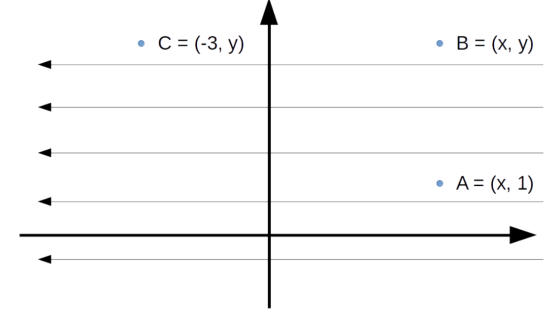
There is a uniform electric field of E = -4.80i [N / C], as indicated in the figure. The position of points A, B and C is known. According to this information determine the potential difference VBA. Express your answer with a decimal and in [V]. Consider that the points are A (2.40; 1), B (2.40; 4.50) and C (-3; 4.50).
Homework Answers
Add Answer to:
Can you help me to solve these problem?
1. A conductive sphere of 26.00cm in diameter...
A conductive sphere of 28.00cm in diameter is charged at 660.00V with respect to V =...
A conductive sphere of 28.00cm in diameter is charged at 660.00V with respect to V = 0 at r = ∞. The surface charge density for this sphere is: (express your answer in nC / m2)
A sphere of radius a that is made of a conductive dielectric (: σο ande Ere) is centered about th...
 A sphere of radius a that is made of a conductive dielectric (: σο ande Ere) is centered about the ongin The sphere is charged at t 0 s with a uniform charge density given by pu(t 0) po for all R s a, where Po is a positive constant (a) Starting from the continuity equation, V J prove that the charge density within the dielectric sphere varies according to pu(t)-pe Tro. (3 points) (b) If it is known that...
Can you help me to solve this problem? Assume that the sphere of radius R, has...
 Can you help me to solve this problem?
Assume that the sphere of radius R, has a density p and is rising with terminal velocity (constant) v by a resistive means of density and viscosity nin the presence of an electric field E. The electric field is generated by a pair of plates parallel with separation *d" to which a potential difference V is applied. Considering that a force of thrust or flotation is exerted on the sphere (Archimedes principle),...
Can you help me to solve this problem?
Assume that the sphere of radius R, has a density p and is rising with terminal velocity (constant) v by a resistive means of density and viscosity nin the presence of an electric field E. The electric field is generated by a pair of plates parallel with separation *d" to which a potential difference V is applied. Considering that a force of thrust or flotation is exerted on the sphere (Archimedes principle),...
In the figure the sphere of radius R is solid and non-conductive and has a uniform...
 In the figure the sphere of radius R is solid and non-conductive and has a uniform charge volumetric distribution p0. A spherical shell with inner radius 2R and outer radius 3R is concentric with the sphere and unloaded. Find, in terms of p0 and R: a) the value of the electric charge in the sphere, b) the magnitude of the electric field at a radial distance r - 2.5R, c) the value of the surface charge density induced in the...
A 33 cm -diameter conducting sphere is charged to 700 V relative to V=0 at r=∞....
A 33 cm -diameter conducting sphere is charged to 700 V relative to V=0 at r=∞. A. What is the surface charge density σ? Express your answer using two significant figures in C/m^2 B. At what distance from the center of the sphere will the potential due to the sphere be only 26 V ? Express your answer using two significant figures in m.
can you answer all questions please? 1.) The figure below shows a small, charged sphere, with...
 can you answer all questions please?
1.) The figure below shows a small, charged sphere, with a charge of +38.0 nC, that moves a distance of d 0.196 m from point A to point in the presence of a uniform electric field E of magnitude 290 N/C, pointing right. A positive point charge q is initially at point A, then moves a distance d to the right to point B. Electric field vector E points to the right. (a) What...
can you answer all questions please?
1.) The figure below shows a small, charged sphere, with a charge of +38.0 nC, that moves a distance of d 0.196 m from point A to point in the presence of a uniform electric field E of magnitude 290 N/C, pointing right. A positive point charge q is initially at point A, then moves a distance d to the right to point B. Electric field vector E points to the right. (a) What...
A 2.3 mm -diameter sphere is charged to -4.4 nC . An electron fired directly at...
A 2.3 mm -diameter sphere is charged to -4.4 nC . An electron fired directly at the sphere from far away comes to within 0.39 mm of the surface of the target before being reflected. A.) What was the electron's initial speed? Express your answer in meters per second. B.) At what distance from the surface of the sphere is the electron's speed half of its initial value? Express your answer in meters. C.) What is the acceleration of the...
Name 1. (12) An isolated charge metal sphere of diameter 10 cm has a potential of...
 Name 1. (12) An isolated charge metal sphere of diameter 10 cm has a potential of 8000 V relative to V 0.0 at infinity. a. (11) Derive an expression that calculates the energy density in the electric field on the surface of the sphere. answer (1) What is the numerical value of the energy density. b. answer
Constants | Periodic Table Part A A 22 cm -diameter conducting sphere is charged to 580 V relative to V 0 atroo? What is the surface charge density σ? Express your answer using two significant figure...
 Constants | Periodic Table Part A A 22 cm -diameter conducting sphere is charged to 580 V relative to V 0 atroo? What is the surface charge density σ? Express your answer using two significant figures. Submit Part B At what distance from the center of the sphere will the potential due to the sphere be only 29 V Express your answer using two significant figures. Im Submit Pearson
Constants | Periodic Table Part A A 22 cm -diameter conducting...
Constants | Periodic Table Part A A 22 cm -diameter conducting sphere is charged to 580 V relative to V 0 atroo? What is the surface charge density σ? Express your answer using two significant figures. Submit Part B At what distance from the center of the sphere will the potential due to the sphere be only 29 V Express your answer using two significant figures. Im Submit Pearson
Constants | Periodic Table Part A A 22 cm -diameter conducting...
help with this question 3. (10 points) A uniformly charged isolated conducting sphere of 1.2 m...
 help with this question
3. (10 points) A uniformly charged isolated conducting sphere of 1.2 m diameter has a surface charge density of 8.1 uC/m2. Use Gauss's Law (properly) to calculate each of the following (remember to define a Gaussian Surface for each case): (Show your entire work for full credit) a. Calculate the electric field inside the sphere. b. Calculate the total electric flux leaving the surface of the sphere 3. c. Calculate the electric field outside the sphere.
help with this question
3. (10 points) A uniformly charged isolated conducting sphere of 1.2 m diameter has a surface charge density of 8.1 uC/m2. Use Gauss's Law (properly) to calculate each of the following (remember to define a Gaussian Surface for each case): (Show your entire work for full credit) a. Calculate the electric field inside the sphere. b. Calculate the total electric flux leaving the surface of the sphere 3. c. Calculate the electric field outside the sphere.
 A sphere of radius a that is made of a conductive dielectric (: σο ande Ere) is centered about the ongin The sphere is charged at t 0 s with a uniform charge density given by pu(t 0) po for all R s a, where Po is a positive constant (a) Starting from the continuity equation, V J prove that the charge density within the dielectric sphere varies according to pu(t)-pe Tro. (3 points) (b) If it is known that...
 Can you help me to solve this problem?
Assume that the sphere of radius R, has a density p and is rising with terminal velocity (constant) v by a resistive means of density and viscosity nin the presence of an electric field E. The electric field is generated by a pair of plates parallel with separation *d" to which a potential difference V is applied. Considering that a force of thrust or flotation is exerted on the sphere (Archimedes principle),...
Can you help me to solve this problem?
Assume that the sphere of radius R, has a density p and is rising with terminal velocity (constant) v by a resistive means of density and viscosity nin the presence of an electric field E. The electric field is generated by a pair of plates parallel with separation *d" to which a potential difference V is applied. Considering that a force of thrust or flotation is exerted on the sphere (Archimedes principle),...
 In the figure the sphere of radius R is solid and non-conductive and has a uniform charge volumetric distribution p0. A spherical shell with inner radius 2R and outer radius 3R is concentric with the sphere and unloaded. Find, in terms of p0 and R: a) the value of the electric charge in the sphere, b) the magnitude of the electric field at a radial distance r - 2.5R, c) the value of the surface charge density induced in the...
 can you answer all questions please?
1.) The figure below shows a small, charged sphere, with a charge of +38.0 nC, that moves a distance of d 0.196 m from point A to point in the presence of a uniform electric field E of magnitude 290 N/C, pointing right. A positive point charge q is initially at point A, then moves a distance d to the right to point B. Electric field vector E points to the right. (a) What...
can you answer all questions please?
1.) The figure below shows a small, charged sphere, with a charge of +38.0 nC, that moves a distance of d 0.196 m from point A to point in the presence of a uniform electric field E of magnitude 290 N/C, pointing right. A positive point charge q is initially at point A, then moves a distance d to the right to point B. Electric field vector E points to the right. (a) What...
 Name 1. (12) An isolated charge metal sphere of diameter 10 cm has a potential of 8000 V relative to V 0.0 at infinity. a. (11) Derive an expression that calculates the energy density in the electric field on the surface of the sphere. answer (1) What is the numerical value of the energy density. b. answer
 Constants | Periodic Table Part A A 22 cm -diameter conducting sphere is charged to 580 V relative to V 0 atroo? What is the surface charge density σ? Express your answer using two significant figures. Submit Part B At what distance from the center of the sphere will the potential due to the sphere be only 29 V Express your answer using two significant figures. Im Submit Pearson
Constants | Periodic Table Part A A 22 cm -diameter conducting...
Constants | Periodic Table Part A A 22 cm -diameter conducting sphere is charged to 580 V relative to V 0 atroo? What is the surface charge density σ? Express your answer using two significant figures. Submit Part B At what distance from the center of the sphere will the potential due to the sphere be only 29 V Express your answer using two significant figures. Im Submit Pearson
Constants | Periodic Table Part A A 22 cm -diameter conducting...
 help with this question
3. (10 points) A uniformly charged isolated conducting sphere of 1.2 m diameter has a surface charge density of 8.1 uC/m2. Use Gauss's Law (properly) to calculate each of the following (remember to define a Gaussian Surface for each case): (Show your entire work for full credit) a. Calculate the electric field inside the sphere. b. Calculate the total electric flux leaving the surface of the sphere 3. c. Calculate the electric field outside the sphere.
help with this question
3. (10 points) A uniformly charged isolated conducting sphere of 1.2 m diameter has a surface charge density of 8.1 uC/m2. Use Gauss's Law (properly) to calculate each of the following (remember to define a Gaussian Surface for each case): (Show your entire work for full credit) a. Calculate the electric field inside the sphere. b. Calculate the total electric flux leaving the surface of the sphere 3. c. Calculate the electric field outside the sphere.
Most questions answered within 3 hours.
-
Where is the error in this code sequence?
String s1 = "Hello";
String s2 = "ello";...
asked 10 months ago -
Financial data for Joel de Paris, Inc., for last year
follow:
Joel de Paris, Inc.
Balance...
asked 10 months ago -
Consider this reaction:
Al2(SO4)3 (aq)+ BaCl3
(aq) Al2Cl6 (aq)- +
3BaSO4(s) . What is the...
asked 10 months ago -
Suppose that Savneet is considering increasing her
recent random sample from 20 car rentals to 40...
asked 10 months ago -
Trucks arrive at an unloading terminal at an average rate of 120
per hour.
Trucks arrive...
asked 10 months ago -
Why are methanol and ethanol completely soluble in water while
octanol is not very little soluble....
asked 10 months ago -
A facilities manager at a university reads in a research report
that the mean amount of...
asked 10 months ago -
When the CuSO4 is rehydrated by adding water to the anhydrous
compound, is this an endothermic...
asked 10 months ago -
A ray of sunlight is passing from diamond into crown glass; the
angle of incidence is...
asked 10 months ago -
A block of mass 0.249 kg is placed on top of a light, vertical
spring of...
asked 10 months ago -
how do the kidneys compensate in the presences of acidosis
a) trigger hyperventilate
b) reserve acid...
asked 10 months ago -
Question 501 pts
The rental rate of capital to the firm increases. Which of the
following...
asked 10 months ago