

Homework Answers
Add Answer to:
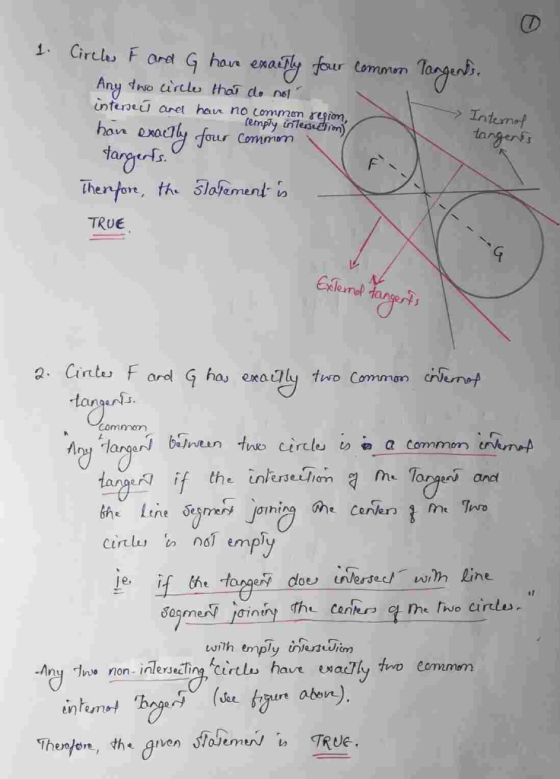
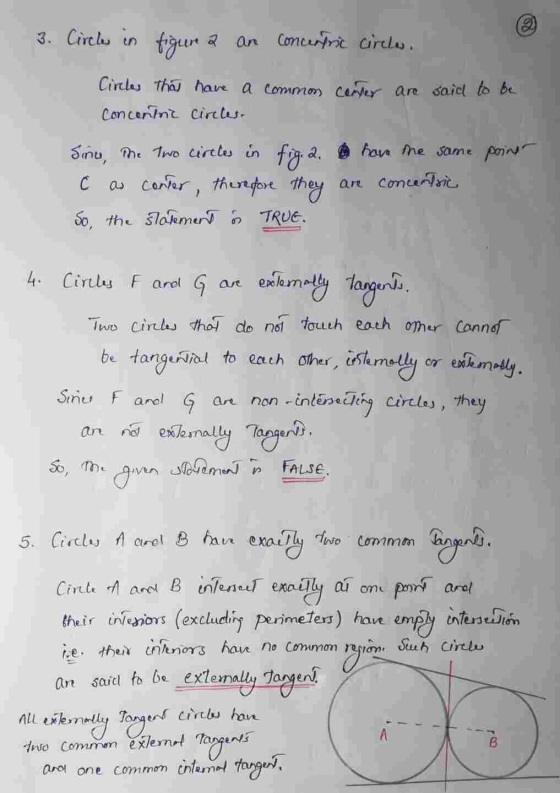
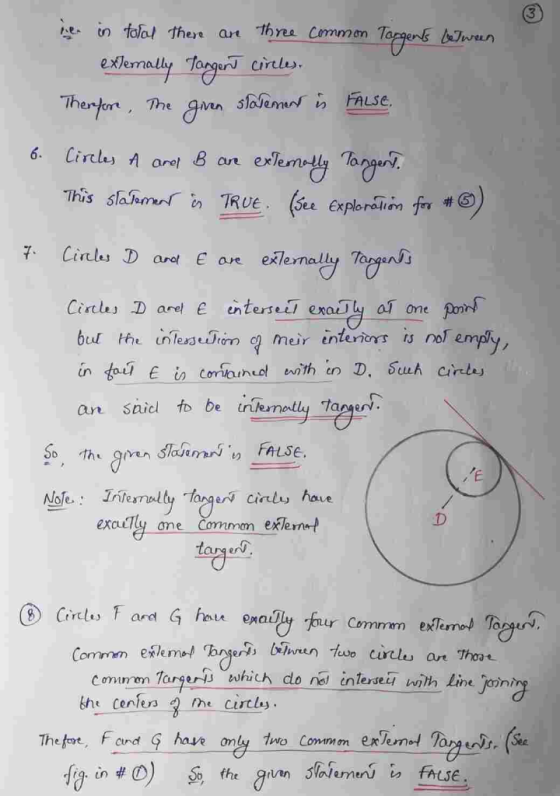
Question 5 Five diagrams are given below. Figure 1 Figure 2 Figure 3 Figure 4 Figure...
1.Determine the equation of the tangent to the curve at x=4 2.Given the curve , find...
 1.Determine the equation of the tangent to the curve
at x=4
2.Given the curve
, find the equations to the tangents at x=5. Include in your
solution a labeled sketch of the situation. (Yes, that said
tangents! there is more than one solution to this problem!)
Personal advice: Think about Implicit differentiation
and logarithmic differentiation. Only use Grade 12 Calculus
knowledge.
All = (3)! (x - 2)2 + (y + 1)2 = 36
1.Determine the equation of the tangent to the curve
at x=4
2.Given the curve
, find the equations to the tangents at x=5. Include in your
solution a labeled sketch of the situation. (Yes, that said
tangents! there is more than one solution to this problem!)
Personal advice: Think about Implicit differentiation
and logarithmic differentiation. Only use Grade 12 Calculus
knowledge.
All = (3)! (x - 2)2 + (y + 1)2 = 36
Figure 1 Figure 2 Part A Consider the following diagrams noting that the scale is different between di...
 Figure 1
Figure 2
Part A
Consider the following diagrams noting that the scale is different
between diagrams. In these diagrams, C and F represent the center
of curvature and the focal point of the convex mirror,
respectively. The image formed by the mirror is obtained using the
ray tracing technique. Which diagram(s) are
correct?(Figure
1)
TypeAif you think that only
diagram A is correct, typeABif
you think that only diagrams A and B are correct, and so on.
Part...
Figure 1
Figure 2
Part A
Consider the following diagrams noting that the scale is different
between diagrams. In these diagrams, C and F represent the center
of curvature and the focal point of the convex mirror,
respectively. The image formed by the mirror is obtained using the
ray tracing technique. Which diagram(s) are
correct?(Figure
1)
TypeAif you think that only
diagram A is correct, typeABif
you think that only diagrams A and B are correct, and so on.
Part...
In the figure below draw the free body diagrams for all three members. 3.) In the figure below draw the free body diagrams for all three members. s) 3 m 2 m 1 m 3 kN 1.5 m 3.) In the figure...
 In the figure below draw the free body
diagrams for all three members.
3.) In the figure below draw the free body diagrams for all three members. s) 3 m 2 m 1 m 3 kN 1.5 m
3.) In the figure below draw the free body diagrams for all three members. s) 3 m 2 m 1 m 3 kN 1.5 m
In the figure below draw the free body
diagrams for all three members.
3.) In the figure below draw the free body diagrams for all three members. s) 3 m 2 m 1 m 3 kN 1.5 m
3.) In the figure below draw the free body diagrams for all three members. s) 3 m 2 m 1 m 3 kN 1.5 m
Figure 2.8 Price $12- NOOOOO TTTTTTTTTTA • 1 2 3 4 5 6 8 9 10...
 Figure 2.8 Price $12- NOOOOO TTTTTTTTTTA • 1 2 3 4 5 6 8 9 10 Quantity 85. (Figure 2.8) Which of the following statements is TRUE? I. The price elasticity of demand is less than 1 in absolute value at prices less than $5 II. The price elasticity of demand is elastic at prices above $5. III. The price elasticity of demand is negative infinity at a price of $0. IV. At $5, the price elasticity of demand is...
Consider the following graph of f(x) on the closed interval (0,5): 5 4 3 2 1...
 Consider the following graph of f(x) on the closed interval (0,5): 5 4 3 2 1 0 -1 0 1 2 3 5 6 (If the picture doesn't load, click here 95graph2) Use the graph of f(x) to answer the following: (a) On what interval(s) is f(x) increasing? (b) On what interval(s) is f(x) decreasing? (c) On what interval(s) is f(x) concave up? (d) On what interval(s) is f(x) concave down? (e) Where are the inflection points (both x and...
Part II. (4 pts) Given the axiom set for the Incidence Geometry as below: Undefined terms: point, line, on Definitions: 1. Two lines are intersecting if there is a point on both. 2. Two lines are...
 Part II. (4 pts) Given the axiom set for the Incidence Geometry as below: Undefined terms: point, line, on Definitions: 1. Two lines are intersecting if there is a point on both. 2. Two lines are parallel if they have no point in common. Axioms: I. Given any two distinct points, there is a unique line on both. II. Each line has at least two distinct points on it. III. There exist at least three points. IV. Not all points...
Considering the phylogeny of the extant orders of sharks to the left answer questions 1-3. 1....
 Considering the phylogeny of the extant orders of sharks to the left answer questions 1-3. 1. If shark orders H, F, C, and A are collectively considered the "cool sharks." what type of group are the cool sharks? A. Monophyletic B. Paraphyletic C. Polyphyletic D. Cooliphyletic E. None of the above 2. Which of the groups labeled on the tree is the outgroup? A. A B. G C. Rays E. None of the above 3. Which of these statements is...
1. Consider the five (5) true statements below and compounds, intermediates, energy diagrams , reagents as...
 1. Consider the five (5) true statements below and compounds, intermediates, energy diagrams , reagents as well as orbitals and resonance forms Compounds with two (a) or more stereogenic centers may be achiral. In equilibrium, substituted cyclohexanes prefer to have the largest group in the equatorial position. (b) In small to medium sized bridged bicyclic ring systems, bridgehead double bonds are not possible. Sy2-type substitution reactions on a stereogenic center inverts the configuration of the stereogenic center (d) If a...
Question 8 (2 points) y 2 1+ 2 2 3 4 5 n k=1 The figure...
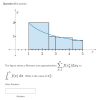 Question 8 (2 points) y 2 1+ 2 2 3 4 5 n k=1 The figure shows a Riemann sum approximation f(xx)Ack to $,° f(a) de. what is the value of 2; ? - 5 Your Answer: Answer
For part (a), please prove the answer. 5. Let S = {1, 2, 3, 4} and...
 For part (a), please prove the answer.
5. Let S = {1, 2, 3, 4} and let F be the sets of all functions from S to S. Let R be the relation on F defined by: For all f,g EF, fRg if and only if fog(1)-2. (a) Is R reflexive? symmetric? transitive? (b) Is it true that that there exists f E F so that fRf? Prove your answer. (c) Is it true that for all f F, there...
For part (a), please prove the answer.
5. Let S = {1, 2, 3, 4} and let F be the sets of all functions from S to S. Let R be the relation on F defined by: For all f,g EF, fRg if and only if fog(1)-2. (a) Is R reflexive? symmetric? transitive? (b) Is it true that that there exists f E F so that fRf? Prove your answer. (c) Is it true that for all f F, there...
 1.Determine the equation of the tangent to the curve
at x=4
2.Given the curve
, find the equations to the tangents at x=5. Include in your
solution a labeled sketch of the situation. (Yes, that said
tangents! there is more than one solution to this problem!)
Personal advice: Think about Implicit differentiation
and logarithmic differentiation. Only use Grade 12 Calculus
knowledge.
All = (3)! (x - 2)2 + (y + 1)2 = 36
1.Determine the equation of the tangent to the curve
at x=4
2.Given the curve
, find the equations to the tangents at x=5. Include in your
solution a labeled sketch of the situation. (Yes, that said
tangents! there is more than one solution to this problem!)
Personal advice: Think about Implicit differentiation
and logarithmic differentiation. Only use Grade 12 Calculus
knowledge.
All = (3)! (x - 2)2 + (y + 1)2 = 36
 Figure 1
Figure 2
Part A
Consider the following diagrams noting that the scale is different
between diagrams. In these diagrams, C and F represent the center
of curvature and the focal point of the convex mirror,
respectively. The image formed by the mirror is obtained using the
ray tracing technique. Which diagram(s) are
correct?(Figure
1)
TypeAif you think that only
diagram A is correct, typeABif
you think that only diagrams A and B are correct, and so on.
Part...
Figure 1
Figure 2
Part A
Consider the following diagrams noting that the scale is different
between diagrams. In these diagrams, C and F represent the center
of curvature and the focal point of the convex mirror,
respectively. The image formed by the mirror is obtained using the
ray tracing technique. Which diagram(s) are
correct?(Figure
1)
TypeAif you think that only
diagram A is correct, typeABif
you think that only diagrams A and B are correct, and so on.
Part...
 In the figure below draw the free body
diagrams for all three members.
3.) In the figure below draw the free body diagrams for all three members. s) 3 m 2 m 1 m 3 kN 1.5 m
3.) In the figure below draw the free body diagrams for all three members. s) 3 m 2 m 1 m 3 kN 1.5 m
In the figure below draw the free body
diagrams for all three members.
3.) In the figure below draw the free body diagrams for all three members. s) 3 m 2 m 1 m 3 kN 1.5 m
3.) In the figure below draw the free body diagrams for all three members. s) 3 m 2 m 1 m 3 kN 1.5 m
 Figure 2.8 Price $12- NOOOOO TTTTTTTTTTA • 1 2 3 4 5 6 8 9 10 Quantity 85. (Figure 2.8) Which of the following statements is TRUE? I. The price elasticity of demand is less than 1 in absolute value at prices less than $5 II. The price elasticity of demand is elastic at prices above $5. III. The price elasticity of demand is negative infinity at a price of $0. IV. At $5, the price elasticity of demand is...
 Consider the following graph of f(x) on the closed interval (0,5): 5 4 3 2 1 0 -1 0 1 2 3 5 6 (If the picture doesn't load, click here 95graph2) Use the graph of f(x) to answer the following: (a) On what interval(s) is f(x) increasing? (b) On what interval(s) is f(x) decreasing? (c) On what interval(s) is f(x) concave up? (d) On what interval(s) is f(x) concave down? (e) Where are the inflection points (both x and...
 Part II. (4 pts) Given the axiom set for the Incidence Geometry as below: Undefined terms: point, line, on Definitions: 1. Two lines are intersecting if there is a point on both. 2. Two lines are parallel if they have no point in common. Axioms: I. Given any two distinct points, there is a unique line on both. II. Each line has at least two distinct points on it. III. There exist at least three points. IV. Not all points...
 Considering the phylogeny of the extant orders of sharks to the left answer questions 1-3. 1. If shark orders H, F, C, and A are collectively considered the "cool sharks." what type of group are the cool sharks? A. Monophyletic B. Paraphyletic C. Polyphyletic D. Cooliphyletic E. None of the above 2. Which of the groups labeled on the tree is the outgroup? A. A B. G C. Rays E. None of the above 3. Which of these statements is...
 1. Consider the five (5) true statements below and compounds, intermediates, energy diagrams , reagents as well as orbitals and resonance forms Compounds with two (a) or more stereogenic centers may be achiral. In equilibrium, substituted cyclohexanes prefer to have the largest group in the equatorial position. (b) In small to medium sized bridged bicyclic ring systems, bridgehead double bonds are not possible. Sy2-type substitution reactions on a stereogenic center inverts the configuration of the stereogenic center (d) If a...
 Question 8 (2 points) y 2 1+ 2 2 3 4 5 n k=1 The figure shows a Riemann sum approximation f(xx)Ack to $,° f(a) de. what is the value of 2; ? - 5 Your Answer: Answer
 For part (a), please prove the answer.
5. Let S = {1, 2, 3, 4} and let F be the sets of all functions from S to S. Let R be the relation on F defined by: For all f,g EF, fRg if and only if fog(1)-2. (a) Is R reflexive? symmetric? transitive? (b) Is it true that that there exists f E F so that fRf? Prove your answer. (c) Is it true that for all f F, there...
For part (a), please prove the answer.
5. Let S = {1, 2, 3, 4} and let F be the sets of all functions from S to S. Let R be the relation on F defined by: For all f,g EF, fRg if and only if fog(1)-2. (a) Is R reflexive? symmetric? transitive? (b) Is it true that that there exists f E F so that fRf? Prove your answer. (c) Is it true that for all f F, there...
Most questions answered within 3 hours.
-
Where is the error in this code sequence?
String s1 = "Hello";
String s2 = "ello";...
asked 10 months ago -
Financial data for Joel de Paris, Inc., for last year
follow:
Joel de Paris, Inc.
Balance...
asked 10 months ago -
Consider this reaction:
Al2(SO4)3 (aq)+ BaCl3
(aq) Al2Cl6 (aq)- +
3BaSO4(s) . What is the...
asked 10 months ago -
Suppose that Savneet is considering increasing her
recent random sample from 20 car rentals to 40...
asked 10 months ago -
Trucks arrive at an unloading terminal at an average rate of 120
per hour.
Trucks arrive...
asked 10 months ago -
Why are methanol and ethanol completely soluble in water while
octanol is not very little soluble....
asked 10 months ago -
A facilities manager at a university reads in a research report
that the mean amount of...
asked 10 months ago -
When the CuSO4 is rehydrated by adding water to the anhydrous
compound, is this an endothermic...
asked 10 months ago -
A ray of sunlight is passing from diamond into crown glass; the
angle of incidence is...
asked 10 months ago -
A block of mass 0.249 kg is placed on top of a light, vertical
spring of...
asked 10 months ago -
how do the kidneys compensate in the presences of acidosis
a) trigger hyperventilate
b) reserve acid...
asked 10 months ago -
Question 501 pts
The rental rate of capital to the firm increases. Which of the
following...
asked 10 months ago