
Homework Answers
Add Answer to:
Arigid tank of volume 0.5 m3 is connected to a piston-cylinder assembly by a valve as...
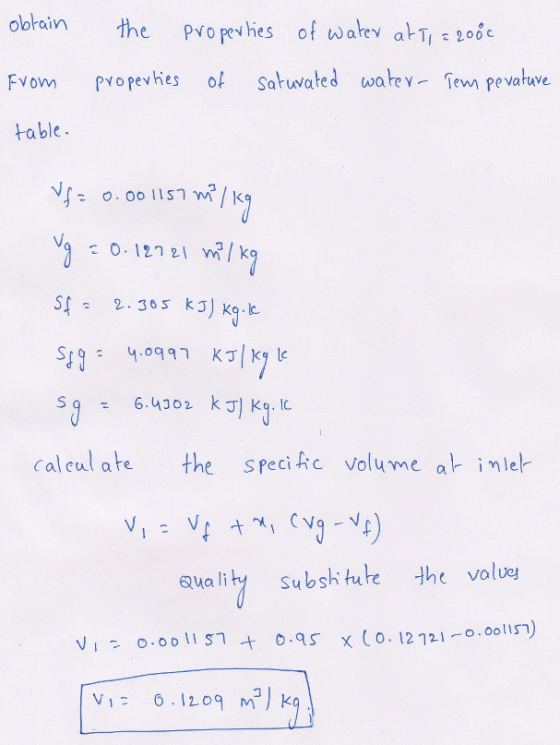
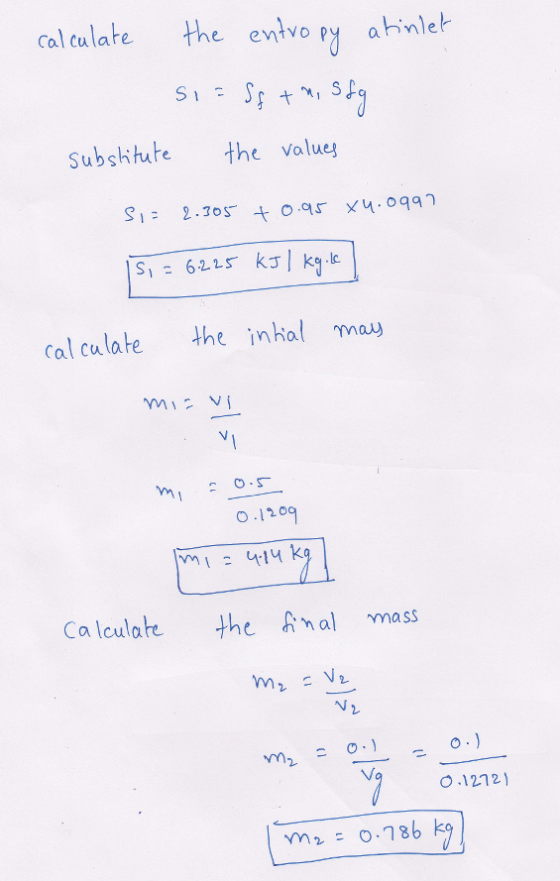
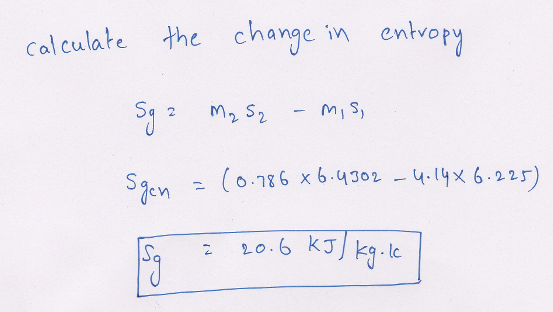
Arigidtankofvolume0.5m3isconnectedtoapiston–cylinderassemblybyavalve,asshown below. Both vessels contain pure water. They are immersed in a constant-temperature bath at 200oC...
Arigidtankofvolume0.5m3isconnectedtoapiston–cylinderassemblybyavalve,asshown below. Both vessels contain pure water. They are immersed in a constant-temperature bath at 200oC and 600 kPa. Consider the tank and the piston–cylinder assembly as the system and the constant temperature bath as the surroundings. Initially the valve is closed and both units are in equilibrium with the surroundings (the bath). The rigid tank contains saturated water with a quality of 95% (i.e., 95% of the mass of water is vapor). The piston–cylinder assembly initially has a volume...
In the friction-free piston-cylinder assembly, initially there is a volume of 0.1 m³ air at 300...
In the friction-free piston-cylinder assembly, initially there is a volume of 0.1 m³ air at 300 K temperature. The air is heated at a constant pressure of 300 kPa, at a constant piston velocity and a temperature of 600 K for 30 s. In this context, calculate the power to be given to the piston as [kW]. Show the process in the diagram T (° C) - v (m³ / kg).
Question: In the friction-free piston-cylinder assembly, initially there is a volume of 0.1 m³ air at...
Question: In the friction-free piston-cylinder assembly, initially there is a volume of 0.1 m³ air at 300 K temperature. The air is heated at a constant pressure of 300 kPa, at a constant piston velocity and a temperature of 600 K for 30 s. In this context, calculate the power to be given to the piston as [kW]. Show the process in the diagram T (° C) - v (m³ / kg).
Thermodynamics A piston-cylinder system contains 0.005 m3 of liquid water and 0.8 m3 of water vapor...
Thermodynamics A piston-cylinder system contains 0.005 m3 of liquid water and 0.8 m3 of water vapor in equilibrium at 600 kPa. Heat is transferred at constant pressure until the temperature reaches 200ºC. a- Determine the initial thermodynamic state of the system. b- Find the initial temperature of water. c- Calculate the total mass of water in the cylinder. d- Find the final volume of the system. e- Sketch the above thermodynamic process on a P-V phase diagram.
Please write the answers legibly. Question: In the friction-free piston-cylinder assembly, initially there is a volume...
 Please write the answers legibly.
Question: In the friction-free piston-cylinder assembly, initially there is a volume of 0.1 m’air at 300 K temperature. The air is heated at a constant pressure of 300 kPa, at a constant piston velocity and a temperature of 600 K for 30 s. In this context, calculate the power to be given to the piston as [kW]. Show the process in the diagram T (°C) - v(m/kg).
Please write the answers legibly.
Question: In the friction-free piston-cylinder assembly, initially there is a volume of 0.1 m’air at 300 K temperature. The air is heated at a constant pressure of 300 kPa, at a constant piston velocity and a temperature of 600 K for 30 s. In this context, calculate the power to be given to the piston as [kW]. Show the process in the diagram T (°C) - v(m/kg).
Consider the piston/cylinder arrangement shown in Fig1. A frictionless piston is free to move between two...
 Consider the piston/cylinder arrangement shown in Fig1. A
frictionless piston is free to move between two sets of stops. When
3 the piston rests on the lower stops, the enclosed volume is 0.5
m3. When the piston reaches the upper stops, the volume is 0.8 m .
The cylinder initially contains water at 200 kPa, 60% quality. The
mass of the piston requires 600 kPa pressure to move it against the
outside ambient pressure.
a) When heat is transferred until...
Consider the piston/cylinder arrangement shown in Fig1. A
frictionless piston is free to move between two sets of stops. When
3 the piston rests on the lower stops, the enclosed volume is 0.5
m3. When the piston reaches the upper stops, the volume is 0.8 m .
The cylinder initially contains water at 200 kPa, 60% quality. The
mass of the piston requires 600 kPa pressure to move it against the
outside ambient pressure.
a) When heat is transferred until...
1 A piston-cylinder device initially contain 0.4 m3 of 1.8- kg saturated liquid water and steam...
 1 A piston-cylinder device initially contain 0.4 m3 of 1.8- kg saturated liquid water and steam mixture at 110 kPa. A electric heater in the device is turned on and passes a current of 1.7 A from a 120-V source. Only transfer of electrical work and boundary work exist. The piston initially rests on a set of stops, and a pressure of 200 kPa is required to move the piston. Afterwards the system continues to raise the piston and eventually...
A piston-cylinder device initially contain 0.4 m3 of 1.8-kg saturated liquid water and steam mixture at...
A piston-cylinder device initially contain 0.4 m3 of 1.8-kg saturated liquid water and steam mixture at 110 kPa. A electric heater in the device is turned on and passes a current of 1.7 A from a 120-V source. Only transfer of electrical work and boundary work exist. The piston initially rests on a set of stops, and a pressure of 200 kPa is required to move the piston. Afterwards the system continues to raise the piston and eventually reaches the...
A piston-cylinder device initially contain 0.4 m3 of 1.8-kg saturated liquid water and steam mixture at...
A piston-cylinder device initially contain 0.4 m3 of 1.8-kg saturated liquid water and steam mixture at 110 kPa. A electric heater in the device is turned on and passes a current of 1.7 A from a 120-V source. Only transfer of electrical work and boundary work exist. The piston initially rests on a set of stops, and a pressure of 200 kPa is required to move the piston. Afterwards the system continues to raise the piston and eventually reaches the...
A piston-cylinder device initially contain 0.4 m3 of 1.8-kg saturated liquid water and steam mixture at...
A piston-cylinder device initially contain 0.4 m3 of 1.8-kg saturated liquid water and steam mixture at 110 kPa. A electric heater in the device is turned on and passes a current of 1.7 A from a 120-V source. Only transfer of electrical work and boundary work exist. The piston initially rests on a set of stops, and a pressure of 200 kPa is required to move the piston. Afterwards the system continues to raise the piston and eventually reaches the...
 Please write the answers legibly.
Question: In the friction-free piston-cylinder assembly, initially there is a volume of 0.1 m’air at 300 K temperature. The air is heated at a constant pressure of 300 kPa, at a constant piston velocity and a temperature of 600 K for 30 s. In this context, calculate the power to be given to the piston as [kW]. Show the process in the diagram T (°C) - v(m/kg).
Please write the answers legibly.
Question: In the friction-free piston-cylinder assembly, initially there is a volume of 0.1 m’air at 300 K temperature. The air is heated at a constant pressure of 300 kPa, at a constant piston velocity and a temperature of 600 K for 30 s. In this context, calculate the power to be given to the piston as [kW]. Show the process in the diagram T (°C) - v(m/kg).
 Consider the piston/cylinder arrangement shown in Fig1. A
frictionless piston is free to move between two sets of stops. When
3 the piston rests on the lower stops, the enclosed volume is 0.5
m3. When the piston reaches the upper stops, the volume is 0.8 m .
The cylinder initially contains water at 200 kPa, 60% quality. The
mass of the piston requires 600 kPa pressure to move it against the
outside ambient pressure.
a) When heat is transferred until...
Consider the piston/cylinder arrangement shown in Fig1. A
frictionless piston is free to move between two sets of stops. When
3 the piston rests on the lower stops, the enclosed volume is 0.5
m3. When the piston reaches the upper stops, the volume is 0.8 m .
The cylinder initially contains water at 200 kPa, 60% quality. The
mass of the piston requires 600 kPa pressure to move it against the
outside ambient pressure.
a) When heat is transferred until...
 1 A piston-cylinder device initially contain 0.4 m3 of 1.8- kg saturated liquid water and steam mixture at 110 kPa. A electric heater in the device is turned on and passes a current of 1.7 A from a 120-V source. Only transfer of electrical work and boundary work exist. The piston initially rests on a set of stops, and a pressure of 200 kPa is required to move the piston. Afterwards the system continues to raise the piston and eventually...
Most questions answered within 3 hours.
-
Where is the error in this code sequence?
String s1 = "Hello";
String s2 = "ello";...
asked 11 months ago -
Financial data for Joel de Paris, Inc., for last year
follow:
Joel de Paris, Inc.
Balance...
asked 11 months ago -
Consider this reaction:
Al2(SO4)3 (aq)+ BaCl3
(aq) Al2Cl6 (aq)- +
3BaSO4(s) . What is the...
asked 11 months ago -
Suppose that Savneet is considering increasing her
recent random sample from 20 car rentals to 40...
asked 11 months ago -
Trucks arrive at an unloading terminal at an average rate of 120
per hour.
Trucks arrive...
asked 11 months ago -
Why are methanol and ethanol completely soluble in water while
octanol is not very little soluble....
asked 11 months ago -
A facilities manager at a university reads in a research report
that the mean amount of...
asked 11 months ago -
When the CuSO4 is rehydrated by adding water to the anhydrous
compound, is this an endothermic...
asked 11 months ago -
A ray of sunlight is passing from diamond into crown glass; the
angle of incidence is...
asked 11 months ago -
A block of mass 0.249 kg is placed on top of a light, vertical
spring of...
asked 11 months ago -
how do the kidneys compensate in the presences of acidosis
a) trigger hyperventilate
b) reserve acid...
asked 11 months ago -
Question 501 pts
The rental rate of capital to the firm increases. Which of the
following...
asked 11 months ago