
Homework Answers
Add Answer to:
Can
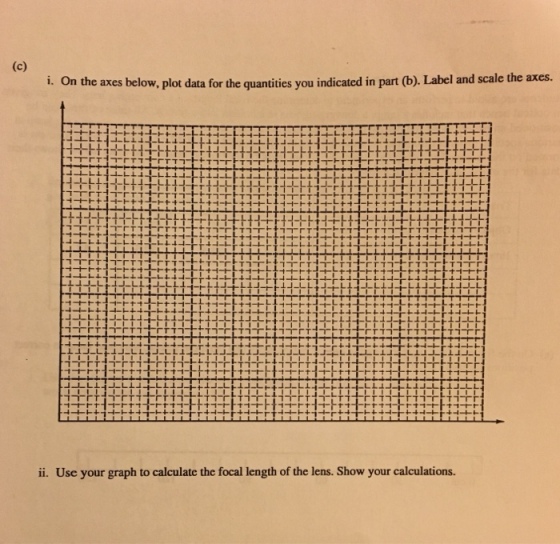
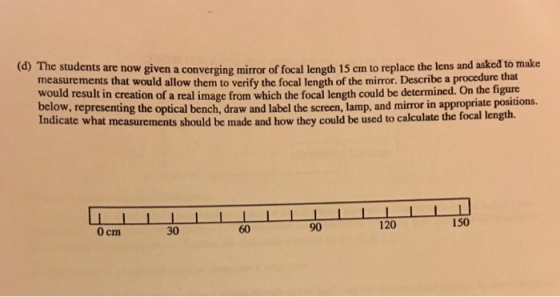
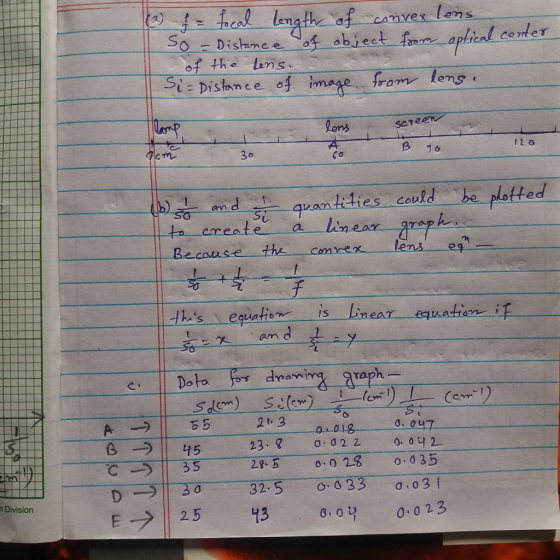
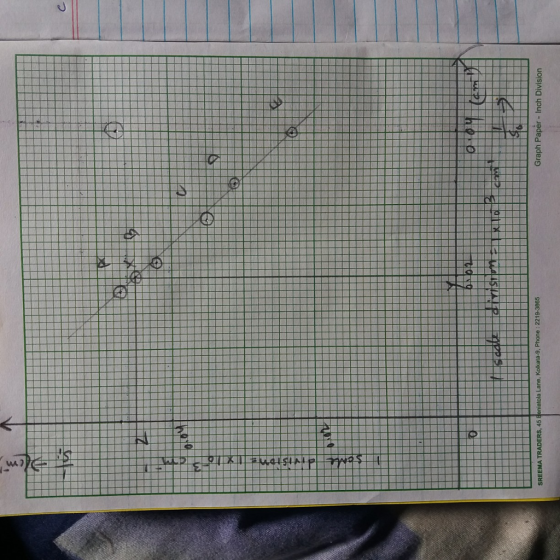
someone please help me with all the parts in this optics free
response problem?
3....
Q1: Within the experiment you are going to estimate object distance and image distance from object,...
 Q1: Within the experiment you are going to estimate object distance and image distance from object, lens and image positions. Write down the formula you will use to estimate object distance and image distances. object screen lens in holder image screen source optical bench Figure 2 Image fomation by a converging lens Object position, O Lens position, L Image position, I 02: what are the y-axis and x-axis parameters for the graph you will make in this experiment? What does...
Optics and Converging & Diverging Lenses 1. What is the relationship between the curvature of a...
Optics and Converging & Diverging Lenses 1. What is the relationship between the curvature of a lens (thick vs thinner converging lenses) and its light-bending power? 2. Focal length: is there a trend in the image distances vis a vis focal lengths as the object distance gets larger? What happens to the thin lens formula when object distance is very large? 3. In the compound lens formula, 1/fcomp = 1/f1 + 1/f2, why does a longer focal lens will not...
PHYS 2010 Geometric Optics Page 75 Prelab Question 1: A candle is located 30 cm from...
 PHYS 2010 Geometric Optics Page 75 Prelab Question 1: A candle is located 30 cm from a converging lens with a focal length 25 cm. a. Calculate the image distance. b. Will the image form on the same or opposite side of the lens as the object? c. What is the magnification of the image? d. Is the image upright or inverted? e. Is the image real or virtual? f. Can the image be viewed on a screen?
Problem 9: Go to the PhET website and run the geometrics optics simulation
 Problem 9: Go to the PhET website and run the geometrics optics simulationhttp://phet.colorado.edu/sims/geometric-optics/geometric-optics_en.htmlIn the questions below, select all correct answers.In this simulation you will explore converging lenses and how the distance of the object from the lens and the focal length determine the properties of the image formed by the lens.Make sure "Marginal rays" is selected in the box at the top left of the screen.The object is initially 2 f away from the lens. Move the object closer to...
please help in all sections! F Object When a real object is placed just inside the...
 please help in all sections!
F Object When a real object is placed just inside the focal point F of a diverging lens, the image is A) virtual, erect, and diminished. B) real, inverted, and enlarged. C) real, inverted, and diminished. D) virtual, erect, and enlarged. E) virtual, inverted, and diminished. 3. A lens has a positive focal length f. The only way to get a magnification of -1 is to A) place a real object at the focal point....
please help in all sections!
F Object When a real object is placed just inside the focal point F of a diverging lens, the image is A) virtual, erect, and diminished. B) real, inverted, and enlarged. C) real, inverted, and diminished. D) virtual, erect, and enlarged. E) virtual, inverted, and diminished. 3. A lens has a positive focal length f. The only way to get a magnification of -1 is to A) place a real object at the focal point....
Please help with this practice question about optics! 6. A certain convex lens is used to...
 Please help with this practice question about optics!
6. A certain convex lens is used to create an image of an object that is 2.0 m in front of the lens on a white screen that is 15.0 cm behind the lens. For the sake of clarity in the description that follows, assume that the object, lens, and screen are on the x axis, the lens sits at the origin, and the object is in the positive x direction (so...
Please help with this practice question about optics!
6. A certain convex lens is used to create an image of an object that is 2.0 m in front of the lens on a white screen that is 15.0 cm behind the lens. For the sake of clarity in the description that follows, assume that the object, lens, and screen are on the x axis, the lens sits at the origin, and the object is in the positive x direction (so...
please complete visual as well Ray Optics 3 Problem Statement A 4.0-cm tall object is placed...
 please complete visual as well
Ray Optics 3 Problem Statement A 4.0-cm tall object is placed 50.0 cm from a diverging lens having a focal length of magnitude 25.0 cm. Draw the ray diagram for this situation. What is the location and height of the image? Is the image real or virtual? Visual Representation • Draw an optical axis with the lens centered on the axis. • Represent the object at the correct distance from the lens • Draw the...
please complete visual as well
Ray Optics 3 Problem Statement A 4.0-cm tall object is placed 50.0 cm from a diverging lens having a focal length of magnitude 25.0 cm. Draw the ray diagram for this situation. What is the location and height of the image? Is the image real or virtual? Visual Representation • Draw an optical axis with the lens centered on the axis. • Represent the object at the correct distance from the lens • Draw the...
Which is true of a compound microscope? Question 1 options: Uses two converging lenses The optics...
Which is true of a compound microscope? Question 1 options: Uses two converging lenses The optics are reversed from those of a refracting telescope The object to be viewed to be enlarged is placed just outside the focal point of the lens All of the above An optical surface is converging if . . . Question 2 options: Parallel incident rays are bent so they intersect after interacting with the surface Parallel incident rays are bent so they intersect before...
Ray Optics 3 Problem Statement A 4.0-cm tall object is placed 50.0 cm from a diverging...
 Ray Optics 3 Problem Statement A 4.0-cm tall object is placed 50.0 cm from a diverging lens having a focal length of magnitude 25.0 cm. Draw the ray diagram for this situation. What is the location and height of the image? Is the image real or virtual? Visual Representation • Draw an optical axis with the lens centered on the axis. Represent the object at the correct distance from the lens • Draw the three "special rays" from the top...
Ray Optics 3 Problem Statement A 4.0-cm tall object is placed 50.0 cm from a diverging...
 Ray Optics 3 Problem Statement A 4.0-cm tall object is placed 50.0 cm from a diverging lens having a focal length of magnitude 25.0 cm. Draw the ray diagram for this situation. What is the location and height of the image? Is the image real or virtual? Visual Representation • Draw an optical axis with the lens centered on the axis. Represent the object at the correct distance from the lens • Draw the three "special rays” from the top...
 Q1: Within the experiment you are going to estimate object distance and image distance from object, lens and image positions. Write down the formula you will use to estimate object distance and image distances. object screen lens in holder image screen source optical bench Figure 2 Image fomation by a converging lens Object position, O Lens position, L Image position, I 02: what are the y-axis and x-axis parameters for the graph you will make in this experiment? What does...
 PHYS 2010 Geometric Optics Page 75 Prelab Question 1: A candle is located 30 cm from a converging lens with a focal length 25 cm. a. Calculate the image distance. b. Will the image form on the same or opposite side of the lens as the object? c. What is the magnification of the image? d. Is the image upright or inverted? e. Is the image real or virtual? f. Can the image be viewed on a screen?
 Problem 9: Go to the PhET website and run the geometrics optics simulationhttp://phet.colorado.edu/sims/geometric-optics/geometric-optics_en.htmlIn the questions below, select all correct answers.In this simulation you will explore converging lenses and how the distance of the object from the lens and the focal length determine the properties of the image formed by the lens.Make sure "Marginal rays" is selected in the box at the top left of the screen.The object is initially 2 f away from the lens. Move the object closer to...
 please help in all sections!
F Object When a real object is placed just inside the focal point F of a diverging lens, the image is A) virtual, erect, and diminished. B) real, inverted, and enlarged. C) real, inverted, and diminished. D) virtual, erect, and enlarged. E) virtual, inverted, and diminished. 3. A lens has a positive focal length f. The only way to get a magnification of -1 is to A) place a real object at the focal point....
please help in all sections!
F Object When a real object is placed just inside the focal point F of a diverging lens, the image is A) virtual, erect, and diminished. B) real, inverted, and enlarged. C) real, inverted, and diminished. D) virtual, erect, and enlarged. E) virtual, inverted, and diminished. 3. A lens has a positive focal length f. The only way to get a magnification of -1 is to A) place a real object at the focal point....
 Please help with this practice question about optics!
6. A certain convex lens is used to create an image of an object that is 2.0 m in front of the lens on a white screen that is 15.0 cm behind the lens. For the sake of clarity in the description that follows, assume that the object, lens, and screen are on the x axis, the lens sits at the origin, and the object is in the positive x direction (so...
Please help with this practice question about optics!
6. A certain convex lens is used to create an image of an object that is 2.0 m in front of the lens on a white screen that is 15.0 cm behind the lens. For the sake of clarity in the description that follows, assume that the object, lens, and screen are on the x axis, the lens sits at the origin, and the object is in the positive x direction (so...
 please complete visual as well
Ray Optics 3 Problem Statement A 4.0-cm tall object is placed 50.0 cm from a diverging lens having a focal length of magnitude 25.0 cm. Draw the ray diagram for this situation. What is the location and height of the image? Is the image real or virtual? Visual Representation • Draw an optical axis with the lens centered on the axis. • Represent the object at the correct distance from the lens • Draw the...
please complete visual as well
Ray Optics 3 Problem Statement A 4.0-cm tall object is placed 50.0 cm from a diverging lens having a focal length of magnitude 25.0 cm. Draw the ray diagram for this situation. What is the location and height of the image? Is the image real or virtual? Visual Representation • Draw an optical axis with the lens centered on the axis. • Represent the object at the correct distance from the lens • Draw the...
 Ray Optics 3 Problem Statement A 4.0-cm tall object is placed 50.0 cm from a diverging lens having a focal length of magnitude 25.0 cm. Draw the ray diagram for this situation. What is the location and height of the image? Is the image real or virtual? Visual Representation • Draw an optical axis with the lens centered on the axis. Represent the object at the correct distance from the lens • Draw the three "special rays" from the top...
 Ray Optics 3 Problem Statement A 4.0-cm tall object is placed 50.0 cm from a diverging lens having a focal length of magnitude 25.0 cm. Draw the ray diagram for this situation. What is the location and height of the image? Is the image real or virtual? Visual Representation • Draw an optical axis with the lens centered on the axis. Represent the object at the correct distance from the lens • Draw the three "special rays” from the top...
Most questions answered within 3 hours.
-
Where is the error in this code sequence?
String s1 = "Hello";
String s2 = "ello";...
asked 11 months ago -
Financial data for Joel de Paris, Inc., for last year
follow:
Joel de Paris, Inc.
Balance...
asked 11 months ago -
Consider this reaction:
Al2(SO4)3 (aq)+ BaCl3
(aq) Al2Cl6 (aq)- +
3BaSO4(s) . What is the...
asked 11 months ago -
Suppose that Savneet is considering increasing her
recent random sample from 20 car rentals to 40...
asked 11 months ago -
Trucks arrive at an unloading terminal at an average rate of 120
per hour.
Trucks arrive...
asked 11 months ago -
Why are methanol and ethanol completely soluble in water while
octanol is not very little soluble....
asked 11 months ago -
A facilities manager at a university reads in a research report
that the mean amount of...
asked 11 months ago -
When the CuSO4 is rehydrated by adding water to the anhydrous
compound, is this an endothermic...
asked 11 months ago -
A ray of sunlight is passing from diamond into crown glass; the
angle of incidence is...
asked 11 months ago -
A block of mass 0.249 kg is placed on top of a light, vertical
spring of...
asked 11 months ago -
how do the kidneys compensate in the presences of acidosis
a) trigger hyperventilate
b) reserve acid...
asked 11 months ago -
Question 501 pts
The rental rate of capital to the firm increases. Which of the
following...
asked 11 months ago