A set of three nucleophilic displacement reactions is shown
below:
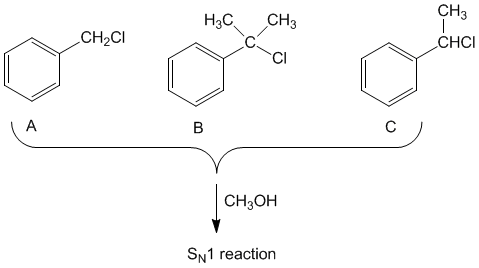
Which reaction (A, B, or C) proceeds the fastest?
Which reaction (A, B, or C) proceeds the slowest?
Homework Answers
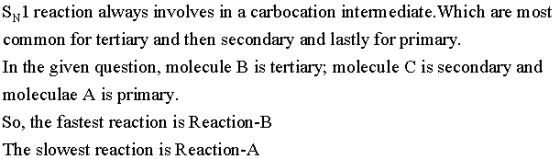
Add Answer to:
A set of three nucleophilic displacement reactions is shown
below:
Which reaction (A, B, or C)...
A set of three nucleophilic displacement reactions is shown below: - Br -Br CH3 Hас CHз...
 A set of three nucleophilic displacement reactions is shown below: - Br -Br CH3 Hас CHз В A NaCN CHнон SN2 reaction Which reaction (A, B, or C) proceeds the fastest? Which reaction (A, B, or C) proceeds the slowest? C A set of three nucleophilic displacement reactions is shown below: CH3 NaCN SN2 reaction CH3CHCH2CH2-X dimethylformamide (DMF) C, X A, X Br B, X CI Which reaction (A, B, or C) proceeds the fastest? Which reaction (A, B, or...
A set of three nucleophilic displacement reactions is shown below: CH3 CI CH2CI CI CH3 H20,...
 A set of three nucleophilic displacement reactions is shown below: CH3 CI CH2CI CI CH3 H20, CH3CH20H SN1 reaction Which reaction (A, B, or C) proceeds the fastest? Which reaction (A, B, or C) proceeds the slowest? ▼ 9 more group attempts remaining Submit Answer Retry Entire Group
ch 22 In both series below the three aromatic compounds illustrated undergo the electrophilic substitution reaction...
 ch 22
In both series below the three aromatic compounds illustrated undergo the electrophilic substitution reaction shown NH2 A B Reaction: Bromination Which compound (A, B, or C) reacts the fastest? Which compound (A, B, or C) reacts the slowest А B с Reaction: Chlorination Next Reaction: Bromination Which compound (A, B, or C) reacts the fastest? Which compound (A, B, or C) reacts the slowest? v do 000!! ZI Reaction: Chlorination Which compound (A, B, or C) reacts the...
ch 22
In both series below the three aromatic compounds illustrated undergo the electrophilic substitution reaction shown NH2 A B Reaction: Bromination Which compound (A, B, or C) reacts the fastest? Which compound (A, B, or C) reacts the slowest А B с Reaction: Chlorination Next Reaction: Bromination Which compound (A, B, or C) reacts the fastest? Which compound (A, B, or C) reacts the slowest? v do 000!! ZI Reaction: Chlorination Which compound (A, B, or C) reacts the...
h both series below the three aromatic compounds ilhestrated undergo the electrophilic substitution reaction show NHCCHE...
 h both series below the three aromatic compounds ilhestrated undergo the electrophilic substitution reaction show NHCCHE A B Reaction: Bromination Which compound (A, B, C) reacts the fastest? Which compound (A, B, or C) reacts the slowest? O OCH COH A B C Reaction: Chlorination Which compound (A, B, or C) reacts the fastest? Which compound (A, B, or C) reacts the slowest? h both series below the three stomatic compounds ilhestrated undergo the electrophilic substitution reaction shown -C-CH2CH3 OH...
which of the following structures will react the fastest in bimolecular nucleophilic reaction? Which of the...
 which of the following structures will react the fastest in
bimolecular nucleophilic reaction?
Which of the following structures will react the fastest in bimolecular nucleophilic reaction? Select one: a. lodocyclohexane b. 1-methyl-1-chlorocyclohexane O c. bromocyclohexane O d. Chlorocyclohexane
which of the following structures will react the fastest in
bimolecular nucleophilic reaction?
Which of the following structures will react the fastest in bimolecular nucleophilic reaction? Select one: a. lodocyclohexane b. 1-methyl-1-chlorocyclohexane O c. bromocyclohexane O d. Chlorocyclohexane
TRUVIOw Topics (References] In both series below the three aromatic compounds illustrated undergo the electrophilic substitution...
 TRUVIOw Topics (References] In both series below the three aromatic compounds illustrated undergo the electrophilic substitution reaction shown O=0 C- H CH2CH2CH2CH3 Reaction: Chlorination Which compound (A, B, or C) reacts the fastest? Which compound (A, B, or C) reacts the slowest? _ OCH3 OCH3 NO2 NO2 Reaction: Nitration Which compound (A, B, or C) reacts the fastest? – Which compound (A, B, or C) reacts the slowest? –
(Review Topics] (References) In both series below the three aromatic compounds illustrated undergo the electrophilic substitution...
 (Review Topics] (References) In both series below the three aromatic compounds illustrated undergo the electrophilic substitution reaction shown CH3 CH3 NO2 NO2 NO2 , Reaction: Nitration Which compound (A, B, or C) reacts the fastest? - Which compound (A, B, or C) reacts the slowest? - D D OCHZ COH Reaction: Chlorination Which compound (A, B, or C) reacts the fastest? Which compound (A, B, or C) reacts the slowest? _D
Draw an energy diagram for each of the reactions described below. Properly label each diagram, including...
 Draw an energy diagram for each of the reactions described below. Properly label each diagram, including reactants, products, transition state, axis labels, scale (set the reactants at 0 kJ/mol), Delta H, and E_a. Exothermic by 43 kJ/mol; E_a = 95 kJ/mol Endothermic by 15 kJ/mol; E_a = 55 kJ/mol Which of the reactions will occur the fastest? Slowest? Assume equal temperatures, concentrations, and the same rate law for both reactions.) For which of the reactions would the reverse reaction be...
Which of the following is true for reactions A, B, and C? 8. CH3CH2CH,+ Br CH,CH2CH2...
 Which of the following is true for reactions A, B, and C? 8. CH3CH2CH,+ Br CH,CH2CH2 + HBr CH CH2CH, + Br CH CH CH3 + HBr CH CH:CH; + Cl CH,CH-СH, + HCI A C a. Reaction A has the lowest activation energy b. Reaction B is the fastest reaction c. Reaction C has the lowest activation energy d. Reaction C is the slowest reaction 9. Which of the following statements is false? a. The rates of Sy1 reactions...
2. Three separate reactions are conducted as outlined below. Reaction 1: 4 drops of 1-chlorobutane in...
 2. Three separate reactions are conducted as outlined below. Reaction 1: 4 drops of 1-chlorobutane in 2 mL of 1% AgNO, in ethanol. Reaction 2: 4 drops of 2-chlorobutane in 2 mL of 1% AgNO, in ethanol. Reaction 3:4 drops of t-butyl chloride in 2 mL of 1% AgNO, in ethanol. a. List the expected rate of each of the reactions. List the slowest reaction first and fastest reaction last. b. Explain your reasoning based on substrate structure, the nature...
 A set of three nucleophilic displacement reactions is shown below: - Br -Br CH3 Hас CHз В A NaCN CHнон SN2 reaction Which reaction (A, B, or C) proceeds the fastest? Which reaction (A, B, or C) proceeds the slowest? C A set of three nucleophilic displacement reactions is shown below: CH3 NaCN SN2 reaction CH3CHCH2CH2-X dimethylformamide (DMF) C, X A, X Br B, X CI Which reaction (A, B, or C) proceeds the fastest? Which reaction (A, B, or...
 A set of three nucleophilic displacement reactions is shown below: CH3 CI CH2CI CI CH3 H20, CH3CH20H SN1 reaction Which reaction (A, B, or C) proceeds the fastest? Which reaction (A, B, or C) proceeds the slowest? ▼ 9 more group attempts remaining Submit Answer Retry Entire Group
 ch 22
In both series below the three aromatic compounds illustrated undergo the electrophilic substitution reaction shown NH2 A B Reaction: Bromination Which compound (A, B, or C) reacts the fastest? Which compound (A, B, or C) reacts the slowest А B с Reaction: Chlorination Next Reaction: Bromination Which compound (A, B, or C) reacts the fastest? Which compound (A, B, or C) reacts the slowest? v do 000!! ZI Reaction: Chlorination Which compound (A, B, or C) reacts the...
ch 22
In both series below the three aromatic compounds illustrated undergo the electrophilic substitution reaction shown NH2 A B Reaction: Bromination Which compound (A, B, or C) reacts the fastest? Which compound (A, B, or C) reacts the slowest А B с Reaction: Chlorination Next Reaction: Bromination Which compound (A, B, or C) reacts the fastest? Which compound (A, B, or C) reacts the slowest? v do 000!! ZI Reaction: Chlorination Which compound (A, B, or C) reacts the...
 h both series below the three aromatic compounds ilhestrated undergo the electrophilic substitution reaction show NHCCHE A B Reaction: Bromination Which compound (A, B, C) reacts the fastest? Which compound (A, B, or C) reacts the slowest? O OCH COH A B C Reaction: Chlorination Which compound (A, B, or C) reacts the fastest? Which compound (A, B, or C) reacts the slowest? h both series below the three stomatic compounds ilhestrated undergo the electrophilic substitution reaction shown -C-CH2CH3 OH...
 which of the following structures will react the fastest in
bimolecular nucleophilic reaction?
Which of the following structures will react the fastest in bimolecular nucleophilic reaction? Select one: a. lodocyclohexane b. 1-methyl-1-chlorocyclohexane O c. bromocyclohexane O d. Chlorocyclohexane
which of the following structures will react the fastest in
bimolecular nucleophilic reaction?
Which of the following structures will react the fastest in bimolecular nucleophilic reaction? Select one: a. lodocyclohexane b. 1-methyl-1-chlorocyclohexane O c. bromocyclohexane O d. Chlorocyclohexane
 TRUVIOw Topics (References] In both series below the three aromatic compounds illustrated undergo the electrophilic substitution reaction shown O=0 C- H CH2CH2CH2CH3 Reaction: Chlorination Which compound (A, B, or C) reacts the fastest? Which compound (A, B, or C) reacts the slowest? _ OCH3 OCH3 NO2 NO2 Reaction: Nitration Which compound (A, B, or C) reacts the fastest? – Which compound (A, B, or C) reacts the slowest? –
 (Review Topics] (References) In both series below the three aromatic compounds illustrated undergo the electrophilic substitution reaction shown CH3 CH3 NO2 NO2 NO2 , Reaction: Nitration Which compound (A, B, or C) reacts the fastest? - Which compound (A, B, or C) reacts the slowest? - D D OCHZ COH Reaction: Chlorination Which compound (A, B, or C) reacts the fastest? Which compound (A, B, or C) reacts the slowest? _D
 Draw an energy diagram for each of the reactions described below. Properly label each diagram, including reactants, products, transition state, axis labels, scale (set the reactants at 0 kJ/mol), Delta H, and E_a. Exothermic by 43 kJ/mol; E_a = 95 kJ/mol Endothermic by 15 kJ/mol; E_a = 55 kJ/mol Which of the reactions will occur the fastest? Slowest? Assume equal temperatures, concentrations, and the same rate law for both reactions.) For which of the reactions would the reverse reaction be...
 Which of the following is true for reactions A, B, and C? 8. CH3CH2CH,+ Br CH,CH2CH2 + HBr CH CH2CH, + Br CH CH CH3 + HBr CH CH:CH; + Cl CH,CH-СH, + HCI A C a. Reaction A has the lowest activation energy b. Reaction B is the fastest reaction c. Reaction C has the lowest activation energy d. Reaction C is the slowest reaction 9. Which of the following statements is false? a. The rates of Sy1 reactions...
 2. Three separate reactions are conducted as outlined below. Reaction 1: 4 drops of 1-chlorobutane in 2 mL of 1% AgNO, in ethanol. Reaction 2: 4 drops of 2-chlorobutane in 2 mL of 1% AgNO, in ethanol. Reaction 3:4 drops of t-butyl chloride in 2 mL of 1% AgNO, in ethanol. a. List the expected rate of each of the reactions. List the slowest reaction first and fastest reaction last. b. Explain your reasoning based on substrate structure, the nature...
Most questions answered within 3 hours.
-
Where is the error in this code sequence?
String s1 = "Hello";
String s2 = "ello";...
asked 10 months ago -
Financial data for Joel de Paris, Inc., for last year
follow:
Joel de Paris, Inc.
Balance...
asked 10 months ago -
Consider this reaction:
Al2(SO4)3 (aq)+ BaCl3
(aq) Al2Cl6 (aq)- +
3BaSO4(s) . What is the...
asked 10 months ago -
Suppose that Savneet is considering increasing her
recent random sample from 20 car rentals to 40...
asked 10 months ago -
Trucks arrive at an unloading terminal at an average rate of 120
per hour.
Trucks arrive...
asked 10 months ago -
Why are methanol and ethanol completely soluble in water while
octanol is not very little soluble....
asked 10 months ago -
A facilities manager at a university reads in a research report
that the mean amount of...
asked 10 months ago -
When the CuSO4 is rehydrated by adding water to the anhydrous
compound, is this an endothermic...
asked 10 months ago -
A ray of sunlight is passing from diamond into crown glass; the
angle of incidence is...
asked 10 months ago -
A block of mass 0.249 kg is placed on top of a light, vertical
spring of...
asked 10 months ago -
how do the kidneys compensate in the presences of acidosis
a) trigger hyperventilate
b) reserve acid...
asked 10 months ago -
Question 501 pts
The rental rate of capital to the firm increases. Which of the
following...
asked 10 months ago