
Homework Answers
According to HomeworkLib policy we are bound to do only four parts of a question. please give good ratings thumbs up to me. thanks
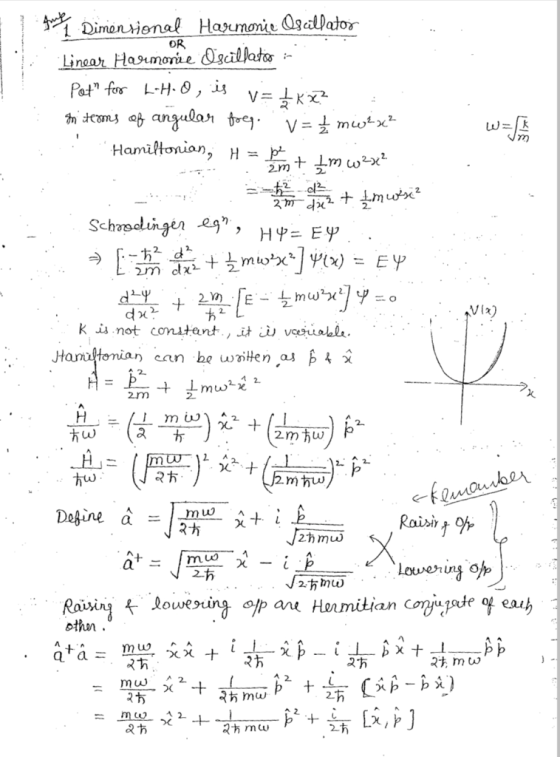
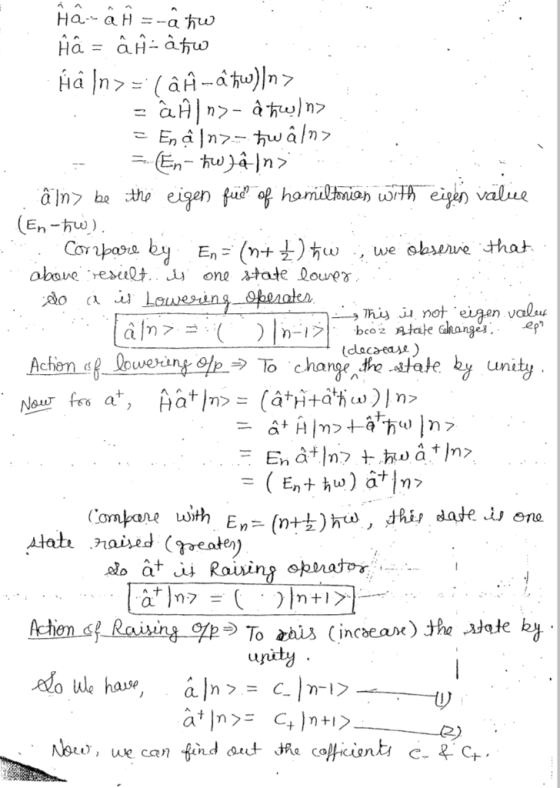
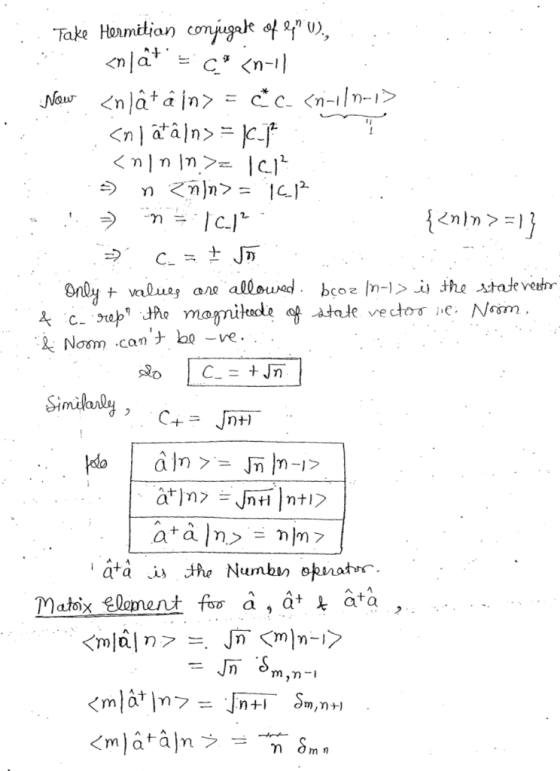
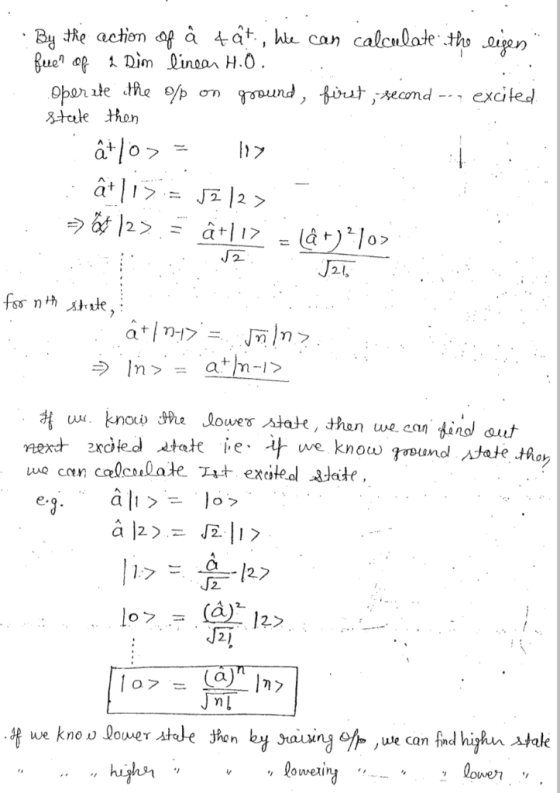
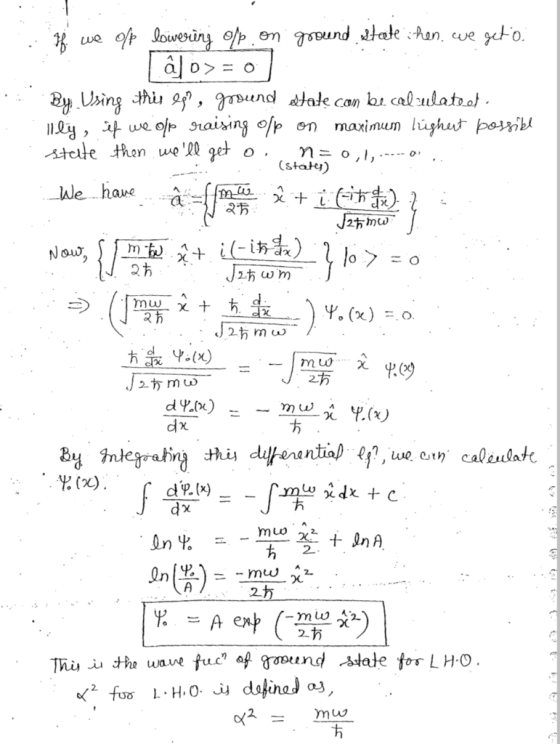
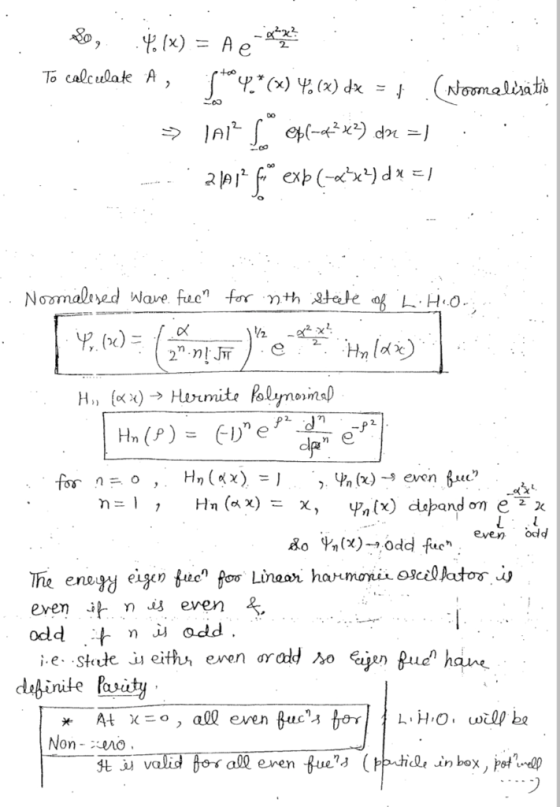
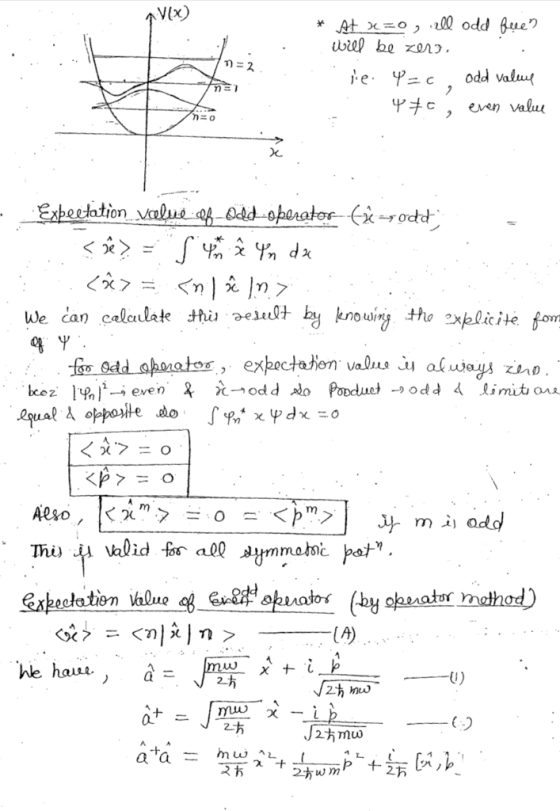
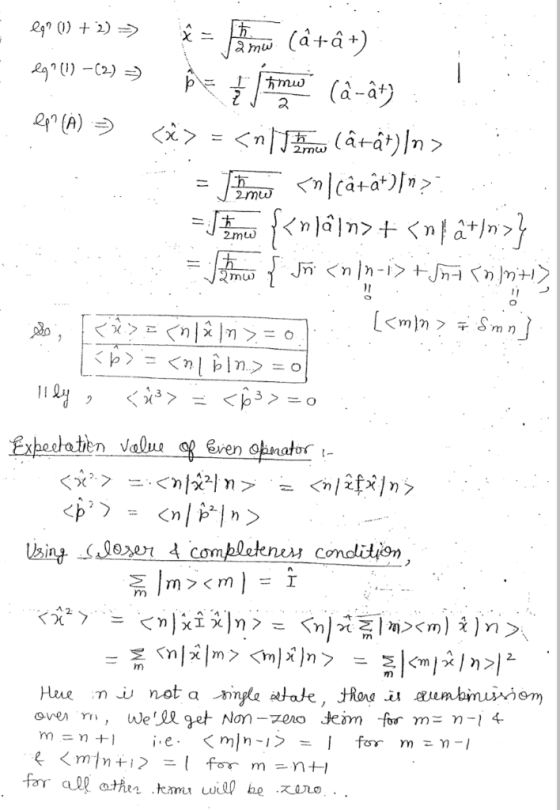
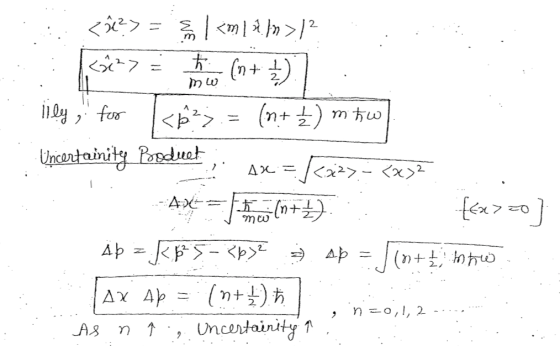
![2. [@+a+올ナu, , а+ај ラ(ata + Đfw (a+a) _ @+9(аґа+9が ちw [o]-。](http://img.homeworklib.com/questions/d899bd40-c2df-11ea-b567-5d46f9e707e5.png?x-oss-process=image/resize,w_560)

Add Answer to:
Problem 5. (30 points) Consider a Harmonic oscillator with H that H=(ata + 1 / 2)ho,...
Problem 5 (20 Points): For the circuit shown below, the input is the current source, I(t) and the...
 Problem 5 (20 Points): For the circuit shown below, the input is the current source, I(t) and the output is eo. 1). Find the state variable model. Take ec and IL as state variables (refer notes from Chapter-6). 2). Apply Laplace Transform on the state variable model (from part-1) and show that the transform of the output (eo) is given by the expression: 사스 ; if the initial conditions, L(0) and ec(0) are known. Note: ec(0)-eo(0) R L R L...
I need help with problem #3, please and thank you! Problem #2 (25 points) - The...
 I need help with problem #3, please and thank you!
Problem #2 (25 points) - The True Hanging String Shape After solving for ye(2) for the scenario in Problem #1, show that the mag- nitude of the tension in the string is given by the expression T(X) = To cosh (Como) where To = Tmin is the minimum tension magnitude in the string which occurs at the bottom point of the string, and then show that the maximum tension magnitude...
I need help with problem #3, please and thank you!
Problem #2 (25 points) - The True Hanging String Shape After solving for ye(2) for the scenario in Problem #1, show that the mag- nitude of the tension in the string is given by the expression T(X) = To cosh (Como) where To = Tmin is the minimum tension magnitude in the string which occurs at the bottom point of the string, and then show that the maximum tension magnitude...
Griffiths Introductory to Quantum Mechanics (3rd Edition): Problem 7.9 Problem 7.9 Consider a particle of mass...
 Griffiths Introductory to Quantum Mechanics (3rd Edition):
Problem 7.9
Problem 7.9 Consider a particle of mass m that is free to move in a one- dimensional region of length L that closes on itself (for instance, a bea that slides frictionlessly on a circular wire of circumference L, as Problem 2.46) (a) Show that the stationary states can be written in the form 2π inx/L where n 0, t l, 2, , and the allowed energies are In Notice that-with...
Griffiths Introductory to Quantum Mechanics (3rd Edition):
Problem 7.9
Problem 7.9 Consider a particle of mass m that is free to move in a one- dimensional region of length L that closes on itself (for instance, a bea that slides frictionlessly on a circular wire of circumference L, as Problem 2.46) (a) Show that the stationary states can be written in the form 2π inx/L where n 0, t l, 2, , and the allowed energies are In Notice that-with...
Consider the state of a spin-1/2 particle 14) = v1o (31+z) + i] – z)) where...
 Consider the state of a spin-1/2 particle 14) = v1o (31+z) + i] – z)) where | z) are the eigenstates of the operator of the spin z-component $z. 1. Show that [V) is properly normalized, i.e. (W14) = 1. 2. Calculate the probability that a measurement of $x = 6x yields 3. Calculate the expectation value (Šx) for the state 14) and its dispersion ASx = V(@z) – ($()2. 4. Assume that the spin is placed in the magnetic...
1) (35 points) The wave function for a particle moving along x axis between the limits 0 and L is: (x)-C sin (nx xL) where n are 1, 2, 3, A) Determine the normalization constant C B) Why can'...
 1) (35 points) The wave function for a particle moving along x axis between the limits 0 and L is: (x)-C sin (nx xL) where n are 1, 2, 3, A) Determine the normalization constant C B) Why can't n take the value of 0, briefly explain C) For n-3 determine the values of x (in terms of L) that correspond to a maximum or a minimum in the wave function D) For n-3 determine the values of x (in...
Q1. Consider these four points: P [,,5| , P2 = 2], P3 = [H]. Plot these...
 Q1. Consider these four points: P [,,5| , P2 = 2], P3 = [H]. Plot these three points. (a) Find the Manhattan distance between Pi and P2 (b) Find the Manhattan distance between P1 and P3. (e) Find the Manhattan distance between P2 and P3. Q2. Consider the same points in Q1 and find the Euclidean distances between the points specified in parts (a), (b), and (e). In other words, you will be doing the above question again but now...
A particle of mass m is bound by the spherically-symmetric three-dimensional harmonic- oscillator potential energy ,...
 A particle of mass m is bound by the spherically-symmetric three-dimensional harmonic- oscillator potential energy , and ф are the usual spherical coordinates. (a) In the form given above, why is it clear that the potential energy function V) is (b) For this problem, it will be more convenient to express this spherically-symmetric where r , spherically symmetric? A brief answer is sufficient. potential energy in Cartesian coordinates x, y, and z as physically the same potential energy as the...
Question 8 please 5. We start with Schrodinger's Equation in 2(x,t) = H¥(x,t). We can write...
 Question 8 please
5. We start with Schrodinger's Equation in 2(x,t) = H¥(x,t). We can write the time derivative as 2.4(x, t) = V(x,+) - (xt), where At is a sufficiently small increment of time. Plug the algebraic form of the derivative into Schrodinger's Eq. and solve for '(x,t+At). b. Put your answer in the form (x,t+At) = T '(x,t). c. What physically does the operator T do to the function '(x,t)? d. Deduce an expression for '(x,t+24t), in terms...
Question 8 please
5. We start with Schrodinger's Equation in 2(x,t) = H¥(x,t). We can write the time derivative as 2.4(x, t) = V(x,+) - (xt), where At is a sufficiently small increment of time. Plug the algebraic form of the derivative into Schrodinger's Eq. and solve for '(x,t+At). b. Put your answer in the form (x,t+At) = T '(x,t). c. What physically does the operator T do to the function '(x,t)? d. Deduce an expression for '(x,t+24t), in terms...
QUESTION 6 1 points s Consider the hypothesis test Ho μι-μ2 against H, μι-μ 2 ....
 QUESTION 6 1 points s Consider the hypothesis test Ho μι-μ2 against H, μι-μ 2 . Suppose that sample sizes are n1-15 and n2-15 and X, 4.5 and X2 -8.0 and that s-4 and s-6.18. Assume that the data are drawn from normal distributions. Compute the p-value of the test statistics. Round your answer to 4 decimal places
1. 5 points Let G, H, J, and P denote the following propositional variables: G: "Jo knows where the gold is hidden....
 1. 5 points Let G, H, J, and P denote the following propositional variables: G: "Jo knows where the gold is hidden." J : "Jo is a knight." H: "Pat knows where the gold is hidden." P: "Pat is a knight." One fine day, while we are strolling along on The Island of Knights & Knaves, we meet Jo and Pat, each of whom is an inhabitant of The Island of Knights & Knaves Jo says "We both know where...
 Problem 5 (20 Points): For the circuit shown below, the input is the current source, I(t) and the output is eo. 1). Find the state variable model. Take ec and IL as state variables (refer notes from Chapter-6). 2). Apply Laplace Transform on the state variable model (from part-1) and show that the transform of the output (eo) is given by the expression: 사스 ; if the initial conditions, L(0) and ec(0) are known. Note: ec(0)-eo(0) R L R L...
 I need help with problem #3, please and thank you!
Problem #2 (25 points) - The True Hanging String Shape After solving for ye(2) for the scenario in Problem #1, show that the mag- nitude of the tension in the string is given by the expression T(X) = To cosh (Como) where To = Tmin is the minimum tension magnitude in the string which occurs at the bottom point of the string, and then show that the maximum tension magnitude...
I need help with problem #3, please and thank you!
Problem #2 (25 points) - The True Hanging String Shape After solving for ye(2) for the scenario in Problem #1, show that the mag- nitude of the tension in the string is given by the expression T(X) = To cosh (Como) where To = Tmin is the minimum tension magnitude in the string which occurs at the bottom point of the string, and then show that the maximum tension magnitude...
 Griffiths Introductory to Quantum Mechanics (3rd Edition):
Problem 7.9
Problem 7.9 Consider a particle of mass m that is free to move in a one- dimensional region of length L that closes on itself (for instance, a bea that slides frictionlessly on a circular wire of circumference L, as Problem 2.46) (a) Show that the stationary states can be written in the form 2π inx/L where n 0, t l, 2, , and the allowed energies are In Notice that-with...
Griffiths Introductory to Quantum Mechanics (3rd Edition):
Problem 7.9
Problem 7.9 Consider a particle of mass m that is free to move in a one- dimensional region of length L that closes on itself (for instance, a bea that slides frictionlessly on a circular wire of circumference L, as Problem 2.46) (a) Show that the stationary states can be written in the form 2π inx/L where n 0, t l, 2, , and the allowed energies are In Notice that-with...
 Consider the state of a spin-1/2 particle 14) = v1o (31+z) + i] – z)) where | z) are the eigenstates of the operator of the spin z-component $z. 1. Show that [V) is properly normalized, i.e. (W14) = 1. 2. Calculate the probability that a measurement of $x = 6x yields 3. Calculate the expectation value (Šx) for the state 14) and its dispersion ASx = V(@z) – ($()2. 4. Assume that the spin is placed in the magnetic...
 1) (35 points) The wave function for a particle moving along x axis between the limits 0 and L is: (x)-C sin (nx xL) where n are 1, 2, 3, A) Determine the normalization constant C B) Why can't n take the value of 0, briefly explain C) For n-3 determine the values of x (in terms of L) that correspond to a maximum or a minimum in the wave function D) For n-3 determine the values of x (in...
 Q1. Consider these four points: P [,,5| , P2 = 2], P3 = [H]. Plot these three points. (a) Find the Manhattan distance between Pi and P2 (b) Find the Manhattan distance between P1 and P3. (e) Find the Manhattan distance between P2 and P3. Q2. Consider the same points in Q1 and find the Euclidean distances between the points specified in parts (a), (b), and (e). In other words, you will be doing the above question again but now...
 A particle of mass m is bound by the spherically-symmetric three-dimensional harmonic- oscillator potential energy , and ф are the usual spherical coordinates. (a) In the form given above, why is it clear that the potential energy function V) is (b) For this problem, it will be more convenient to express this spherically-symmetric where r , spherically symmetric? A brief answer is sufficient. potential energy in Cartesian coordinates x, y, and z as physically the same potential energy as the...
 Question 8 please
5. We start with Schrodinger's Equation in 2(x,t) = H¥(x,t). We can write the time derivative as 2.4(x, t) = V(x,+) - (xt), where At is a sufficiently small increment of time. Plug the algebraic form of the derivative into Schrodinger's Eq. and solve for '(x,t+At). b. Put your answer in the form (x,t+At) = T '(x,t). c. What physically does the operator T do to the function '(x,t)? d. Deduce an expression for '(x,t+24t), in terms...
Question 8 please
5. We start with Schrodinger's Equation in 2(x,t) = H¥(x,t). We can write the time derivative as 2.4(x, t) = V(x,+) - (xt), where At is a sufficiently small increment of time. Plug the algebraic form of the derivative into Schrodinger's Eq. and solve for '(x,t+At). b. Put your answer in the form (x,t+At) = T '(x,t). c. What physically does the operator T do to the function '(x,t)? d. Deduce an expression for '(x,t+24t), in terms...
 QUESTION 6 1 points s Consider the hypothesis test Ho μι-μ2 against H, μι-μ 2 . Suppose that sample sizes are n1-15 and n2-15 and X, 4.5 and X2 -8.0 and that s-4 and s-6.18. Assume that the data are drawn from normal distributions. Compute the p-value of the test statistics. Round your answer to 4 decimal places
 1. 5 points Let G, H, J, and P denote the following propositional variables: G: "Jo knows where the gold is hidden." J : "Jo is a knight." H: "Pat knows where the gold is hidden." P: "Pat is a knight." One fine day, while we are strolling along on The Island of Knights & Knaves, we meet Jo and Pat, each of whom is an inhabitant of The Island of Knights & Knaves Jo says "We both know where...
Most questions answered within 3 hours.
-
Where is the error in this code sequence?
String s1 = "Hello";
String s2 = "ello";...
asked 11 months ago -
Financial data for Joel de Paris, Inc., for last year
follow:
Joel de Paris, Inc.
Balance...
asked 11 months ago -
Consider this reaction:
Al2(SO4)3 (aq)+ BaCl3
(aq) Al2Cl6 (aq)- +
3BaSO4(s) . What is the...
asked 11 months ago -
Suppose that Savneet is considering increasing her
recent random sample from 20 car rentals to 40...
asked 11 months ago -
Trucks arrive at an unloading terminal at an average rate of 120
per hour.
Trucks arrive...
asked 11 months ago -
Why are methanol and ethanol completely soluble in water while
octanol is not very little soluble....
asked 11 months ago -
A facilities manager at a university reads in a research report
that the mean amount of...
asked 11 months ago -
When the CuSO4 is rehydrated by adding water to the anhydrous
compound, is this an endothermic...
asked 11 months ago -
A ray of sunlight is passing from diamond into crown glass; the
angle of incidence is...
asked 11 months ago -
A block of mass 0.249 kg is placed on top of a light, vertical
spring of...
asked 11 months ago -
how do the kidneys compensate in the presences of acidosis
a) trigger hyperventilate
b) reserve acid...
asked 11 months ago -
Question 501 pts
The rental rate of capital to the firm increases. Which of the
following...
asked 11 months ago