Please let me know which of the following are right from question 1&2 1)What is the...
Please let me know which of the following are right from question 1&2
1)What is the most likely phenotype of a loss of function mutation in a proto-oncogene? (you may select more than one answer)
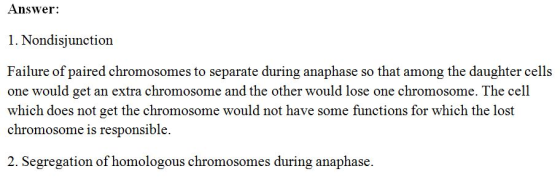
Increased cell division, decreased cell division, cancer, non-disjunction
QUESTION 2
Which of the following behaviors of meiotic chromosomes is responsible for Mendel's law of segregation?
|
Condensation of chromosomes during metaphase 1 |
||
|
Segregation of homologous chromosomes during anaphase |
||
|
chromatids |
||
|
DNA replication in interphase |
||
|
Pairing of homologous chromosomes in prophase |
Homework Answers
Add Answer to:
Please let me know which of the following are right from
question 1&2
1)What is the...
QUESTION 14 Which of the following behaviors of melotic chromosomes is responsible for Mendel's law of...
 QUESTION 14 Which of the following behaviors of melotic chromosomes is responsible for Mendel's law of segregation? OCondensation of chromosomes during metaphase 1 OSegregation of homologous chromosomes during anaphase OSegregation of sister chromatids during anaphase I O DNA replication in interphase OPairing of homologous chromosomes in prophase QUESTION 15 Which of the tolowing best explains why some autosoma trisomies, such as trisomy 21, are viable in humans, while others die as very early embryos? O The extra gene dosage of...
GENETICS can someone fill this out for me please The effects of cell cycle events on...
 GENETICS
can someone fill this out for me please
The effects of cell cycle events on chromosomes Event Phase Number of structures Chromosomes Chromatids replication of chromosomes (DNA) S (interphase) condensation (tight coiling) of chromosomes prophase orientation of chromosomes metaphase anaphase In total centromere division: segregation of chromatids telophase per pole_ nuclear membrane re-forms around group of chromosomes at each pole cytokinesis per cell 0 two daughter cells form
GENETICS
can someone fill this out for me please
The effects of cell cycle events on chromosomes Event Phase Number of structures Chromosomes Chromatids replication of chromosomes (DNA) S (interphase) condensation (tight coiling) of chromosomes prophase orientation of chromosomes metaphase anaphase In total centromere division: segregation of chromatids telophase per pole_ nuclear membrane re-forms around group of chromosomes at each pole cytokinesis per cell 0 two daughter cells form
Question 24 (2 points) Mendel's law of segregation can be explained by a specific event that...
 Question 24 (2 points) Mendel's law of segregation can be explained by a specific event that occurs during meiosis. That event is V 1) homologous chromosomes synapse and cross over during Prophase 2) independent assortment of homologous chromosomes at Metaphase I 3) random fertilization 4) sister chromatids separate during Anaphase II 5) homologous chromosomes separate during Anaphasel
2) What is the most likely phenotype of a loss of function mutation in a proto-oncogene?...
2) What is the most likely phenotype of a loss of function mutation in a proto-oncogene? (you may select more than one answer) a) Increased cell division b) decreased cell division c) cancer d) non-disjunction
Can you please help me with this problem: 1. A cell in G2 of interphase has...
 Can you please help me with this problem:
1. A cell in G2 of interphase has 10 chromosomes. How many chromosomes and DNA molecules will be found per cell when this original cell progresses to the following stages: a. Metaphase 1 of meiosis b. Prophase II of meiosis c. G1 phase, following the conclusion of mitosis d. Anaphase 1 of meiosis 2. Draw a pair of homologous chromosomes in G2 of the cell cycle. These chromosomes carry two different genes...
Can you please help me with this problem:
1. A cell in G2 of interphase has 10 chromosomes. How many chromosomes and DNA molecules will be found per cell when this original cell progresses to the following stages: a. Metaphase 1 of meiosis b. Prophase II of meiosis c. G1 phase, following the conclusion of mitosis d. Anaphase 1 of meiosis 2. Draw a pair of homologous chromosomes in G2 of the cell cycle. These chromosomes carry two different genes...
Please fill out every part of Mitosis. thank you. Question 2 3 pts Match the following...
 Please fill out every part of Mitosis. thank you.
Question 2 3 pts Match the following phases of mitosis Prophase [Choose (Choose) Chromosomes condense, nuclear envelope breaks down, spindle complex forms Metaphase Anaphase The cell prepares for mitosis after DNA replication Chromatids of sister chromatids separate from each other and travel to opposite poles Chromosomes decondense, nuclear envelope reforms chromosomes line up along the metaphase plate so that a sister chromatid faces each pole Cytokinesis Cells duplicate their chromatids to...
Please fill out every part of Mitosis. thank you.
Question 2 3 pts Match the following phases of mitosis Prophase [Choose (Choose) Chromosomes condense, nuclear envelope breaks down, spindle complex forms Metaphase Anaphase The cell prepares for mitosis after DNA replication Chromatids of sister chromatids separate from each other and travel to opposite poles Chromosomes decondense, nuclear envelope reforms chromosomes line up along the metaphase plate so that a sister chromatid faces each pole Cytokinesis Cells duplicate their chromatids to...
Match the following terms to the correct definition Match the following terms to the correct definition. 1. term used t...
 Match the following terms to the correct definition
. 1. term used to describe the double stranded chromosomes present after DNA replication alleles A. cell division that results in the formation of B 4 cells each containing haploid number of chromosomes crossing over division of the cytoplasm type of cell division that results in the formation of 2 daughter cells genetically identical to parent cell pairing of homologous sister chromatids during prophase I...
Match the following terms to the correct definition
Match the following terms to the correct definition. 1. term used to describe the double stranded chromosomes present after DNA replication alleles A. cell division that results in the formation of B 4 cells each containing haploid number of chromosomes crossing over division of the cytoplasm type of cell division that results in the formation of 2 daughter cells genetically identical to parent cell pairing of homologous sister chromatids during prophase I...
FLUID o True False 1 pts Question 3 Which of the following statements about MEIOSIS are...
 FLUID o True False 1 pts Question 3 Which of the following statements about MEIOSIS are CORRECT? Only haploid cells are produced Sister chromatids are separated during anaphase I and homologous chromosomes are separated during anaphase II After crossing over (recombination) the sister chromatids are still identical There are two rounds of cell division following only one round of DNA synthesis non-disjunction can occur during either anaphase I or Il 1 pts Question 4
2. Explain why the replication of one of the DNA strands is continuous while the other...
2. Explain why the replication of one of the DNA strands is continuous while the other strand is discontinuous. What causes this difference? 3. A) What are telomeres? B) Are telomeres present in both Prokaryotes and Eukaryotes? Explain why some cells have telomeres and others don't. 4. A) Draw a cell with 2 pairs chromosomes as it goes through the cell cycle and indicate the main things that happen to its chromosomes at each stage (label: sister chromatids, homologous chromosomes,...
Multiple choice: 1- Which of the following is a component of the total variability of a...
Multiple choice: 1- Which of the following is a component of the total variability of a trait? A. additive effects of alleles B. dominance interactions among alleles C. environmental effects D. epistatic relationships among alleles E. all of the above 2- Which of the following is not an example of a multifactorial disorder? A. cystic fibrosis B. diabetes C. hypertension D. obesity E. partial epilepsy 3- Cells with four of each of the basic chromosome number are: A. tetraploid (2N)....
 QUESTION 14 Which of the following behaviors of melotic chromosomes is responsible for Mendel's law of segregation? OCondensation of chromosomes during metaphase 1 OSegregation of homologous chromosomes during anaphase OSegregation of sister chromatids during anaphase I O DNA replication in interphase OPairing of homologous chromosomes in prophase QUESTION 15 Which of the tolowing best explains why some autosoma trisomies, such as trisomy 21, are viable in humans, while others die as very early embryos? O The extra gene dosage of...
 GENETICS
can someone fill this out for me please
The effects of cell cycle events on chromosomes Event Phase Number of structures Chromosomes Chromatids replication of chromosomes (DNA) S (interphase) condensation (tight coiling) of chromosomes prophase orientation of chromosomes metaphase anaphase In total centromere division: segregation of chromatids telophase per pole_ nuclear membrane re-forms around group of chromosomes at each pole cytokinesis per cell 0 two daughter cells form
GENETICS
can someone fill this out for me please
The effects of cell cycle events on chromosomes Event Phase Number of structures Chromosomes Chromatids replication of chromosomes (DNA) S (interphase) condensation (tight coiling) of chromosomes prophase orientation of chromosomes metaphase anaphase In total centromere division: segregation of chromatids telophase per pole_ nuclear membrane re-forms around group of chromosomes at each pole cytokinesis per cell 0 two daughter cells form
 Question 24 (2 points) Mendel's law of segregation can be explained by a specific event that occurs during meiosis. That event is V 1) homologous chromosomes synapse and cross over during Prophase 2) independent assortment of homologous chromosomes at Metaphase I 3) random fertilization 4) sister chromatids separate during Anaphase II 5) homologous chromosomes separate during Anaphasel
 Can you please help me with this problem:
1. A cell in G2 of interphase has 10 chromosomes. How many chromosomes and DNA molecules will be found per cell when this original cell progresses to the following stages: a. Metaphase 1 of meiosis b. Prophase II of meiosis c. G1 phase, following the conclusion of mitosis d. Anaphase 1 of meiosis 2. Draw a pair of homologous chromosomes in G2 of the cell cycle. These chromosomes carry two different genes...
Can you please help me with this problem:
1. A cell in G2 of interphase has 10 chromosomes. How many chromosomes and DNA molecules will be found per cell when this original cell progresses to the following stages: a. Metaphase 1 of meiosis b. Prophase II of meiosis c. G1 phase, following the conclusion of mitosis d. Anaphase 1 of meiosis 2. Draw a pair of homologous chromosomes in G2 of the cell cycle. These chromosomes carry two different genes...
 Please fill out every part of Mitosis. thank you.
Question 2 3 pts Match the following phases of mitosis Prophase [Choose (Choose) Chromosomes condense, nuclear envelope breaks down, spindle complex forms Metaphase Anaphase The cell prepares for mitosis after DNA replication Chromatids of sister chromatids separate from each other and travel to opposite poles Chromosomes decondense, nuclear envelope reforms chromosomes line up along the metaphase plate so that a sister chromatid faces each pole Cytokinesis Cells duplicate their chromatids to...
Please fill out every part of Mitosis. thank you.
Question 2 3 pts Match the following phases of mitosis Prophase [Choose (Choose) Chromosomes condense, nuclear envelope breaks down, spindle complex forms Metaphase Anaphase The cell prepares for mitosis after DNA replication Chromatids of sister chromatids separate from each other and travel to opposite poles Chromosomes decondense, nuclear envelope reforms chromosomes line up along the metaphase plate so that a sister chromatid faces each pole Cytokinesis Cells duplicate their chromatids to...
 Match the following terms to the correct definition
. 1. term used to describe the double stranded chromosomes present after DNA replication alleles A. cell division that results in the formation of B 4 cells each containing haploid number of chromosomes crossing over division of the cytoplasm type of cell division that results in the formation of 2 daughter cells genetically identical to parent cell pairing of homologous sister chromatids during prophase I...
Match the following terms to the correct definition
Match the following terms to the correct definition. 1. term used to describe the double stranded chromosomes present after DNA replication alleles A. cell division that results in the formation of B 4 cells each containing haploid number of chromosomes crossing over division of the cytoplasm type of cell division that results in the formation of 2 daughter cells genetically identical to parent cell pairing of homologous sister chromatids during prophase I...
 FLUID o True False 1 pts Question 3 Which of the following statements about MEIOSIS are CORRECT? Only haploid cells are produced Sister chromatids are separated during anaphase I and homologous chromosomes are separated during anaphase II After crossing over (recombination) the sister chromatids are still identical There are two rounds of cell division following only one round of DNA synthesis non-disjunction can occur during either anaphase I or Il 1 pts Question 4
Most questions answered within 3 hours.
-
Where is the error in this code sequence?
String s1 = "Hello";
String s2 = "ello";...
asked 11 months ago -
Financial data for Joel de Paris, Inc., for last year
follow:
Joel de Paris, Inc.
Balance...
asked 11 months ago -
Consider this reaction:
Al2(SO4)3 (aq)+ BaCl3
(aq) Al2Cl6 (aq)- +
3BaSO4(s) . What is the...
asked 11 months ago -
Suppose that Savneet is considering increasing her
recent random sample from 20 car rentals to 40...
asked 11 months ago -
Trucks arrive at an unloading terminal at an average rate of 120
per hour.
Trucks arrive...
asked 11 months ago -
Why are methanol and ethanol completely soluble in water while
octanol is not very little soluble....
asked 11 months ago -
A facilities manager at a university reads in a research report
that the mean amount of...
asked 11 months ago -
When the CuSO4 is rehydrated by adding water to the anhydrous
compound, is this an endothermic...
asked 11 months ago -
A ray of sunlight is passing from diamond into crown glass; the
angle of incidence is...
asked 11 months ago -
A block of mass 0.249 kg is placed on top of a light, vertical
spring of...
asked 11 months ago -
how do the kidneys compensate in the presences of acidosis
a) trigger hyperventilate
b) reserve acid...
asked 11 months ago -
Question 501 pts
The rental rate of capital to the firm increases. Which of the
following...
asked 11 months ago