
Homework Answers
Add Answer to:
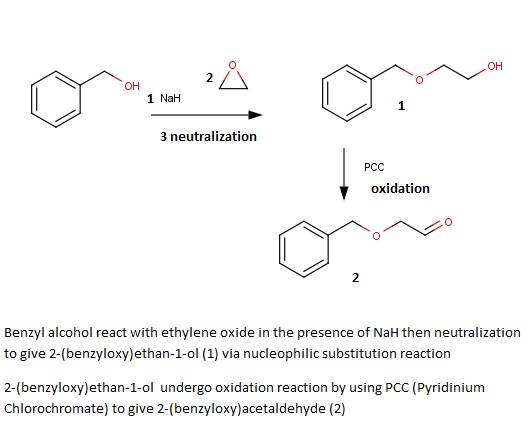
1) Reagent A 2) Reactant A 3) Neutralization C9H2O2 Reagent B acetone NaBH4 ethylene oxide Mg...
In each reaction box, place the best reagent or reactant from the list supplied. Stoichiometry is...
 In each reaction box, place the best reagent or reactant from the list supplied. Stoichiometry is omitted. 1. Reagent B, then H30* 1. Reagent D OH C Reactant A C3H7Br 2. Reagent C 2. Reagent E 3. H30+ Answer Bank PCC Mg in Etz NaH NaBH4 PB13 acetone ethylene oxide EtOAc
In each reaction box, place the best reagent or reactant from the list below. Stoichiometry is...
 In each reaction box, place the best reagent or reactant from the list below. Stoichiometry is omitted. Reactant A Reagent B ,then H3O 2) Reagent c PCC PBr3 ethyl acetate acetone NaBHa ethylene oxide Mg in Et20 NaH C3H7Br 1) Reagent D 2) Reactant E 3) H3o* OH
The reaction between ethylene oxide and a Grigrand reagent, followed by the addition of dilute HCl...
The reaction between ethylene oxide and a Grigrand reagent, followed by the addition of dilute HCl gives a. primary alcohol or secondary alcohol? b. one more carbon or two more carbon then the reagent began with
each reaction box, place the best reagent and conditions from the list below. 1) 2) 3)...
 each reaction box, place the best reagent and conditions from the list below. 1) 2) 3) 4) Br но CH3CHO, H30* (cat.) CH3CH2OH, H3o (ca CH3MgBr 2-propanol HOCH2CH2OH, H3Oca H2CrO4 Mg, ether H30 NaOH LiAIH4 KMnO4 tanol acetone NaBH4
Ethylene oxide is produced by the catalytic oxidation of ethylene: 2C2H4 + O2 → 2C2H4O An...
Ethylene oxide is produced by the catalytic oxidation of ethylene: 2C2H4 + O2 → 2C2H4O An undesired competing reaction is the combustion of ethylene: C2H4 + 3O2 → 2CO2 + 2H2O The feed to the reactor (not the fresh feed to the process) consists of 3.00 moles of ethylene per mole of oxygen. The single-pass conversion of ethylene to either ethylene oxide or carbon dioxide is 20.0%, and for every 100.0 moles of ethylene consumed in the reactor, 85.0 moles...
Table IV-B. Classification of Liquids Liquid Polar? Nonpolar? water hexane methanol 1-octanol acetone 3-pentanone 2-pentanol ethylene...
Table IV-B. Classification of Liquids Liquid Polar? Nonpolar? water hexane methanol 1-octanol acetone 3-pentanone 2-pentanol ethylene glycol
In each reaction box, place the best reagent and conditions from the list below 1) 2)...
 In each reaction box, place the best reagent and conditions from the list below 1) 2) 3) 4) Br HO CH3MgBr 2-propanol t-butanol NaBH4 HOCH2CH20H, H30* (cat.) LiAlIH4 IAI KMnO4 acetone CH3CHO, 3( Mg, ether 3O* NaOH H2CrO4 CH3CH20H, H3O* (cat.)
Consider the two‑step synthesis of cyclopentanecarboxylic acid from cyclopentanol. Identify the missing reagents and draw the...
 Consider the two‑step synthesis of cyclopentanecarboxylic acid
from cyclopentanol. Identify the missing reagents and draw the
intermediate formed.
Draw the intermediate.
reagent A Intermediate reagent E 2. CO2 3. H3o он Identify reagent A. PBr PCC NaH NaBH Identify reagent B. acetone Mg in ether ethyl acetate ethylene oxide
Consider the two‑step synthesis of cyclopentanecarboxylic acid
from cyclopentanol. Identify the missing reagents and draw the
intermediate formed.
Draw the intermediate.
reagent A Intermediate reagent E 2. CO2 3. H3o он Identify reagent A. PBr PCC NaH NaBH Identify reagent B. acetone Mg in ether ethyl acetate ethylene oxide
19. What reagent and conditions could best be used for this reaction? CH,CH-CH-CH2CH2OH + CH,CECH-- (A)...
 19. What reagent and conditions could best be used for this reaction? CH,CH-CH-CH2CH2OH + CH,CECH-- (A) 1H2/Pt 2. NaNH2 3. ethylene oxide 4. H3o (B) 1. NaNH2 2. ethylene oxide 3. H 4. H/Pt (excess) (C). HBr 2. NaNH2 3. ethylene oxide 4. H30 (D) 1. Mg/THF 2. HBr 3. ethylene oxide 4. H3O 20. What is the major product of the following reaction 2 H2SO4 heat CH3 CH3 CH3 CH3 CH2 21. How many distinct alkene products are possible...
PART C 6. The rate of formation of ethylene oxide was measured in a 1 m...
 PART C
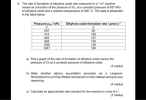
6. The rate of formation of ethylene oxide was measured in a 1 m reaction vessel as a function of the pressure of O2, at a constant pressure of 827 kPa of ethylene oxide and a reaction temperature of 300 °C. The data is presented in the table below. Pressure poz/kPa Ethylene oxide formation rate / umol s1 207 65 414 105 127 620 828 1035 1241 135 139 140 a) Plot a graph of the rate of...
PART C
6. The rate of formation of ethylene oxide was measured in a 1 m reaction vessel as a function of the pressure of O2, at a constant pressure of 827 kPa of ethylene oxide and a reaction temperature of 300 °C. The data is presented in the table below. Pressure poz/kPa Ethylene oxide formation rate / umol s1 207 65 414 105 127 620 828 1035 1241 135 139 140 a) Plot a graph of the rate of...
 In each reaction box, place the best reagent or reactant from the list supplied. Stoichiometry is omitted. 1. Reagent B, then H30* 1. Reagent D OH C Reactant A C3H7Br 2. Reagent C 2. Reagent E 3. H30+ Answer Bank PCC Mg in Etz NaH NaBH4 PB13 acetone ethylene oxide EtOAc
 In each reaction box, place the best reagent or reactant from the list below. Stoichiometry is omitted. Reactant A Reagent B ,then H3O 2) Reagent c PCC PBr3 ethyl acetate acetone NaBHa ethylene oxide Mg in Et20 NaH C3H7Br 1) Reagent D 2) Reactant E 3) H3o* OH
 each reaction box, place the best reagent and conditions from the list below. 1) 2) 3) 4) Br но CH3CHO, H30* (cat.) CH3CH2OH, H3o (ca CH3MgBr 2-propanol HOCH2CH2OH, H3Oca H2CrO4 Mg, ether H30 NaOH LiAIH4 KMnO4 tanol acetone NaBH4
 In each reaction box, place the best reagent and conditions from the list below 1) 2) 3) 4) Br HO CH3MgBr 2-propanol t-butanol NaBH4 HOCH2CH20H, H30* (cat.) LiAlIH4 IAI KMnO4 acetone CH3CHO, 3( Mg, ether 3O* NaOH H2CrO4 CH3CH20H, H3O* (cat.)
 Consider the two‑step synthesis of cyclopentanecarboxylic acid
from cyclopentanol. Identify the missing reagents and draw the
intermediate formed.
Draw the intermediate.
reagent A Intermediate reagent E 2. CO2 3. H3o он Identify reagent A. PBr PCC NaH NaBH Identify reagent B. acetone Mg in ether ethyl acetate ethylene oxide
Consider the two‑step synthesis of cyclopentanecarboxylic acid
from cyclopentanol. Identify the missing reagents and draw the
intermediate formed.
Draw the intermediate.
reagent A Intermediate reagent E 2. CO2 3. H3o он Identify reagent A. PBr PCC NaH NaBH Identify reagent B. acetone Mg in ether ethyl acetate ethylene oxide
 19. What reagent and conditions could best be used for this reaction? CH,CH-CH-CH2CH2OH + CH,CECH-- (A) 1H2/Pt 2. NaNH2 3. ethylene oxide 4. H3o (B) 1. NaNH2 2. ethylene oxide 3. H 4. H/Pt (excess) (C). HBr 2. NaNH2 3. ethylene oxide 4. H30 (D) 1. Mg/THF 2. HBr 3. ethylene oxide 4. H3O 20. What is the major product of the following reaction 2 H2SO4 heat CH3 CH3 CH3 CH3 CH2 21. How many distinct alkene products are possible...
 PART C
6. The rate of formation of ethylene oxide was measured in a 1 m reaction vessel as a function of the pressure of O2, at a constant pressure of 827 kPa of ethylene oxide and a reaction temperature of 300 °C. The data is presented in the table below. Pressure poz/kPa Ethylene oxide formation rate / umol s1 207 65 414 105 127 620 828 1035 1241 135 139 140 a) Plot a graph of the rate of...
PART C
6. The rate of formation of ethylene oxide was measured in a 1 m reaction vessel as a function of the pressure of O2, at a constant pressure of 827 kPa of ethylene oxide and a reaction temperature of 300 °C. The data is presented in the table below. Pressure poz/kPa Ethylene oxide formation rate / umol s1 207 65 414 105 127 620 828 1035 1241 135 139 140 a) Plot a graph of the rate of...
Most questions answered within 3 hours.
-
Where is the error in this code sequence?
String s1 = "Hello";
String s2 = "ello";...
asked 11 months ago -
Financial data for Joel de Paris, Inc., for last year
follow:
Joel de Paris, Inc.
Balance...
asked 11 months ago -
Consider this reaction:
Al2(SO4)3 (aq)+ BaCl3
(aq) Al2Cl6 (aq)- +
3BaSO4(s) . What is the...
asked 11 months ago -
Suppose that Savneet is considering increasing her
recent random sample from 20 car rentals to 40...
asked 11 months ago -
Trucks arrive at an unloading terminal at an average rate of 120
per hour.
Trucks arrive...
asked 11 months ago -
Why are methanol and ethanol completely soluble in water while
octanol is not very little soluble....
asked 11 months ago -
A facilities manager at a university reads in a research report
that the mean amount of...
asked 11 months ago -
When the CuSO4 is rehydrated by adding water to the anhydrous
compound, is this an endothermic...
asked 11 months ago -
A ray of sunlight is passing from diamond into crown glass; the
angle of incidence is...
asked 11 months ago -
A block of mass 0.249 kg is placed on top of a light, vertical
spring of...
asked 11 months ago -
how do the kidneys compensate in the presences of acidosis
a) trigger hyperventilate
b) reserve acid...
asked 11 months ago -
Question 501 pts
The rental rate of capital to the firm increases. Which of the
following...
asked 11 months ago