
Homework Answers
Add Answer to:
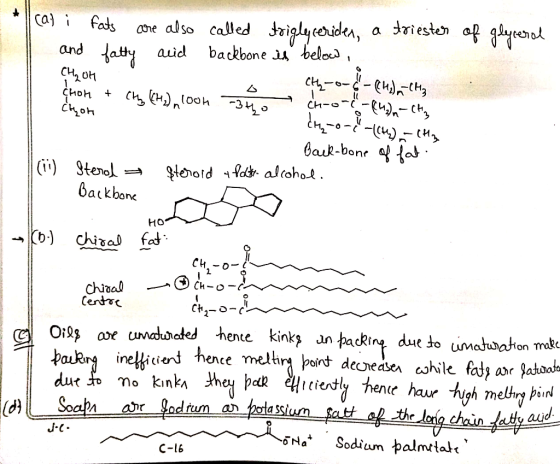
a. Draw the backbone for a fat and a sterol. b. Draw a chiral fat. c....
4-chloro-3, 4-dimethylnonan-1-amine Assignment 3: Chiral Carbons and Stereoisomers On a page titled Chiral Carbons...
 4-chloro-3, 4-dimethylnonan-1-amine
Assignment 3: Chiral Carbons and Stereoisomers On a page titled Chiral Carbons draw using a chemical drawing program or other computer generated form the expanded structure of your molecule. No hand drawn structures will be accepted. O Determine if your molecule contains any chiral carbons. If there are chiral carbons in your molecule, circle or highlight all of them. If your molecule does not contain any chiral carbons explain why none of the carbons are chiral. One a...
4-chloro-3, 4-dimethylnonan-1-amine
Assignment 3: Chiral Carbons and Stereoisomers On a page titled Chiral Carbons draw using a chemical drawing program or other computer generated form the expanded structure of your molecule. No hand drawn structures will be accepted. O Determine if your molecule contains any chiral carbons. If there are chiral carbons in your molecule, circle or highlight all of them. If your molecule does not contain any chiral carbons explain why none of the carbons are chiral. One a...
BED S a. What is the relationship between compounds A and B? D b. What is...
 BED S a. What is the relationship between compounds A and B? D b. What is the relationship between compounds C and D? D c. What is the relationship between compounds A and D? D E E E 4. In steam distillation of limonene, the boiling point of the distilling liquid is lower than limonene or water, can you explain? 2 pts 5. Bioynthesis of terpenes may proceed by way of the carbocation intermediate shown. a. Follow the arrows to...
a. Circle the chiral centers in the following molecule and identify them as R or S...
 a. Circle the chiral centers in the following molecule and identify them as R or S Suggest a second component for synthesis of the molecule above via a Diels-Alder reaction (i.e. completer the reaction below) c. Is the configuration of your starting material in part b, E or Z? d. The concept of aromaticity (i.e. 4n + 2 pi electrons stable, aromatic; 4n electrons = unstable, antiaromatic) can be used to understand reaction like the Diels-Alder and related reactions. Use...
4. Consider the following Fischer Projection: CH, OH I 9 CH OH A Does this represent...
 4. Consider the following Fischer Projection: CH, OH I 9 CH OH A Does this represent a monosaccharide, a disaccharide, a trisaccharide or something else? B Are any chiral carbons present? If so, circle each one. C Does this represent an aldose or a ketose? Explain your response and draw a box around the relevant functional group. D Give the molecular formula for this compound. E Is this compound classified as an L-isomer or a D- isomer? your response. Explain...
2-methylocta-4,6-dien-1-amine Assignment 1: Draw your molecule from IUPAC name
 2-methylocta-4,6-dien-1-amineAssignment 1: Draw your molecule from IUPAC
name Using the given IUPAC name, draw your molecule Complete the cover page (p.1) of your portfolio with the
following:o Structural formula of the moleculeo IUPAC name Use a thin, clear binder or report cover to protect the
portfolio Submit the following in the binder:o Cover page as described above (page 1)Assignment 2: Formula, Molar Mass and Functional
Groups On a page titled Expanded Structural Formula draw the expanded
structure of themolecule.o Show...
2-methylocta-4,6-dien-1-amineAssignment 1: Draw your molecule from IUPAC
name Using the given IUPAC name, draw your molecule Complete the cover page (p.1) of your portfolio with the
following:o Structural formula of the moleculeo IUPAC name Use a thin, clear binder or report cover to protect the
portfolio Submit the following in the binder:o Cover page as described above (page 1)Assignment 2: Formula, Molar Mass and Functional
Groups On a page titled Expanded Structural Formula draw the expanded
structure of themolecule.o Show...
3. Draw the Lewis structure for the sulfate ion (1pt] a. What is the molecular geometry...
 3. Draw the Lewis structure for the sulfate ion (1pt] a. What is the molecular geometry of this molecule? (0.5pt] b. What is the chemical formula for ammonium sulfate? [1pt] C. What is the molar mass of ammonium sulfate? (1pt] 4. Draw one valid Lewis structure for dinitrogen monoxide (HINT: N is the center atom]. [1pt] a. What is the molecular geometry of this molecule? (0.5pt] b. Is this molecule polar or non-polar? (0.5pt] C. Identify all the intermolecular forces...
Compound A Compound B Give the IUPAC name for Compound A. 2. Give the IUPAC name...
 Compound A Compound B Give the IUPAC name for Compound A. 2. Give the IUPAC name for Compound B. 3. Which compound from above (Compound A or Compound B) is more soluble in water and why? 4. Which compound can be dehydrated to form a double bond (Compound A or Compound B)? Draw the most likely product of that dehydration. (Insert a picture of your drawing of the molecule or a scan of your drawing of the molecule) 5. Could...
Please help!! The molecule is Ventolin and i need to label all of the functional groups,...
 Please help!! The molecule is Ventolin and i need to label all
of the functional groups, chiral carbons and illustrate how it
forms hydrogen bonds with water. The instructions are in the
picture as well as the expanded form of Ventolin. At the bottom of
each page it asks for a update. have to write 2-3 sentances
summurizing the major ilunderstamding.
1. 1. Identify the functional groups in the drug molecule. . . On a page titled Functional Groups...
Please help!! The molecule is Ventolin and i need to label all
of the functional groups, chiral carbons and illustrate how it
forms hydrogen bonds with water. The instructions are in the
picture as well as the expanded form of Ventolin. At the bottom of
each page it asks for a update. have to write 2-3 sentances
summurizing the major ilunderstamding.
1. 1. Identify the functional groups in the drug molecule. . . On a page titled Functional Groups...
Protein kinases can A) Inactivate enzymes by dephosphorylating them B) Activate enzymes by phosphorylating them C)...
 Protein kinases can A) Inactivate enzymes by dephosphorylating them B) Activate enzymes by phosphorylating them C) Cleave proteins after Tyr, Ser, or Thr residues D) Contain a catalytic triad to cut peptide bonds Peanut oil contains a high percentage of monounsaturated fatty acids whereas vegetable oil contains a high percentage of polyunsaturated fatty acids. During a cold spell, the peanut oil freezes whereas the vegetable oil remains liquid. Explain why. Predict which one of the following organisms will have the...
1. Follow the instructions given: 20 points. a. Provide the IUPAC name for the molecule shown...
 1. Follow the instructions given: 20 points. a. Provide the IUPAC name for the molecule shown below. (4 points) b. Provide the IUPAC name for the molecule shown below. (4 points) c. Of the cations shown below, circle any that are chiral. (4 points) d. Draw the expected product of the reaction below and briefly explain why three, not two equivalents of NaNH2 are required. (5 points) Br- 3 NaNH2 NH e. Rank the following radicals in terms of their...
 4-chloro-3, 4-dimethylnonan-1-amine
Assignment 3: Chiral Carbons and Stereoisomers On a page titled Chiral Carbons draw using a chemical drawing program or other computer generated form the expanded structure of your molecule. No hand drawn structures will be accepted. O Determine if your molecule contains any chiral carbons. If there are chiral carbons in your molecule, circle or highlight all of them. If your molecule does not contain any chiral carbons explain why none of the carbons are chiral. One a...
4-chloro-3, 4-dimethylnonan-1-amine
Assignment 3: Chiral Carbons and Stereoisomers On a page titled Chiral Carbons draw using a chemical drawing program or other computer generated form the expanded structure of your molecule. No hand drawn structures will be accepted. O Determine if your molecule contains any chiral carbons. If there are chiral carbons in your molecule, circle or highlight all of them. If your molecule does not contain any chiral carbons explain why none of the carbons are chiral. One a...
 BED S a. What is the relationship between compounds A and B? D b. What is the relationship between compounds C and D? D c. What is the relationship between compounds A and D? D E E E 4. In steam distillation of limonene, the boiling point of the distilling liquid is lower than limonene or water, can you explain? 2 pts 5. Bioynthesis of terpenes may proceed by way of the carbocation intermediate shown. a. Follow the arrows to...
 a. Circle the chiral centers in the following molecule and identify them as R or S Suggest a second component for synthesis of the molecule above via a Diels-Alder reaction (i.e. completer the reaction below) c. Is the configuration of your starting material in part b, E or Z? d. The concept of aromaticity (i.e. 4n + 2 pi electrons stable, aromatic; 4n electrons = unstable, antiaromatic) can be used to understand reaction like the Diels-Alder and related reactions. Use...
 4. Consider the following Fischer Projection: CH, OH I 9 CH OH A Does this represent a monosaccharide, a disaccharide, a trisaccharide or something else? B Are any chiral carbons present? If so, circle each one. C Does this represent an aldose or a ketose? Explain your response and draw a box around the relevant functional group. D Give the molecular formula for this compound. E Is this compound classified as an L-isomer or a D- isomer? your response. Explain...
 2-methylocta-4,6-dien-1-amineAssignment 1: Draw your molecule from IUPAC
name Using the given IUPAC name, draw your molecule Complete the cover page (p.1) of your portfolio with the
following:o Structural formula of the moleculeo IUPAC name Use a thin, clear binder or report cover to protect the
portfolio Submit the following in the binder:o Cover page as described above (page 1)Assignment 2: Formula, Molar Mass and Functional
Groups On a page titled Expanded Structural Formula draw the expanded
structure of themolecule.o Show...
2-methylocta-4,6-dien-1-amineAssignment 1: Draw your molecule from IUPAC
name Using the given IUPAC name, draw your molecule Complete the cover page (p.1) of your portfolio with the
following:o Structural formula of the moleculeo IUPAC name Use a thin, clear binder or report cover to protect the
portfolio Submit the following in the binder:o Cover page as described above (page 1)Assignment 2: Formula, Molar Mass and Functional
Groups On a page titled Expanded Structural Formula draw the expanded
structure of themolecule.o Show...
 3. Draw the Lewis structure for the sulfate ion (1pt] a. What is the molecular geometry of this molecule? (0.5pt] b. What is the chemical formula for ammonium sulfate? [1pt] C. What is the molar mass of ammonium sulfate? (1pt] 4. Draw one valid Lewis structure for dinitrogen monoxide (HINT: N is the center atom]. [1pt] a. What is the molecular geometry of this molecule? (0.5pt] b. Is this molecule polar or non-polar? (0.5pt] C. Identify all the intermolecular forces...
 Compound A Compound B Give the IUPAC name for Compound A. 2. Give the IUPAC name for Compound B. 3. Which compound from above (Compound A or Compound B) is more soluble in water and why? 4. Which compound can be dehydrated to form a double bond (Compound A or Compound B)? Draw the most likely product of that dehydration. (Insert a picture of your drawing of the molecule or a scan of your drawing of the molecule) 5. Could...
 Please help!! The molecule is Ventolin and i need to label all
of the functional groups, chiral carbons and illustrate how it
forms hydrogen bonds with water. The instructions are in the
picture as well as the expanded form of Ventolin. At the bottom of
each page it asks for a update. have to write 2-3 sentances
summurizing the major ilunderstamding.
1. 1. Identify the functional groups in the drug molecule. . . On a page titled Functional Groups...
Please help!! The molecule is Ventolin and i need to label all
of the functional groups, chiral carbons and illustrate how it
forms hydrogen bonds with water. The instructions are in the
picture as well as the expanded form of Ventolin. At the bottom of
each page it asks for a update. have to write 2-3 sentances
summurizing the major ilunderstamding.
1. 1. Identify the functional groups in the drug molecule. . . On a page titled Functional Groups...
 Protein kinases can A) Inactivate enzymes by dephosphorylating them B) Activate enzymes by phosphorylating them C) Cleave proteins after Tyr, Ser, or Thr residues D) Contain a catalytic triad to cut peptide bonds Peanut oil contains a high percentage of monounsaturated fatty acids whereas vegetable oil contains a high percentage of polyunsaturated fatty acids. During a cold spell, the peanut oil freezes whereas the vegetable oil remains liquid. Explain why. Predict which one of the following organisms will have the...
 1. Follow the instructions given: 20 points. a. Provide the IUPAC name for the molecule shown below. (4 points) b. Provide the IUPAC name for the molecule shown below. (4 points) c. Of the cations shown below, circle any that are chiral. (4 points) d. Draw the expected product of the reaction below and briefly explain why three, not two equivalents of NaNH2 are required. (5 points) Br- 3 NaNH2 NH e. Rank the following radicals in terms of their...
Most questions answered within 3 hours.
-
Where is the error in this code sequence?
String s1 = "Hello";
String s2 = "ello";...
asked 10 months ago -
Financial data for Joel de Paris, Inc., for last year
follow:
Joel de Paris, Inc.
Balance...
asked 10 months ago -
Consider this reaction:
Al2(SO4)3 (aq)+ BaCl3
(aq) Al2Cl6 (aq)- +
3BaSO4(s) . What is the...
asked 10 months ago -
Suppose that Savneet is considering increasing her
recent random sample from 20 car rentals to 40...
asked 10 months ago -
Trucks arrive at an unloading terminal at an average rate of 120
per hour.
Trucks arrive...
asked 10 months ago -
Why are methanol and ethanol completely soluble in water while
octanol is not very little soluble....
asked 10 months ago -
A facilities manager at a university reads in a research report
that the mean amount of...
asked 10 months ago -
When the CuSO4 is rehydrated by adding water to the anhydrous
compound, is this an endothermic...
asked 10 months ago -
A ray of sunlight is passing from diamond into crown glass; the
angle of incidence is...
asked 10 months ago -
A block of mass 0.249 kg is placed on top of a light, vertical
spring of...
asked 10 months ago -
how do the kidneys compensate in the presences of acidosis
a) trigger hyperventilate
b) reserve acid...
asked 10 months ago -
Question 501 pts
The rental rate of capital to the firm increases. Which of the
following...
asked 10 months ago