


Homework Answers
Add Answer to:
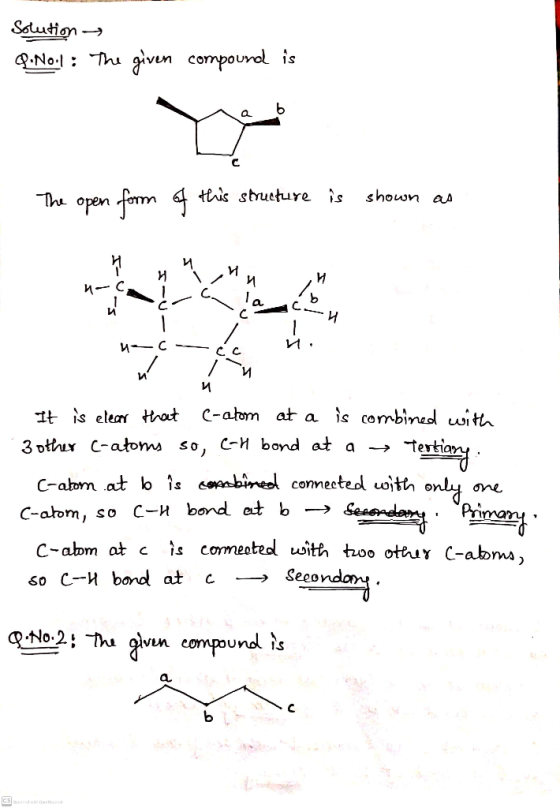
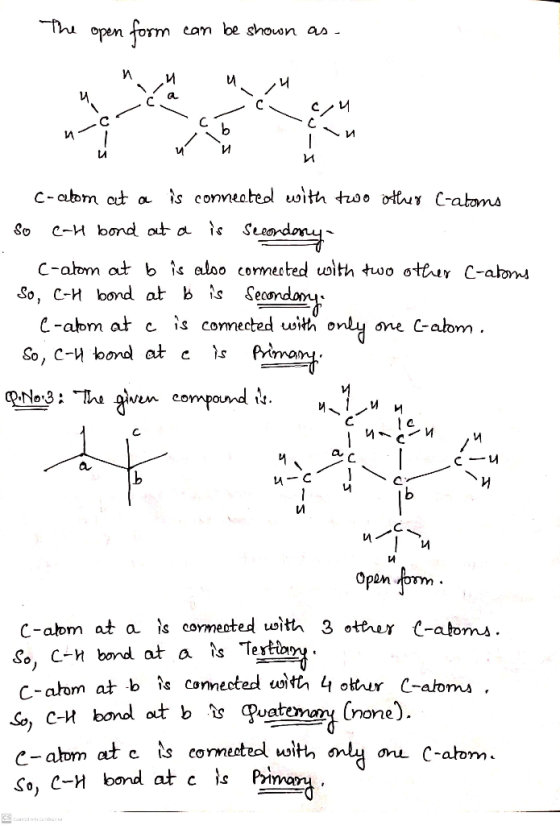
Carbon-hydrogen bonds exhibit a range of different chemical reactivity that depends on molecular structure. Classify the...
[Review Topico) [References) Carbon-hydrogen bonds exhibit a range of different chemical reactivity that depends on molecular...
 [Review Topico) [References) Carbon-hydrogen bonds exhibit a range of different chemical reactivity that depends on molecular structure. Classify the C-H boods at the carbons labeled a-c in the structure below. Possible classifications are: primary, secondary, & tertiary or nome if there are no hydrogens at the labeled carbon C-H bond(s) at al ty C-H bond(s) at b. cunoa C-H bond(s) at 9 more group attempts remaining Retry Entire Group Submit Answer
Carbon brydrogen bonds exhibit a range of different chemical reactivity that depends on molecular structure Classify...
 Carbon brydrogen bonds exhibit a range of different chemical reactivity that depends on molecular structure Classify the C-H boods at the carbons labeled a-c in the structure below. Possible classifications are primary, secondary, & tertiary or home if there are no brydrogens at the labeled carbon M 2rea C-H bond(s) at a C-H bond(s) at C-H bond(s) at M Sul Answer Retry Entre Group more group attempts remaining 12reg 2req
[Review Topics] (References] Carbon-hydrogen bonds exhibit a range of different chemical reactivity that depends on molecular...
 [Review Topics] (References] Carbon-hydrogen bonds exhibit a range of different chemical reactivity that depends on molecular structure. Classify the C-H bonds at the carbons labeled a-c in the structure below. Possible classifications are primary, secondary, & tertiary or none if there are no hydrogens at the labeled carbon C-H bond(s) at a C-H bond(s) at b. C-H bond(s) at
Carbon-hydrogen bonds exhibit a range of different chemical reactivity that depends on molecular structure. Classify the...
 Carbon-hydrogen bonds exhibit a range of different chemical reactivity that depends on molecular structure. Classify the C-H bonds at the carbons labeled a-c in the structure below. Possible classifications are: primary, secondary, & tertiary or none if there are no hydrogens at the labeled carbon. C-H bond(s) at a C-H bond(s) at b or C-H bond(s) at v primary secondary tertiary 2 item attempts Submit Answer Try Another Version none 1-Bromopropane was prepared by heating 11.1 g of sodium bromide...
In radical chlorination of alkanes, non-equivalent hydrogens react with chlorine atoms at different rates. At 35...
 In radical chlorination of alkanes, non-equivalent hydrogens react with chlorine atoms at different rates. At 35 °C, primary, secondary, and tertiary C-H bonds react at relative rates of 1 : 3.9 : 5.2 respectively. These are conditions of kinetic control where product ratios are determined by relative rates of formation. For example, if A is formed twice as fast as B, the A:B product ratio will be 2. Consider chlorination of the alkane below at 35 °C. 1. Specify the...
In radical chlorination of alkanes, non-equivalent hydrogens react with chlorine atoms at different rates. At 35...
 In radical chlorination of alkanes, non-equivalent hydrogens react with chlorine atoms at different rates. At 35 °C, primary, secondary, and tertiary C-H bonds react at relative rates of 1 : 3.9: 5.2 respectively. These are conditions of kinetic control where product ratios are determined by relative rates of formation. For example, if A is formed twice as fast as B, the A:B product ratio will be 2. Consider chlorination of the alkane below at 35 °C. 1. Specify the most...
In radical chlorination of alkanes, non-equivalent hydrogens react with chlorine atoms at different rates. At 35...
 In radical chlorination of alkanes, non-equivalent hydrogens react with chlorine atoms at different rates. At 35 °C, primary, secondary, and tertiary C-H bonds react at relative rates of 1 : 3.9 : 5.2 respectively These are conditions of kinetic control where product ratios are determined by relative rates of formation For example, if A is formed twice as fast as B, the A:B product ratio will be 2 Consider chlorination of the alkane below at 35 °C 1. Specify the...
In radical chlorination of alkanes, non-equivalent hydrogens react with chlorine atoms at different rates. At 35...
 In radical chlorination of alkanes, non-equivalent hydrogens react with chlorine atoms at different rates. At 35 °C, primary, secondary, and tertiary C-H bonds react at relative rates of 1 : 3.9: 5.2 respectively. These are conditions of kinetic control where product ratios are determined by relative rates of formation. For example, if A is formed twice as fast as B, the A:B product ratio will be 2. Consider chlorination of the alkane below at 35 °C. a b C 1....
1 through 5 please 1. Which level of protein structure is held together by hydrogen bonds...
 1 through 5 please
1. Which level of protein structure is held together by hydrogen bonds only a) primary b) secondary c) tertiary d) quaternary 2. Which level of protein structure is held together by peptide bonds only a) primary b) secondary c) tertiary d) quaternary 3. Which level of protein structure is held together by R-group interactions? a) primary b) secondary c) tertiary d) quaternary " Which level of protein structure is likely to change when a substrate binds...
1 through 5 please
1. Which level of protein structure is held together by hydrogen bonds only a) primary b) secondary c) tertiary d) quaternary 2. Which level of protein structure is held together by peptide bonds only a) primary b) secondary c) tertiary d) quaternary 3. Which level of protein structure is held together by R-group interactions? a) primary b) secondary c) tertiary d) quaternary " Which level of protein structure is likely to change when a substrate binds...
sic.cengagenow.com/i/takssignment/ CoventActivity do locator assignment-taketakeAssignmentSession Locator assignment-tate L References view Topics In radical chlorination of alicanes,...
 sic.cengagenow.com/i/takssignment/ CoventActivity do locator assignment-taketakeAssignmentSession Locator assignment-tate L References view Topics In radical chlorination of alicanes, non-equivalent hydrogens react with chlorine atoms at different rates. At 35 °C, primary, secondary, and tertiary C-H bonds react at relative rates of 1 : 3.9: 5.2 respectively These are conditions of kinetic control where product ratios are determined by relative rates of formation. For example, if A is formed twice as fast as B, the A:B product ratio will be 2. Consider chlorination...
 [Review Topico) [References) Carbon-hydrogen bonds exhibit a range of different chemical reactivity that depends on molecular structure. Classify the C-H boods at the carbons labeled a-c in the structure below. Possible classifications are: primary, secondary, & tertiary or nome if there are no hydrogens at the labeled carbon C-H bond(s) at al ty C-H bond(s) at b. cunoa C-H bond(s) at 9 more group attempts remaining Retry Entire Group Submit Answer
 Carbon brydrogen bonds exhibit a range of different chemical reactivity that depends on molecular structure Classify the C-H boods at the carbons labeled a-c in the structure below. Possible classifications are primary, secondary, & tertiary or home if there are no brydrogens at the labeled carbon M 2rea C-H bond(s) at a C-H bond(s) at C-H bond(s) at M Sul Answer Retry Entre Group more group attempts remaining 12reg 2req
 [Review Topics] (References] Carbon-hydrogen bonds exhibit a range of different chemical reactivity that depends on molecular structure. Classify the C-H bonds at the carbons labeled a-c in the structure below. Possible classifications are primary, secondary, & tertiary or none if there are no hydrogens at the labeled carbon C-H bond(s) at a C-H bond(s) at b. C-H bond(s) at
 Carbon-hydrogen bonds exhibit a range of different chemical reactivity that depends on molecular structure. Classify the C-H bonds at the carbons labeled a-c in the structure below. Possible classifications are: primary, secondary, & tertiary or none if there are no hydrogens at the labeled carbon. C-H bond(s) at a C-H bond(s) at b or C-H bond(s) at v primary secondary tertiary 2 item attempts Submit Answer Try Another Version none 1-Bromopropane was prepared by heating 11.1 g of sodium bromide...
 In radical chlorination of alkanes, non-equivalent hydrogens react with chlorine atoms at different rates. At 35 °C, primary, secondary, and tertiary C-H bonds react at relative rates of 1 : 3.9 : 5.2 respectively. These are conditions of kinetic control where product ratios are determined by relative rates of formation. For example, if A is formed twice as fast as B, the A:B product ratio will be 2. Consider chlorination of the alkane below at 35 °C. 1. Specify the...
 In radical chlorination of alkanes, non-equivalent hydrogens react with chlorine atoms at different rates. At 35 °C, primary, secondary, and tertiary C-H bonds react at relative rates of 1 : 3.9: 5.2 respectively. These are conditions of kinetic control where product ratios are determined by relative rates of formation. For example, if A is formed twice as fast as B, the A:B product ratio will be 2. Consider chlorination of the alkane below at 35 °C. 1. Specify the most...
 In radical chlorination of alkanes, non-equivalent hydrogens react with chlorine atoms at different rates. At 35 °C, primary, secondary, and tertiary C-H bonds react at relative rates of 1 : 3.9 : 5.2 respectively These are conditions of kinetic control where product ratios are determined by relative rates of formation For example, if A is formed twice as fast as B, the A:B product ratio will be 2 Consider chlorination of the alkane below at 35 °C 1. Specify the...
 In radical chlorination of alkanes, non-equivalent hydrogens react with chlorine atoms at different rates. At 35 °C, primary, secondary, and tertiary C-H bonds react at relative rates of 1 : 3.9: 5.2 respectively. These are conditions of kinetic control where product ratios are determined by relative rates of formation. For example, if A is formed twice as fast as B, the A:B product ratio will be 2. Consider chlorination of the alkane below at 35 °C. a b C 1....
 1 through 5 please
1. Which level of protein structure is held together by hydrogen bonds only a) primary b) secondary c) tertiary d) quaternary 2. Which level of protein structure is held together by peptide bonds only a) primary b) secondary c) tertiary d) quaternary 3. Which level of protein structure is held together by R-group interactions? a) primary b) secondary c) tertiary d) quaternary " Which level of protein structure is likely to change when a substrate binds...
1 through 5 please
1. Which level of protein structure is held together by hydrogen bonds only a) primary b) secondary c) tertiary d) quaternary 2. Which level of protein structure is held together by peptide bonds only a) primary b) secondary c) tertiary d) quaternary 3. Which level of protein structure is held together by R-group interactions? a) primary b) secondary c) tertiary d) quaternary " Which level of protein structure is likely to change when a substrate binds...
 sic.cengagenow.com/i/takssignment/ CoventActivity do locator assignment-taketakeAssignmentSession Locator assignment-tate L References view Topics In radical chlorination of alicanes, non-equivalent hydrogens react with chlorine atoms at different rates. At 35 °C, primary, secondary, and tertiary C-H bonds react at relative rates of 1 : 3.9: 5.2 respectively These are conditions of kinetic control where product ratios are determined by relative rates of formation. For example, if A is formed twice as fast as B, the A:B product ratio will be 2. Consider chlorination...
Most questions answered within 3 hours.
-
Where is the error in this code sequence?
String s1 = "Hello";
String s2 = "ello";...
asked 10 months ago -
Financial data for Joel de Paris, Inc., for last year
follow:
Joel de Paris, Inc.
Balance...
asked 10 months ago -
Consider this reaction:
Al2(SO4)3 (aq)+ BaCl3
(aq) Al2Cl6 (aq)- +
3BaSO4(s) . What is the...
asked 10 months ago -
Suppose that Savneet is considering increasing her
recent random sample from 20 car rentals to 40...
asked 10 months ago -
Trucks arrive at an unloading terminal at an average rate of 120
per hour.
Trucks arrive...
asked 10 months ago -
Why are methanol and ethanol completely soluble in water while
octanol is not very little soluble....
asked 10 months ago -
A facilities manager at a university reads in a research report
that the mean amount of...
asked 10 months ago -
When the CuSO4 is rehydrated by adding water to the anhydrous
compound, is this an endothermic...
asked 10 months ago -
A ray of sunlight is passing from diamond into crown glass; the
angle of incidence is...
asked 10 months ago -
A block of mass 0.249 kg is placed on top of a light, vertical
spring of...
asked 10 months ago -
how do the kidneys compensate in the presences of acidosis
a) trigger hyperventilate
b) reserve acid...
asked 10 months ago -
Question 501 pts
The rental rate of capital to the firm increases. Which of the
following...
asked 10 months ago