
Homework Answers

Add Answer to:
Problem 2 2 of 20> Correct o use the answer obtained for a subsequent hint or...
On a frictionless horizontal air table, puck A (with mass 0.250 kg ) is moving toward...
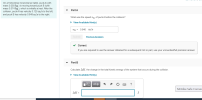 On a frictionless horizontal air table, puck A (with mass 0.250 kg ) is moving toward puck B (with mass 0.374 kg), which is initially at rest. After the collision, puck A has velocity 0.125 m/s to the left, and puck B has velocity 0.649 m/s to the right. - Part A What was the speed vAi of puck A before the collision? View Available Hint(s) Vai = 0.846 m/s Submit Previous Answers ✓ Correct If you are required to...
IeviewI CUI Slal ILS I CIUIC laule On a frictionless horizontal air table, puck A (with...
 IeviewI CUI Slal ILS I CIUIC laule On a frictionless horizontal air table, puck A (with mass 0.249 kg ) is moving toward puck B (with mass 0.372 kg), which is initially at rest. After the collision, puck A has velocity 0.121 m/s to the left, and puck B has velocity 0.647 m/s to the right. Part A What was the speed vAi of puck A before the collision? View Available Hint(s) VAi = 0.846 m/s Submit Previous Answers Correct...
On a frictionless horizontal air table, puck A (with mass 0.247 kg) is moving toward puck...
 On a frictionless horizontal air table, puck A (with mass 0.247 kg) is moving toward puck B (with What was the speed VAi of puck A before the collision? mass 0.369 kg), which is initially at rest. After the collision, puck A has velocity 0.120 m/s to the left, and puck B has velocity 0.648 m/s to the right. What was the speed upsilon_Ai of puck A before the collision? upsilon_Ai = 0.84 m/s Correct If you are required to...
On a frictionless, horizontal air table, puck A (with mass 0.245 kg ) is moving toward...
On a frictionless, horizontal air table, puck A (with mass 0.245 kg ) is moving toward puck B (with mass 0.355 kg ), that is initially at rest. After the collision, puck A has a velocity of 0.115 m/s to the left, and puck B has velocity 0.660 m/s to the right. A. What was the speed of puck A before the collision? B. Calculate the change in the total kinetic energy of the system that occurs during the collision.
Part A On a frictionless horizontal air table, puck A (with mass 0.253 kg ) is...
 Part A On a frictionless horizontal air table, puck A (with mass 0.253 kg ) is moving toward puck B (with mass 0.373 kg), which is initially at rest. After the collision, puck A has velocity 0.125 m/s to the left, and puck B has velocity 0.645 m/s to the right. What was the speed Vai of puck A before the collision? View Available Hint(s) IVO ALOM ? VAi = Submit Previous Answers X Incorrect; Try Again; 6 attempts remaining...
On a frictionless horizontal air table, puck A (with mass 0.247 kg ) is moving toward...
On a frictionless horizontal air table, puck A (with mass 0.247 kg ) is moving toward puck B (with mass 0.369 kg ), which is initially at rest. After the collision, puck A has velocity 0.117 m/s to the left, and puck B has velocity 0.654 m/s to the right. Calculate ΔK, the change in the total kinetic energy of the system that occurs during the collision.
On a frictionless horizontal air table, puck A (with mass 0.245 kg ) is moving toward...
On a frictionless horizontal air table, puck A (with mass 0.245 kg ) is moving toward puck B (with mass 0.375 kg ), which is initially at rest. After the collision, puck A has velocity 0.124 m/s to the left, and puck B has velocity 0.648 m/s to the right. A. What was the speed vAi of puck A before the collision? Answer. 0868m/s B. Calculate ΔK, the change in the total kinetic energy of the system that occurs during...
On a frictionless horizontal air table, puck A (with mass 0.245 kg ) is moving toward...
On a frictionless horizontal air table, puck A (with mass 0.245 kg ) is moving toward puck B (with mass 0.370 kg ), which is initially at rest. After the collision, puck A has velocity 0.118 m/s to the left, and puck B has velocity 0.647 m/s to the right. What was the speed vAi of puck A before the collision? Calculate ΔK the change in the total kinetic energy of the system that occurs during the collision.
On a frictionless horizontal air table, puck A (with mass 0.249 kg ) is moving toward...
On a frictionless horizontal air table, puck A (with mass 0.249 kg ) is moving toward puck B (with mass 0.367 kg ), which is initially at rest. After the collision, puck A has velocity 0.115 m/s to the left, and puck B has velocity 0.650 m/s to the right. What was the speed vAi of puck A before the collision? Calculate ΔK, the change in the total kinetic energy of the system that occurs during the collision.
On a frictionless horizontal air table, puck A (with mass 0.252 kg ) is moving toward puck B (with mass 0.368 kg ), whi...
On a frictionless horizontal air table, puck A (with mass 0.252 kg ) is moving toward puck B (with mass 0.368 kg ), which is initially at rest. After the collision, puck A has velocity 0.125 m/s to the left, and puck B has velocity 0.650 m/s to the right. What was the speed vAi of puck A before the collision?
 On a frictionless horizontal air table, puck A (with mass 0.250 kg ) is moving toward puck B (with mass 0.374 kg), which is initially at rest. After the collision, puck A has velocity 0.125 m/s to the left, and puck B has velocity 0.649 m/s to the right. - Part A What was the speed vAi of puck A before the collision? View Available Hint(s) Vai = 0.846 m/s Submit Previous Answers ✓ Correct If you are required to...
 IeviewI CUI Slal ILS I CIUIC laule On a frictionless horizontal air table, puck A (with mass 0.249 kg ) is moving toward puck B (with mass 0.372 kg), which is initially at rest. After the collision, puck A has velocity 0.121 m/s to the left, and puck B has velocity 0.647 m/s to the right. Part A What was the speed vAi of puck A before the collision? View Available Hint(s) VAi = 0.846 m/s Submit Previous Answers Correct...
 On a frictionless horizontal air table, puck A (with mass 0.247 kg) is moving toward puck B (with What was the speed VAi of puck A before the collision? mass 0.369 kg), which is initially at rest. After the collision, puck A has velocity 0.120 m/s to the left, and puck B has velocity 0.648 m/s to the right. What was the speed upsilon_Ai of puck A before the collision? upsilon_Ai = 0.84 m/s Correct If you are required to...
 Part A On a frictionless horizontal air table, puck A (with mass 0.253 kg ) is moving toward puck B (with mass 0.373 kg), which is initially at rest. After the collision, puck A has velocity 0.125 m/s to the left, and puck B has velocity 0.645 m/s to the right. What was the speed Vai of puck A before the collision? View Available Hint(s) IVO ALOM ? VAi = Submit Previous Answers X Incorrect; Try Again; 6 attempts remaining...
Most questions answered within 3 hours.
-
Where is the error in this code sequence?
String s1 = "Hello";
String s2 = "ello";...
asked 10 months ago -
Financial data for Joel de Paris, Inc., for last year
follow:
Joel de Paris, Inc.
Balance...
asked 10 months ago -
Consider this reaction:
Al2(SO4)3 (aq)+ BaCl3
(aq) Al2Cl6 (aq)- +
3BaSO4(s) . What is the...
asked 10 months ago -
Suppose that Savneet is considering increasing her
recent random sample from 20 car rentals to 40...
asked 10 months ago -
Trucks arrive at an unloading terminal at an average rate of 120
per hour.
Trucks arrive...
asked 10 months ago -
Why are methanol and ethanol completely soluble in water while
octanol is not very little soluble....
asked 10 months ago -
A facilities manager at a university reads in a research report
that the mean amount of...
asked 10 months ago -
When the CuSO4 is rehydrated by adding water to the anhydrous
compound, is this an endothermic...
asked 10 months ago -
A ray of sunlight is passing from diamond into crown glass; the
angle of incidence is...
asked 10 months ago -
A block of mass 0.249 kg is placed on top of a light, vertical
spring of...
asked 10 months ago -
how do the kidneys compensate in the presences of acidosis
a) trigger hyperventilate
b) reserve acid...
asked 10 months ago -
Question 501 pts
The rental rate of capital to the firm increases. Which of the
following...
asked 10 months ago