
Homework Answers

Add Answer to:
Be sure that you understand how to handle when there is a tie amongst the first...
Please explain how you got the answer :) not necessarily additive!) and that group is given...
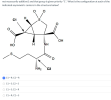 Please explain how you got the
answer :)
not necessarily additive!) and that group is given priority "1". What is the configuration at each of the indicated asymmetric centers in the structure below? C1H OH Η ΝΗ NH2 c2 C1 = R; C2 =R C1 = S; C2=5 C1 = 5; C2=R C1 =R; C2 = 5
Please explain how you got the
answer :)
not necessarily additive!) and that group is given priority "1". What is the configuration at each of the indicated asymmetric centers in the structure below? C1H OH Η ΝΗ NH2 c2 C1 = R; C2 =R C1 = S; C2=5 C1 = 5; C2=R C1 =R; C2 = 5
In this problem, how do you know which atoms or groups are going away, towards you, or in plane from the chiral center?...
 In this problem, how do you know which atoms or groups are
going away, towards you, or in plane from the chiral center? for
example, why do they assume that hydrogen is going away (dotted
line) and Ch3 is coming towards you (bold colored line)? And how do
you know which direction Ch2Ch2Br and Br is going in? its just a
single line (Not dotted or bold). I know directions are important
in determining R/S.
Ex: In the second photo...
In this problem, how do you know which atoms or groups are
going away, towards you, or in plane from the chiral center? for
example, why do they assume that hydrogen is going away (dotted
line) and Ch3 is coming towards you (bold colored line)? And how do
you know which direction Ch2Ch2Br and Br is going in? its just a
single line (Not dotted or bold). I know directions are important
in determining R/S.
Ex: In the second photo...
utions that must be specified suflex that must be added? How b ed? How many carton...
 utions that must be specified suflex that must be added? How b ed? How many carton chain? Where should the numbering of that groups are present and now are those name the ante stereochemical configurations that must be substitut e Solve The highest priority functional group in suffix is oic acid and numbering begins at the Molecule functional groups present are NH, and o c h CarbonCO as substituents and receive the prefixes amine which he other The prefix carbamoyl...
Which of the following is written correctly? A. Fisher projections are typically drawn with hydrogens on...
 Which of the following is written correctly? A. Fisher projections are typically drawn with hydrogens on vertical lines and carbon chains on horizontal lines. B. In the case of a tie, atom priorities are assigned based on the functional groups attached to the next atom in the chain C. When choosing between R and S the highest priority atom should be pointing atom should be pointing toward the viewer. D. Rotation around C = C is typically hindered because of...
answers given but please show work on how you get to that answer. 16. Which one...
 answers given but please show work on how you get to that
answer.
16. Which one of the following statements about valence electron c Tollowing statements about valence electron configurations is incorrect? A) A single neutral phosphorus atom, P, has 5 valence electrons. B) A single neutral carbon atom, C, has 2 unpaired valence electrons. (C) A single neutral sulfur atom, S, has 2 valence electrons. D) A single neutral nitrogen atom, N, has 3 unpaired valence electrons. E) A...
answers given but please show work on how you get to that
answer.
16. Which one of the following statements about valence electron c Tollowing statements about valence electron configurations is incorrect? A) A single neutral phosphorus atom, P, has 5 valence electrons. B) A single neutral carbon atom, C, has 2 unpaired valence electrons. (C) A single neutral sulfur atom, S, has 2 valence electrons. D) A single neutral nitrogen atom, N, has 3 unpaired valence electrons. E) A...
PART IV. MISCIBILITY OF TWO LIQUIDS 1. For the first two liquids in Table IV-B (the...
 PART IV. MISCIBILITY OF TWO LIQUIDS
1. For the first two liquids in Table IV-B (the solvents in the
miscibility tests), use the molecular structures provided in the
Introduction to identify each liquid as polar or nonpolar. Put an X
in the appropriate column.
2. For the remaining liquids in Table IV-B, determine if they
are primarily polar, primarily nonpolar, or both polar and polar
based on your observations in Table III-A and based on the polarity
of the solvent....
PART IV. MISCIBILITY OF TWO LIQUIDS
1. For the first two liquids in Table IV-B (the solvents in the
miscibility tests), use the molecular structures provided in the
Introduction to identify each liquid as polar or nonpolar. Put an X
in the appropriate column.
2. For the remaining liquids in Table IV-B, determine if they
are primarily polar, primarily nonpolar, or both polar and polar
based on your observations in Table III-A and based on the polarity
of the solvent....
Question: You buy a sample of glucose that has the radioactive carbon-14 (C) isotope at the...
 Question: You buy a sample of glucose that has the radioactive carbon-14 (C) isotope at the second position (Carbon #2). All other carbon positions in the glucose molecules have the "C isotope. "C is only a label and does not alter the biochemical behavior of the molecules in which it is found. This glucose sample is mixed with all the enzymes derived from liver cells, which initially contain no other C-labeled chemicals. A) Draw the Haworth structure of glucose and...
please need help with all the questions and ASAP, thank you 11. Please predict the principle...
 please need help with all the questions and ASAP, thank you
11. Please predict the principle organic product of the following reactions, show stereochemistry where appropriate. Note that some reactions involve isotope-labeled compounds, in those cases the correct isotope must be used. (66') 1. LIAID 2. H,O (1) 18 1) THF (2). CH3Li + 2) HaO NaBH4 (3) CH3OD H2(excess)/Pt (4) d herd (5). - Mg Br D2O diethyl ether Br +Li (6) diethyl ether LICu(CH2CHs)2 Br (7). 1. diethyl...
please need help with all the questions and ASAP, thank you
11. Please predict the principle organic product of the following reactions, show stereochemistry where appropriate. Note that some reactions involve isotope-labeled compounds, in those cases the correct isotope must be used. (66') 1. LIAID 2. H,O (1) 18 1) THF (2). CH3Li + 2) HaO NaBH4 (3) CH3OD H2(excess)/Pt (4) d herd (5). - Mg Br D2O diethyl ether Br +Li (6) diethyl ether LICu(CH2CHs)2 Br (7). 1. diethyl...
please help me. answer only first page. thank you! p. If you accidentally forgot to inoculate...
 please help me. answer only first page. thank you!
p. If you accidentally forgot to inoculate your organism in an OF-glucose tube with oil, and only had one yellow “no oil” tube, what type of carbohydrate catabolism would describe that organism (fermenter, oxidative, neither)? Explain your answer. q. What are two other results from the OF-glucose tubes other than their type of carbohydrate catabolism? r. How can organisms that don't use starch grow on a starch agar plate? Carbohydrate Catabolism...
please help me. answer only first page. thank you!
p. If you accidentally forgot to inoculate your organism in an OF-glucose tube with oil, and only had one yellow “no oil” tube, what type of carbohydrate catabolism would describe that organism (fermenter, oxidative, neither)? Explain your answer. q. What are two other results from the OF-glucose tubes other than their type of carbohydrate catabolism? r. How can organisms that don't use starch grow on a starch agar plate? Carbohydrate Catabolism...
Problem Set 4 Atomic Structure and the Periodic Table Name: Date: Lab Section: General Instructions Complete the f...
 Problem Set 4 Atomic Structure and the Periodic Table Name: Date: Lab Section: General Instructions Complete the following problems. Attach another sheet to give yourself space for problems 8,9,10 as needed. Assignment is due at the end of the lab period unless stated otherwise by instructor. 1.) Energy Levels and Sublevels for the Polyelectronic Atom (a) How many sublevels exist in the energy level (n = 5)? (b) How many orbitals exist in any f-sublevel? (c) What is the maximum...
 Please explain how you got the
answer :)
not necessarily additive!) and that group is given priority "1". What is the configuration at each of the indicated asymmetric centers in the structure below? C1H OH Η ΝΗ NH2 c2 C1 = R; C2 =R C1 = S; C2=5 C1 = 5; C2=R C1 =R; C2 = 5
Please explain how you got the
answer :)
not necessarily additive!) and that group is given priority "1". What is the configuration at each of the indicated asymmetric centers in the structure below? C1H OH Η ΝΗ NH2 c2 C1 = R; C2 =R C1 = S; C2=5 C1 = 5; C2=R C1 =R; C2 = 5
 In this problem, how do you know which atoms or groups are
going away, towards you, or in plane from the chiral center? for
example, why do they assume that hydrogen is going away (dotted
line) and Ch3 is coming towards you (bold colored line)? And how do
you know which direction Ch2Ch2Br and Br is going in? its just a
single line (Not dotted or bold). I know directions are important
in determining R/S.
Ex: In the second photo...
In this problem, how do you know which atoms or groups are
going away, towards you, or in plane from the chiral center? for
example, why do they assume that hydrogen is going away (dotted
line) and Ch3 is coming towards you (bold colored line)? And how do
you know which direction Ch2Ch2Br and Br is going in? its just a
single line (Not dotted or bold). I know directions are important
in determining R/S.
Ex: In the second photo...
 utions that must be specified suflex that must be added? How b ed? How many carton chain? Where should the numbering of that groups are present and now are those name the ante stereochemical configurations that must be substitut e Solve The highest priority functional group in suffix is oic acid and numbering begins at the Molecule functional groups present are NH, and o c h CarbonCO as substituents and receive the prefixes amine which he other The prefix carbamoyl...
 Which of the following is written correctly? A. Fisher projections are typically drawn with hydrogens on vertical lines and carbon chains on horizontal lines. B. In the case of a tie, atom priorities are assigned based on the functional groups attached to the next atom in the chain C. When choosing between R and S the highest priority atom should be pointing atom should be pointing toward the viewer. D. Rotation around C = C is typically hindered because of...
 answers given but please show work on how you get to that
answer.
16. Which one of the following statements about valence electron c Tollowing statements about valence electron configurations is incorrect? A) A single neutral phosphorus atom, P, has 5 valence electrons. B) A single neutral carbon atom, C, has 2 unpaired valence electrons. (C) A single neutral sulfur atom, S, has 2 valence electrons. D) A single neutral nitrogen atom, N, has 3 unpaired valence electrons. E) A...
answers given but please show work on how you get to that
answer.
16. Which one of the following statements about valence electron c Tollowing statements about valence electron configurations is incorrect? A) A single neutral phosphorus atom, P, has 5 valence electrons. B) A single neutral carbon atom, C, has 2 unpaired valence electrons. (C) A single neutral sulfur atom, S, has 2 valence electrons. D) A single neutral nitrogen atom, N, has 3 unpaired valence electrons. E) A...
 PART IV. MISCIBILITY OF TWO LIQUIDS
1. For the first two liquids in Table IV-B (the solvents in the
miscibility tests), use the molecular structures provided in the
Introduction to identify each liquid as polar or nonpolar. Put an X
in the appropriate column.
2. For the remaining liquids in Table IV-B, determine if they
are primarily polar, primarily nonpolar, or both polar and polar
based on your observations in Table III-A and based on the polarity
of the solvent....
PART IV. MISCIBILITY OF TWO LIQUIDS
1. For the first two liquids in Table IV-B (the solvents in the
miscibility tests), use the molecular structures provided in the
Introduction to identify each liquid as polar or nonpolar. Put an X
in the appropriate column.
2. For the remaining liquids in Table IV-B, determine if they
are primarily polar, primarily nonpolar, or both polar and polar
based on your observations in Table III-A and based on the polarity
of the solvent....
 Question: You buy a sample of glucose that has the radioactive carbon-14 (C) isotope at the second position (Carbon #2). All other carbon positions in the glucose molecules have the "C isotope. "C is only a label and does not alter the biochemical behavior of the molecules in which it is found. This glucose sample is mixed with all the enzymes derived from liver cells, which initially contain no other C-labeled chemicals. A) Draw the Haworth structure of glucose and...
 please need help with all the questions and ASAP, thank you
11. Please predict the principle organic product of the following reactions, show stereochemistry where appropriate. Note that some reactions involve isotope-labeled compounds, in those cases the correct isotope must be used. (66') 1. LIAID 2. H,O (1) 18 1) THF (2). CH3Li + 2) HaO NaBH4 (3) CH3OD H2(excess)/Pt (4) d herd (5). - Mg Br D2O diethyl ether Br +Li (6) diethyl ether LICu(CH2CHs)2 Br (7). 1. diethyl...
please need help with all the questions and ASAP, thank you
11. Please predict the principle organic product of the following reactions, show stereochemistry where appropriate. Note that some reactions involve isotope-labeled compounds, in those cases the correct isotope must be used. (66') 1. LIAID 2. H,O (1) 18 1) THF (2). CH3Li + 2) HaO NaBH4 (3) CH3OD H2(excess)/Pt (4) d herd (5). - Mg Br D2O diethyl ether Br +Li (6) diethyl ether LICu(CH2CHs)2 Br (7). 1. diethyl...
 please help me. answer only first page. thank you!
p. If you accidentally forgot to inoculate your organism in an OF-glucose tube with oil, and only had one yellow “no oil” tube, what type of carbohydrate catabolism would describe that organism (fermenter, oxidative, neither)? Explain your answer. q. What are two other results from the OF-glucose tubes other than their type of carbohydrate catabolism? r. How can organisms that don't use starch grow on a starch agar plate? Carbohydrate Catabolism...
please help me. answer only first page. thank you!
p. If you accidentally forgot to inoculate your organism in an OF-glucose tube with oil, and only had one yellow “no oil” tube, what type of carbohydrate catabolism would describe that organism (fermenter, oxidative, neither)? Explain your answer. q. What are two other results from the OF-glucose tubes other than their type of carbohydrate catabolism? r. How can organisms that don't use starch grow on a starch agar plate? Carbohydrate Catabolism...
 Problem Set 4 Atomic Structure and the Periodic Table Name: Date: Lab Section: General Instructions Complete the following problems. Attach another sheet to give yourself space for problems 8,9,10 as needed. Assignment is due at the end of the lab period unless stated otherwise by instructor. 1.) Energy Levels and Sublevels for the Polyelectronic Atom (a) How many sublevels exist in the energy level (n = 5)? (b) How many orbitals exist in any f-sublevel? (c) What is the maximum...
Most questions answered within 3 hours.
-
Where is the error in this code sequence?
String s1 = "Hello";
String s2 = "ello";...
asked 10 months ago -
Financial data for Joel de Paris, Inc., for last year
follow:
Joel de Paris, Inc.
Balance...
asked 10 months ago -
Consider this reaction:
Al2(SO4)3 (aq)+ BaCl3
(aq) Al2Cl6 (aq)- +
3BaSO4(s) . What is the...
asked 10 months ago -
Suppose that Savneet is considering increasing her
recent random sample from 20 car rentals to 40...
asked 10 months ago -
Trucks arrive at an unloading terminal at an average rate of 120
per hour.
Trucks arrive...
asked 10 months ago -
Why are methanol and ethanol completely soluble in water while
octanol is not very little soluble....
asked 10 months ago -
A facilities manager at a university reads in a research report
that the mean amount of...
asked 10 months ago -
When the CuSO4 is rehydrated by adding water to the anhydrous
compound, is this an endothermic...
asked 10 months ago -
A ray of sunlight is passing from diamond into crown glass; the
angle of incidence is...
asked 10 months ago -
A block of mass 0.249 kg is placed on top of a light, vertical
spring of...
asked 10 months ago -
how do the kidneys compensate in the presences of acidosis
a) trigger hyperventilate
b) reserve acid...
asked 10 months ago -
Question 501 pts
The rental rate of capital to the firm increases. Which of the
following...
asked 10 months ago