
Homework Answers
Request Answer!
We need at least 10 more requests to produce the answer.
0 / 10 have requested this problem solution
The more requests, the faster the answer.
Add Answer to:
Examine the following pedigree tracing a human recessive disorder for deafness. If you follow the key...
Achondroplasia is a dominant condition that leads to dwarfism. Hereditary deafness is a recessive trait. John,...
Achondroplasia is a dominant condition that leads to dwarfism. Hereditary deafness is a recessive trait. John, who is achondroplastic and hears normally, marries Ann, who has normal height and hearing, but whose father was deaf. They have a non-achondroplastic 3 year old son who is deaf. Draw the pedigree for this family, indicating all the known family members. Give the genotypes of John, Ann, and their son. If John and Ann have another child, what is the probability that The...
PEDIGREE ANALYSIS Examine the following pedigrees. 1. Examine the pedigree of achondroplasia (a form of dwarfism)....
 PEDIGREE ANALYSIS
Examine the following pedigrees.
1. Examine the pedigree of achondroplasia (a form of
dwarfism).
a) Is this trait dominant or recesive?_____
b) How do you know?_______
c) Label all genotypes on the pedigree chart:
2. Examine the pedigree of an X-linked recessive disorder
(red-green color deficiency).
1) Label all of the genotypes on the pedigree chart:____
3. Examine the following pedigree.
a) Is it autosomal dominant or recessive, or X-linked
recessive? _______
b) How do you know?______
c)...
PEDIGREE ANALYSIS
Examine the following pedigrees.
1. Examine the pedigree of achondroplasia (a form of
dwarfism).
a) Is this trait dominant or recesive?_____
b) How do you know?_______
c) Label all genotypes on the pedigree chart:
2. Examine the pedigree of an X-linked recessive disorder
(red-green color deficiency).
1) Label all of the genotypes on the pedigree chart:____
3. Examine the following pedigree.
a) Is it autosomal dominant or recessive, or X-linked
recessive? _______
b) How do you know?______
c)...
please explain all the details 5. (See similar problem GM-5 and scroll down to find its...
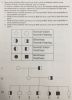 please explain all the details
5. (See similar problem GM-5 and scroll down to find its detailed solution in the Problem Solving: Genetic Mapping" post in Canvas.) In humans, deafness (d) and blindness (b, due to the disease retinitis pigmentosum) are determined by recessive alleles at X-chromosome loci that are 16 map units apart. Consider the pedigree shown below. a. What are the possible genotypes for individual II-3? What is the probability for b. What is the probability that individual...
please explain all the details
5. (See similar problem GM-5 and scroll down to find its detailed solution in the Problem Solving: Genetic Mapping" post in Canvas.) In humans, deafness (d) and blindness (b, due to the disease retinitis pigmentosum) are determined by recessive alleles at X-chromosome loci that are 16 map units apart. Consider the pedigree shown below. a. What are the possible genotypes for individual II-3? What is the probability for b. What is the probability that individual...
PEDIGREE ANALYSIS Cystic fibrosis is a recessive inherited disorder that affects one in 2,500 people of...
 PEDIGREE ANALYSIS Cystic fibrosis is a recessive inherited disorder that affects one in 2,500 people of European descent. People afflicted with this condition have defective or absent protein channels which causes an accumulation of extracellular chloride ions, leading to a buildup of mucus around the lungs and digestive system. This sticky mucus clogs the lungs leading to life-threatening lung infections, and also obstructs the pancreas and causes poor absorption of food. With treatment, individuals can live into their 30's and...
Question 3 The following human pedigree shows a family affected by a specific disease. Assume that...
 Question 3 The following human pedigree shows a family affected by a specific disease. Assume that the individuals marked with an asterisk () do not carry any allele associated with the affected phenotype and that no other mutation spontaneously occurs. Also assume complete penetrance a) State the most likely mode of inheritance for this disease. Choose from: autosomal dominant, autosomal recessive, X-linked dominant, X-linked recessive b) Write all possible genotypes of the following individuals in the pedigree. Use the uppercase...
Use the pedigree below to determine the most likely mode of inheritance. Shade in the following...
 Use the pedigree below to determine the most likely mode of
inheritance.
Shade in the following affected individuals: 1, 3, 5, 11, 13
& 19.
There may be carriers present if this is a recessive disorder,
and when you determine them, they should be shaded appropriately.
Use the letters R/r or XR/Xr for the genotypes.
(1.5pts) Label the genotypes for every individual.
20 21 22. 23
Use the pedigree below to determine the most likely mode of
inheritance.
Shade in the following affected individuals: 1, 3, 5, 11, 13
& 19.
There may be carriers present if this is a recessive disorder,
and when you determine them, they should be shaded appropriately.
Use the letters R/r or XR/Xr for the genotypes.
(1.5pts) Label the genotypes for every individual.
20 21 22. 23
The pedigree shows the occurrence of a X linked recessive mendelian disease in a human family....
 The pedigree shows the occurrence of a X linked recessive mendelian disease in a human family. Two unaffected family members were genotyped at a microsatellite locus and two different microsatellite alleles were observed (M1 and M2) I M1/M1 II 1 M1 M2 III 3 IV 3 5 a) Assume the disease and the microsatellite locus are completely linked. What is the genotype of individual IV-4 (give both disease and micrsatellite alleles in the genotype)? b) Assume that the disease locus...
Genetics Pedigree Worksheet 1. Use the below pedigree chart to answer the following questions about dimples....
 Genetics Pedigree Worksheet 1. Use the below pedigree chart to answer the following questions about dimples. The Dimple gene controls whether a person has dimples or doesn't have dimples. Dimples is dominant to no dimples. Place the genotypes of each individual below its symbol. O Dimples gene (D) Dimples is dominant to no dimples 12 13 14 A) How many family members have Dimples? B) What is the genotype of individual 3 and 4? C) Can cither individual #8 or...
11. (8 m) Refer to the following pedigree, which traces the inheritance of a biochemical disorder....
 11. (8 m) Refer to the following pedigree, which traces the inheritance of a biochemical disorder. female not affected female affected 0 male not affected male affected a. (2 m) Does this disorder appear to be caused by an autosomal or sex-linked gene? Does this disorder appear to be caused by a dominant allele or by a recessive allele? Explain how you know this. b. (2 m) Fill in the genotypes of all affected individuals. Use A and a to...
The pedigree below that shows a family in which an autosomal recessive disorder is present. Family...
 The pedigree below that shows a family in which an autosomal recessive disorder is present. Family members 1-2 and II-2 are affected by the disorder and have the genotype dd. A pregnancy involving Il-4 has just undergone genetic testing for a VNTR that is linked to the disease gene. The VNTR has two alleles, V1 and V2. The gel electrophoresis patterns for each family member are shown, including the VNTR genotype for 1|-4. 2 - 2 3 4 = ?...
 PEDIGREE ANALYSIS
Examine the following pedigrees.
1. Examine the pedigree of achondroplasia (a form of
dwarfism).
a) Is this trait dominant or recesive?_____
b) How do you know?_______
c) Label all genotypes on the pedigree chart:
2. Examine the pedigree of an X-linked recessive disorder
(red-green color deficiency).
1) Label all of the genotypes on the pedigree chart:____
3. Examine the following pedigree.
a) Is it autosomal dominant or recessive, or X-linked
recessive? _______
b) How do you know?______
c)...
PEDIGREE ANALYSIS
Examine the following pedigrees.
1. Examine the pedigree of achondroplasia (a form of
dwarfism).
a) Is this trait dominant or recesive?_____
b) How do you know?_______
c) Label all genotypes on the pedigree chart:
2. Examine the pedigree of an X-linked recessive disorder
(red-green color deficiency).
1) Label all of the genotypes on the pedigree chart:____
3. Examine the following pedigree.
a) Is it autosomal dominant or recessive, or X-linked
recessive? _______
b) How do you know?______
c)...
 please explain all the details
5. (See similar problem GM-5 and scroll down to find its detailed solution in the Problem Solving: Genetic Mapping" post in Canvas.) In humans, deafness (d) and blindness (b, due to the disease retinitis pigmentosum) are determined by recessive alleles at X-chromosome loci that are 16 map units apart. Consider the pedigree shown below. a. What are the possible genotypes for individual II-3? What is the probability for b. What is the probability that individual...
please explain all the details
5. (See similar problem GM-5 and scroll down to find its detailed solution in the Problem Solving: Genetic Mapping" post in Canvas.) In humans, deafness (d) and blindness (b, due to the disease retinitis pigmentosum) are determined by recessive alleles at X-chromosome loci that are 16 map units apart. Consider the pedigree shown below. a. What are the possible genotypes for individual II-3? What is the probability for b. What is the probability that individual...
 PEDIGREE ANALYSIS Cystic fibrosis is a recessive inherited disorder that affects one in 2,500 people of European descent. People afflicted with this condition have defective or absent protein channels which causes an accumulation of extracellular chloride ions, leading to a buildup of mucus around the lungs and digestive system. This sticky mucus clogs the lungs leading to life-threatening lung infections, and also obstructs the pancreas and causes poor absorption of food. With treatment, individuals can live into their 30's and...
 Question 3 The following human pedigree shows a family affected by a specific disease. Assume that the individuals marked with an asterisk () do not carry any allele associated with the affected phenotype and that no other mutation spontaneously occurs. Also assume complete penetrance a) State the most likely mode of inheritance for this disease. Choose from: autosomal dominant, autosomal recessive, X-linked dominant, X-linked recessive b) Write all possible genotypes of the following individuals in the pedigree. Use the uppercase...
 Use the pedigree below to determine the most likely mode of
inheritance.
Shade in the following affected individuals: 1, 3, 5, 11, 13
& 19.
There may be carriers present if this is a recessive disorder,
and when you determine them, they should be shaded appropriately.
Use the letters R/r or XR/Xr for the genotypes.
(1.5pts) Label the genotypes for every individual.
20 21 22. 23
Use the pedigree below to determine the most likely mode of
inheritance.
Shade in the following affected individuals: 1, 3, 5, 11, 13
& 19.
There may be carriers present if this is a recessive disorder,
and when you determine them, they should be shaded appropriately.
Use the letters R/r or XR/Xr for the genotypes.
(1.5pts) Label the genotypes for every individual.
20 21 22. 23
 The pedigree shows the occurrence of a X linked recessive mendelian disease in a human family. Two unaffected family members were genotyped at a microsatellite locus and two different microsatellite alleles were observed (M1 and M2) I M1/M1 II 1 M1 M2 III 3 IV 3 5 a) Assume the disease and the microsatellite locus are completely linked. What is the genotype of individual IV-4 (give both disease and micrsatellite alleles in the genotype)? b) Assume that the disease locus...
 Genetics Pedigree Worksheet 1. Use the below pedigree chart to answer the following questions about dimples. The Dimple gene controls whether a person has dimples or doesn't have dimples. Dimples is dominant to no dimples. Place the genotypes of each individual below its symbol. O Dimples gene (D) Dimples is dominant to no dimples 12 13 14 A) How many family members have Dimples? B) What is the genotype of individual 3 and 4? C) Can cither individual #8 or...
 11. (8 m) Refer to the following pedigree, which traces the inheritance of a biochemical disorder. female not affected female affected 0 male not affected male affected a. (2 m) Does this disorder appear to be caused by an autosomal or sex-linked gene? Does this disorder appear to be caused by a dominant allele or by a recessive allele? Explain how you know this. b. (2 m) Fill in the genotypes of all affected individuals. Use A and a to...
 The pedigree below that shows a family in which an autosomal recessive disorder is present. Family members 1-2 and II-2 are affected by the disorder and have the genotype dd. A pregnancy involving Il-4 has just undergone genetic testing for a VNTR that is linked to the disease gene. The VNTR has two alleles, V1 and V2. The gel electrophoresis patterns for each family member are shown, including the VNTR genotype for 1|-4. 2 - 2 3 4 = ?...
Most questions answered within 3 hours.
-
Where is the error in this code sequence?
String s1 = "Hello";
String s2 = "ello";...
asked 11 months ago -
Financial data for Joel de Paris, Inc., for last year
follow:
Joel de Paris, Inc.
Balance...
asked 11 months ago -
Consider this reaction:
Al2(SO4)3 (aq)+ BaCl3
(aq) Al2Cl6 (aq)- +
3BaSO4(s) . What is the...
asked 11 months ago -
Suppose that Savneet is considering increasing her
recent random sample from 20 car rentals to 40...
asked 11 months ago -
Trucks arrive at an unloading terminal at an average rate of 120
per hour.
Trucks arrive...
asked 11 months ago -
Why are methanol and ethanol completely soluble in water while
octanol is not very little soluble....
asked 11 months ago -
A facilities manager at a university reads in a research report
that the mean amount of...
asked 11 months ago -
When the CuSO4 is rehydrated by adding water to the anhydrous
compound, is this an endothermic...
asked 11 months ago -
A ray of sunlight is passing from diamond into crown glass; the
angle of incidence is...
asked 11 months ago -
A block of mass 0.249 kg is placed on top of a light, vertical
spring of...
asked 11 months ago -
how do the kidneys compensate in the presences of acidosis
a) trigger hyperventilate
b) reserve acid...
asked 11 months ago -
Question 501 pts
The rental rate of capital to the firm increases. Which of the
following...
asked 11 months ago