
Homework Answers
Add Answer to:
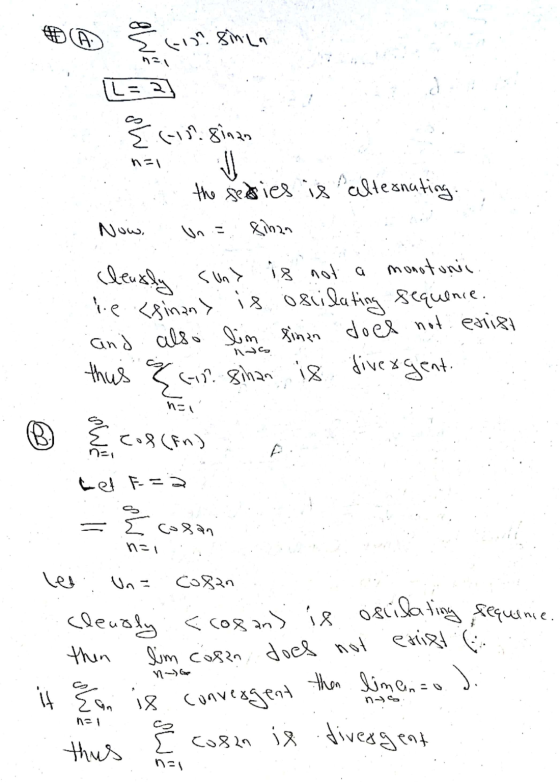
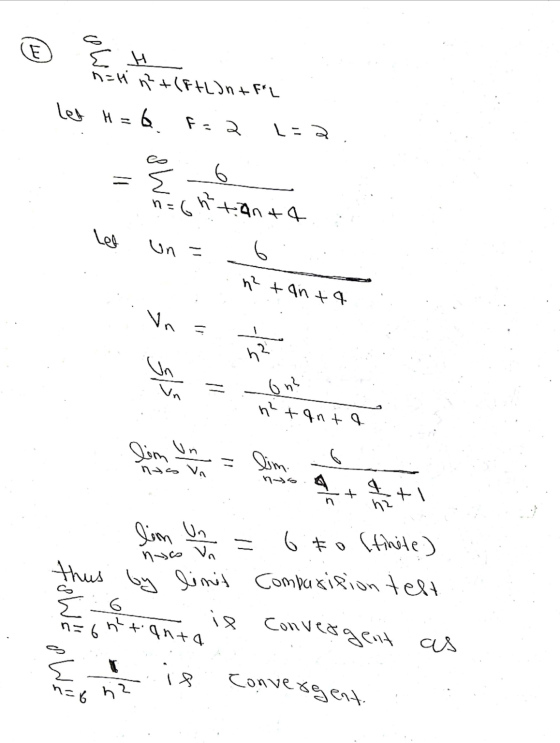
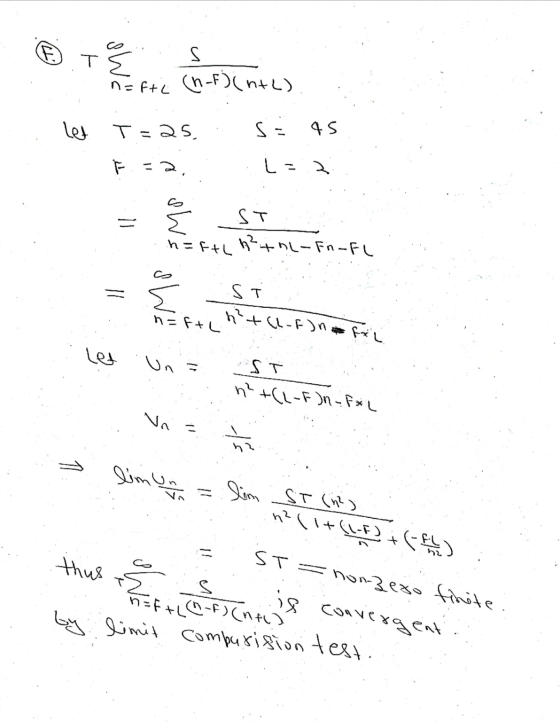
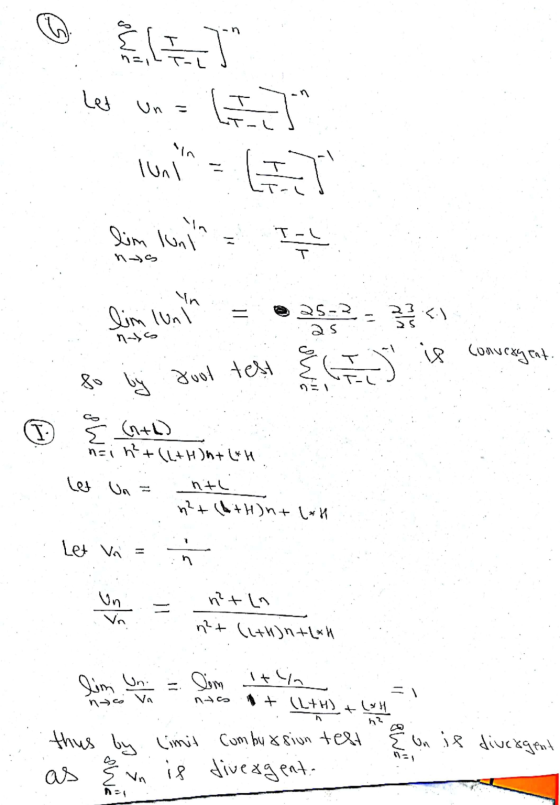
H= 6
T=25
F= 2
L=2
S=45
8) Solve only 6 of the questions A-J. Mark...
2. Use the property f(t) = L-1 {r(s))-(-1)"L-1 {F(n)(s)} (-t)n and choose n = 1 to perform the fo...
 2. Use the property f(t) = L-1 {r(s))-(-1)"L-1 {F(n)(s)} (-t)n and choose n = 1 to perform the following inverse Laplace transform L-1 (F(s)): (1). F(s)=ln-s-3 V s + 1 (Answer:- (e3t-le-t) ) (2). F(s) - arctan(2s) (Answer: tsin )
2. Use the property f(t) = L-1 {r(s))-(-1)"L-1 {F(n)(s)} (-t)n and choose n = 1 to perform the following inverse Laplace transform L-1 (F(s)): (1). F(s)=ln-s-3 V s + 1 (Answer:- (e3t-le-t) ) (2). F(s) - arctan(2s) (Answer: tsin )
2. Use the property f(t) = L-1 {r(s))-(-1)"L-1 {F(n)(s)} (-t)n and choose n = 1 to perform the following inverse Laplace transform L-1 (F(s)): (1). F(s)=ln-s-3 V s + 1 (Answer:- (e3t-le-t) ) (2). F(s) - arctan(2s) (Answer: tsin )
Elementary Laplace Transtorms Y(S) = {f} -L e-stf(t)dt fc = C-'{F(s)} F(s) = {f} f(t) =-'{F(s))...
 Elementary Laplace Transtorms Y(S) = {f} -L e-stf(t)dt fc = C-'{F(s)} F(s) = {f} f(t) =-'{F(s)) F(s) = {f} -CS 1. 1 1 12. uct) le S> 0 S> 0 . s S 2. eat 1 13. ucOf(t-c) e-csF(s) S> a S-a n! 3. t",n e Z 14. ectf(t) F( sc) S> 0 sh+1 4. tP, p>-1 (p+1) S> 0 SP+1 15. f(ct) F). c>0 16. SFt - 1)g(t)dt F(s)G(*) 5. sin at S> 0 16. cos at 17. 8(t...
Elementary Laplace Transtorms Y(S) = {f} -L e-stf(t)dt fc = C-'{F(s)} F(s) = {f} f(t) =-'{F(s))...
 Elementary Laplace Transtorms Y(S) = {f} -L e-stf(t)dt fc = C-'{F(s)} F(s) = {f} f(t) =-'{F(s)) F(s) = {f} -CS 1. 1 1 12. uct) le S> 0 S> 0 . s S 2. eat 1 13. ucOf(t-c) e-csF(s) S> a S-a n! 3. t",n e Z 14. ectf(t) F( sc) S> 0 sh+1 4. tP, p>-1 (p+1) S> 0 SP+1 15. f(ct) F). c>0 16. SFt - 1)g(t)dt F(s)G(*) 5. sin at S> 0 16. cos at 17. 8(t...
Elementary Laplace Transtorms Y(S) = {f} -L e-stf(t)dt fc = C-'{F(s)} F(s) = {f} f(t) =-'{F(s))...
 Elementary Laplace Transtorms Y(S) = {f} -L e-stf(t)dt fc = C-'{F(s)} F(s) = {f} f(t) =-'{F(s)) F(s) = {f} -CS 1. 1 1 12. uct) le S> 0 S> 0 . s S 2. eat 1 13. ucOf(t-c) e-csF(s) S> a S-a n! 3. t",n e Z 14. ectf(t) F( sc) S> 0 sh+1 4. tP, p>-1 (p+1) S> 0 SP+1 15. f(ct) F). c>0 16. SFt - 1)g(t)dt F(s)G(*) 5. sin at S> 0 16. cos at 17. 8(t...
Elementary Laplace Transtorms Y(S) = {f} -L e-stf(t)dt fc = C-'{F(s)} F(s) = {f} f(t) =-'{F(s))...
 Elementary Laplace Transtorms Y(S) = {f} -L e-stf(t)dt fc = C-'{F(s)} F(s) = {f} f(t) =-'{F(s)) F(s) = {f} -CS 1. 1 1 12. uct) le S> 0 S> 0 . s S 2. eat 1 13. ucOf(t-c) e-csF(s) S> a S-a n! 3. t",n e Z 14. ectf(t) F( sc) S> 0 sh+1 4. tP, p>-1 (p+1) S> 0 SP+1 15. f(ct) F). c>0 16. SFt - 1)g(t)dt F(s)G(*) 5. sin at S> 0 16. cos at 17. 8(t...
dn 6. Use the theorem, L {t" f(t)} = (-1)" den! F(s), to find each of...
 dn 6. Use the theorem, L {t" f(t)} = (-1)" den! F(s), to find each of the following: (a) L {t cos 2t} (b) L {t sint}
6. Mix and match. You may also answer "none of these" F(s) = L{ft) f(t)= {F($)}...
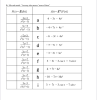 6. Mix and match. You may also answer "none of these" F(s) = L{ft) f(t)= {F($)} 4 – 36 – 4e 35+3 s-(S-1) та 3s +3 $2(52 -1) - 4+7t + 4e7 -6-3t + 6e -7s+3 s-(s -1) 7s+7 $2(2-1) d -7-7t + Tet | 3s +7 s(s+1) le - 3 – 3t + 3e' 3s +7 $2(5+1) 3 - 3t - 3 cos t + 3 sint 4 + 70-4e | 3s - 7 s-(s-1) | 3s +7 s-(s-1)...
Elementary Laplace Transtorms Y(S) = {f} -L e-stf(t)dt fc = C-'{F(s)} F(s) = {f} f(t) =-'{F(s))...
 Elementary Laplace Transtorms Y(S) = {f} -L e-stf(t)dt fc = C-'{F(s)} F(s) = {f} f(t) =-'{F(s)) F(s) = {f} -CS 1. 1 1 12. uct) le S> 0 S> 0 . s S 2. eat 1 13. ucOf(t-c) e-csF(s) S> a S-a n! 3. t",n e Z 14. ectf(t) F( sc) S> 0 sh+1 4. tP, p>-1 (p+1) S> 0 SP+1 15. f(ct) F). c>0 16. SFt - 1)g(t)dt F(s)G(*) 5. sin at S> 0 16. cos at 17. 8(t...
#6.) Given f(t)=-2:+8, Ost<4, f(t+4)= f(t). Find F(s)=L{f(t)} of the Periodic Function.
 #6.) Given f(t)=-2:+8, Ost<4, f(t+4)= f(t). Find F(s)=L{f(t)} of the Periodic Function.
Verify the following using MATLAB 2) (a) Consider the following function f(t)=e"" sinwt u (t (1)...
 Verify the following using MATLAB
2) (a) Consider the following function f(t)=e"" sinwt u (t (1) .... Write the formula for Laplace transform. L[f)]=F(6) F(6))e"d Where f(t is the function in time domain. F(s) is the function in frequency domain Apply Laplace transform to equation 1. Le sin cot u()]F(s) Consider, f() sin wtu(t). From the frequency shifting theorem, L(e"f()F(s+a) (2) Apply Laplace transform to f(t). F,(s)sin ot u (t)e" "dt Define the step function, u(t u(t)= 1 fort >0...
Verify the following using MATLAB
2) (a) Consider the following function f(t)=e"" sinwt u (t (1) .... Write the formula for Laplace transform. L[f)]=F(6) F(6))e"d Where f(t is the function in time domain. F(s) is the function in frequency domain Apply Laplace transform to equation 1. Le sin cot u()]F(s) Consider, f() sin wtu(t). From the frequency shifting theorem, L(e"f()F(s+a) (2) Apply Laplace transform to f(t). F,(s)sin ot u (t)e" "dt Define the step function, u(t u(t)= 1 fort >0...
 2. Use the property f(t) = L-1 {r(s))-(-1)"L-1 {F(n)(s)} (-t)n and choose n = 1 to perform the following inverse Laplace transform L-1 (F(s)): (1). F(s)=ln-s-3 V s + 1 (Answer:- (e3t-le-t) ) (2). F(s) - arctan(2s) (Answer: tsin )
2. Use the property f(t) = L-1 {r(s))-(-1)"L-1 {F(n)(s)} (-t)n and choose n = 1 to perform the following inverse Laplace transform L-1 (F(s)): (1). F(s)=ln-s-3 V s + 1 (Answer:- (e3t-le-t) ) (2). F(s) - arctan(2s) (Answer: tsin )
2. Use the property f(t) = L-1 {r(s))-(-1)"L-1 {F(n)(s)} (-t)n and choose n = 1 to perform the following inverse Laplace transform L-1 (F(s)): (1). F(s)=ln-s-3 V s + 1 (Answer:- (e3t-le-t) ) (2). F(s) - arctan(2s) (Answer: tsin )
 Elementary Laplace Transtorms Y(S) = {f} -L e-stf(t)dt fc = C-'{F(s)} F(s) = {f} f(t) =-'{F(s)) F(s) = {f} -CS 1. 1 1 12. uct) le S> 0 S> 0 . s S 2. eat 1 13. ucOf(t-c) e-csF(s) S> a S-a n! 3. t",n e Z 14. ectf(t) F( sc) S> 0 sh+1 4. tP, p>-1 (p+1) S> 0 SP+1 15. f(ct) F). c>0 16. SFt - 1)g(t)dt F(s)G(*) 5. sin at S> 0 16. cos at 17. 8(t...
 Elementary Laplace Transtorms Y(S) = {f} -L e-stf(t)dt fc = C-'{F(s)} F(s) = {f} f(t) =-'{F(s)) F(s) = {f} -CS 1. 1 1 12. uct) le S> 0 S> 0 . s S 2. eat 1 13. ucOf(t-c) e-csF(s) S> a S-a n! 3. t",n e Z 14. ectf(t) F( sc) S> 0 sh+1 4. tP, p>-1 (p+1) S> 0 SP+1 15. f(ct) F). c>0 16. SFt - 1)g(t)dt F(s)G(*) 5. sin at S> 0 16. cos at 17. 8(t...
 Elementary Laplace Transtorms Y(S) = {f} -L e-stf(t)dt fc = C-'{F(s)} F(s) = {f} f(t) =-'{F(s)) F(s) = {f} -CS 1. 1 1 12. uct) le S> 0 S> 0 . s S 2. eat 1 13. ucOf(t-c) e-csF(s) S> a S-a n! 3. t",n e Z 14. ectf(t) F( sc) S> 0 sh+1 4. tP, p>-1 (p+1) S> 0 SP+1 15. f(ct) F). c>0 16. SFt - 1)g(t)dt F(s)G(*) 5. sin at S> 0 16. cos at 17. 8(t...
 Elementary Laplace Transtorms Y(S) = {f} -L e-stf(t)dt fc = C-'{F(s)} F(s) = {f} f(t) =-'{F(s)) F(s) = {f} -CS 1. 1 1 12. uct) le S> 0 S> 0 . s S 2. eat 1 13. ucOf(t-c) e-csF(s) S> a S-a n! 3. t",n e Z 14. ectf(t) F( sc) S> 0 sh+1 4. tP, p>-1 (p+1) S> 0 SP+1 15. f(ct) F). c>0 16. SFt - 1)g(t)dt F(s)G(*) 5. sin at S> 0 16. cos at 17. 8(t...
 dn 6. Use the theorem, L {t" f(t)} = (-1)" den! F(s), to find each of the following: (a) L {t cos 2t} (b) L {t sint}
 6. Mix and match. You may also answer "none of these" F(s) = L{ft) f(t)= {F($)} 4 – 36 – 4e 35+3 s-(S-1) та 3s +3 $2(52 -1) - 4+7t + 4e7 -6-3t + 6e -7s+3 s-(s -1) 7s+7 $2(2-1) d -7-7t + Tet | 3s +7 s(s+1) le - 3 – 3t + 3e' 3s +7 $2(5+1) 3 - 3t - 3 cos t + 3 sint 4 + 70-4e | 3s - 7 s-(s-1) | 3s +7 s-(s-1)...
 Elementary Laplace Transtorms Y(S) = {f} -L e-stf(t)dt fc = C-'{F(s)} F(s) = {f} f(t) =-'{F(s)) F(s) = {f} -CS 1. 1 1 12. uct) le S> 0 S> 0 . s S 2. eat 1 13. ucOf(t-c) e-csF(s) S> a S-a n! 3. t",n e Z 14. ectf(t) F( sc) S> 0 sh+1 4. tP, p>-1 (p+1) S> 0 SP+1 15. f(ct) F). c>0 16. SFt - 1)g(t)dt F(s)G(*) 5. sin at S> 0 16. cos at 17. 8(t...
 #6.) Given f(t)=-2:+8, Ost<4, f(t+4)= f(t). Find F(s)=L{f(t)} of the Periodic Function.
 Verify the following using MATLAB
2) (a) Consider the following function f(t)=e"" sinwt u (t (1) .... Write the formula for Laplace transform. L[f)]=F(6) F(6))e"d Where f(t is the function in time domain. F(s) is the function in frequency domain Apply Laplace transform to equation 1. Le sin cot u()]F(s) Consider, f() sin wtu(t). From the frequency shifting theorem, L(e"f()F(s+a) (2) Apply Laplace transform to f(t). F,(s)sin ot u (t)e" "dt Define the step function, u(t u(t)= 1 fort >0...
Verify the following using MATLAB
2) (a) Consider the following function f(t)=e"" sinwt u (t (1) .... Write the formula for Laplace transform. L[f)]=F(6) F(6))e"d Where f(t is the function in time domain. F(s) is the function in frequency domain Apply Laplace transform to equation 1. Le sin cot u()]F(s) Consider, f() sin wtu(t). From the frequency shifting theorem, L(e"f()F(s+a) (2) Apply Laplace transform to f(t). F,(s)sin ot u (t)e" "dt Define the step function, u(t u(t)= 1 fort >0...
Most questions answered within 3 hours.
-
Where is the error in this code sequence?
String s1 = "Hello";
String s2 = "ello";...
asked 11 months ago -
Financial data for Joel de Paris, Inc., for last year
follow:
Joel de Paris, Inc.
Balance...
asked 11 months ago -
Consider this reaction:
Al2(SO4)3 (aq)+ BaCl3
(aq) Al2Cl6 (aq)- +
3BaSO4(s) . What is the...
asked 11 months ago -
Suppose that Savneet is considering increasing her
recent random sample from 20 car rentals to 40...
asked 11 months ago -
Trucks arrive at an unloading terminal at an average rate of 120
per hour.
Trucks arrive...
asked 11 months ago -
Why are methanol and ethanol completely soluble in water while
octanol is not very little soluble....
asked 11 months ago -
A facilities manager at a university reads in a research report
that the mean amount of...
asked 11 months ago -
When the CuSO4 is rehydrated by adding water to the anhydrous
compound, is this an endothermic...
asked 11 months ago -
A ray of sunlight is passing from diamond into crown glass; the
angle of incidence is...
asked 11 months ago -
A block of mass 0.249 kg is placed on top of a light, vertical
spring of...
asked 11 months ago -
how do the kidneys compensate in the presences of acidosis
a) trigger hyperventilate
b) reserve acid...
asked 11 months ago -
Question 501 pts
The rental rate of capital to the firm increases. Which of the
following...
asked 11 months ago