
Homework Answers
![t 48(4849)5 + 1920 x2 (4x2494 (4 x249) [ 48(4x2+9) † 1920x2] (4x84934 [ 192 x? + +32 + 1920x3] (4x249)4[ 2112 x? +432] 48 (4x](http://img.homeworklib.com/questions/7704b440-e35e-11ea-9cfb-1dd0ee9093c6.png?x-oss-process=image/resize,w_560)
Add Answer to:
simplify, pls explain the steps taken. I don't understand the
process of simplyfying these equations
48(4x+)$...
How do I simplify this fraction, pls show steps 16(48-29-5x+1)*- (4x-2)^(-26 (-6x+1)* (-5x+1)'0
 How do I simplify this fraction, pls show steps
16(48-29-5x+1)*- (4x-2)^(-26 (-6x+1)* (-5x+1)'0
How do I simplify this fraction, pls show steps
16(48-29-5x+1)*- (4x-2)^(-26 (-6x+1)* (-5x+1)'0
2x^2+10x+12=0 Can someone please explain this to me with steps. I don't understand it quite yet,...
2x^2+10x+12=0 Can someone please explain this to me with steps. I don't understand it quite yet, steps and an explanation would be very helpful. I'm very, very new to this. Factor
Explain the steps taken in the reaction mechanism of the oxidation of cyclohexanone to adipic acid...
Explain the steps taken in the reaction mechanism of the oxidation of cyclohexanone to adipic acid with potassium permanganate. (Please explain what happens in each step as I do not understand the process and what is going on).
Please explain in great details. Don't skip intermediate steps. I am trying to really understand this....
 Please explain in great details. Don't skip intermediate steps.
I am trying to really understand this. Thank you
6) Let fand g be functions from Z to Z such that fx) -2x + 1 and g)- Is finvertible, and if so, what is its inverse? g invertible, and if so, what is its inverse? C. F Find fx)
Please explain in great details. Don't skip intermediate steps.
I am trying to really understand this. Thank you
6) Let fand g be functions from Z to Z such that fx) -2x + 1 and g)- Is finvertible, and if so, what is its inverse? g invertible, and if so, what is its inverse? C. F Find fx)
given the expression (3s-4)(4s+5) explain in words the steps taken to completely simplify the expression
given the expression (3s-4)(4s+5) explain in words the steps taken to completely simplify the expression
Why does Thevenin's Theorem work? I understand how to use it but I don't understand why...
 Why does Thevenin's Theorem work? I understand how to use it but I don't understand why it works. I have been reading my textbook and can follow the procedure, but I want to understand on a deeper level why the author does what they do. So far I know that the steps are 1. Find Vth, the open terminal voltage 2. Find isc, the short circuit current Vth 3. Rth isc But I don't know why these steps work. I...
please explain well. I don't understand at all. Explain all steps ans math involved. 1. Ammonia...
 please explain well. I don't understand at all. Explain all
steps ans math involved.
1. Ammonia and hydrogen sulfide can both be formed directly from their elements. At 90 °C... N2(8) +3H2(g) 2NHa(g) K 120 K 0.068 H2(8)+S()H2S(s) Find K at 90 °C for the following reaction: K ? 2NH(R) +3S(s)3H2S(g) + N2(8)
please explain well. I don't understand at all. Explain all
steps ans math involved.
1. Ammonia and hydrogen sulfide can both be formed directly from their elements. At 90 °C... N2(8) +3H2(g) 2NHa(g) K 120 K 0.068 H2(8)+S()H2S(s) Find K at 90 °C for the following reaction: K ? 2NH(R) +3S(s)3H2S(g) + N2(8)
I don't understand these. Please explain Differential Equations; 7. Which of the following is an appropriate...
 I don't understand these. Please explain
Differential Equations;
7. Which of the following is an appropriate choice for the particular solution, p when solving the differential equation (E) none of (A)-(D) 8. Which of the following is an appropriate choice for the particular solution, yp when solving the differential equation (A) p Ce (E) none of (A)-(D) Which of the following is a particular solution to the differential equation 10. HINT: You do not need to be able to solve...
I don't understand these. Please explain
Differential Equations;
7. Which of the following is an appropriate choice for the particular solution, p when solving the differential equation (E) none of (A)-(D) 8. Which of the following is an appropriate choice for the particular solution, yp when solving the differential equation (A) p Ce (E) none of (A)-(D) Which of the following is a particular solution to the differential equation 10. HINT: You do not need to be able to solve...
I don't understand how to solve this or what the thought process behind this is. We...
I don't understand how to solve this or what the thought process behind this is. We need to answer it on this answer-sheet format as well. But I don't understand how to calculate or why to calculate said things. Could you give me a step-by-step process? This is from the book "International Financial Reporting 6th edition by Alan Merville ISBN: 978-1-292-20074-3 (Print)
Can someone please explain this? I don't understand this at all
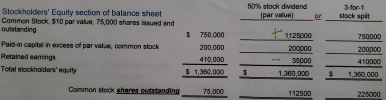 Can someone please explain this? I don't
understand this at all
Can someone please explain this? I don't
understand this at all
 How do I simplify this fraction, pls show steps
16(48-29-5x+1)*- (4x-2)^(-26 (-6x+1)* (-5x+1)'0
How do I simplify this fraction, pls show steps
16(48-29-5x+1)*- (4x-2)^(-26 (-6x+1)* (-5x+1)'0
 Please explain in great details. Don't skip intermediate steps.
I am trying to really understand this. Thank you
6) Let fand g be functions from Z to Z such that fx) -2x + 1 and g)- Is finvertible, and if so, what is its inverse? g invertible, and if so, what is its inverse? C. F Find fx)
Please explain in great details. Don't skip intermediate steps.
I am trying to really understand this. Thank you
6) Let fand g be functions from Z to Z such that fx) -2x + 1 and g)- Is finvertible, and if so, what is its inverse? g invertible, and if so, what is its inverse? C. F Find fx)
 Why does Thevenin's Theorem work? I understand how to use it but I don't understand why it works. I have been reading my textbook and can follow the procedure, but I want to understand on a deeper level why the author does what they do. So far I know that the steps are 1. Find Vth, the open terminal voltage 2. Find isc, the short circuit current Vth 3. Rth isc But I don't know why these steps work. I...
 please explain well. I don't understand at all. Explain all
steps ans math involved.
1. Ammonia and hydrogen sulfide can both be formed directly from their elements. At 90 °C... N2(8) +3H2(g) 2NHa(g) K 120 K 0.068 H2(8)+S()H2S(s) Find K at 90 °C for the following reaction: K ? 2NH(R) +3S(s)3H2S(g) + N2(8)
please explain well. I don't understand at all. Explain all
steps ans math involved.
1. Ammonia and hydrogen sulfide can both be formed directly from their elements. At 90 °C... N2(8) +3H2(g) 2NHa(g) K 120 K 0.068 H2(8)+S()H2S(s) Find K at 90 °C for the following reaction: K ? 2NH(R) +3S(s)3H2S(g) + N2(8)
 I don't understand these. Please explain
Differential Equations;
7. Which of the following is an appropriate choice for the particular solution, p when solving the differential equation (E) none of (A)-(D) 8. Which of the following is an appropriate choice for the particular solution, yp when solving the differential equation (A) p Ce (E) none of (A)-(D) Which of the following is a particular solution to the differential equation 10. HINT: You do not need to be able to solve...
I don't understand these. Please explain
Differential Equations;
7. Which of the following is an appropriate choice for the particular solution, p when solving the differential equation (E) none of (A)-(D) 8. Which of the following is an appropriate choice for the particular solution, yp when solving the differential equation (A) p Ce (E) none of (A)-(D) Which of the following is a particular solution to the differential equation 10. HINT: You do not need to be able to solve...
 Can someone please explain this? I don't
understand this at all
Can someone please explain this? I don't
understand this at all
Most questions answered within 3 hours.
-
Where is the error in this code sequence?
String s1 = "Hello";
String s2 = "ello";...
asked 10 months ago -
Financial data for Joel de Paris, Inc., for last year
follow:
Joel de Paris, Inc.
Balance...
asked 10 months ago -
Consider this reaction:
Al2(SO4)3 (aq)+ BaCl3
(aq) Al2Cl6 (aq)- +
3BaSO4(s) . What is the...
asked 10 months ago -
Suppose that Savneet is considering increasing her
recent random sample from 20 car rentals to 40...
asked 10 months ago -
Trucks arrive at an unloading terminal at an average rate of 120
per hour.
Trucks arrive...
asked 10 months ago -
Why are methanol and ethanol completely soluble in water while
octanol is not very little soluble....
asked 10 months ago -
A facilities manager at a university reads in a research report
that the mean amount of...
asked 10 months ago -
When the CuSO4 is rehydrated by adding water to the anhydrous
compound, is this an endothermic...
asked 10 months ago -
A ray of sunlight is passing from diamond into crown glass; the
angle of incidence is...
asked 10 months ago -
A block of mass 0.249 kg is placed on top of a light, vertical
spring of...
asked 10 months ago -
how do the kidneys compensate in the presences of acidosis
a) trigger hyperventilate
b) reserve acid...
asked 10 months ago -
Question 501 pts
The rental rate of capital to the firm increases. Which of the
following...
asked 10 months ago