
Homework Answers
First we apply two sample T-test on the given Treatment I and
II,


therefore estimated standard error is given by:
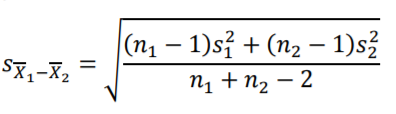
which come to be =  =
2.273
=
2.273
and estimated variance = 2.2732 =
5.16663
(please round up according to the requirement in the
question)
thus t = -2.799
and critical value is  2.447
2.447
No we'll perform the F-test for the ANOVA and show how F-stest and
t-test are equivalent as F= t2


F = 7.838 = t2 = 2.79972
Add Answer to:
For either independent-measures or repeated-measures designs comparing two treatments, the mean difference can be evaluated with...
Consider the following data from a repeated-measures design. You want to use a repeated-measures t test...
 Consider the following data from a repeated-measures design. You want to use a repeated-measures t test to test the null hypothesis H_0: mu_D = 0 (the null hypothesis states that the mean difference for the general population is zero). The data consist of five observations, each with two measurements, A and B, taken before and after a treatment. Assume the population of the differences in these measurements are normally distributed. Complete the following table by calculating the differences and the...
A repeated-measures study with a sample of n 16 participants produces a mean difference of Mp...
 A repeated-measures study with a sample of n 16 participants produces a mean difference of Mp 4 with a standard deviation of s = 8, Use a two-tailed hypothesis test with a-.05 to determine whether it is likely that this sample came from a population with μο-0. Degrees of Freedom 21 5000 5000 0.0 0.000 3.0 -2.0 1.0 2.0 3.0 AN t-criticalt The results indicate: O Rejection of the null hypothesis; there is a significant mean difference O Failure to...
For a repeated-measures study comparing two treatments with a sample of n = 9 participants, the...
 For a repeated-measures study comparing two treatments with a sample of n = 9 participants, the difference scores have a mean of Mo = 4.90 with SS = 18. What is the estimated standard error for the sample mean difference? 1 OOOO 0.5 0.08
5. A step-by-step hypothesis test for a repeated-measures design Aa Aa E Consider the following data...
 5. A step-by-step hypothesis test for a repeated-measures design Aa Aa E Consider the following data from a repeated-measures design. You want to use a repeated-measures t test to test the null hypothesis Ho: Wp = 0 (the null hypothesis states that the mean difference for the general population is zero). The data consist of five observations, each with two measurements, A and B, taken before and after a treatment. Assume the population of the differences in these measurements are...
19. A repeated-measures study comparing two treatments with a sample of n 10 participants produces a...
 19. A repeated-measures study comparing two treatments with a sample of n 10 participants produces a mean of M 8 for the scores in the first treatment, a mean of M 10 for the scores in the second treatment, and a mean of MD 2 with Sum of squares of the difference SS 64 for the difference scores. What is the estimated standard error for the sample mean difference? Answer:
Keep the Highest: Attempts: /4.5 7. Comparing ANOVA and the t test for an independent-measures hy...
 please answer all fill in the blank
Keep the Highest: Attempts: /4.5 7. Comparing ANOVA and the t test for an independent-measures hypothesis test Aa Aa Suzanne Zeedyk, a developmental psychologist at Dundee University's School of Psychology, conducted a pilot study in which parents started a half-hour walk with their infants in a parent-facing or an away-facing stroller and then switched to the other type of stroller midway. Her results suggest that parents talked less to the babies, the babies...
please answer all fill in the blank
Keep the Highest: Attempts: /4.5 7. Comparing ANOVA and the t test for an independent-measures hypothesis test Aa Aa Suzanne Zeedyk, a developmental psychologist at Dundee University's School of Psychology, conducted a pilot study in which parents started a half-hour walk with their infants in a parent-facing or an away-facing stroller and then switched to the other type of stroller midway. Her results suggest that parents talked less to the babies, the babies...
A repeated-measures study comparing two treatments with a sample of n = 4 participants produces a Mp = 4 with SS =...
 A repeated-measures study comparing two treatments with a sample of n = 4 participants produces a Mp = 4 with SS = 12 for the difference scores. What is the estimated standard error for the sample mean difference? 4 3 2.
Are my answers correct? 2. Gravetter/Wallnau/Forzano, Essentials - Chapter 10 - End-of-chapter question 6 Two separate...
 Are my answers correct?
2. Gravetter/Wallnau/Forzano, Essentials - Chapter 10 - End-of-chapter question 6 Two separate samples receive different treatments. After treatment, the first sample has n = 6 with SS = 236, and the second has n = 12 with SS = 340. The pooled variance for the two samples is 36.00 . Compute the estimated standard error for the sample mean difference. Estimated S(M1 - M2) = 3.00 If the sample mean difference is 7 points, is this...
Are my answers correct?
2. Gravetter/Wallnau/Forzano, Essentials - Chapter 10 - End-of-chapter question 6 Two separate samples receive different treatments. After treatment, the first sample has n = 6 with SS = 236, and the second has n = 12 with SS = 340. The pooled variance for the two samples is 36.00 . Compute the estimated standard error for the sample mean difference. Estimated S(M1 - M2) = 3.00 If the sample mean difference is 7 points, is this...
The following table summarizes the results of a two-factor ANOVA evaluating an independent-measures experiment with 2...
The following table summarizes the results of a two-factor ANOVA evaluating an independent-measures experiment with 2 levels of factor A, 3 levels of factor B, and n = 6 participants in each treatment condition. A. Fill in all missing values in the table. Show your work (i.e., all computational steps for finding the missing values). Hint: start with the df values. B. Do these data indicate any significant effects (assume p < .05 for hypothesis testing of all three effects)?...
Looking for some help with this stats problem - will give good reviews! Attempts Average: /19...
 Looking for some help with this stats problem - will give good
reviews!
Attempts Average: /19 10. Comparing repeated-measures ANOVA to independent-measures ANOVA Aa Aa You are interested in studying how formal language exposure and deafness affect language acquisition. You want to compare three groups: a hearing group, a deaf group that began learning American Sign Language (ASL) before age 1, and a deaf group that did not begin learning ASL until age 1. You are trying to decide whether...
Looking for some help with this stats problem - will give good
reviews!
Attempts Average: /19 10. Comparing repeated-measures ANOVA to independent-measures ANOVA Aa Aa You are interested in studying how formal language exposure and deafness affect language acquisition. You want to compare three groups: a hearing group, a deaf group that began learning American Sign Language (ASL) before age 1, and a deaf group that did not begin learning ASL until age 1. You are trying to decide whether...
 Consider the following data from a repeated-measures design. You want to use a repeated-measures t test to test the null hypothesis H_0: mu_D = 0 (the null hypothesis states that the mean difference for the general population is zero). The data consist of five observations, each with two measurements, A and B, taken before and after a treatment. Assume the population of the differences in these measurements are normally distributed. Complete the following table by calculating the differences and the...
 A repeated-measures study with a sample of n 16 participants produces a mean difference of Mp 4 with a standard deviation of s = 8, Use a two-tailed hypothesis test with a-.05 to determine whether it is likely that this sample came from a population with μο-0. Degrees of Freedom 21 5000 5000 0.0 0.000 3.0 -2.0 1.0 2.0 3.0 AN t-criticalt The results indicate: O Rejection of the null hypothesis; there is a significant mean difference O Failure to...
 For a repeated-measures study comparing two treatments with a sample of n = 9 participants, the difference scores have a mean of Mo = 4.90 with SS = 18. What is the estimated standard error for the sample mean difference? 1 OOOO 0.5 0.08
 5. A step-by-step hypothesis test for a repeated-measures design Aa Aa E Consider the following data from a repeated-measures design. You want to use a repeated-measures t test to test the null hypothesis Ho: Wp = 0 (the null hypothesis states that the mean difference for the general population is zero). The data consist of five observations, each with two measurements, A and B, taken before and after a treatment. Assume the population of the differences in these measurements are...
 19. A repeated-measures study comparing two treatments with a sample of n 10 participants produces a mean of M 8 for the scores in the first treatment, a mean of M 10 for the scores in the second treatment, and a mean of MD 2 with Sum of squares of the difference SS 64 for the difference scores. What is the estimated standard error for the sample mean difference? Answer:
 please answer all fill in the blank
Keep the Highest: Attempts: /4.5 7. Comparing ANOVA and the t test for an independent-measures hypothesis test Aa Aa Suzanne Zeedyk, a developmental psychologist at Dundee University's School of Psychology, conducted a pilot study in which parents started a half-hour walk with their infants in a parent-facing or an away-facing stroller and then switched to the other type of stroller midway. Her results suggest that parents talked less to the babies, the babies...
please answer all fill in the blank
Keep the Highest: Attempts: /4.5 7. Comparing ANOVA and the t test for an independent-measures hypothesis test Aa Aa Suzanne Zeedyk, a developmental psychologist at Dundee University's School of Psychology, conducted a pilot study in which parents started a half-hour walk with their infants in a parent-facing or an away-facing stroller and then switched to the other type of stroller midway. Her results suggest that parents talked less to the babies, the babies...
 A repeated-measures study comparing two treatments with a sample of n = 4 participants produces a Mp = 4 with SS = 12 for the difference scores. What is the estimated standard error for the sample mean difference? 4 3 2.
 Are my answers correct?
2. Gravetter/Wallnau/Forzano, Essentials - Chapter 10 - End-of-chapter question 6 Two separate samples receive different treatments. After treatment, the first sample has n = 6 with SS = 236, and the second has n = 12 with SS = 340. The pooled variance for the two samples is 36.00 . Compute the estimated standard error for the sample mean difference. Estimated S(M1 - M2) = 3.00 If the sample mean difference is 7 points, is this...
Are my answers correct?
2. Gravetter/Wallnau/Forzano, Essentials - Chapter 10 - End-of-chapter question 6 Two separate samples receive different treatments. After treatment, the first sample has n = 6 with SS = 236, and the second has n = 12 with SS = 340. The pooled variance for the two samples is 36.00 . Compute the estimated standard error for the sample mean difference. Estimated S(M1 - M2) = 3.00 If the sample mean difference is 7 points, is this...
 Looking for some help with this stats problem - will give good
reviews!
Attempts Average: /19 10. Comparing repeated-measures ANOVA to independent-measures ANOVA Aa Aa You are interested in studying how formal language exposure and deafness affect language acquisition. You want to compare three groups: a hearing group, a deaf group that began learning American Sign Language (ASL) before age 1, and a deaf group that did not begin learning ASL until age 1. You are trying to decide whether...
Looking for some help with this stats problem - will give good
reviews!
Attempts Average: /19 10. Comparing repeated-measures ANOVA to independent-measures ANOVA Aa Aa You are interested in studying how formal language exposure and deafness affect language acquisition. You want to compare three groups: a hearing group, a deaf group that began learning American Sign Language (ASL) before age 1, and a deaf group that did not begin learning ASL until age 1. You are trying to decide whether...
Most questions answered within 3 hours.
-
Where is the error in this code sequence?
String s1 = "Hello";
String s2 = "ello";...
asked 10 months ago -
Financial data for Joel de Paris, Inc., for last year
follow:
Joel de Paris, Inc.
Balance...
asked 10 months ago -
Consider this reaction:
Al2(SO4)3 (aq)+ BaCl3
(aq) Al2Cl6 (aq)- +
3BaSO4(s) . What is the...
asked 10 months ago -
Suppose that Savneet is considering increasing her
recent random sample from 20 car rentals to 40...
asked 10 months ago -
Trucks arrive at an unloading terminal at an average rate of 120
per hour.
Trucks arrive...
asked 10 months ago -
Why are methanol and ethanol completely soluble in water while
octanol is not very little soluble....
asked 10 months ago -
A facilities manager at a university reads in a research report
that the mean amount of...
asked 10 months ago -
When the CuSO4 is rehydrated by adding water to the anhydrous
compound, is this an endothermic...
asked 10 months ago -
A ray of sunlight is passing from diamond into crown glass; the
angle of incidence is...
asked 10 months ago -
A block of mass 0.249 kg is placed on top of a light, vertical
spring of...
asked 10 months ago -
how do the kidneys compensate in the presences of acidosis
a) trigger hyperventilate
b) reserve acid...
asked 10 months ago -
Question 501 pts
The rental rate of capital to the firm increases. Which of the
following...
asked 10 months ago