
Homework Answers
Add Answer to:
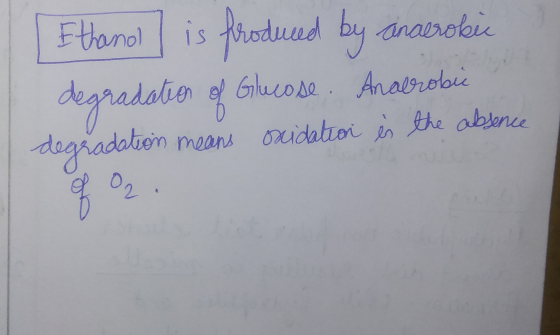
Which of the following is a possible product in the anaerobic breakdown of glucose? FADH2 ethanol...
QUESTION 2 When adenosine diphosphate is phosphorylated, what small molecule is lost? H20 CO2 HCI 02...
 QUESTION 2 When adenosine diphosphate is phosphorylated, what small molecule is lost? H20 CO2 HCI 02 QUESTION 4 How many carbon atoms enter the citric acid cycle at a time? 2. 4 3 6 QUESTION 7 How many molecules of ATP (NET) are produced directly from the GLYCOLYSIS of 5 molecules of glucose? 5 12.5 10 QUESTION 8 Which of the following is(are) NOT found in the electron transport chain? O2 CO2 OH ions Fe ions QUESTION 9 Which letter...
QUESTION 4 How many carbon atoms enter the citric acid cycle at a time? 2 4...
 QUESTION 4 How many carbon atoms enter the citric acid cycle at a time? 2 4 3 6 QUESTION 7 How many molecules of ATP (NET) are produced directly from the GLYCOLYSIS of molecules of glucose? 3 2.5 10 QUESTIONS Which of the following are NOT found in the electron transport chalet O2 CO2 Hions Felons QUESTION Which letter corresponds to the ANOMERIC Carbon in the saccharide shown to the right? Answer tal CH OH ON OH он OM b...
Which of the following is not a net product of the citric acid cycle for each...
Which of the following is not a net product of the citric acid cycle for each molecule of pyruvate generated in glycolysis? Select one: a. 1 ATP (GTP) b. 1 acetyl coA c. 3 NADH d. 1 FADH2 Question 2 Which of the following is NOT an end product for an acetyl group that enters the citric acid cycle? Select one: a. ATP b. NADH c. FADH2 d. oxaloacetate Question 3 Once they have been processed through the citric acid...
In yeast, ethanol is produced from glucose under anaerobic conditions. A cell‑free yeast extract is placed...
 In yeast, ethanol is produced from glucose under anaerobic
conditions. A cell‑free yeast extract is placed in a solution that
contains glucose....
Thank you!!!!
In yeast, ethanol is produced from glucose under anaerobic conditions. A cell-free yeast extract is placed in a solution that contains 3.00 x 10 mmol glucose, 0.40 mmol ADP, 040 mmol P. 0.80 mmol ATP, 0.20 mmol NAD*, and 0.20 mmol NADH. It is kept under anaerobic conditions. What is the maximum amount of ethanol (in...
In yeast, ethanol is produced from glucose under anaerobic
conditions. A cell‑free yeast extract is placed in a solution that
contains glucose....
Thank you!!!!
In yeast, ethanol is produced from glucose under anaerobic conditions. A cell-free yeast extract is placed in a solution that contains 3.00 x 10 mmol glucose, 0.40 mmol ADP, 040 mmol P. 0.80 mmol ATP, 0.20 mmol NAD*, and 0.20 mmol NADH. It is kept under anaerobic conditions. What is the maximum amount of ethanol (in...
The breakdown of glucose into pyruvate is known as: O A. electron transport B. glyconeogenesis C....
 The breakdown of glucose into pyruvate is known as: O A. electron transport B. glyconeogenesis C. citric acid cycle D. glycolysis
?Which of the following events does NOT occur during anaerobic respiration of glucose? ? A. Muscle...
?Which of the following events does NOT occur during anaerobic respiration of glucose? ? A. Muscle cell produce lactic acid B. Carbon dioxide is produced C. Milk bacteria produce lactic acid D. Energy is not produced E. Germinating seeds produce alcohol.
Art-labeling Activity Figure 4.15 Complete the table describing anaerobic and aerobic metabolism. Art-labeling Activity Figure 4.15...
 Art-labeling Activity Figure 4.15
Complete the table describing anaerobic and aerobic
metabolism.
Art-labeling Activity Figure 4.15 Glycolysis 2 Lactate 1 Glucose NADH FADH2 ATPCO2 L1Glucon- 1 NADH FADH2 ATP | CO2 metabolism +4 2* -2 6 H20 Transport Chain 2 Acetyl CoA 30-32 ATP TOTALS 0 NADH 2 ATP and H. Anaerobic metabolism 26-28 Citric Acid Cycle TOTALS 6 CO2 Cytoplasmic NADH sometimes yield only 5 ATP/NADH instead of 2.5 ATP/NADH
Art-labeling Activity Figure 4.15
Complete the table describing anaerobic and aerobic
metabolism.
Art-labeling Activity Figure 4.15 Glycolysis 2 Lactate 1 Glucose NADH FADH2 ATPCO2 L1Glucon- 1 NADH FADH2 ATP | CO2 metabolism +4 2* -2 6 H20 Transport Chain 2 Acetyl CoA 30-32 ATP TOTALS 0 NADH 2 ATP and H. Anaerobic metabolism 26-28 Citric Acid Cycle TOTALS 6 CO2 Cytoplasmic NADH sometimes yield only 5 ATP/NADH instead of 2.5 ATP/NADH
11. The breakdown of valine's carbon skeleton goes through the step below. Using your knowledge of...
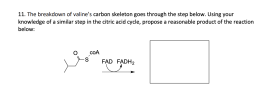 11. The breakdown of valine's carbon skeleton goes through the step below. Using your knowledge of a similar step in the citric acid cycle, propose a reasonable product of the reaction below: COA S : 3ر FAD FADH2
Glucose (C6H12O6) is converted by yeast into ethanol or propenoic acid (aka acrylic acid) by the...
Glucose (C6H12O6) is converted by yeast into ethanol or propenoic acid (aka acrylic acid) by the following two reactions C6H12O6 à 2 C2H5OH + 2 CO2 (rxn 1) C6H12O6 à 2 C2H3CO2H + 2 H2O (rxn 2) Initially an enzymatic reactor is filled with 5700 kg of an aqueous solution of 12 wt% glucose. During the conversion 175.1 kg of carbon dioxide are produced and 133 kg of glucose is left in the reactor after the reactions are complete....
gets reduced 20. glucose + ATP > glucose-6 phosphate +ADP In the above reaction, - A....
 gets reduced 20. glucose + ATP > glucose-6 phosphate +ADP In the above reaction, - A. ADPIATP B. ATP/glucose C. glucose/glucose-6 phosphate D. glucose6-phosphate/glucose E. glucose/ATP 21. Which of the following is a net product of glycolysis? A. ATP B. NAD+ C. pyruvate D. CO2 E. A&C 22. Substrate-level phosphorylation occurs in the process of A. Oxidative phosphorylation B. electron transport chain C. glycolysis D. ATP-synthase function E. C&D 23. What should your hypothesis be for "Do yeast produce ethanol...
 QUESTION 2 When adenosine diphosphate is phosphorylated, what small molecule is lost? H20 CO2 HCI 02 QUESTION 4 How many carbon atoms enter the citric acid cycle at a time? 2. 4 3 6 QUESTION 7 How many molecules of ATP (NET) are produced directly from the GLYCOLYSIS of 5 molecules of glucose? 5 12.5 10 QUESTION 8 Which of the following is(are) NOT found in the electron transport chain? O2 CO2 OH ions Fe ions QUESTION 9 Which letter...
 QUESTION 4 How many carbon atoms enter the citric acid cycle at a time? 2 4 3 6 QUESTION 7 How many molecules of ATP (NET) are produced directly from the GLYCOLYSIS of molecules of glucose? 3 2.5 10 QUESTIONS Which of the following are NOT found in the electron transport chalet O2 CO2 Hions Felons QUESTION Which letter corresponds to the ANOMERIC Carbon in the saccharide shown to the right? Answer tal CH OH ON OH он OM b...
 In yeast, ethanol is produced from glucose under anaerobic
conditions. A cell‑free yeast extract is placed in a solution that
contains glucose....
Thank you!!!!
In yeast, ethanol is produced from glucose under anaerobic conditions. A cell-free yeast extract is placed in a solution that contains 3.00 x 10 mmol glucose, 0.40 mmol ADP, 040 mmol P. 0.80 mmol ATP, 0.20 mmol NAD*, and 0.20 mmol NADH. It is kept under anaerobic conditions. What is the maximum amount of ethanol (in...
In yeast, ethanol is produced from glucose under anaerobic
conditions. A cell‑free yeast extract is placed in a solution that
contains glucose....
Thank you!!!!
In yeast, ethanol is produced from glucose under anaerobic conditions. A cell-free yeast extract is placed in a solution that contains 3.00 x 10 mmol glucose, 0.40 mmol ADP, 040 mmol P. 0.80 mmol ATP, 0.20 mmol NAD*, and 0.20 mmol NADH. It is kept under anaerobic conditions. What is the maximum amount of ethanol (in...
 The breakdown of glucose into pyruvate is known as: O A. electron transport B. glyconeogenesis C. citric acid cycle D. glycolysis
 Art-labeling Activity Figure 4.15
Complete the table describing anaerobic and aerobic
metabolism.
Art-labeling Activity Figure 4.15 Glycolysis 2 Lactate 1 Glucose NADH FADH2 ATPCO2 L1Glucon- 1 NADH FADH2 ATP | CO2 metabolism +4 2* -2 6 H20 Transport Chain 2 Acetyl CoA 30-32 ATP TOTALS 0 NADH 2 ATP and H. Anaerobic metabolism 26-28 Citric Acid Cycle TOTALS 6 CO2 Cytoplasmic NADH sometimes yield only 5 ATP/NADH instead of 2.5 ATP/NADH
Art-labeling Activity Figure 4.15
Complete the table describing anaerobic and aerobic
metabolism.
Art-labeling Activity Figure 4.15 Glycolysis 2 Lactate 1 Glucose NADH FADH2 ATPCO2 L1Glucon- 1 NADH FADH2 ATP | CO2 metabolism +4 2* -2 6 H20 Transport Chain 2 Acetyl CoA 30-32 ATP TOTALS 0 NADH 2 ATP and H. Anaerobic metabolism 26-28 Citric Acid Cycle TOTALS 6 CO2 Cytoplasmic NADH sometimes yield only 5 ATP/NADH instead of 2.5 ATP/NADH
 11. The breakdown of valine's carbon skeleton goes through the step below. Using your knowledge of a similar step in the citric acid cycle, propose a reasonable product of the reaction below: COA S : 3ر FAD FADH2
 gets reduced 20. glucose + ATP > glucose-6 phosphate +ADP In the above reaction, - A. ADPIATP B. ATP/glucose C. glucose/glucose-6 phosphate D. glucose6-phosphate/glucose E. glucose/ATP 21. Which of the following is a net product of glycolysis? A. ATP B. NAD+ C. pyruvate D. CO2 E. A&C 22. Substrate-level phosphorylation occurs in the process of A. Oxidative phosphorylation B. electron transport chain C. glycolysis D. ATP-synthase function E. C&D 23. What should your hypothesis be for "Do yeast produce ethanol...
Most questions answered within 3 hours.
-
Where is the error in this code sequence?
String s1 = "Hello";
String s2 = "ello";...
asked 11 months ago -
Financial data for Joel de Paris, Inc., for last year
follow:
Joel de Paris, Inc.
Balance...
asked 11 months ago -
Consider this reaction:
Al2(SO4)3 (aq)+ BaCl3
(aq) Al2Cl6 (aq)- +
3BaSO4(s) . What is the...
asked 11 months ago -
Suppose that Savneet is considering increasing her
recent random sample from 20 car rentals to 40...
asked 11 months ago -
Trucks arrive at an unloading terminal at an average rate of 120
per hour.
Trucks arrive...
asked 11 months ago -
Why are methanol and ethanol completely soluble in water while
octanol is not very little soluble....
asked 11 months ago -
A facilities manager at a university reads in a research report
that the mean amount of...
asked 11 months ago -
When the CuSO4 is rehydrated by adding water to the anhydrous
compound, is this an endothermic...
asked 11 months ago -
A ray of sunlight is passing from diamond into crown glass; the
angle of incidence is...
asked 11 months ago -
A block of mass 0.249 kg is placed on top of a light, vertical
spring of...
asked 11 months ago -
how do the kidneys compensate in the presences of acidosis
a) trigger hyperventilate
b) reserve acid...
asked 11 months ago -
Question 501 pts
The rental rate of capital to the firm increases. Which of the
following...
asked 11 months ago