
Homework Answers
Add Answer to:
A
chemist mixes the following chemicals together in hopes of
isolating the compound shown as the...
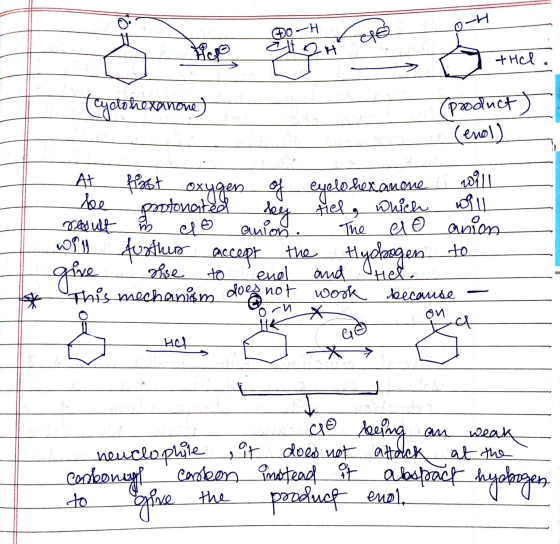
A chemist mixes the following chemicals together in hopes of isolating the indicated compound. Much to...
 A
chemist mixes the following chemicals together in hopes of
isolating the indicated compound. Much to their dismay, however,
the desired product isn't isolated at all, to any appreciable
amount. Explain why the reaction did not work.
co A chemist mixes the following chemicals together in hopes of isolating the indicated compound. Much to their dismay, however, the desired product isn't isolated at all, to any appreciable amount. Explain why the reaction did not work. HO, CI НСІ
A
chemist mixes the following chemicals together in hopes of
isolating the indicated compound. Much to their dismay, however,
the desired product isn't isolated at all, to any appreciable
amount. Explain why the reaction did not work.
co A chemist mixes the following chemicals together in hopes of isolating the indicated compound. Much to their dismay, however, the desired product isn't isolated at all, to any appreciable amount. Explain why the reaction did not work. HO, CI НСІ
A chemist mixes the following chemicals together in hopes of isolating the indicated compound. Much to...
 A chemist mixes the following chemicals together in hopes of isolating the indicated compound. Much to their dismay, however the desired product isn't isolated at all, to any appreciable amount. Explain why the reaction did not work. co HO CI HCI
Explain the following observations H o 90%. Yield TICH OH 90% Yield Heat No Reaction Explain...
 Explain the following observations H o 90%. Yield TICH OH 90% Yield Heat No Reaction Explain the following observations BE Hear Br2 Heat B12 No Reaction Heat A chemist mixes the following chemicals together in hopes of isolating the indicated compound. Much to their dismay, however, the desired product isn't isolated at all, to any appreciable amount. Explain why the reaction did not work. HOCI HCI
Write out the complete mechanism with all steps and appriopriate arrows. A chemistry mixes these chemicals...
 Write out the complete mechanism with all steps and
appriopriate arrows. A chemistry mixes these chemicals together to
get the isolated indicated compound, however, the desired product
is not isolated at all. Explain why the reaction did not
work.
애 5 HCL >
Write out the complete mechanism with all steps and
appriopriate arrows. A chemistry mixes these chemicals together to
get the isolated indicated compound, however, the desired product
is not isolated at all. Explain why the reaction did not
work.
애 5 HCL >
The following molecule undergoes an intramolecular reaction in the presence of pyrrolidinium acetate. Draw the compound...
 The following
molecule undergoes an intramolecular reaction in the presence of
pyrrolidinium acetate. Draw the compound formed
from dehydration of the product shown below.
The following molecule undergoes an intramolecular reaction in the presence of pyrrolidinium acetate. Draw the compound formed from dehydration of the product shown below. Me Me NAcO Me Me HO HO Me Me Me Me Me Me HO Me . Draw all enolates in their carbanion form . You do not have to consider stereochemistry
The following
molecule undergoes an intramolecular reaction in the presence of
pyrrolidinium acetate. Draw the compound formed
from dehydration of the product shown below.
The following molecule undergoes an intramolecular reaction in the presence of pyrrolidinium acetate. Draw the compound formed from dehydration of the product shown below. Me Me NAcO Me Me HO HO Me Me Me Me Me Me HO Me . Draw all enolates in their carbanion form . You do not have to consider stereochemistry
Draw the structure of the product that is formed when the compound shown below is treated with the following reagents:
 Draw the structure of the product that is formed when the compound shown below is treated with the following reagents: 1) BH3/THF; 2) H2O2, HO- , H2O. Interactive 3D display mode
10. Balance the following reaction shown: _Fe2O3+ _HCl -> _FeCl3+_H2O 11. In reaction 10, a chemist...
 10. Balance the following reaction shown: _Fe2O3+ _HCl ->
_FeCl3+_H2O
11. In reaction 10, a chemist reacted together 12.2 g of Iron
(III) Oxide and 16.0 g of Hydrochloric acid.
A) How much (in grams) Iron (III) Chloride did she produce?
B) What is the limiting reactant?
C) How many grams of the excess reactant would be left after the
reaction is complete?
6) Calculate the mass percent of oxygen in the carbonate ion. 7) How many grams of oxygen...
10. Balance the following reaction shown: _Fe2O3+ _HCl ->
_FeCl3+_H2O
11. In reaction 10, a chemist reacted together 12.2 g of Iron
(III) Oxide and 16.0 g of Hydrochloric acid.
A) How much (in grams) Iron (III) Chloride did she produce?
B) What is the limiting reactant?
C) How many grams of the excess reactant would be left after the
reaction is complete?
6) Calculate the mass percent of oxygen in the carbonate ion. 7) How many grams of oxygen...
Draw the structure of the product that is formed when the compound shown below is treated with the following reagents: 1) BH3, THF; 2) H2O2, HO-.
 Draw the structure of the product that is
formed when the compound shown below is treated with the following
reagents: 1) BH3, THF; 2) H2O2, HO-.
Draw the structure of the product that is
formed when the compound shown below is treated with the following
reagents: 1) BH3, THF; 2) H2O2, HO-.
please explain answers thank you Draw the principle products formed when the following compound is treated as shown: (m...
 please explain answers thank you
Draw the principle products formed when the following compound is treated as shown: (more than one product may form for each reaction, show all that are likely) СНЗОН KО!Bu HОBu CI Br NaCN NaOCH3, CH3ОН
please explain answers thank you
Draw the principle products formed when the following compound is treated as shown: (more than one product may form for each reaction, show all that are likely) СНЗОН KО!Bu HОBu CI Br NaCN NaOCH3, CH3ОН
I just need help with the question #5-6 4. As you are an intelligent chemist and...
 I just need help with the question #5-6
4. As you are an intelligent chemist and you've been doing this long enough to understand some fundamental aspects of safety when mixing/cooking chemicals etc., you decide before you begin this process, to place your reactants and the associated glassware under the vacuum hood just to be on the safe side. Based on your chemical equation above, is there a gas emanating from this reaction and if so, what gas is going...
I just need help with the question #5-6
4. As you are an intelligent chemist and you've been doing this long enough to understand some fundamental aspects of safety when mixing/cooking chemicals etc., you decide before you begin this process, to place your reactants and the associated glassware under the vacuum hood just to be on the safe side. Based on your chemical equation above, is there a gas emanating from this reaction and if so, what gas is going...
 A
chemist mixes the following chemicals together in hopes of
isolating the indicated compound. Much to their dismay, however,
the desired product isn't isolated at all, to any appreciable
amount. Explain why the reaction did not work.
co A chemist mixes the following chemicals together in hopes of isolating the indicated compound. Much to their dismay, however, the desired product isn't isolated at all, to any appreciable amount. Explain why the reaction did not work. HO, CI НСІ
A
chemist mixes the following chemicals together in hopes of
isolating the indicated compound. Much to their dismay, however,
the desired product isn't isolated at all, to any appreciable
amount. Explain why the reaction did not work.
co A chemist mixes the following chemicals together in hopes of isolating the indicated compound. Much to their dismay, however, the desired product isn't isolated at all, to any appreciable amount. Explain why the reaction did not work. HO, CI НСІ
 A chemist mixes the following chemicals together in hopes of isolating the indicated compound. Much to their dismay, however the desired product isn't isolated at all, to any appreciable amount. Explain why the reaction did not work. co HO CI HCI
 Explain the following observations H o 90%. Yield TICH OH 90% Yield Heat No Reaction Explain the following observations BE Hear Br2 Heat B12 No Reaction Heat A chemist mixes the following chemicals together in hopes of isolating the indicated compound. Much to their dismay, however, the desired product isn't isolated at all, to any appreciable amount. Explain why the reaction did not work. HOCI HCI
 Write out the complete mechanism with all steps and
appriopriate arrows. A chemistry mixes these chemicals together to
get the isolated indicated compound, however, the desired product
is not isolated at all. Explain why the reaction did not
work.
애 5 HCL >
Write out the complete mechanism with all steps and
appriopriate arrows. A chemistry mixes these chemicals together to
get the isolated indicated compound, however, the desired product
is not isolated at all. Explain why the reaction did not
work.
애 5 HCL >
 The following
molecule undergoes an intramolecular reaction in the presence of
pyrrolidinium acetate. Draw the compound formed
from dehydration of the product shown below.
The following molecule undergoes an intramolecular reaction in the presence of pyrrolidinium acetate. Draw the compound formed from dehydration of the product shown below. Me Me NAcO Me Me HO HO Me Me Me Me Me Me HO Me . Draw all enolates in their carbanion form . You do not have to consider stereochemistry
The following
molecule undergoes an intramolecular reaction in the presence of
pyrrolidinium acetate. Draw the compound formed
from dehydration of the product shown below.
The following molecule undergoes an intramolecular reaction in the presence of pyrrolidinium acetate. Draw the compound formed from dehydration of the product shown below. Me Me NAcO Me Me HO HO Me Me Me Me Me Me HO Me . Draw all enolates in their carbanion form . You do not have to consider stereochemistry
 10. Balance the following reaction shown: _Fe2O3+ _HCl ->
_FeCl3+_H2O
11. In reaction 10, a chemist reacted together 12.2 g of Iron
(III) Oxide and 16.0 g of Hydrochloric acid.
A) How much (in grams) Iron (III) Chloride did she produce?
B) What is the limiting reactant?
C) How many grams of the excess reactant would be left after the
reaction is complete?
6) Calculate the mass percent of oxygen in the carbonate ion. 7) How many grams of oxygen...
10. Balance the following reaction shown: _Fe2O3+ _HCl ->
_FeCl3+_H2O
11. In reaction 10, a chemist reacted together 12.2 g of Iron
(III) Oxide and 16.0 g of Hydrochloric acid.
A) How much (in grams) Iron (III) Chloride did she produce?
B) What is the limiting reactant?
C) How many grams of the excess reactant would be left after the
reaction is complete?
6) Calculate the mass percent of oxygen in the carbonate ion. 7) How many grams of oxygen...
 please explain answers thank you
Draw the principle products formed when the following compound is treated as shown: (more than one product may form for each reaction, show all that are likely) СНЗОН KО!Bu HОBu CI Br NaCN NaOCH3, CH3ОН
please explain answers thank you
Draw the principle products formed when the following compound is treated as shown: (more than one product may form for each reaction, show all that are likely) СНЗОН KО!Bu HОBu CI Br NaCN NaOCH3, CH3ОН
 I just need help with the question #5-6
4. As you are an intelligent chemist and you've been doing this long enough to understand some fundamental aspects of safety when mixing/cooking chemicals etc., you decide before you begin this process, to place your reactants and the associated glassware under the vacuum hood just to be on the safe side. Based on your chemical equation above, is there a gas emanating from this reaction and if so, what gas is going...
I just need help with the question #5-6
4. As you are an intelligent chemist and you've been doing this long enough to understand some fundamental aspects of safety when mixing/cooking chemicals etc., you decide before you begin this process, to place your reactants and the associated glassware under the vacuum hood just to be on the safe side. Based on your chemical equation above, is there a gas emanating from this reaction and if so, what gas is going...
Most questions answered within 3 hours.
-
Where is the error in this code sequence?
String s1 = "Hello";
String s2 = "ello";...
asked 10 months ago -
Financial data for Joel de Paris, Inc., for last year
follow:
Joel de Paris, Inc.
Balance...
asked 10 months ago -
Consider this reaction:
Al2(SO4)3 (aq)+ BaCl3
(aq) Al2Cl6 (aq)- +
3BaSO4(s) . What is the...
asked 10 months ago -
Suppose that Savneet is considering increasing her
recent random sample from 20 car rentals to 40...
asked 10 months ago -
Trucks arrive at an unloading terminal at an average rate of 120
per hour.
Trucks arrive...
asked 10 months ago -
Why are methanol and ethanol completely soluble in water while
octanol is not very little soluble....
asked 10 months ago -
A facilities manager at a university reads in a research report
that the mean amount of...
asked 10 months ago -
When the CuSO4 is rehydrated by adding water to the anhydrous
compound, is this an endothermic...
asked 10 months ago -
A ray of sunlight is passing from diamond into crown glass; the
angle of incidence is...
asked 10 months ago -
A block of mass 0.249 kg is placed on top of a light, vertical
spring of...
asked 10 months ago -
how do the kidneys compensate in the presences of acidosis
a) trigger hyperventilate
b) reserve acid...
asked 10 months ago -
Question 501 pts
The rental rate of capital to the firm increases. Which of the
following...
asked 10 months ago