Homework Answers
Request Answer!
We need at least 7 more requests to produce the answer.
3 / 10 have requested this problem solution
The more requests, the faster the answer.
3. Consider the transfer function: ls0 (s +0.5(s +2(s +3)(s +4(s+10) (s +3.5) (s +4.5) (s 5.5) (s...
 3. Consider the transfer function: ls0 (s +0.5(s +2(s +3)(s +4(s+10) (s +3.5) (s +4.5) (s 5.5) (s 6.5)(s +20.5) (a) [6] Find the phase angle (degrees) and gain (in dB, Bode units) for the following frequencies (in rad/sec) rail Gp(ju) dB 0.1 21 56 b) [3 What is the gain crossover frequency for this system? (c) [8] Design a PD controller so that-0.3 ± 0.3] is a pole of the closed-loop system.
3. Consider the transfer function: ls0 (s...
3. Consider the transfer function: ls0 (s +0.5(s +2(s +3)(s +4(s+10) (s +3.5) (s +4.5) (s 5.5) (s 6.5)(s +20.5) (a) [6] Find the phase angle (degrees) and gain (in dB, Bode units) for the following frequencies (in rad/sec) rail Gp(ju) dB 0.1 21 56 b) [3 What is the gain crossover frequency for this system? (c) [8] Design a PD controller so that-0.3 ± 0.3] is a pole of the closed-loop system.
3. Consider the transfer function: ls0 (s...
16. Using the following information, calculate the sublimation of S(s) to S(g) Mg(s) S(s) MgS(s) AHo...
 16. Using the following information, calculate the sublimation of S(s) to S(g) Mg(s) S(s) MgS(s) AHo 343 kJ/mol Mg(s) Mg(g) Mg(g) Mg (g) 2e S(s)> S(g) 2e > S2(g) Mg2 (g) S2g) -> MgS(s) A) 279 kJ/mol B) 575 kJ/mol C) 1179 kJ/mol D) 965 kJ/mol E) 4651 kJ/mol AHo 148 kJ/mol 2+ AH° 2186 kJ/mol ΔΗ S(g) AHo 450 kJ/mol AHo3406 kJ/mol _
Hz(s) + R(s) Gi(s) G2(s) G3(s) G4(s) C(s) Hi(s) Consider the system described by the block...
 Hz(s) + R(s) Gi(s) G2(s) G3(s) G4(s) C(s) Hi(s) Consider the system described by the block diagram above. a. Find the transfer function of the system by reducing the diagram. b. Draw a signal-flow diagram for the given system. c. Using Mason's rule find the transfer function of the system. d. Compare your answers to part (a) and part (c). What do you notice? Explain.
Problem (1) X (s) (s Ha (s) C2 (s) Ci(s)H() 2 (s) 2rs) x,(s) H2(s)83 Design the controller C2(s),...
 Problem (1) X (s) (s Ha (s) C2 (s) Ci(s)H() 2 (s) 2rs) x,(s) H2(s)83 Design the controller C2(s), so that the closed-loop of the overall system behaves as a first order transfer function with time constant T2
Problem (1) X (s) (s Ha (s) C2 (s) Ci(s)H() 2 (s) 2rs) x,(s) H2(s)83 Design the controller C2(s), so that the closed-loop of the overall system behaves as a first order transfer function with time constant T2
Problem (1) X (s) (s Ha (s) C2 (s) Ci(s)H() 2 (s) 2rs) x,(s) H2(s)83 Design the controller C2(s), so that the closed-loop of the overall system behaves as a first order transfer function with time constant T2
A transfer function is given by G(s) H (s) = s(s+1 ) (s + 8 (a)...
 A transfer function is given by
G(s) H (s) = s(s+1 ) (s + 8 (a) Design a Lead Compensator or PD controller such that the closed loop has the following specifications: Percent Overshoot (PO) 16 % Rise time 0.4 sec-2.16 ? + 0.6 (b) Determine the velocity error constant (Kv) of the uncompensated and compensated systems.
A transfer function is given by
G(s) H (s) = s(s+1 ) (s + 8 (a) Design a Lead Compensator or PD controller such that the closed loop has the following specifications: Percent Overshoot (PO) 16 % Rise time 0.4 sec-2.16 ? + 0.6 (b) Determine the velocity error constant (Kv) of the uncompensated and compensated systems.
Q8.5 For the following systems evaluate: GCL(s), where Y(s)-GCL(s)R(s) GE(s), where E(s)- GE(s)R(s) and Gd(s), where...
 Q8.5 For the following systems evaluate: GCL(s), where Y(s)-GCL(s)R(s) GE(s), where E(s)- GE(s)R(s) and Gd(s), where d(s) = Gd(s)R(s) d(s) Rfs) 8 dis) 2 s+1 R(s) E(s) In each case (a) and (b), what do you notice about the denominator and numerator of each transfer function?
G(s)=1/((S+2)(S+3)(S+7))
How tk solve frequency domain lag compensator
Example 3.3.1 A control system shown in following Figure G(s)=(s+1) C(s) N(s) E(s) G,(S) R(s) S...
 Example 3.3.1 A control system shown in following Figure G(s)=(s+1) C(s) N(s) E(s) G,(S) R(s) S G2(s) 100 G2(s)= s(s+10) H(s) H(s) 1 1. If n(t) 0, r(t)=5+2t+10t?, make e 0.1, k-? 2. If n(t)=t, r(t)=5+2t+10t2, k=1, e=? sS I ess0.1, k=?. Question14 A control system shown in following Figure, obtain the steady-state error transfer function E(s)/N(s). N(s) E(S) GS C(S) G.(S) R(s) H(s) Question12 Obtain both analytically and computationally the rise time, peak time, maximum overshoot, and settling time...
1. For the feedback system C(s) G(s) with K (s +7) (s+5) (s +8)(s + 12)...
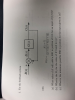 1. For the feedback system C(s) G(s) with K (s +7) (s+5) (s +8)(s + 12) G(s) (a) What value of K will yield a SSE in position of 0.01 for an input of (1/10)t? (b) What is the K, for the value of K found in (a)? (c) What is the minimum possible SSE in position for the input given in (a)?
Question #5 [20 points) R(S) - --- G(s) G(s) - G(S) = Ks (s + 1)(s...
 Question #5 [20 points) R(S) - --- G(s) G(s) - G(S) = Ks (s + 1)(s + 2) a) Find the root locus for the above system. ) For what values of K, the system is stable Answer: B. Determine the gain and phase margins of the system. GM = _ PM = C. What is wgc(gain cross over frequency) ge D. What is ape(Phase cross over frequency) Wpc E. Is the system stable, why? F. Sketch the step response...
 3. Consider the transfer function: ls0 (s +0.5(s +2(s +3)(s +4(s+10) (s +3.5) (s +4.5) (s 5.5) (s 6.5)(s +20.5) (a) [6] Find the phase angle (degrees) and gain (in dB, Bode units) for the following frequencies (in rad/sec) rail Gp(ju) dB 0.1 21 56 b) [3 What is the gain crossover frequency for this system? (c) [8] Design a PD controller so that-0.3 ± 0.3] is a pole of the closed-loop system.
3. Consider the transfer function: ls0 (s...
3. Consider the transfer function: ls0 (s +0.5(s +2(s +3)(s +4(s+10) (s +3.5) (s +4.5) (s 5.5) (s 6.5)(s +20.5) (a) [6] Find the phase angle (degrees) and gain (in dB, Bode units) for the following frequencies (in rad/sec) rail Gp(ju) dB 0.1 21 56 b) [3 What is the gain crossover frequency for this system? (c) [8] Design a PD controller so that-0.3 ± 0.3] is a pole of the closed-loop system.
3. Consider the transfer function: ls0 (s...
 16. Using the following information, calculate the sublimation of S(s) to S(g) Mg(s) S(s) MgS(s) AHo 343 kJ/mol Mg(s) Mg(g) Mg(g) Mg (g) 2e S(s)> S(g) 2e > S2(g) Mg2 (g) S2g) -> MgS(s) A) 279 kJ/mol B) 575 kJ/mol C) 1179 kJ/mol D) 965 kJ/mol E) 4651 kJ/mol AHo 148 kJ/mol 2+ AH° 2186 kJ/mol ΔΗ S(g) AHo 450 kJ/mol AHo3406 kJ/mol _
 Hz(s) + R(s) Gi(s) G2(s) G3(s) G4(s) C(s) Hi(s) Consider the system described by the block diagram above. a. Find the transfer function of the system by reducing the diagram. b. Draw a signal-flow diagram for the given system. c. Using Mason's rule find the transfer function of the system. d. Compare your answers to part (a) and part (c). What do you notice? Explain.
 Problem (1) X (s) (s Ha (s) C2 (s) Ci(s)H() 2 (s) 2rs) x,(s) H2(s)83 Design the controller C2(s), so that the closed-loop of the overall system behaves as a first order transfer function with time constant T2
Problem (1) X (s) (s Ha (s) C2 (s) Ci(s)H() 2 (s) 2rs) x,(s) H2(s)83 Design the controller C2(s), so that the closed-loop of the overall system behaves as a first order transfer function with time constant T2
Problem (1) X (s) (s Ha (s) C2 (s) Ci(s)H() 2 (s) 2rs) x,(s) H2(s)83 Design the controller C2(s), so that the closed-loop of the overall system behaves as a first order transfer function with time constant T2
 A transfer function is given by
G(s) H (s) = s(s+1 ) (s + 8 (a) Design a Lead Compensator or PD controller such that the closed loop has the following specifications: Percent Overshoot (PO) 16 % Rise time 0.4 sec-2.16 ? + 0.6 (b) Determine the velocity error constant (Kv) of the uncompensated and compensated systems.
A transfer function is given by
G(s) H (s) = s(s+1 ) (s + 8 (a) Design a Lead Compensator or PD controller such that the closed loop has the following specifications: Percent Overshoot (PO) 16 % Rise time 0.4 sec-2.16 ? + 0.6 (b) Determine the velocity error constant (Kv) of the uncompensated and compensated systems.
 Q8.5 For the following systems evaluate: GCL(s), where Y(s)-GCL(s)R(s) GE(s), where E(s)- GE(s)R(s) and Gd(s), where d(s) = Gd(s)R(s) d(s) Rfs) 8 dis) 2 s+1 R(s) E(s) In each case (a) and (b), what do you notice about the denominator and numerator of each transfer function?
 Example 3.3.1 A control system shown in following Figure G(s)=(s+1) C(s) N(s) E(s) G,(S) R(s) S G2(s) 100 G2(s)= s(s+10) H(s) H(s) 1 1. If n(t) 0, r(t)=5+2t+10t?, make e 0.1, k-? 2. If n(t)=t, r(t)=5+2t+10t2, k=1, e=? sS I ess0.1, k=?. Question14 A control system shown in following Figure, obtain the steady-state error transfer function E(s)/N(s). N(s) E(S) GS C(S) G.(S) R(s) H(s) Question12 Obtain both analytically and computationally the rise time, peak time, maximum overshoot, and settling time...
 1. For the feedback system C(s) G(s) with K (s +7) (s+5) (s +8)(s + 12) G(s) (a) What value of K will yield a SSE in position of 0.01 for an input of (1/10)t? (b) What is the K, for the value of K found in (a)? (c) What is the minimum possible SSE in position for the input given in (a)?
 Question #5 [20 points) R(S) - --- G(s) G(s) - G(S) = Ks (s + 1)(s + 2) a) Find the root locus for the above system. ) For what values of K, the system is stable Answer: B. Determine the gain and phase margins of the system. GM = _ PM = C. What is wgc(gain cross over frequency) ge D. What is ape(Phase cross over frequency) Wpc E. Is the system stable, why? F. Sketch the step response...
Most questions answered within 3 hours.
-
Where is the error in this code sequence?
String s1 = "Hello";
String s2 = "ello";...
asked 10 months ago -
Financial data for Joel de Paris, Inc., for last year
follow:
Joel de Paris, Inc.
Balance...
asked 10 months ago -
Consider this reaction:
Al2(SO4)3 (aq)+ BaCl3
(aq) Al2Cl6 (aq)- +
3BaSO4(s) . What is the...
asked 10 months ago -
Suppose that Savneet is considering increasing her
recent random sample from 20 car rentals to 40...
asked 10 months ago -
Trucks arrive at an unloading terminal at an average rate of 120
per hour.
Trucks arrive...
asked 10 months ago -
Why are methanol and ethanol completely soluble in water while
octanol is not very little soluble....
asked 10 months ago -
A facilities manager at a university reads in a research report
that the mean amount of...
asked 10 months ago -
When the CuSO4 is rehydrated by adding water to the anhydrous
compound, is this an endothermic...
asked 10 months ago -
A ray of sunlight is passing from diamond into crown glass; the
angle of incidence is...
asked 10 months ago -
A block of mass 0.249 kg is placed on top of a light, vertical
spring of...
asked 10 months ago -
how do the kidneys compensate in the presences of acidosis
a) trigger hyperventilate
b) reserve acid...
asked 10 months ago -
Question 501 pts
The rental rate of capital to the firm increases. Which of the
following...
asked 10 months ago