
Homework Answers
Request Answer!
We need at least 10 more requests to produce the answer.
0 / 10 have requested this problem solution
The more requests, the faster the answer.
Add Answer to:
pts) 9. First, exhaustively alkylate, then add Ag20 and heat. After providing ALL intermediates a products,...
9-17. Syntheses: draw / provide the likely organic product(s) generated in each of the reactions (or...
 9-17. Syntheses: draw / provide the likely organic product(s) generated in each of the reactions (or reaction sequences) below. As appropriate, pay attention to regiospecificity (new bond formation and location in the product formed) and stereochemistry (direction in space of new bond[s] formed). Indicate ALL likely products; where one product does not predominate, label / indicate the MAJOR product(s). Where a product mix results, indicate the MINOR or TRACE product(s). (12 pts) 9. First, exhaustively alkylate, then add Ag20 and...
(4 pts each, unless otherwise noted, 47 pts total) 9-17. Syntheses: draw / provide the likely...
 (4 pts each, unless otherwise noted, 47 pts total) 9-17. Syntheses: draw / provide the likely organic product(s) generated in each of the reactions (or reaction sequences) below. As appropriate, pay attention to regiospecificity (new bond formation and location in the product formed) and stereochemistry (direction in space of new bond(s) formed). Indicate ALL likely products; where one product does not predominate, label / indicate the MAJOR product(s). Where a product mix results, indicate the MINOR or TRACE product(s). (12...
(4 pts each, unless otherwise noted, 45 pts total) 10-18. Syntheses: draw / provide the likely...
 (4 pts each, unless otherwise noted, 45 pts total) 10-18. Syntheses: draw / provide the likely organic product(s) generated in each of the reactions (or reaction sequences) below. As appropriate, pay attention to regiospecificity (new bond formation and location in the product formed) and stereochemistry (direction in space of new bond(s) formed). Indicate ALL likely products: where one product does not predominate, label / indicate the MAJOR or predominant product(s). Where a product mix results, indicate the MINOR or TRACE...
4. [12 pts] Propose mechanisms for the formation of all 3 products shown in the reaction...
 4. [12 pts] Propose mechanisms for the formation of all 3 products shown in the reaction below: (draw curved arrows, intermediates, and resonance structures if necessary. NO NEED FOR TRANSITION STATES! CH CH CH CH Br Heat CH,CH,OH OCH.CH Mechanism.14 points) Mechanism 2 points) Mechanism.3 14 points) 5. [14 pts] Provide the major products of reacting the alkene shown in the middle of the scheme below with all the reagents independently. Draw the products' structures in the corresponding table below...
name the product? Question 14 Not yet graded/6 pts Name all of the products of the...
 name the product?
Question 14 Not yet graded/6 pts Name all of the products of the following reaction. H+ heat CH-CHB.COM CH3-CH2-CH2OH + CH3-CHBr-C-OH
name the product?
Question 14 Not yet graded/6 pts Name all of the products of the following reaction. H+ heat CH-CHB.COM CH3-CH2-CH2OH + CH3-CHBr-C-OH
5. Mechanism: (20 pts) Show the detailed reaction mechanism including all relevant arrows, intermediates, inorganic products,...
 5. Mechanism: (20 pts) Show the detailed reaction mechanism including all relevant arrows, intermediates, inorganic products, relevant resonance structures, and stereochemistry for the following reaction heat OH H-Br Step 1 step 2 Step 3 Step 4 Product(s) a. This is a Sx2/S1/E/Ez/ reduction / oxidation mechanism. b. What is the product if the starting alcohol is reacted with PBry? Product(s) with PBry c. Reaction with PBr; is a S2/S1/E/Ez/reduction / oxidation mechanism.
5. Mechanism: (20 pts) Show the detailed reaction mechanism including all relevant arrows, intermediates, inorganic products,...
 5. Mechanism: (20 pts) Show the detailed reaction mechanism including all relevant arrows, intermediates, inorganic products, relevant resonance structures, and stereochemistry for the following reaction. heat OH H-Br step 1 step 2 step 3 step 4 Product(s) a. This is a S2/Sx1/E/E2/ reduction / oxidation mechanism. b. What is the product if the starting alcohol is reacted with PBrz? Product(s) with PBrz c. Reaction with PBr3 is a S2/S1/Ej / E2 / reduction / oxidation mechanism.
LILY U JUULULUI TULLUTU TUI L mUJUI VISU pivuuuu O CU TUULI shown below. H 1....
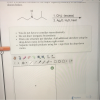 LILY U JUULULUI TULLUTU TUI L mUJUI VISU pivuuuu O CU TUULI shown below. H 1. CH31 (excess) 2. Ag2O, H20, heat • You do not have to consider stereochemistry, • Do not draw inorganic by-products. • Draw one structure per sketcher. Add additional sketchers using the drop-down menu in the bottom right corner. Separate multiple products using the + sign from the drop-down menu. ted CP ogy Iste OOO [+ - Previous [Review Topics References] Praw the structure(s) of...
Do all work on this paper. 1. The compound below on the left has a much...
 Do all work on this paper. 1. The compound below on the left has a much higher melting point than its isomer on the right. Explain. (4 points) Tronohon o llottobu 2. Strong acids always protonate amide oxygens and never protonate amide nitrogens. Provide two reasons that explain this fact (4 points). 3. Draw the complete mechanism of the reaction below and indicate the location of "O in the product. (6 points). CH, + 1 equivalent of KOH in water...
Question 18 18 pts A) H2SO4 H20, heat R) NaBH2CN, CH2CH2OH B) NaOH, H2O, heat S)...
 Question 18 18 pts A) H2SO4 H20, heat R) NaBH2CN, CH2CH2OH B) NaOH, H2O, heat S) NaOH, Br2, H20, heat C) H3O+ (workup) T) NaNO2, HCI, H2O,0°C D) H20 U) CH3CH2CHO E) NaHCO3 (workup) V) CH2CH2CH2CHO F) NaOH, H2O, heat, pressure W) CH2CH Br G) NH3, heat X) CH2CH2CH2Br H) KNH2, NH3 Y) CH2CH2CH2CH2Br 1) TEA Z) (CH3)3CCOCI J) LiAIH4 AA) (CH3)3CCH COCI K) K2CO3 AB) (CH3)2CHCOCI L) CH2N2 AC) (CH3)2CHCH2COCI M) NaN3, DMF AD) CH2CHBO N) KCN, DME AE)...
 9-17. Syntheses: draw / provide the likely organic product(s) generated in each of the reactions (or reaction sequences) below. As appropriate, pay attention to regiospecificity (new bond formation and location in the product formed) and stereochemistry (direction in space of new bond[s] formed). Indicate ALL likely products; where one product does not predominate, label / indicate the MAJOR product(s). Where a product mix results, indicate the MINOR or TRACE product(s). (12 pts) 9. First, exhaustively alkylate, then add Ag20 and...
 (4 pts each, unless otherwise noted, 47 pts total) 9-17. Syntheses: draw / provide the likely organic product(s) generated in each of the reactions (or reaction sequences) below. As appropriate, pay attention to regiospecificity (new bond formation and location in the product formed) and stereochemistry (direction in space of new bond(s) formed). Indicate ALL likely products; where one product does not predominate, label / indicate the MAJOR product(s). Where a product mix results, indicate the MINOR or TRACE product(s). (12...
 (4 pts each, unless otherwise noted, 45 pts total) 10-18. Syntheses: draw / provide the likely organic product(s) generated in each of the reactions (or reaction sequences) below. As appropriate, pay attention to regiospecificity (new bond formation and location in the product formed) and stereochemistry (direction in space of new bond(s) formed). Indicate ALL likely products: where one product does not predominate, label / indicate the MAJOR or predominant product(s). Where a product mix results, indicate the MINOR or TRACE...
 4. [12 pts] Propose mechanisms for the formation of all 3 products shown in the reaction below: (draw curved arrows, intermediates, and resonance structures if necessary. NO NEED FOR TRANSITION STATES! CH CH CH CH Br Heat CH,CH,OH OCH.CH Mechanism.14 points) Mechanism 2 points) Mechanism.3 14 points) 5. [14 pts] Provide the major products of reacting the alkene shown in the middle of the scheme below with all the reagents independently. Draw the products' structures in the corresponding table below...
 name the product?
Question 14 Not yet graded/6 pts Name all of the products of the following reaction. H+ heat CH-CHB.COM CH3-CH2-CH2OH + CH3-CHBr-C-OH
name the product?
Question 14 Not yet graded/6 pts Name all of the products of the following reaction. H+ heat CH-CHB.COM CH3-CH2-CH2OH + CH3-CHBr-C-OH
 5. Mechanism: (20 pts) Show the detailed reaction mechanism including all relevant arrows, intermediates, inorganic products, relevant resonance structures, and stereochemistry for the following reaction heat OH H-Br Step 1 step 2 Step 3 Step 4 Product(s) a. This is a Sx2/S1/E/Ez/ reduction / oxidation mechanism. b. What is the product if the starting alcohol is reacted with PBry? Product(s) with PBry c. Reaction with PBr; is a S2/S1/E/Ez/reduction / oxidation mechanism.
 5. Mechanism: (20 pts) Show the detailed reaction mechanism including all relevant arrows, intermediates, inorganic products, relevant resonance structures, and stereochemistry for the following reaction. heat OH H-Br step 1 step 2 step 3 step 4 Product(s) a. This is a S2/Sx1/E/E2/ reduction / oxidation mechanism. b. What is the product if the starting alcohol is reacted with PBrz? Product(s) with PBrz c. Reaction with PBr3 is a S2/S1/Ej / E2 / reduction / oxidation mechanism.
 LILY U JUULULUI TULLUTU TUI L mUJUI VISU pivuuuu O CU TUULI shown below. H 1. CH31 (excess) 2. Ag2O, H20, heat • You do not have to consider stereochemistry, • Do not draw inorganic by-products. • Draw one structure per sketcher. Add additional sketchers using the drop-down menu in the bottom right corner. Separate multiple products using the + sign from the drop-down menu. ted CP ogy Iste OOO [+ - Previous [Review Topics References] Praw the structure(s) of...
 Do all work on this paper. 1. The compound below on the left has a much higher melting point than its isomer on the right. Explain. (4 points) Tronohon o llottobu 2. Strong acids always protonate amide oxygens and never protonate amide nitrogens. Provide two reasons that explain this fact (4 points). 3. Draw the complete mechanism of the reaction below and indicate the location of "O in the product. (6 points). CH, + 1 equivalent of KOH in water...
 Question 18 18 pts A) H2SO4 H20, heat R) NaBH2CN, CH2CH2OH B) NaOH, H2O, heat S) NaOH, Br2, H20, heat C) H3O+ (workup) T) NaNO2, HCI, H2O,0°C D) H20 U) CH3CH2CHO E) NaHCO3 (workup) V) CH2CH2CH2CHO F) NaOH, H2O, heat, pressure W) CH2CH Br G) NH3, heat X) CH2CH2CH2Br H) KNH2, NH3 Y) CH2CH2CH2CH2Br 1) TEA Z) (CH3)3CCOCI J) LiAIH4 AA) (CH3)3CCH COCI K) K2CO3 AB) (CH3)2CHCOCI L) CH2N2 AC) (CH3)2CHCH2COCI M) NaN3, DMF AD) CH2CHBO N) KCN, DME AE)...
Most questions answered within 3 hours.
-
Where is the error in this code sequence?
String s1 = "Hello";
String s2 = "ello";...
asked 11 months ago -
Financial data for Joel de Paris, Inc., for last year
follow:
Joel de Paris, Inc.
Balance...
asked 11 months ago -
Consider this reaction:
Al2(SO4)3 (aq)+ BaCl3
(aq) Al2Cl6 (aq)- +
3BaSO4(s) . What is the...
asked 11 months ago -
Suppose that Savneet is considering increasing her
recent random sample from 20 car rentals to 40...
asked 11 months ago -
Trucks arrive at an unloading terminal at an average rate of 120
per hour.
Trucks arrive...
asked 11 months ago -
Why are methanol and ethanol completely soluble in water while
octanol is not very little soluble....
asked 11 months ago -
A facilities manager at a university reads in a research report
that the mean amount of...
asked 11 months ago -
When the CuSO4 is rehydrated by adding water to the anhydrous
compound, is this an endothermic...
asked 11 months ago -
A ray of sunlight is passing from diamond into crown glass; the
angle of incidence is...
asked 11 months ago -
A block of mass 0.249 kg is placed on top of a light, vertical
spring of...
asked 11 months ago -
how do the kidneys compensate in the presences of acidosis
a) trigger hyperventilate
b) reserve acid...
asked 11 months ago -
Question 501 pts
The rental rate of capital to the firm increases. Which of the
following...
asked 11 months ago