
Homework Answers
Length of the copper wire L=7.65 cm= 7.65*10-2 m
Diameter of the wire=2.34 mm
Radius r=2.34/2=1.17*10-3 m
Angle made by the magnetic field with horizontal  =31o
=31o
Magnetic field of earth=3.5*10-5T
Thus, horizontal component of the magnetic field,
BV=B sin=3.5*10-5*sin31=1.8*10-5T
5) The free body diagram of the current carrying wire is shown below.
 6) To suspend or float a
section of copper wire, the magnetic field due to the current
carrying wire shorld be equal to the vertical component of the
earth's magnetic field as shown above.
6) To suspend or float a
section of copper wire, the magnetic field due to the current
carrying wire shorld be equal to the vertical component of the
earth's magnetic field as shown above.
Thus,  oI/2r=1.8*10-5
where
o= permeability of free space=4 *10-7N/A2
Using r=1.17*10-3 m(given),
Current through the wire
I=1.8*10-5*3.34*10-3/(4*10-7)=0.048A
7) According to Faraday's law emf e=-d /dt,
where
=magnetic flux=B.dA
/dt,
where
=magnetic flux=B.dA
For the wire, dA=2rL
Thus, e=-d/dt(
oI/2r*2rL)=-d/dt(
oI/L)
This will change the current in the loop, in which emf changes according to the Lenz law in a direction opposite to the source producing it, thus increasing or decreasing the current.
The vertical position remains unchanged since the magnetic field and hence the current is independent of the vertical length L.
Add Answer to:
Let's say you want to "float" a section of copper wire, which is 7.65 cm long...
Let’s say you want to “float” a section of copper wire, which is 7.65 cm long...
 Let’s say you want to “float” a section of copper wire, which is
7.65 cm long and 2.34 mm in diameter within the magnetic field of
Earth near the Earth’s surface. Assume the magnetic field of Earth
makes a 31° with respect to the horizontal and has a magnitude of
3.5.×10-5 T. The current is flowing from west to east. See the
diagram given below.
Let's say you want to "float" a section of copper wire, which is 7.65 cm...
Let’s say you want to “float” a section of copper wire, which is
7.65 cm long and 2.34 mm in diameter within the magnetic field of
Earth near the Earth’s surface. Assume the magnetic field of Earth
makes a 31° with respect to the horizontal and has a magnitude of
3.5.×10-5 T. The current is flowing from west to east. See the
diagram given below.
Let's say you want to "float" a section of copper wire, which is 7.65 cm...
Please answer all the questions!!! Let's say you want to "float" a section of copper wire,...
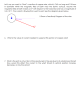 Please answer all the questions!!!
Let's say you want to "float" a section of copper wire, which is 7.65 cm long and 2.34 mm in diameter within the magnetic field of Earth near the Earth's surface. Assume the magnetic field of Earth makes a 31° with respect to the horizontal and has a magnitude of 3.5.x 10-5 T. The current is flowing from west to east. See the diagram given below. 5.Draw a Free Body Diagram of the wire. 22...
Please answer all the questions!!!
Let's say you want to "float" a section of copper wire, which is 7.65 cm long and 2.34 mm in diameter within the magnetic field of Earth near the Earth's surface. Assume the magnetic field of Earth makes a 31° with respect to the horizontal and has a magnitude of 3.5.x 10-5 T. The current is flowing from west to east. See the diagram given below. 5.Draw a Free Body Diagram of the wire. 22...
Suppose a straight 1.55 mm -diameter copper wire could just "float" horizontally in air because of...
Suppose a straight 1.55 mm -diameter copper wire could just "float" horizontally in air because of the force due to the Earth's magnetic field B⃗ , which is horizontal, perpendicular to the wire, and of magnitude 4.4×10⁻⁵ What current would the wire carry? Does the answer seem feasible?
Suppose a straight 1.80 mm -diameter copper wire could just "float" horizontally in air because of...
Suppose a straight 1.80 mm -diameter copper wire could just "float" horizontally in air because of the force due to the Earth's magnetic field B⃗ , which is horizontal, perpendicular to the wire, and of magnitude 6.9×10⁻⁵ T . What current would the wire carry? Does the answer seem feasible?
Suppose a straight 1.40 mmmm -diameter copper wire could just "float" horizontally in air because of...
Suppose a straight 1.40 mmmm -diameter copper wire could just "float" horizontally in air because of the force due to the Earth's magnetic field B which is horizontal, perpendicular to the wire, and of magnitude 4.8×10⁻⁵ T. Part A) What current would the wire carry? Part B) Does the answer seem feasible? (Yes or No)
a) Suppose a straight 1.40 mm -diameter copper wire could just "float" horizontally in air because...
a) Suppose a straight 1.40 mm -diameter copper wire could just "float" horizontally in air because of the force due to the Earth's magnetic field B⃗, which is horizontal, perpendicular to the wire, and of magnitude 3.4×10⁻⁵ T . What current would the wire carry? Does the answer seem feasible? Explain why. b) The force on a wire carrying 7.95 A is a maximum of 2.13 N when placed between the pole faces of a magnet If the pole faces...
Ch. 20 #3 Suppose a straight 1.20 mm -diameter copper wire could just "float" horizontally in...
Ch. 20 #3 Suppose a straight 1.20 mm -diameter copper wire could just "float" horizontally in air because of the force due to the Earth's magnetic field B⃗ , which is horizontal, perpendicular to the wire, and of magnitude 4.1×10⁻⁵ T . Part A: What current would the wire carry? Part B: Does the answer seem feasible? yes no
Suppose a straight 1.30 mm -diameter copper wire could just "float" horizontally in air because of...
Suppose a straight 1.30 mm -diameter copper wire could just "float" horizontally in air because of the force due to the Earth's magnetic field B⃗ , which is horizontal, perpendicular to the wire, and of magnitude 4.3×10⁻⁵ T . Part A: What current would the wire carry? Part B: Does the answer seem feasible? (yes or no) Part C: Explain briefly your answer to part B.
Suppose a straight 1.25 mm -diameter copper wire could just "float" horizontally in air because of...
Suppose a straight 1.25 mm -diameter copper wire could just "float" horizontally in air because of the force due to the Earth's magnetic field B⃗ , which is horizontal, perpendicular to the wire, and of magnitude 6.4×10⁻⁵ T . Part A What current would the wire carry? Express your answer using two significant figures. Part B Does the answer seem feasible? Does the answer seem feasible? yes no
Suppose a straight 1.65 mm -diameter copper wire could just "float" horizontally in air because of...
Suppose a straight 1.65 mm -diameter copper wire could just "float" horizontally in air because of the force due to the Earth's magnetic field B⃗ , which is horizontal, perpendicular to the wire, and of magnitude 4.5×10⁻⁵ T . A) What current would the wire carry? Express your answer using two significant figures. B) Explain briefly. Essay answers are limited to about 500 words (3800 characters maximum, including spaces).
 Let’s say you want to “float” a section of copper wire, which is
7.65 cm long and 2.34 mm in diameter within the magnetic field of
Earth near the Earth’s surface. Assume the magnetic field of Earth
makes a 31° with respect to the horizontal and has a magnitude of
3.5.×10-5 T. The current is flowing from west to east. See the
diagram given below.
Let's say you want to "float" a section of copper wire, which is 7.65 cm...
Let’s say you want to “float” a section of copper wire, which is
7.65 cm long and 2.34 mm in diameter within the magnetic field of
Earth near the Earth’s surface. Assume the magnetic field of Earth
makes a 31° with respect to the horizontal and has a magnitude of
3.5.×10-5 T. The current is flowing from west to east. See the
diagram given below.
Let's say you want to "float" a section of copper wire, which is 7.65 cm...
 Please answer all the questions!!!
Let's say you want to "float" a section of copper wire, which is 7.65 cm long and 2.34 mm in diameter within the magnetic field of Earth near the Earth's surface. Assume the magnetic field of Earth makes a 31° with respect to the horizontal and has a magnitude of 3.5.x 10-5 T. The current is flowing from west to east. See the diagram given below. 5.Draw a Free Body Diagram of the wire. 22...
Please answer all the questions!!!
Let's say you want to "float" a section of copper wire, which is 7.65 cm long and 2.34 mm in diameter within the magnetic field of Earth near the Earth's surface. Assume the magnetic field of Earth makes a 31° with respect to the horizontal and has a magnitude of 3.5.x 10-5 T. The current is flowing from west to east. See the diagram given below. 5.Draw a Free Body Diagram of the wire. 22...
Most questions answered within 3 hours.
-
Where is the error in this code sequence?
String s1 = "Hello";
String s2 = "ello";...
asked 10 months ago -
Financial data for Joel de Paris, Inc., for last year
follow:
Joel de Paris, Inc.
Balance...
asked 10 months ago -
Consider this reaction:
Al2(SO4)3 (aq)+ BaCl3
(aq) Al2Cl6 (aq)- +
3BaSO4(s) . What is the...
asked 10 months ago -
Suppose that Savneet is considering increasing her
recent random sample from 20 car rentals to 40...
asked 10 months ago -
Trucks arrive at an unloading terminal at an average rate of 120
per hour.
Trucks arrive...
asked 10 months ago -
Why are methanol and ethanol completely soluble in water while
octanol is not very little soluble....
asked 10 months ago -
A facilities manager at a university reads in a research report
that the mean amount of...
asked 10 months ago -
When the CuSO4 is rehydrated by adding water to the anhydrous
compound, is this an endothermic...
asked 10 months ago -
A ray of sunlight is passing from diamond into crown glass; the
angle of incidence is...
asked 10 months ago -
A block of mass 0.249 kg is placed on top of a light, vertical
spring of...
asked 10 months ago -
how do the kidneys compensate in the presences of acidosis
a) trigger hyperventilate
b) reserve acid...
asked 10 months ago -
Question 501 pts
The rental rate of capital to the firm increases. Which of the
following...
asked 10 months ago