
Homework Answers
Ans. (e) 11
Number 11 represents zygote, which will convert into embryo (1), which then further transforms into a diploid sporophyte (3). The sporophyte then produces spores (5) by meiosis (4). The spores then produces gametophyte (7). The ganetophyte produces gametes (9), which fertilizes to form zygote (11).
The following question refers to the generalized life cycle for land plants shown in the figure...
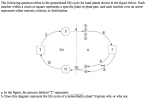 The following question refers to the generalized life cycle for land plants shown in the figure below. Each number within a circle or square represents a specific plant or plant part, and each number over an arrow represents either meiosis, mitosis, or fertilization. 2n 94 and a. In the figure, the process labeled "2" represents b. Does this diagram represent the life cycle of a heterothallic plant? Explain why or why not.
2. The following questions refer to the generalized life cycle for land plants shown in the...
 2. The following questions refer to the generalized life cycle for land plants shown in the figure. Each number within a circle or square represents a specific plant or plant part, and each number over an arrow represents meiosis, mitosis, or fertilization. (Hint: "2" represents mitosis and "3" represents sporocyte) 2n 8 Fill out the following blanks. (15 points) (1). In the figure, represents the mature gametophyte. (2). In the figure, represents the mature sporophyte. (3). In the figure, represents...
What is the diploid number of chromosomes in this plant? _______________ ["2N=4", "N=8", "2N=16", "2N=8", "N=4",...
 What is the diploid number of chromosomes in this plant?
_______________ ["2N=4", "N=8", "2N=16", "2N=8", "N=4", "N=16"]
Give the names of each stage of mitosis or meiosis shown in
the:
left panel:
________________ ["anaphase of meiosis I", "metaphase
of meiosis I", "prophase of meiosis II", "metaphase of mitosis",
"telophase of mitosis", "anaphase of meiosis II", "anaphase of
mitosis", "prophase of mitosis", "telophase of meiosis II",
"metaphase of meiosis II", "telophase of meiosis I", "prophase of
meiosis...
What is the diploid number of chromosomes in this plant?
_______________ ["2N=4", "N=8", "2N=16", "2N=8", "N=4", "N=16"]
Give the names of each stage of mitosis or meiosis shown in
the:
left panel:
________________ ["anaphase of meiosis I", "metaphase
of meiosis I", "prophase of meiosis II", "metaphase of mitosis",
"telophase of mitosis", "anaphase of meiosis II", "anaphase of
mitosis", "prophase of mitosis", "telophase of meiosis II",
"metaphase of meiosis II", "telophase of meiosis I", "prophase of
meiosis...
BIOL 1020 Homework Evolution & Natural Selection 4 NATURAL SELECTION: 1. In your OWN words, explain...
 BIOL 1020 Homework Evolution & Natural Selection 4 NATURAL SELECTION: 1. In your OWN words, explain what natural selection is. What is required? What is the result? 2. True or false? For natural selection to work, a population must have genetic variation. Explain your answer. 3. List three sources of genetic variation in a population. Identify which sources are most important for asexually reproducing organisms. Which method is most important for sexually reproducing organisms? 4. List three mechanisms which cause...
51 Review questions: 1. Does the thallus contain vascular tisues? 2. 1s the thallus the gametophyte...
 51 Review questions: 1. Does the thallus contain vascular tisues? 2. 1s the thallus the gametophyte or the sporophyte generation? 3. Where are the rhizoids located and what is their function? 4. Where is the pore located and what is its function? (similar to stoma in higher plants) 5. Is the gemmae cup a sexual or asexual reproductive structure? 6. Are gemmae haploid or diploid?_ 7. When rain splashes the gemmae out of the cup, what do they grow into?...
. 1. Prove by induction that for all integers n≥1, 4+8+12+...+4n = 2n^2+2n 2. A number...
. 1. Prove by induction that for all integers n≥1, 4+8+12+...+4n = 2n^2+2n 2. A number a is divisible by b if the remainder of dividing a by b is zero. For example 10 is divisible by 5 but 11 is not divisible by 5. Prove by induction that for all integers n≥1,11^n - 6 is divisible by 5. 3. Prove by induction that for all integers n ≥ 1, 3^n ≥ 2^n+n^2
Simplify each expression. Thanks 4n 6 n-3 2n 7) a+4_6 2a +6 2 8) 9) x+5...
 Simplify each expression. Thanks
4n 6 n-3 2n 7) a+4_6 2a +6 2 8) 9) x+5 x +3 10) 6 r-6 r+ 3
Simplify each expression. Thanks
4n 6 n-3 2n 7) a+4_6 2a +6 2 8) 9) x+5 x +3 10) 6 r-6 r+ 3
QUESTION 5 You cross want to create a new hybrid plant. You cross Plant 1 (2n=10)...
 QUESTION 5 You cross want to create a new hybrid plant. You cross Plant 1 (2n=10) with Plant 2 (2n=14) and generate a generation of hybrid plants. Most of the hybrid plants are infertile, however, you do find a hybrid plant that is fertile. You reason that this plant must have undergone a non-disjunction event that now rendered it fertile. If your reasoning is correct, how many chromosomes does this fertile hybrid plant have? O a. 24 Ob. 12 O...
A plant species X with n=5 chromosomes was crossed with a related species Y with n = 7 chromosomes. The F1 hybrids produced only a few pollen grains, which were used to fertilize the ovules of related...
A plant species X with n=5 chromosomes was crossed with a related species Y with n = 7 chromosomes. The F1 hybrids produced only a few pollen grains, which were used to fertilize the ovules of related species Z with n=7 chromosomes. A few plants were produced from this cross, and all had 19 chromosomes. The F1 hybrids (with 19 chromosomes) were mated with related species W with n=11 chromosomes. A few plants were produced from the cross and all...
6. Which is not a characteristic of fungi? A. Most are single celled B. It is...
 6. Which is not a characteristic of fungi? A. Most are single celled B. It is a saprophyte D. It lives moist areas E. All the above are characteristics of the fungi C. It is a decomposer 7. Why is the relationship between most mycorhizal fungi and their host plants considered mutualistic? A. They live in close physical association. B. Both species benefit from the association. C. The host plant cannot live without the mycorhizae. D. The mycorhizae cannot live...
 The following question refers to the generalized life cycle for land plants shown in the figure below. Each number within a circle or square represents a specific plant or plant part, and each number over an arrow represents either meiosis, mitosis, or fertilization. 2n 94 and a. In the figure, the process labeled "2" represents b. Does this diagram represent the life cycle of a heterothallic plant? Explain why or why not.
 2. The following questions refer to the generalized life cycle for land plants shown in the figure. Each number within a circle or square represents a specific plant or plant part, and each number over an arrow represents meiosis, mitosis, or fertilization. (Hint: "2" represents mitosis and "3" represents sporocyte) 2n 8 Fill out the following blanks. (15 points) (1). In the figure, represents the mature gametophyte. (2). In the figure, represents the mature sporophyte. (3). In the figure, represents...
 What is the diploid number of chromosomes in this plant?
_______________ ["2N=4", "N=8", "2N=16", "2N=8", "N=4", "N=16"]
Give the names of each stage of mitosis or meiosis shown in
the:
left panel:
________________ ["anaphase of meiosis I", "metaphase
of meiosis I", "prophase of meiosis II", "metaphase of mitosis",
"telophase of mitosis", "anaphase of meiosis II", "anaphase of
mitosis", "prophase of mitosis", "telophase of meiosis II",
"metaphase of meiosis II", "telophase of meiosis I", "prophase of
meiosis...
What is the diploid number of chromosomes in this plant?
_______________ ["2N=4", "N=8", "2N=16", "2N=8", "N=4", "N=16"]
Give the names of each stage of mitosis or meiosis shown in
the:
left panel:
________________ ["anaphase of meiosis I", "metaphase
of meiosis I", "prophase of meiosis II", "metaphase of mitosis",
"telophase of mitosis", "anaphase of meiosis II", "anaphase of
mitosis", "prophase of mitosis", "telophase of meiosis II",
"metaphase of meiosis II", "telophase of meiosis I", "prophase of
meiosis...
 BIOL 1020 Homework Evolution & Natural Selection 4 NATURAL SELECTION: 1. In your OWN words, explain what natural selection is. What is required? What is the result? 2. True or false? For natural selection to work, a population must have genetic variation. Explain your answer. 3. List three sources of genetic variation in a population. Identify which sources are most important for asexually reproducing organisms. Which method is most important for sexually reproducing organisms? 4. List three mechanisms which cause...
 51 Review questions: 1. Does the thallus contain vascular tisues? 2. 1s the thallus the gametophyte or the sporophyte generation? 3. Where are the rhizoids located and what is their function? 4. Where is the pore located and what is its function? (similar to stoma in higher plants) 5. Is the gemmae cup a sexual or asexual reproductive structure? 6. Are gemmae haploid or diploid?_ 7. When rain splashes the gemmae out of the cup, what do they grow into?...
 Simplify each expression. Thanks
4n 6 n-3 2n 7) a+4_6 2a +6 2 8) 9) x+5 x +3 10) 6 r-6 r+ 3
Simplify each expression. Thanks
4n 6 n-3 2n 7) a+4_6 2a +6 2 8) 9) x+5 x +3 10) 6 r-6 r+ 3
 QUESTION 5 You cross want to create a new hybrid plant. You cross Plant 1 (2n=10) with Plant 2 (2n=14) and generate a generation of hybrid plants. Most of the hybrid plants are infertile, however, you do find a hybrid plant that is fertile. You reason that this plant must have undergone a non-disjunction event that now rendered it fertile. If your reasoning is correct, how many chromosomes does this fertile hybrid plant have? O a. 24 Ob. 12 O...
 6. Which is not a characteristic of fungi? A. Most are single celled B. It is a saprophyte D. It lives moist areas E. All the above are characteristics of the fungi C. It is a decomposer 7. Why is the relationship between most mycorhizal fungi and their host plants considered mutualistic? A. They live in close physical association. B. Both species benefit from the association. C. The host plant cannot live without the mycorhizae. D. The mycorhizae cannot live...
Most questions answered within 3 hours.
-
Where is the error in this code sequence?
String s1 = "Hello";
String s2 = "ello";...
asked 11 months ago -
Financial data for Joel de Paris, Inc., for last year
follow:
Joel de Paris, Inc.
Balance...
asked 11 months ago -
Consider this reaction:
Al2(SO4)3 (aq)+ BaCl3
(aq) Al2Cl6 (aq)- +
3BaSO4(s) . What is the...
asked 11 months ago -
Suppose that Savneet is considering increasing her
recent random sample from 20 car rentals to 40...
asked 11 months ago -
Trucks arrive at an unloading terminal at an average rate of 120
per hour.
Trucks arrive...
asked 11 months ago -
Why are methanol and ethanol completely soluble in water while
octanol is not very little soluble....
asked 11 months ago -
A facilities manager at a university reads in a research report
that the mean amount of...
asked 11 months ago -
When the CuSO4 is rehydrated by adding water to the anhydrous
compound, is this an endothermic...
asked 11 months ago -
A ray of sunlight is passing from diamond into crown glass; the
angle of incidence is...
asked 11 months ago -
A block of mass 0.249 kg is placed on top of a light, vertical
spring of...
asked 11 months ago -
how do the kidneys compensate in the presences of acidosis
a) trigger hyperventilate
b) reserve acid...
asked 11 months ago -
Question 501 pts
The rental rate of capital to the firm increases. Which of the
following...
asked 11 months ago