
Homework Answers
Request Answer!
We need at least 10 more requests to produce the answer.
0 / 10 have requested this problem solution
The more requests, the faster the answer.
Add Answer to:
aperto e point D. For the following Hitration of NH3 with HC!, the chemical species that...
. the solution at recies that determines the pH of BeFor the following Hitration of 113...
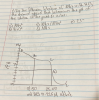 .
the solution at recies that determines the pH of BeFor the following Hitration of 113 with HC!, point is lare: ch NH 3 / NH 4 t el Cl- d) NA 3 (6) H 30+ 144 IA MB Hd 12.50 25.00 ml HCl 0.225 M added
.
the solution at recies that determines the pH of BeFor the following Hitration of 113 with HC!, point is lare: ch NH 3 / NH 4 t el Cl- d) NA 3 (6) H 30+ 144 IA MB Hd 12.50 25.00 ml HCl 0.225 M added
Why isn’t the pH at the equivalence point equal to 7? Consider the major species present...
Why isn’t the pH at the equivalence point equal to 7? Consider the major species present in solution, and include a balanced chemical equation as part of your answer. The pH curve for the titration of 50.0 mL of 0.10M NH3(aq) with 0.10M HCl(aq).
are account. 1 To calculate the pH at the point, indicale species or chemical species taken...
 are account. 1 To calculate the pH at the point, indicale species or chemical species taken into tal only weak acid I only the strong bose 13) only the weah acid cleach component conjugate pair el strong acid in excese in excess 12 11 10 a 7. Hd 5 4 3 2 10 20 30 40 Volumen
A solution (75.0 mL) of 0.250 M NH3 is being titrated with 0.500 M HCl. Kb = 1.8x10⁻⁵ for NH3. What species are present,...
A solution (75.0 mL) of 0.250 M NH3 is being titrated with 0.500 M HCl. Kb = 1.8x10⁻⁵ for NH3. What species are present, and what are their concentrations: (a) Before any HCl has been added? (b) When 17.5 mL HCl have been added? (c) After 37.5 mL HCl solution has been added? (d) After 45.0 mL HCl solution has been added? Can you please show all work?
To 25.00 mL of 0.100 M NH3 solution are added 15.00 mL of 0.100 M HCl...
To 25.00 mL of 0.100 M NH3 solution are added 15.00 mL of 0.100 M HCl solution. (Kb NH3 = 1.8 x 10⁻⁵) By how much will the pH change if a further 15.00 mL of the 0.100 M HCl solution are added? A. 2.72 B. 5.61 C. 8.32 D. 7.04 E. 6.39
3. 50.0 ml of a 0.200 M Ammonia (NH3) solution, Kb = 1.8×10⁻⁵, are transferred in...
3. 50.0 ml of a 0.200 M Ammonia (NH3) solution, Kb = 1.8×10⁻⁵, are transferred in an Erlenmeyer flask and titrated with 0.200 M of HCl (HC is delivered in the flask using a burette). Predict pH, pOH, concentration of ammonia, concentration of the conjugated acid NH4+, and concentration of HCl in the Erlenmeyer flask when: (a) 0 mL of HCl solution are added to the Erlenmeyer flask (b) 25 mL of HCl solution are added to the Erlenmeyer flask...
7) For the chemical reaction NH3(aq) + HCl(aq) + NH4" (aq) + Cl(aq) the acid and...
 7) For the chemical reaction NH3(aq) + HCl(aq) + NH4" (aq) + Cl(aq) the acid and conjugate base are a) NH; (acid); C (conjugate base) b) NH; (acid); NH4 (conjugate base) c) HCI (acid); Cl"(conjugate base) d) HCI (acid): NH (conjugate base) e) HCI (acid); NHA (conjugate base) 8) A buffer solution is formed by adding 0.0100 moles of potassium dihydrogen phosphate (KH_PO4) and 0.0100 moles of potassium hydrogen phosphate (K,HPO) into 1.000 liters of water. When 0.0010 moles of...
A 10.0 mL sample of 0.25 M NH3(aq) is titrated with 0.20 M HCl(aq) (adding HCl to NH3
 1)A 10.0 mL sample of 0.25 M NH3(aq)
is titrated with 0.20 M HCl(aq) (adding HCl to
NH3). Determine which region on the titration curve the
mixture produced is in, and the pH of the mixture at each volume of
added acid.Kb of NH3 is 1.8 ×
10−5.Henderson–Hasselbalch equation:Part a):1) After adding 10 mL of the HCl solution, the
mixture is [ Select ] ["at", "before", "after"] the
equivalence point on the titration curve.2) The pH of the solution after...
1)A 10.0 mL sample of 0.25 M NH3(aq)
is titrated with 0.20 M HCl(aq) (adding HCl to
NH3). Determine which region on the titration curve the
mixture produced is in, and the pH of the mixture at each volume of
added acid.Kb of NH3 is 1.8 ×
10−5.Henderson–Hasselbalch equation:Part a):1) After adding 10 mL of the HCl solution, the
mixture is [ Select ] ["at", "before", "after"] the
equivalence point on the titration curve.2) The pH of the solution after...
1. a. For the following groups, indicate their predominant ionic species (draw the chemical structure) at...
1. a. For the following groups, indicate their predominant ionic species (draw the chemical structure) at pH 7.4: a. The side chain amino group (–NH3+) of the amino acid lysine, pKa=10.5. The side chain carboxyl group (-COOH) of the amino acid glutamate, pKa=4.1. b.For a buffer with a pKa of 8.03 : How will the pH and buffering capacity change when HCl is added to the buffer in “a”? How will the pH and buffering capacity change when NaOH is...
3.)A certain weak acid, HA, with a Ka value of 5.61×10?6, is titrated with NaOH. Part A A solution is made by titrati...
3.)A certain weak acid, HA, with a Ka value of 5.61×10?6, is titrated with NaOH. Part A A solution is made by titrating 7.00 mmol (millimoles) of HA and 1.00 mmol of the strong base. What is the resulting pH? Express the pH numerically to two decimal places. Part B More strong base is added until the equivalence point is reached. What is the pH of this solution at the equivalence point if the total volume is 35.0 mL ?...
 .
the solution at recies that determines the pH of BeFor the following Hitration of 113 with HC!, point is lare: ch NH 3 / NH 4 t el Cl- d) NA 3 (6) H 30+ 144 IA MB Hd 12.50 25.00 ml HCl 0.225 M added
.
the solution at recies that determines the pH of BeFor the following Hitration of 113 with HC!, point is lare: ch NH 3 / NH 4 t el Cl- d) NA 3 (6) H 30+ 144 IA MB Hd 12.50 25.00 ml HCl 0.225 M added
 are account. 1 To calculate the pH at the point, indicale species or chemical species taken into tal only weak acid I only the strong bose 13) only the weah acid cleach component conjugate pair el strong acid in excese in excess 12 11 10 a 7. Hd 5 4 3 2 10 20 30 40 Volumen
 7) For the chemical reaction NH3(aq) + HCl(aq) + NH4" (aq) + Cl(aq) the acid and conjugate base are a) NH; (acid); C (conjugate base) b) NH; (acid); NH4 (conjugate base) c) HCI (acid); Cl"(conjugate base) d) HCI (acid): NH (conjugate base) e) HCI (acid); NHA (conjugate base) 8) A buffer solution is formed by adding 0.0100 moles of potassium dihydrogen phosphate (KH_PO4) and 0.0100 moles of potassium hydrogen phosphate (K,HPO) into 1.000 liters of water. When 0.0010 moles of...
 1)A 10.0 mL sample of 0.25 M NH3(aq)
is titrated with 0.20 M HCl(aq) (adding HCl to
NH3). Determine which region on the titration curve the
mixture produced is in, and the pH of the mixture at each volume of
added acid.Kb of NH3 is 1.8 ×
10−5.Henderson–Hasselbalch equation:Part a):1) After adding 10 mL of the HCl solution, the
mixture is [ Select ] ["at", "before", "after"] the
equivalence point on the titration curve.2) The pH of the solution after...
1)A 10.0 mL sample of 0.25 M NH3(aq)
is titrated with 0.20 M HCl(aq) (adding HCl to
NH3). Determine which region on the titration curve the
mixture produced is in, and the pH of the mixture at each volume of
added acid.Kb of NH3 is 1.8 ×
10−5.Henderson–Hasselbalch equation:Part a):1) After adding 10 mL of the HCl solution, the
mixture is [ Select ] ["at", "before", "after"] the
equivalence point on the titration curve.2) The pH of the solution after...
Most questions answered within 3 hours.
-
Where is the error in this code sequence?
String s1 = "Hello";
String s2 = "ello";...
asked 10 months ago -
Financial data for Joel de Paris, Inc., for last year
follow:
Joel de Paris, Inc.
Balance...
asked 10 months ago -
Consider this reaction:
Al2(SO4)3 (aq)+ BaCl3
(aq) Al2Cl6 (aq)- +
3BaSO4(s) . What is the...
asked 10 months ago -
Suppose that Savneet is considering increasing her
recent random sample from 20 car rentals to 40...
asked 10 months ago -
Trucks arrive at an unloading terminal at an average rate of 120
per hour.
Trucks arrive...
asked 10 months ago -
Why are methanol and ethanol completely soluble in water while
octanol is not very little soluble....
asked 10 months ago -
A facilities manager at a university reads in a research report
that the mean amount of...
asked 10 months ago -
When the CuSO4 is rehydrated by adding water to the anhydrous
compound, is this an endothermic...
asked 10 months ago -
A ray of sunlight is passing from diamond into crown glass; the
angle of incidence is...
asked 10 months ago -
A block of mass 0.249 kg is placed on top of a light, vertical
spring of...
asked 10 months ago -
how do the kidneys compensate in the presences of acidosis
a) trigger hyperventilate
b) reserve acid...
asked 10 months ago -
Question 501 pts
The rental rate of capital to the firm increases. Which of the
following...
asked 10 months ago