


Homework Answers

Add Answer to:
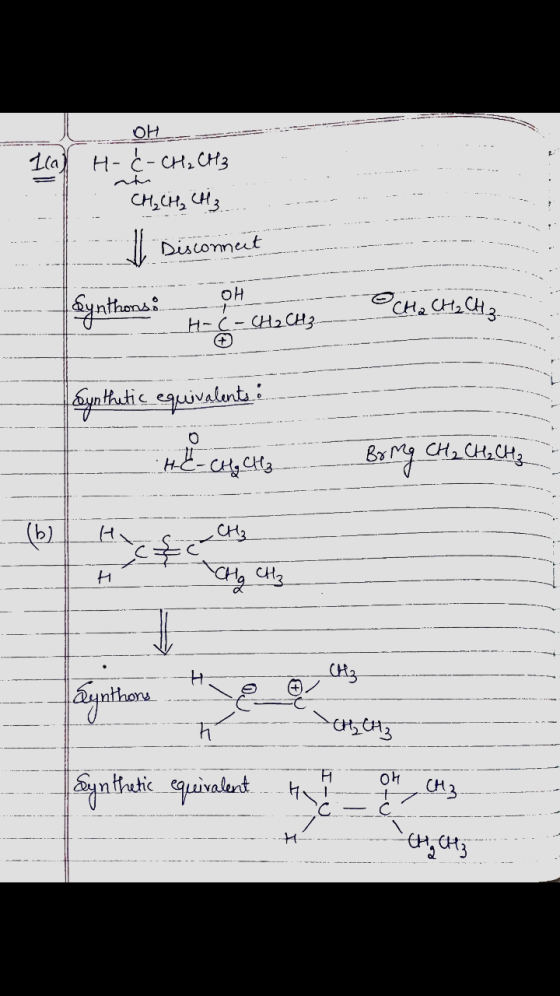
1. Draw the synthons and synthetic equivalents formed by cleaving the indicated bond. (24 pts) synthons...
2 Circle the most acidic hydrogen(s) in the molecule. (8 pts) H 1 HH H a....
 2 Circle the most acidic hydrogen(s) in the molecule. (8 pts) H 1 HH H a. H HHH HHHH 3. Determine the pK, for each type of hydrogen in the molecule. Write the number above the line for each type of hydrogen. (10 pts) ноно HHHH 4. Draw an arrow pointing to the most basic atom in each molecule. (8 pts) b. OCH 5. Show the synthesis of the target molecule. You may use benzene, potassium cyanide, and chloromethane as...
2 What is the pka for each hydrogen - H OH 0 11 H H 3...
 2 What is the pka for each hydrogen - H OH 0 11 H H 3 What is the most basic atom? o N a) b) "OCH 3 4 perform the synthesis for each molecule. Ulse benzene, potassium cyanide, chloromethane as carbon sources and any inorganic reagents OH .OH a) b) C! H TM HO. M
1 What is the most audic hydrogen? + a) 나 1 H 11 •C. TI C...
 1 What is the most audic hydrogen? + a) 나 1 H 11 •C. TI C b) -C=C-H. H ci H H H # 2 What is the pka for each hydrogen H OH O TI C C He C Н H 3 What is the most basic atom? o 0 "OCH 3 4 perform the synthesis for each molecule. Use benzene, potassium Cyande, chloromethane as carbon sources and any inorganic veagents OH DI 0 b) C! Н TM HD...
1. COMB 2. wwerd 6. Propose multi step synthetic routes from the given organic molecule to the indicated product. Y...
 1. COMB 2. wwerd 6. Propose multi step synthetic routes from the given organic molecule to the indicated product. You can use any organic solvent and any of the following organic chemicals CHI, CH.CH -Brand inorganic chemicals: CO., KCN, Mr. Li, Cul, Zn, Sn, HCI,H,O, H.SO, DIBALH, LIAIH, NaBH., Cro., H, and Pd catalyst, PBr, and SOCI. (24 points, 6 each). OOH CH Of 04
Draw the Predominant organic product formed in each of the following reactions involving (4 Pts) alcohol...
 Draw the Predominant organic product formed in each of the following reactions involving (4 Pts) alcohol molecule as the reactants. H2 H,SO н.с. OH 180 °C CH3 OH H,SO .CH CH3 180 °C CH3
Do all work on this paper. 1. The compound below on the left has a much...
 Do all work on this paper. 1. The compound below on the left has a much higher melting point than its isomer on the right. Explain. (4 points) Tronohon o llottobu 2. Strong acids always protonate amide oxygens and never protonate amide nitrogens. Provide two reasons that explain this fact (4 points). 3. Draw the complete mechanism of the reaction below and indicate the location of "O in the product. (6 points). CH, + 1 equivalent of KOH in water...
3/4 d) Draw the structure of the MINOR product below. No mechanism needed here. (2 pts)...
 3/4 d) Draw the structure of the MINOR product below. No mechanism needed here. (2 pts) 7) Draw the mechanism of the elimination reaction below (6 pts) EN (1 pt) b) What is the name of the specific mechanism of the reaction? c) What is being eliminated in the reaction? (2 pts) 8) A molecule in the conformation shown below undergoes the same type of elimination reaction as the previous problem. Draw the product of the reaction in full line...
Identifying Stereochemical Relationships and Assigning Stereochemistry 1. Follow the instructions provided to indicate the relationship between...
 Identifying Stereochemical Relationships and Assigning Stereochemistry 1. Follow the instructions provided to indicate the relationship between the structure in the box and those shown underneath. HECH CHE CH,CH a) Write "a" in the blank below each molecule that represents the enantiomer of the one in the box. b) Write "b" in the blank below each molecule that represents a diastereomer of the one in the box. c) Write "e" in the blank below each molecule that is the same as...
1. (6 pts total; 2 pts each) Proteins that catalyze chemical reactions in living systems are...
 1. (6 pts total; 2 pts each) Proteins that catalyze chemical reactions in living systems are called enzymes. The basic building blocks of proteins are called amino acids and have the general structure pictured below, left, where R is a substituent containing one of many organic functional groups. Some representative examples of amino acids found in nature are pictured here as well (R groups only) сн. н 0:00 HO-C-H. HỌC-C-CH, CH,SH H-C-H H2N -CO,H H An Amino Acid Threonine Valine...
1. [10 pts] Consider the elimination reaction for the following alkyl halide with sodium methoxide in...
 1. [10 pts] Consider the elimination reaction for the following alkyl halide with sodium methoxide in methanol (Na* OCH, CH,OH). CH NaOme MeOH CH Compound A Problem 2c Draw the major expected organic product (a) Redraw Compound A as seen in Viewpoint I below left as a Newman projection on the template provided in Problem 2a (below). Hint: Fill in missing Hs ar C2 and C3 to help you get started! (b) Rotate the C2 C3 bond to obtain the...
 2 Circle the most acidic hydrogen(s) in the molecule. (8 pts) H 1 HH H a. H HHH HHHH 3. Determine the pK, for each type of hydrogen in the molecule. Write the number above the line for each type of hydrogen. (10 pts) ноно HHHH 4. Draw an arrow pointing to the most basic atom in each molecule. (8 pts) b. OCH 5. Show the synthesis of the target molecule. You may use benzene, potassium cyanide, and chloromethane as...
 2 What is the pka for each hydrogen - H OH 0 11 H H 3 What is the most basic atom? o N a) b) "OCH 3 4 perform the synthesis for each molecule. Ulse benzene, potassium cyanide, chloromethane as carbon sources and any inorganic reagents OH .OH a) b) C! H TM HO. M
 1 What is the most audic hydrogen? + a) 나 1 H 11 •C. TI C b) -C=C-H. H ci H H H # 2 What is the pka for each hydrogen H OH O TI C C He C Н H 3 What is the most basic atom? o 0 "OCH 3 4 perform the synthesis for each molecule. Use benzene, potassium Cyande, chloromethane as carbon sources and any inorganic veagents OH DI 0 b) C! Н TM HD...
 1. COMB 2. wwerd 6. Propose multi step synthetic routes from the given organic molecule to the indicated product. You can use any organic solvent and any of the following organic chemicals CHI, CH.CH -Brand inorganic chemicals: CO., KCN, Mr. Li, Cul, Zn, Sn, HCI,H,O, H.SO, DIBALH, LIAIH, NaBH., Cro., H, and Pd catalyst, PBr, and SOCI. (24 points, 6 each). OOH CH Of 04
 Draw the Predominant organic product formed in each of the following reactions involving (4 Pts) alcohol molecule as the reactants. H2 H,SO н.с. OH 180 °C CH3 OH H,SO .CH CH3 180 °C CH3
 Do all work on this paper. 1. The compound below on the left has a much higher melting point than its isomer on the right. Explain. (4 points) Tronohon o llottobu 2. Strong acids always protonate amide oxygens and never protonate amide nitrogens. Provide two reasons that explain this fact (4 points). 3. Draw the complete mechanism of the reaction below and indicate the location of "O in the product. (6 points). CH, + 1 equivalent of KOH in water...
 3/4 d) Draw the structure of the MINOR product below. No mechanism needed here. (2 pts) 7) Draw the mechanism of the elimination reaction below (6 pts) EN (1 pt) b) What is the name of the specific mechanism of the reaction? c) What is being eliminated in the reaction? (2 pts) 8) A molecule in the conformation shown below undergoes the same type of elimination reaction as the previous problem. Draw the product of the reaction in full line...
 Identifying Stereochemical Relationships and Assigning Stereochemistry 1. Follow the instructions provided to indicate the relationship between the structure in the box and those shown underneath. HECH CHE CH,CH a) Write "a" in the blank below each molecule that represents the enantiomer of the one in the box. b) Write "b" in the blank below each molecule that represents a diastereomer of the one in the box. c) Write "e" in the blank below each molecule that is the same as...
 1. (6 pts total; 2 pts each) Proteins that catalyze chemical reactions in living systems are called enzymes. The basic building blocks of proteins are called amino acids and have the general structure pictured below, left, where R is a substituent containing one of many organic functional groups. Some representative examples of amino acids found in nature are pictured here as well (R groups only) сн. н 0:00 HO-C-H. HỌC-C-CH, CH,SH H-C-H H2N -CO,H H An Amino Acid Threonine Valine...
 1. [10 pts] Consider the elimination reaction for the following alkyl halide with sodium methoxide in methanol (Na* OCH, CH,OH). CH NaOme MeOH CH Compound A Problem 2c Draw the major expected organic product (a) Redraw Compound A as seen in Viewpoint I below left as a Newman projection on the template provided in Problem 2a (below). Hint: Fill in missing Hs ar C2 and C3 to help you get started! (b) Rotate the C2 C3 bond to obtain the...
Most questions answered within 3 hours.
-
Where is the error in this code sequence?
String s1 = "Hello";
String s2 = "ello";...
asked 10 months ago -
Financial data for Joel de Paris, Inc., for last year
follow:
Joel de Paris, Inc.
Balance...
asked 10 months ago -
Consider this reaction:
Al2(SO4)3 (aq)+ BaCl3
(aq) Al2Cl6 (aq)- +
3BaSO4(s) . What is the...
asked 10 months ago -
Suppose that Savneet is considering increasing her
recent random sample from 20 car rentals to 40...
asked 10 months ago -
Trucks arrive at an unloading terminal at an average rate of 120
per hour.
Trucks arrive...
asked 10 months ago -
Why are methanol and ethanol completely soluble in water while
octanol is not very little soluble....
asked 10 months ago -
A facilities manager at a university reads in a research report
that the mean amount of...
asked 10 months ago -
When the CuSO4 is rehydrated by adding water to the anhydrous
compound, is this an endothermic...
asked 10 months ago -
A ray of sunlight is passing from diamond into crown glass; the
angle of incidence is...
asked 10 months ago -
A block of mass 0.249 kg is placed on top of a light, vertical
spring of...
asked 10 months ago -
how do the kidneys compensate in the presences of acidosis
a) trigger hyperventilate
b) reserve acid...
asked 10 months ago -
Question 501 pts
The rental rate of capital to the firm increases. Which of the
following...
asked 10 months ago