
Homework Answers
Answer:

Add Answer to:
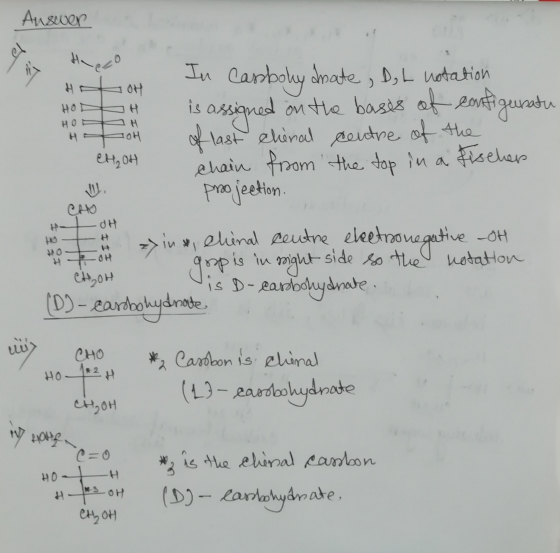
(5 Marks) B. Answer the questions based on the structures given below i. ii. нонс нонс...
4) Take a look at these structures of monosaccharides (3 pts) *CHOH CHOH CH,OH OH CH,OH...
 4) Take a look at these structures of monosaccharides (3 pts) *CHOH CHOH CH,OH OH CH,OH SH HOM HO OH OH H H OH OH H . H OH GLUCOSE HOH GALACTOSE OH FRUCTOSE What is the molecular formula for the the following monosaccharides? a. glucose: C b. fructose: C c. galactose: C 5) A. Show the anomeric carbon. (1 pts) B. Draw B-D-Fructopyranose (2 pts) Fructose Isomers 6) Identify monosaccharide (M), disaccharide (D) or Polysaccharide (P) (3 pts) a....
Culhydrates 1. Complete th Complete the table by classifying each sugar sugar (A, B, C, D)...
 Culhydrates 1. Complete th Complete the table by classifying each sugar sugar (A, B, C, D) below based on carbonyl group and number of carbons (c.8. aldohexose, ketotriose, etc.). Classify them as an antiomer. Indicate the number of chiral carbons for each sugar. Sugar Classification based on carbonyl group and number of carbons Lor D enantiomer Number of chiral carbons н-с-он HO-6-H. н-с-он ін,он CH,OH C=0 HO-C-H н-с-он HO-C-H. ён,он снон c=0 | HO-C-H ін,он H-C-OH CH, OH CD 2....
b) Give the uses of the each of the polysaccharides below: [4 marks] i. Amylose ii....
 b) Give the uses of the each of the polysaccharides below: [4 marks] i. Amylose ii. Cellulose iii. Glycogen iv. Peptidoglycan c) In a lab experiment, Ngosa and Melinda synthesized an artificial polysaccharide containing four glucose units, one galactose unit and one fructose unit. Upon acid hydrolysis of the polysaccharide with three water molecules, they obtained two disaccharides and two monosaccharide units. If the monosaccharide units obtained were a glucose unit and galactose unit, what were the two other molecules...
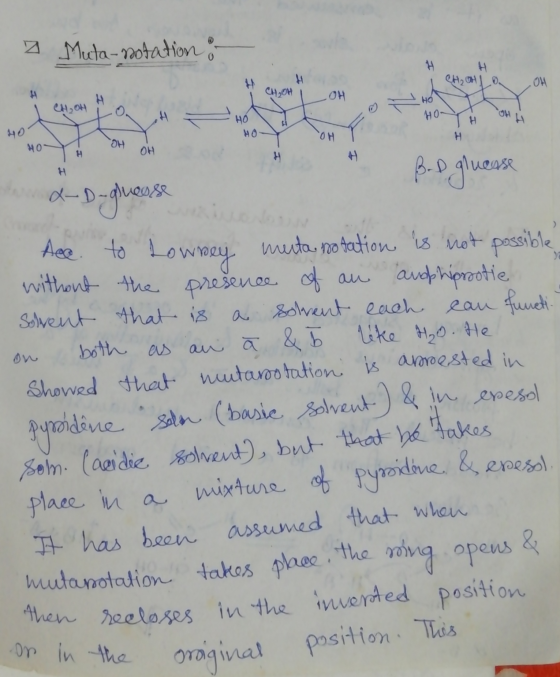
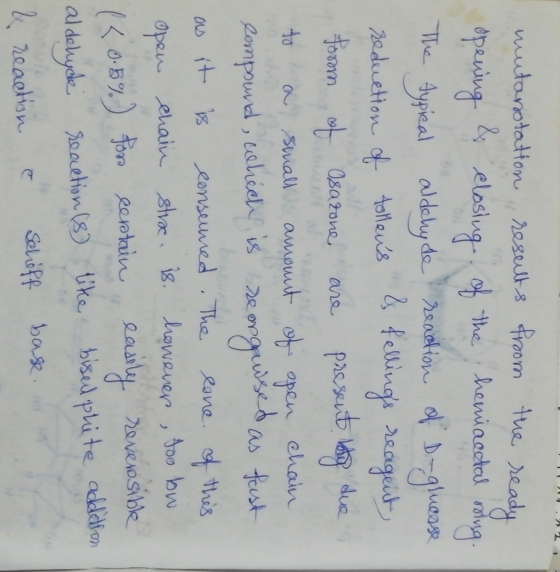
Pa 25. Sugars that cannot undergo mutarotation in neutral aqueous solution are: HOR CH,00 OCH, CH,08...
 Pa 25. Sugars that cannot undergo mutarotation in neutral aqueous solution are: HOR CH,00 OCH, CH,08 H OR . 3 ba OR ao B1 3 OH ao Во 8 H OF I J CH,05 (a,00 9,0 C2,08 9 OH 3 ou н н. Ho ON yo OH 1 0 CH A ou CH 2 34 K L a. Hand J b. J and K c. I, J, and K d. Hand K e HI, and L Which of the structures...
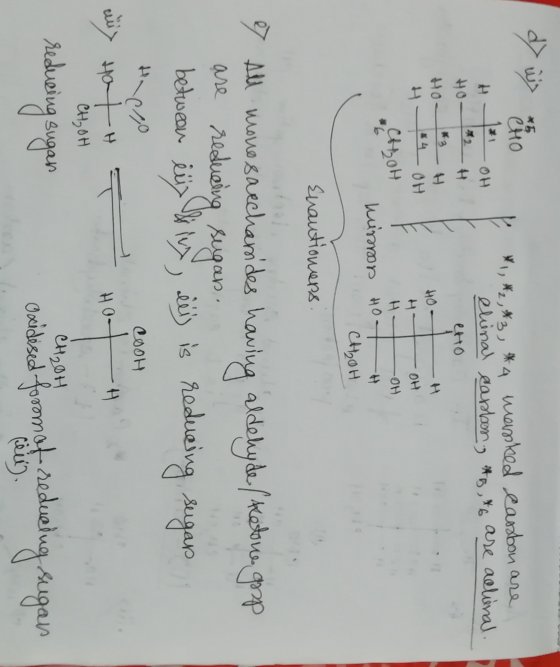
2) Answer the following questions about the structures below (structures are numbered 1,2,a to be able to clearly I...
 2) Answer the following questions about the structures below (structures are numbered 1,2,a to be able to clearly ID them in your answers): CHO ÇHO CH-OH H-C-OH H-C-OH Ç= 0 HO-C-H . HO-C-H HO-C-H HO-C-H H—C—OH H-C-OH HO-C-H H-C-OH H-C-OH 1) CH2OH 2 CH OH CH OH A) ID each as an Lor D sugar B) List any pairs which are stereoisomers C) List and pairs which are enantiomers D) Choose one (indicate number of compound) and numbering from the...
3. Given the chemical information below, determine the structure of the saccharide i. It is a non-reducing sugar, a...
 3. Given the chemical information below, determine the structure of the saccharide i. It is a non-reducing sugar, and does not undergo mutarotation. ii. Upon acidic hydrolysis, one mole each of (D)-mannose, (L)-galactose, (D)-xylose, and (D) threitol (the alditol formed from threose) are produced. iii. Upon exhaustive methylation with dimethylsulfate and hydroxide, followed by acidic hydrolysis, 2,4-di-O-methyl-(D)-mannose, 2,3,4,6-tetra-O-methyl-(L)-galactose, 2,3,4-tri-o methyl-(D)-xylose, and 1,2,3-tri-O-methyl-(D)-threitol are formed iv. When all o-glycosidic linkages are enzymatically hydrolyzed, (L)-galactose, (D)-threitol, and a reducing disaccharide are formed...
please answer i,ii,iii,iv,v Predict the major product(s) of the following reaction, giving regiochemical and/or stereochemical details...
 please
answer i,ii,iii,iv,v
Predict the major product(s) of the following reaction, giving regiochemical and/or stereochemical details as relevant. (6 MARKS) q Bry, H0 ? ANSWER: (ii) Predict the product(s) of the oxidation of 2,3,4-trimethyl-1,5-heptadiene with hot, alkaline KMnO4 followed by acidic work up. (6 MARKS) (iii) Complete the following reaction sequence, giving structures for compounds C and D (Na2CO3 just acts as a base!): CH,SOCI CH,OH Na2CO3 D DMF (6 MARKS) D (iv) Supply the missing structures A and B....
please
answer i,ii,iii,iv,v
Predict the major product(s) of the following reaction, giving regiochemical and/or stereochemical details as relevant. (6 MARKS) q Bry, H0 ? ANSWER: (ii) Predict the product(s) of the oxidation of 2,3,4-trimethyl-1,5-heptadiene with hot, alkaline KMnO4 followed by acidic work up. (6 MARKS) (iii) Complete the following reaction sequence, giving structures for compounds C and D (Na2CO3 just acts as a base!): CH,SOCI CH,OH Na2CO3 D DMF (6 MARKS) D (iv) Supply the missing structures A and B....
+ion OAL, 5) Which of the following structures contains an alkene? A)1 B) II C) III...
 +ion OAL, 5) Which of the following structures contains an alkene? A)1 B) II C) III D) IV 6) Which of the following is a secondary alcohol? OH HO B) II AT D) IV C) III 7) Rank the following compounds in order of increasing strength of intermolecular forces, putting the molecule with the weakest intermolecular force first OH A) I II B) I<IIIIIC III ) II<I<III ) IIIII< I D 8) Which of the following compounds has the highest...
2. Enzymes are important biological molecules and they act as catalysts for specific chemical reactions. Their...
 2. Enzymes are important biological molecules and they act as catalysts for specific chemical reactions. Their biological function is determined by their 3 dimensional shape and the functional groups present in the active site. (a) What are the main mechanisms by which an enzyme increase the rate of a reaction? (b) What is a cofactor in an enzyme mediated reaction? (c) Give the name of a cofactor (structure if possible) and indicate the type of reaction that it facilitates. 3....
please provide ACCURATE answers pls i'll give u thumbs up!! 3. Below are the structures of...
 please provide ACCURATE answers pls i'll give u thumbs up!!
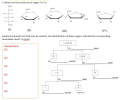
3. Below are the structures of sugars I to IV: CH OH CH OH 0 CH, OH 0 CH OH CH OH OH HO H OH OH OH Н -OH OH SH OH H - ОН ОН OH OH OH OH CH OH (1) (II) (III) (IV) Supply the specific test that may be used for the identification of these sugars. Indicate the corresponding observable result. (1 ptea) I, II,...
please provide ACCURATE answers pls i'll give u thumbs up!!
3. Below are the structures of sugars I to IV: CH OH CH OH 0 CH, OH 0 CH OH CH OH OH HO H OH OH OH Н -OH OH SH OH H - ОН ОН OH OH OH OH CH OH (1) (II) (III) (IV) Supply the specific test that may be used for the identification of these sugars. Indicate the corresponding observable result. (1 ptea) I, II,...
 4) Take a look at these structures of monosaccharides (3 pts) *CHOH CHOH CH,OH OH CH,OH SH HOM HO OH OH H H OH OH H . H OH GLUCOSE HOH GALACTOSE OH FRUCTOSE What is the molecular formula for the the following monosaccharides? a. glucose: C b. fructose: C c. galactose: C 5) A. Show the anomeric carbon. (1 pts) B. Draw B-D-Fructopyranose (2 pts) Fructose Isomers 6) Identify monosaccharide (M), disaccharide (D) or Polysaccharide (P) (3 pts) a....
 Culhydrates 1. Complete th Complete the table by classifying each sugar sugar (A, B, C, D) below based on carbonyl group and number of carbons (c.8. aldohexose, ketotriose, etc.). Classify them as an antiomer. Indicate the number of chiral carbons for each sugar. Sugar Classification based on carbonyl group and number of carbons Lor D enantiomer Number of chiral carbons н-с-он HO-6-H. н-с-он ін,он CH,OH C=0 HO-C-H н-с-он HO-C-H. ён,он снон c=0 | HO-C-H ін,он H-C-OH CH, OH CD 2....
 b) Give the uses of the each of the polysaccharides below: [4 marks] i. Amylose ii. Cellulose iii. Glycogen iv. Peptidoglycan c) In a lab experiment, Ngosa and Melinda synthesized an artificial polysaccharide containing four glucose units, one galactose unit and one fructose unit. Upon acid hydrolysis of the polysaccharide with three water molecules, they obtained two disaccharides and two monosaccharide units. If the monosaccharide units obtained were a glucose unit and galactose unit, what were the two other molecules...
 Pa 25. Sugars that cannot undergo mutarotation in neutral aqueous solution are: HOR CH,00 OCH, CH,08 H OR . 3 ba OR ao B1 3 OH ao Во 8 H OF I J CH,05 (a,00 9,0 C2,08 9 OH 3 ou н н. Ho ON yo OH 1 0 CH A ou CH 2 34 K L a. Hand J b. J and K c. I, J, and K d. Hand K e HI, and L Which of the structures...
 2) Answer the following questions about the structures below (structures are numbered 1,2,a to be able to clearly ID them in your answers): CHO ÇHO CH-OH H-C-OH H-C-OH Ç= 0 HO-C-H . HO-C-H HO-C-H HO-C-H H—C—OH H-C-OH HO-C-H H-C-OH H-C-OH 1) CH2OH 2 CH OH CH OH A) ID each as an Lor D sugar B) List any pairs which are stereoisomers C) List and pairs which are enantiomers D) Choose one (indicate number of compound) and numbering from the...
 3. Given the chemical information below, determine the structure of the saccharide i. It is a non-reducing sugar, and does not undergo mutarotation. ii. Upon acidic hydrolysis, one mole each of (D)-mannose, (L)-galactose, (D)-xylose, and (D) threitol (the alditol formed from threose) are produced. iii. Upon exhaustive methylation with dimethylsulfate and hydroxide, followed by acidic hydrolysis, 2,4-di-O-methyl-(D)-mannose, 2,3,4,6-tetra-O-methyl-(L)-galactose, 2,3,4-tri-o methyl-(D)-xylose, and 1,2,3-tri-O-methyl-(D)-threitol are formed iv. When all o-glycosidic linkages are enzymatically hydrolyzed, (L)-galactose, (D)-threitol, and a reducing disaccharide are formed...
 please
answer i,ii,iii,iv,v
Predict the major product(s) of the following reaction, giving regiochemical and/or stereochemical details as relevant. (6 MARKS) q Bry, H0 ? ANSWER: (ii) Predict the product(s) of the oxidation of 2,3,4-trimethyl-1,5-heptadiene with hot, alkaline KMnO4 followed by acidic work up. (6 MARKS) (iii) Complete the following reaction sequence, giving structures for compounds C and D (Na2CO3 just acts as a base!): CH,SOCI CH,OH Na2CO3 D DMF (6 MARKS) D (iv) Supply the missing structures A and B....
please
answer i,ii,iii,iv,v
Predict the major product(s) of the following reaction, giving regiochemical and/or stereochemical details as relevant. (6 MARKS) q Bry, H0 ? ANSWER: (ii) Predict the product(s) of the oxidation of 2,3,4-trimethyl-1,5-heptadiene with hot, alkaline KMnO4 followed by acidic work up. (6 MARKS) (iii) Complete the following reaction sequence, giving structures for compounds C and D (Na2CO3 just acts as a base!): CH,SOCI CH,OH Na2CO3 D DMF (6 MARKS) D (iv) Supply the missing structures A and B....
 +ion OAL, 5) Which of the following structures contains an alkene? A)1 B) II C) III D) IV 6) Which of the following is a secondary alcohol? OH HO B) II AT D) IV C) III 7) Rank the following compounds in order of increasing strength of intermolecular forces, putting the molecule with the weakest intermolecular force first OH A) I II B) I<IIIIIC III ) II<I<III ) IIIII< I D 8) Which of the following compounds has the highest...
 2. Enzymes are important biological molecules and they act as catalysts for specific chemical reactions. Their biological function is determined by their 3 dimensional shape and the functional groups present in the active site. (a) What are the main mechanisms by which an enzyme increase the rate of a reaction? (b) What is a cofactor in an enzyme mediated reaction? (c) Give the name of a cofactor (structure if possible) and indicate the type of reaction that it facilitates. 3....
 please provide ACCURATE answers pls i'll give u thumbs up!!
3. Below are the structures of sugars I to IV: CH OH CH OH 0 CH, OH 0 CH OH CH OH OH HO H OH OH OH Н -OH OH SH OH H - ОН ОН OH OH OH OH CH OH (1) (II) (III) (IV) Supply the specific test that may be used for the identification of these sugars. Indicate the corresponding observable result. (1 ptea) I, II,...
please provide ACCURATE answers pls i'll give u thumbs up!!
3. Below are the structures of sugars I to IV: CH OH CH OH 0 CH, OH 0 CH OH CH OH OH HO H OH OH OH Н -OH OH SH OH H - ОН ОН OH OH OH OH CH OH (1) (II) (III) (IV) Supply the specific test that may be used for the identification of these sugars. Indicate the corresponding observable result. (1 ptea) I, II,...
Most questions answered within 3 hours.
-
Where is the error in this code sequence?
String s1 = "Hello";
String s2 = "ello";...
asked 10 months ago -
Financial data for Joel de Paris, Inc., for last year
follow:
Joel de Paris, Inc.
Balance...
asked 10 months ago -
Consider this reaction:
Al2(SO4)3 (aq)+ BaCl3
(aq) Al2Cl6 (aq)- +
3BaSO4(s) . What is the...
asked 10 months ago -
Suppose that Savneet is considering increasing her
recent random sample from 20 car rentals to 40...
asked 10 months ago -
Trucks arrive at an unloading terminal at an average rate of 120
per hour.
Trucks arrive...
asked 10 months ago -
Why are methanol and ethanol completely soluble in water while
octanol is not very little soluble....
asked 10 months ago -
A facilities manager at a university reads in a research report
that the mean amount of...
asked 10 months ago -
When the CuSO4 is rehydrated by adding water to the anhydrous
compound, is this an endothermic...
asked 10 months ago -
A ray of sunlight is passing from diamond into crown glass; the
angle of incidence is...
asked 10 months ago -
A block of mass 0.249 kg is placed on top of a light, vertical
spring of...
asked 10 months ago -
how do the kidneys compensate in the presences of acidosis
a) trigger hyperventilate
b) reserve acid...
asked 10 months ago -
Question 501 pts
The rental rate of capital to the firm increases. Which of the
following...
asked 10 months ago