


Homework Answers
1. All rays that are parallel to the principle axis in a concave mirror reflects
a. Towards the focal point
EXPLANATION:
The basic laws of reflection are the same for both the plane
surface and the curved surface. On curved surface, we first draw a
tangent at a point and then draw a perpendicular to that tangent at
that point. Then we can define the angle of incidence and angle of
reflection from this normal. The normal always a line that join
center of curvature and the point of incidence of the ray. The
angle of incidence and the angle of reflection are equal to each
other. The incident ray, the normal, and the reflected ray are in
the same plane.
For any spherical mirror, we can see that the focal point situated
in between the pole and center of curvature of the spherical
mirror. So when several parallel rays ( parallel to the principal
axis) incident on the concave mirror, they must obey the law of
reflection, and all reflected rays converge or meet to a particular
point, which is known as a focal point. It is experimentally
proved. That is why reflected rays from the concave mirror
converges to its focal point.
2. The statements that are true about the virtual image are
a. A concave lens always form a virtual image.
EXPLANATION: Because the all rays diverge from the concave lens, they never converge. Therefore it seems that the emerge rays appear to converge. So a concave lens always form a virtual image.
c. A plane mirror always form a virtual image.
EXPLANATION: Because the reflected ray from the plane mirror always diverge, and they can not converge anyway. so it seems that the reflected rays appear to come from a point behind the mirror. That is why A plane mirror always form a virtual image.
e. It can not be viewed on a screen.
EXPLANATION: Because virual image form virtually, i.e, virtual image seems to appear from a point not originated in real. That is why we can not viewed the virtual image on a screen.
Option (b) and (d) can not be true. Option (b) can not be true because virtual images can be photographed. Because camera is made of lens through which we can capture both the real and virtual images of the object. Option (d) can not be true because eye act as a lens. so we can see the virtual image directly.
3. The focal length is equal to the
c. Half the radius of the curvature.
EXPLANATION: The formula of lens is
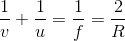
Where v= image distance
u= object distance
f= focal length
R= radius of curvature.
so, f= R/2
4. Virtual image is
d. From which light rays diverge but do not pass through.
EXPLANATION: From the definition of virtual image the light ray appear to diverge from a point but in real they are not pass through it.
5. The distace from the center of the mirror, c to the pole of the mirror is given as
b. 2f
EXPLANATION: We know, 1/f= 2/R
Therfore R =2f. R= distance betwwen c and pole of the mirror.
6. An image that is formed at the back of the mirrror is said to be
a. Virtual image.
EXPLANATION: Virtual image always form at the back of the mirror and the real image always form infront of the mirror.
Add Answer to:
All rays that are parallel to the principle axis in a concave mirror reflects Select one:...
1. A ray of light parallel to the optic axis of a concave mirror is reflected...
 1. A ray of light parallel to the optic axis of a concave mirror is reflected back a) through the center of the sphere b) through the focal point c) parallel to the optic axis. d) as if it came from the focal point. 2. What type of image is formed when an object is placed at a distance of 1.5 focal lengths from a convex mirror? a) upright and virtual c) upright and real b) inverted and virtual d)...
#10 please 9). Which one of the following phrases most accurately describes paravial rays? A) rays...
 #10 please
9). Which one of the following phrases most accurately describes paravial rays? A) rays that pass through the principal focus B) any rays that are parallel to the principal axis C) rays that come to a focus on the principal axis D) rays close to the principal axis and parallel to it E) rays close to the principal axis, but not necessarily parallel to it 10). Which one of the following statements concerning the image formed by a...
#10 please
9). Which one of the following phrases most accurately describes paravial rays? A) rays that pass through the principal focus B) any rays that are parallel to the principal axis C) rays that come to a focus on the principal axis D) rays close to the principal axis and parallel to it E) rays close to the principal axis, but not necessarily parallel to it 10). Which one of the following statements concerning the image formed by a...
13. The interference of waves refers to the A) slowing down of one wave in the...
 13. The interference of waves refers to the A) slowing down of one wave in the presence of another e of two or more waves at every point in tho change in wavelength that oecurs when two waves cross one another D) phase change of I 80" that occurs on reflection of a wave at a fixed end E) ability of waves to go around comers 14. A phase shift of 180' occurs when a light wave A is transmitted...
1) in order to create a virtual image with a concave mirror, where must an object...
1) in order to create a virtual image with a concave mirror, where must an object be placed? a) at the focus b) between the focus and mirror c) beyond the center of curvature d) between the focus and the center of curvature 2) Car headlights use spherical concave mirrors. to produce a parallel beam of reflected light, where must the bulb of a headlight be placed? a) beyond the center of curvature b) at the center of curvature c)...
Physics concept maps concave mirror: make a concept map linking the following phrases:
 physics concept maps concave mirror: make a concept map linking
the following phrases:
spherical concave mirror image reduced the point of intersection of the extended reflected rays distance between image and mirror in size real image radius of curvature of the mirror m-h_i/h_o virtual image image f-r/2 magnified height of object the point of intersection of the reflected rays focal length of the mirror in front of the mirror (reflecting side) behind the mirror (non-reflecting side) image distance between d...
physics concept maps concave mirror: make a concept map linking
the following phrases:
spherical concave mirror image reduced the point of intersection of the extended reflected rays distance between image and mirror in size real image radius of curvature of the mirror m-h_i/h_o virtual image image f-r/2 magnified height of object the point of intersection of the reflected rays focal length of the mirror in front of the mirror (reflecting side) behind the mirror (non-reflecting side) image distance between d...
A biconvex lens sits between an object and a concave spherical mirror. The lens has a...
A biconvex lens sits between an object and a concave spherical mirror. The lens has a focal length f and the mirror has a radius of curvature of R. The object is a distance 2f from the lens and the distance from the lens to the mirror is 2f + R. The object is illuminated and light scattered from the object shines through the lens to the mirror, reflects, travels back through the lens, and forms a final image. (a)...
White light is sent through a prism, and the various colors are typically separated. Which of...
 White light is sent through a prism, and the various colors are typically separated. Which of the following colors would have the highest refractive index on this prism? Select one: to. Red b. green c. yellow d. blue Incident white light Red (760 nm) Violet (380 nn In Young's double-slit experiment, how many maxima occur between the sixth-order maxima? Select one: to. 10 b. eleven c. 12 d. 36 - YT M TV X o At what angle will the...
need help. please answer #8-11 8. As an object moves away from a plane mirror on...
 need help. please answer #8-11
8. As an object moves away from a plane mirror on a wall and you observe the object and the image from the position of the mirror, the image of the object A. gets smaller B. may or may not get smaller, depending on where the observer is positioned. C. Is always a real image, no matter how far you are from the mirror. D. Changes from being a virtual to a real image as...
need help. please answer #8-11
8. As an object moves away from a plane mirror on a wall and you observe the object and the image from the position of the mirror, the image of the object A. gets smaller B. may or may not get smaller, depending on where the observer is positioned. C. Is always a real image, no matter how far you are from the mirror. D. Changes from being a virtual to a real image as...
The object in the figure beside is mid-way between the lens and the mirror, which are...
 The object in the figure beside is mid-way between the lens and the mirror, which are separated by a distance d-25.0 cm. The magnitude of the mirror's radius of curvature is 20.0 cm, and the lens has a focal length of-16.7 cm. Lens Object Mirronr (A) We first study the image formed by the lens only (As the spherical (a) Describe the image formed by the lens (location, magnification, real or virtual and (b) Construct a ray diagram of this...
An object O is placed at the location shown in front of a convex spherical mirror....
 An object O is placed at the location shown in front of
a convex spherical mirror. Use ray tracing to determine the
location and size of the image in the mirror. As you work, keep in
mind the following properties of principal rays:
A ray parallel to the axis, after reflection, passes through the
focal point F of a concave mirror or appears to come from
the (virtual) focal point of a convex mirror.
A ray through (or proceeding toward)...
An object O is placed at the location shown in front of
a convex spherical mirror. Use ray tracing to determine the
location and size of the image in the mirror. As you work, keep in
mind the following properties of principal rays:
A ray parallel to the axis, after reflection, passes through the
focal point F of a concave mirror or appears to come from
the (virtual) focal point of a convex mirror.
A ray through (or proceeding toward)...
 1. A ray of light parallel to the optic axis of a concave mirror is reflected back a) through the center of the sphere b) through the focal point c) parallel to the optic axis. d) as if it came from the focal point. 2. What type of image is formed when an object is placed at a distance of 1.5 focal lengths from a convex mirror? a) upright and virtual c) upright and real b) inverted and virtual d)...
 #10 please
9). Which one of the following phrases most accurately describes paravial rays? A) rays that pass through the principal focus B) any rays that are parallel to the principal axis C) rays that come to a focus on the principal axis D) rays close to the principal axis and parallel to it E) rays close to the principal axis, but not necessarily parallel to it 10). Which one of the following statements concerning the image formed by a...
#10 please
9). Which one of the following phrases most accurately describes paravial rays? A) rays that pass through the principal focus B) any rays that are parallel to the principal axis C) rays that come to a focus on the principal axis D) rays close to the principal axis and parallel to it E) rays close to the principal axis, but not necessarily parallel to it 10). Which one of the following statements concerning the image formed by a...
 13. The interference of waves refers to the A) slowing down of one wave in the presence of another e of two or more waves at every point in tho change in wavelength that oecurs when two waves cross one another D) phase change of I 80" that occurs on reflection of a wave at a fixed end E) ability of waves to go around comers 14. A phase shift of 180' occurs when a light wave A is transmitted...
 physics concept maps concave mirror: make a concept map linking
the following phrases:
spherical concave mirror image reduced the point of intersection of the extended reflected rays distance between image and mirror in size real image radius of curvature of the mirror m-h_i/h_o virtual image image f-r/2 magnified height of object the point of intersection of the reflected rays focal length of the mirror in front of the mirror (reflecting side) behind the mirror (non-reflecting side) image distance between d...
physics concept maps concave mirror: make a concept map linking
the following phrases:
spherical concave mirror image reduced the point of intersection of the extended reflected rays distance between image and mirror in size real image radius of curvature of the mirror m-h_i/h_o virtual image image f-r/2 magnified height of object the point of intersection of the reflected rays focal length of the mirror in front of the mirror (reflecting side) behind the mirror (non-reflecting side) image distance between d...
 White light is sent through a prism, and the various colors are typically separated. Which of the following colors would have the highest refractive index on this prism? Select one: to. Red b. green c. yellow d. blue Incident white light Red (760 nm) Violet (380 nn In Young's double-slit experiment, how many maxima occur between the sixth-order maxima? Select one: to. 10 b. eleven c. 12 d. 36 - YT M TV X o At what angle will the...
 need help. please answer #8-11
8. As an object moves away from a plane mirror on a wall and you observe the object and the image from the position of the mirror, the image of the object A. gets smaller B. may or may not get smaller, depending on where the observer is positioned. C. Is always a real image, no matter how far you are from the mirror. D. Changes from being a virtual to a real image as...
need help. please answer #8-11
8. As an object moves away from a plane mirror on a wall and you observe the object and the image from the position of the mirror, the image of the object A. gets smaller B. may or may not get smaller, depending on where the observer is positioned. C. Is always a real image, no matter how far you are from the mirror. D. Changes from being a virtual to a real image as...
 The object in the figure beside is mid-way between the lens and the mirror, which are separated by a distance d-25.0 cm. The magnitude of the mirror's radius of curvature is 20.0 cm, and the lens has a focal length of-16.7 cm. Lens Object Mirronr (A) We first study the image formed by the lens only (As the spherical (a) Describe the image formed by the lens (location, magnification, real or virtual and (b) Construct a ray diagram of this...
 An object O is placed at the location shown in front of
a convex spherical mirror. Use ray tracing to determine the
location and size of the image in the mirror. As you work, keep in
mind the following properties of principal rays:
A ray parallel to the axis, after reflection, passes through the
focal point F of a concave mirror or appears to come from
the (virtual) focal point of a convex mirror.
A ray through (or proceeding toward)...
An object O is placed at the location shown in front of
a convex spherical mirror. Use ray tracing to determine the
location and size of the image in the mirror. As you work, keep in
mind the following properties of principal rays:
A ray parallel to the axis, after reflection, passes through the
focal point F of a concave mirror or appears to come from
the (virtual) focal point of a convex mirror.
A ray through (or proceeding toward)...
Most questions answered within 3 hours.
-
Where is the error in this code sequence?
String s1 = "Hello";
String s2 = "ello";...
asked 10 months ago -
Financial data for Joel de Paris, Inc., for last year
follow:
Joel de Paris, Inc.
Balance...
asked 10 months ago -
Consider this reaction:
Al2(SO4)3 (aq)+ BaCl3
(aq) Al2Cl6 (aq)- +
3BaSO4(s) . What is the...
asked 10 months ago -
Suppose that Savneet is considering increasing her
recent random sample from 20 car rentals to 40...
asked 10 months ago -
Trucks arrive at an unloading terminal at an average rate of 120
per hour.
Trucks arrive...
asked 10 months ago -
Why are methanol and ethanol completely soluble in water while
octanol is not very little soluble....
asked 10 months ago -
A facilities manager at a university reads in a research report
that the mean amount of...
asked 10 months ago -
When the CuSO4 is rehydrated by adding water to the anhydrous
compound, is this an endothermic...
asked 10 months ago -
A ray of sunlight is passing from diamond into crown glass; the
angle of incidence is...
asked 10 months ago -
A block of mass 0.249 kg is placed on top of a light, vertical
spring of...
asked 10 months ago -
how do the kidneys compensate in the presences of acidosis
a) trigger hyperventilate
b) reserve acid...
asked 10 months ago -
Question 501 pts
The rental rate of capital to the firm increases. Which of the
following...
asked 10 months ago