


Homework Answers
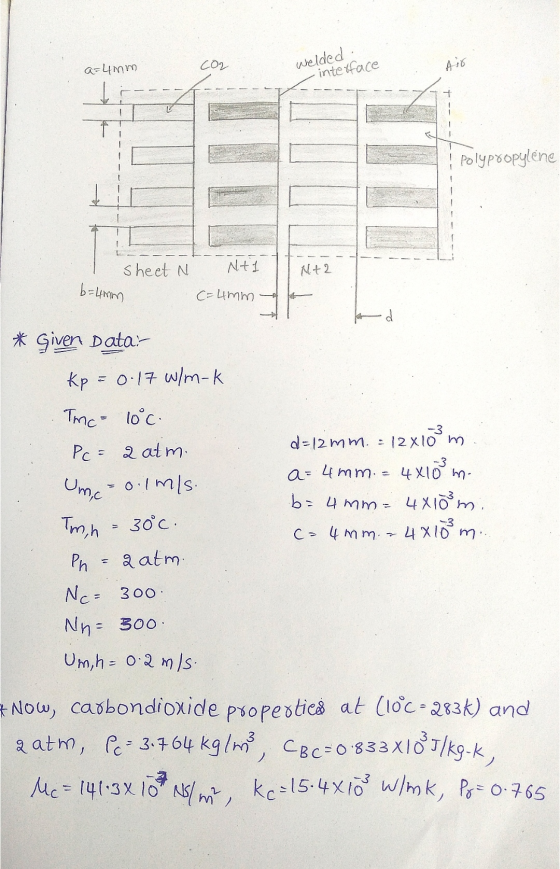
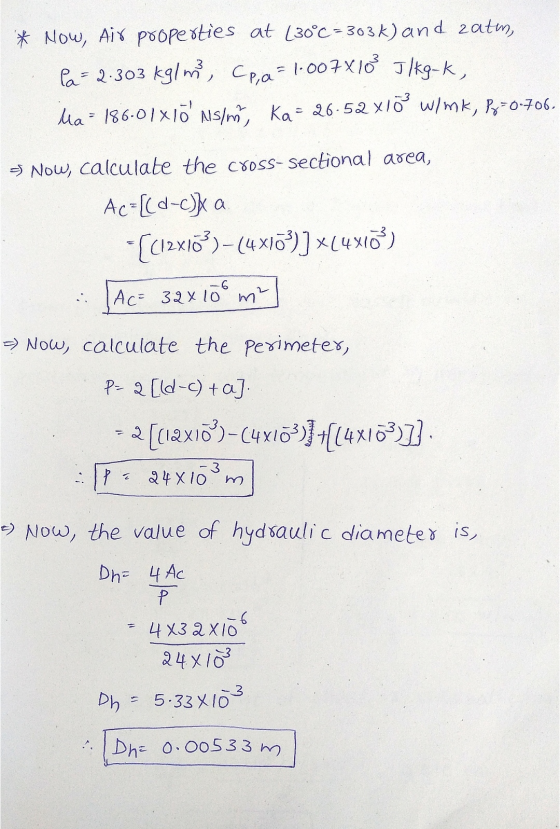
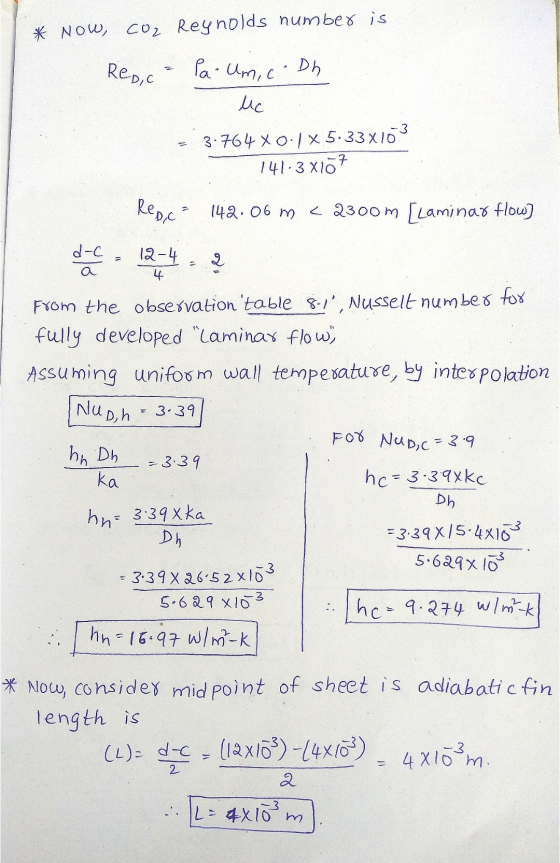
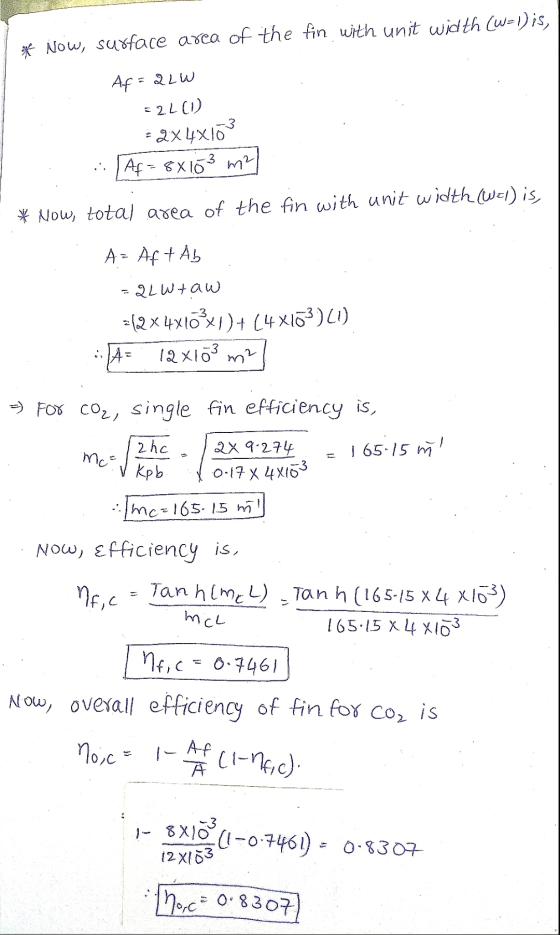
 Dear student, feel free to ask
your doubts in the comment section. Please rate my work by dropping
a "LIKE". Please do not thumbs down, it effects us
badly.
Dear student, feel free to ask
your doubts in the comment section. Please rate my work by dropping
a "LIKE". Please do not thumbs down, it effects us
badly.
Add Answer to:
= View Policies Show Attempt History A novel heat exchanger concept consists of a large number...
Hot air enters a heat exchanger at 350°C and exits at (149°C. The heat extracted is...
 Hot air enters a heat exchanger at 350°C and exits at (149°C. The heat extracted is used to boil (0.263) kg/s of 100°C water (from saturated liquid to saturated steam). The heat exchanger is a single-shell shell-and-tube heat exchanger with two tube passes. The overall heat transfer coefficient for the hot side is 240 W/(m2°C). Assume a constant specific heat for air of Cp = 1.005 kJ/(kgC). The pressure of the hot air and the boiling water is P =...
2) Hot air enters a heat exchanger at 350°C and exits at 153°C. The heat extracted...
 2) Hot air enters a heat exchanger at 350°C and exits at 153°C. The heat extracted is used to boil 0.277 kg/s of 100°C water (from saturated liquid to saturated steam). The heat exchanger is a single-shell shell-and-tube heat exchanger with two tube passes. The overall heat transfer coefficient for the hot side is 240 W/(m2). Assume a constant specific heat for air of cp = 1.005 kJ/(kg°C). The pressure of the hot air and the boiling water is P...
2) Hot air enters a heat exchanger at 350°C and exits at 155°C. The heat extracted...
 2) Hot air enters a heat exchanger at 350°C and exits at 155°C. The heat extracted is used to boil 0.283 kg/s of 100°C water (from saturated liquid to saturated steam). The heat exchanger is a single-shell shell-and-tube heat exchanger with two tube passes. The overall heat transfer coefficient for the hot side is 240 W/(m²°C). Assume a constant specific heat for air of Cp = 1.005 kJ/(kg °C). The pressure of the hot air and the boiling water is...
The wall of a liquid-to-gas heat exchanger has a surface area on the liquid side of...
 The wall of a liquid-to-gas heat exchanger has a surface area on the liquid side of 1.8 m2 (0.6 m * 3.0 m) with a heat transfer coefficient of 255 W/m2K. On the other side of the heat exchanger wall a gas flows, and the wall has 96 thin rectangular steel fins 0.5 cm thick and 1.25 cm high (k = 3 W/m K) as shown in the figure below. The fins are 3 m long and the heat transfer...
The wall of a liquid-to-gas heat exchanger has a surface area on the liquid side of...
 The wall of a liquid-to-gas heat exchanger has a surface area on the liquid side of 1.8 m2 (0.6 m 3.0 m) with a heat transfer coefficient of 255 W/m2K. On the other side of the heat exchanger wall a gas flows, and the wall has 96 thin rectangular steel fins 0.5 cm thick and 1.25 cm high (k = 3 W/m K) as shown in the figure below. The fins are 3 m long and the heat transfer coefficient...
Question 11 (15 points) The wall of a liquid-to-gas heat exchanger has a surface area on...
 Question 11 (15 points) The wall of a liquid-to-gas heat exchanger has a surface area on the liquid side of 1.8 m2 (0.6 m * 3.0 m) with a heat transfer coefficient of 255 W/m2 K. On the other side of the heat exchanger wall a gas flows, and the wall has 96 thin rectangular steel fins 0.5 cm thick and 1.25 cm high (k = 3 W/m K) as shown in the figure below. The fins are 3 m...
4. A Cross-Flow Air-to-Water Heat Exchanger with an effectiveness of 0.58 is used to heat water, ...
 4. A Cross-Flow Air-to-Water Heat Exchanger with an effectiveness of 0.58 is used to heat water, entering at 20°C at a rate of 4 kg/s, using hot air, entering at 127oC at a rate of 10 kg/s. The Overall Heat Transfer Coefficient for the Heat exchanger is 275 W/m'K. Assuming both fluids are unmixed, determine; (i) The Heat Capacity rates for both the air and the water (ii) The heat transfer surface area. ii) The exit temperature of the water...
Problem 4: Heat Exchangers Analysis (25 points) A counterflow plate-type heat exchanger as shown in the...
 Problem 4: Heat Exchangers Analysis (25 points) A counterflow plate-type heat exchanger as shown in the figure below is used to cool propane fuel W 50 mm H 25 mm Saturated Vapor propane Thickness t =5 mm H 25 mm Cooling water Length L The flow rate of the cooling water is 0.2 kg/s, while the flow of the propane is 0.1 kg/s. The water enters the heat exchanger at a temperature of 20°C while the propane enters at its...
A counter-flow heat exchanger is stated to have an overall heat transfer coefficient of 284 W/m2.K...
 A counter-flow heat exchanger is stated to have an overall heat transfer coefficient of 284 W/m2.K when operating at design and clean conditions. Hot fluid enters the tube side at 101°C and exits at 71°C, while cold fluid enters the shell side at 27°C and exits at 42°C. After a period of use, built-up scale in the heat exchanger gives a fouling factor of 0.0004 m2 K/W. The surface area is 93 m². Assume both hot and cold fluids have...
please show work 5/10 5 View Policies Show Attempt History An experiment is designed to study...
 please show work
5/10 5 View Policies Show Attempt History An experiment is designed to study microscale forced convection. Water at Tm. i - 300 K is to be heated in a straight, circular glass tube with a 60-um inner diameter and a wall thickness of 3 mm. Warm water at Too - 350 K, V - 2 m/s is in cross flow over the exterior tube surface. The experiment is to be designed to cover the operating range 15...
please show work
5/10 5 View Policies Show Attempt History An experiment is designed to study microscale forced convection. Water at Tm. i - 300 K is to be heated in a straight, circular glass tube with a 60-um inner diameter and a wall thickness of 3 mm. Warm water at Too - 350 K, V - 2 m/s is in cross flow over the exterior tube surface. The experiment is to be designed to cover the operating range 15...
 Hot air enters a heat exchanger at 350°C and exits at (149°C. The heat extracted is used to boil (0.263) kg/s of 100°C water (from saturated liquid to saturated steam). The heat exchanger is a single-shell shell-and-tube heat exchanger with two tube passes. The overall heat transfer coefficient for the hot side is 240 W/(m2°C). Assume a constant specific heat for air of Cp = 1.005 kJ/(kgC). The pressure of the hot air and the boiling water is P =...
 2) Hot air enters a heat exchanger at 350°C and exits at 153°C. The heat extracted is used to boil 0.277 kg/s of 100°C water (from saturated liquid to saturated steam). The heat exchanger is a single-shell shell-and-tube heat exchanger with two tube passes. The overall heat transfer coefficient for the hot side is 240 W/(m2). Assume a constant specific heat for air of cp = 1.005 kJ/(kg°C). The pressure of the hot air and the boiling water is P...
 2) Hot air enters a heat exchanger at 350°C and exits at 155°C. The heat extracted is used to boil 0.283 kg/s of 100°C water (from saturated liquid to saturated steam). The heat exchanger is a single-shell shell-and-tube heat exchanger with two tube passes. The overall heat transfer coefficient for the hot side is 240 W/(m²°C). Assume a constant specific heat for air of Cp = 1.005 kJ/(kg °C). The pressure of the hot air and the boiling water is...
 The wall of a liquid-to-gas heat exchanger has a surface area on the liquid side of 1.8 m2 (0.6 m * 3.0 m) with a heat transfer coefficient of 255 W/m2K. On the other side of the heat exchanger wall a gas flows, and the wall has 96 thin rectangular steel fins 0.5 cm thick and 1.25 cm high (k = 3 W/m K) as shown in the figure below. The fins are 3 m long and the heat transfer...
 The wall of a liquid-to-gas heat exchanger has a surface area on the liquid side of 1.8 m2 (0.6 m 3.0 m) with a heat transfer coefficient of 255 W/m2K. On the other side of the heat exchanger wall a gas flows, and the wall has 96 thin rectangular steel fins 0.5 cm thick and 1.25 cm high (k = 3 W/m K) as shown in the figure below. The fins are 3 m long and the heat transfer coefficient...
 Question 11 (15 points) The wall of a liquid-to-gas heat exchanger has a surface area on the liquid side of 1.8 m2 (0.6 m * 3.0 m) with a heat transfer coefficient of 255 W/m2 K. On the other side of the heat exchanger wall a gas flows, and the wall has 96 thin rectangular steel fins 0.5 cm thick and 1.25 cm high (k = 3 W/m K) as shown in the figure below. The fins are 3 m...
 4. A Cross-Flow Air-to-Water Heat Exchanger with an effectiveness of 0.58 is used to heat water, entering at 20°C at a rate of 4 kg/s, using hot air, entering at 127oC at a rate of 10 kg/s. The Overall Heat Transfer Coefficient for the Heat exchanger is 275 W/m'K. Assuming both fluids are unmixed, determine; (i) The Heat Capacity rates for both the air and the water (ii) The heat transfer surface area. ii) The exit temperature of the water...
 Problem 4: Heat Exchangers Analysis (25 points) A counterflow plate-type heat exchanger as shown in the figure below is used to cool propane fuel W 50 mm H 25 mm Saturated Vapor propane Thickness t =5 mm H 25 mm Cooling water Length L The flow rate of the cooling water is 0.2 kg/s, while the flow of the propane is 0.1 kg/s. The water enters the heat exchanger at a temperature of 20°C while the propane enters at its...
 A counter-flow heat exchanger is stated to have an overall heat transfer coefficient of 284 W/m2.K when operating at design and clean conditions. Hot fluid enters the tube side at 101°C and exits at 71°C, while cold fluid enters the shell side at 27°C and exits at 42°C. After a period of use, built-up scale in the heat exchanger gives a fouling factor of 0.0004 m2 K/W. The surface area is 93 m². Assume both hot and cold fluids have...
 please show work
5/10 5 View Policies Show Attempt History An experiment is designed to study microscale forced convection. Water at Tm. i - 300 K is to be heated in a straight, circular glass tube with a 60-um inner diameter and a wall thickness of 3 mm. Warm water at Too - 350 K, V - 2 m/s is in cross flow over the exterior tube surface. The experiment is to be designed to cover the operating range 15...
please show work
5/10 5 View Policies Show Attempt History An experiment is designed to study microscale forced convection. Water at Tm. i - 300 K is to be heated in a straight, circular glass tube with a 60-um inner diameter and a wall thickness of 3 mm. Warm water at Too - 350 K, V - 2 m/s is in cross flow over the exterior tube surface. The experiment is to be designed to cover the operating range 15...
Most questions answered within 3 hours.
-
Where is the error in this code sequence?
String s1 = "Hello";
String s2 = "ello";...
asked 11 months ago -
Financial data for Joel de Paris, Inc., for last year
follow:
Joel de Paris, Inc.
Balance...
asked 11 months ago -
Consider this reaction:
Al2(SO4)3 (aq)+ BaCl3
(aq) Al2Cl6 (aq)- +
3BaSO4(s) . What is the...
asked 11 months ago -
Suppose that Savneet is considering increasing her
recent random sample from 20 car rentals to 40...
asked 11 months ago -
Trucks arrive at an unloading terminal at an average rate of 120
per hour.
Trucks arrive...
asked 11 months ago -
Why are methanol and ethanol completely soluble in water while
octanol is not very little soluble....
asked 11 months ago -
A facilities manager at a university reads in a research report
that the mean amount of...
asked 11 months ago -
When the CuSO4 is rehydrated by adding water to the anhydrous
compound, is this an endothermic...
asked 11 months ago -
A ray of sunlight is passing from diamond into crown glass; the
angle of incidence is...
asked 11 months ago -
A block of mass 0.249 kg is placed on top of a light, vertical
spring of...
asked 11 months ago -
how do the kidneys compensate in the presences of acidosis
a) trigger hyperventilate
b) reserve acid...
asked 11 months ago -
Question 501 pts
The rental rate of capital to the firm increases. Which of the
following...
asked 11 months ago