
Homework Answers
Add Answer to:
20 -{24R/1<x<1+ }}-(1,1+ 4) for each positive integer S: = ? a. US = ? i=1...
Let n be a positive integer. For each possible pair i, j of integers with 1...
 Let n be a positive integer. For each possible pair i, j of integers with 1 sisi<n, find an n x n matrix A with the property that 1 is an eigenvalue of A with g(1) = i and a(1) = j.
,n2} with ISI = n. 4. Let n be a positive integer with n > 20, and let S {1, 2, -I with a) Show that S possesses two dilferent 3-element subsets, the sums of whose elements are equal. (b) Show tha...
 ,n2} with ISI = n. 4. Let n be a positive integer with n > 20, and let S {1, 2, -I with a) Show that S possesses two dilferent 3-element subsets, the sums of whose elements are equal. (b) Show that S possesses two disjoint subsets, the sums of whose elements are equal
,n2} with ISI = n. 4. Let n be a positive integer with n > 20, and let S {1, 2, -I with a) Show that...
,n2} with ISI = n. 4. Let n be a positive integer with n > 20, and let S {1, 2, -I with a) Show that S possesses two dilferent 3-element subsets, the sums of whose elements are equal. (b) Show that S possesses two disjoint subsets, the sums of whose elements are equal
,n2} with ISI = n. 4. Let n be a positive integer with n > 20, and let S {1, 2, -I with a) Show that...
Let n be a positive integer with n > 20 , and let with 1. Show...
 Let n be a positive integer with n > 20 , and let
with
1. Show that S possess two disjoint subsets, the sum of whose
elements are equal.
S 1,2,., 1n2) We were unable to transcribe this image
Let n be a positive integer with n > 20 , and let
with
1. Show that S possess two disjoint subsets, the sum of whose
elements are equal.
S 1,2,., 1n2) We were unable to transcribe this image
4. Let n be a positive integer with n > 20, and let S (1,2.. n21 with IS- (a) Show that S possesses two different 3-element subsets, the sums of whose elements are equal b) Show that S possesses t...
 4. Let n be a positive integer with n > 20, and let S (1,2.. n21 with IS- (a) Show that S possesses two different 3-element subsets, the sums of whose elements are equal b) Show that S possesses two disjoint subsets, the sums of whose elements are equal.
4. Let n be a positive integer with n > 20, and let S (1,2.. n21 with IS- (a) Show that S possesses two different 3-element subsets, the sums of whose...
4. Let n be a positive integer with n > 20, and let S (1,2.. n21 with IS- (a) Show that S possesses two different 3-element subsets, the sums of whose elements are equal b) Show that S possesses two disjoint subsets, the sums of whose elements are equal.
4. Let n be a positive integer with n > 20, and let S (1,2.. n21 with IS- (a) Show that S possesses two different 3-element subsets, the sums of whose...
Example 2: for (i = 0; i < 100; i = i + 1){ Y[i] =...
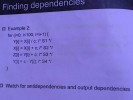 Example 2: for (i = 0; i < 100; i = i + 1){ Y[i] = X[i]/c;/* S1 */X[i] = X[i] + c;/* S2 */Z[i] = Y[i] + c;/* S3 */Y[i] = c - Y[i];/* S4 */} Watch for antidependencies and output dependencies
I got a C++ problem. Let n be a positive integer and let S(n) denote the...
 I got a C++ problem.
Let n be a positive integer and let S(n) denote the number of divisors of n. For example, S(1)- 1, S(4)-3, S(6)-4 A positive integer p is called antiprime if S(n)くS(p) for all positive n 〈P. In other words, an antiprime is a number that has a larger number of divisors than any number smaller than itself. Given a positive integer b, your program should output the largest antiprime that is less than or equal...
I got a C++ problem.
Let n be a positive integer and let S(n) denote the number of divisors of n. For example, S(1)- 1, S(4)-3, S(6)-4 A positive integer p is called antiprime if S(n)くS(p) for all positive n 〈P. In other words, an antiprime is a number that has a larger number of divisors than any number smaller than itself. Given a positive integer b, your program should output the largest antiprime that is less than or equal...
Let S = {x ER:[x]<1}=(-1,1). We will refer to E as hyperbolic relativity space. Now a+b...
 Let S = {x ER:[x]<1}=(-1,1). We will refer to E as hyperbolic relativity space. Now a+b define a binary operation by: if a,beR and ab +-1, then aob= 1+ ab Proposition 1. (5,0) is a group. Remark. This is the kind of problem that every student should become competent at doing. Perhaps some of the details here are more challenging than normally but understanding what are the steps to follow in such a problem is basic, and everyone should understand...
5. (a) Show that 26 = 1 mod 9. (b) Let m be a positive integer,...
 5. (a) Show that 26 = 1 mod 9. (b) Let m be a positive integer, and let m = 6q+r where q and r are integers with 0 <r < 6. Use (a) and rules of exponents to show that 2" = 2 mod 9 (c) Use (b) to find an s in {0,1,...,8} with 21024 = s mod 9.
Let n be a positive integer. For each possible pair i, j of integers with 1<i<i...
 Let n be a positive integer. For each possible pair i, j of integers with 1<i<i <n, find an n xn matrix A with the property that 1 is an eigenvalue of A with g(1) = i and a(1) = j.
Consider the following four problems: Bin Packing: Given n items with positive integer sizes s1,s2,...,sn, a...
Consider the following four problems: Bin Packing: Given n items with positive integer sizes s1,s2,...,sn, a capacity C for bins and a positive integer k, is it possible to pack the n items using at most k bins? Partition: Given a set S of n integers, is it possible to partition S into two subsets S1 and S2 so that the sum of the integers in S1 is equal to the sum of the integers in S2? Longest Path: Given...
 Let n be a positive integer. For each possible pair i, j of integers with 1 sisi<n, find an n x n matrix A with the property that 1 is an eigenvalue of A with g(1) = i and a(1) = j.
 ,n2} with ISI = n. 4. Let n be a positive integer with n > 20, and let S {1, 2, -I with a) Show that S possesses two dilferent 3-element subsets, the sums of whose elements are equal. (b) Show that S possesses two disjoint subsets, the sums of whose elements are equal
,n2} with ISI = n. 4. Let n be a positive integer with n > 20, and let S {1, 2, -I with a) Show that...
,n2} with ISI = n. 4. Let n be a positive integer with n > 20, and let S {1, 2, -I with a) Show that S possesses two dilferent 3-element subsets, the sums of whose elements are equal. (b) Show that S possesses two disjoint subsets, the sums of whose elements are equal
,n2} with ISI = n. 4. Let n be a positive integer with n > 20, and let S {1, 2, -I with a) Show that...
 Let n be a positive integer with n > 20 , and let
with
1. Show that S possess two disjoint subsets, the sum of whose
elements are equal.
S 1,2,., 1n2) We were unable to transcribe this image
Let n be a positive integer with n > 20 , and let
with
1. Show that S possess two disjoint subsets, the sum of whose
elements are equal.
S 1,2,., 1n2) We were unable to transcribe this image
 4. Let n be a positive integer with n > 20, and let S (1,2.. n21 with IS- (a) Show that S possesses two different 3-element subsets, the sums of whose elements are equal b) Show that S possesses two disjoint subsets, the sums of whose elements are equal.
4. Let n be a positive integer with n > 20, and let S (1,2.. n21 with IS- (a) Show that S possesses two different 3-element subsets, the sums of whose...
4. Let n be a positive integer with n > 20, and let S (1,2.. n21 with IS- (a) Show that S possesses two different 3-element subsets, the sums of whose elements are equal b) Show that S possesses two disjoint subsets, the sums of whose elements are equal.
4. Let n be a positive integer with n > 20, and let S (1,2.. n21 with IS- (a) Show that S possesses two different 3-element subsets, the sums of whose...
 Example 2: for (i = 0; i < 100; i = i + 1){ Y[i] = X[i]/c;/* S1 */X[i] = X[i] + c;/* S2 */Z[i] = Y[i] + c;/* S3 */Y[i] = c - Y[i];/* S4 */} Watch for antidependencies and output dependencies
 I got a C++ problem.
Let n be a positive integer and let S(n) denote the number of divisors of n. For example, S(1)- 1, S(4)-3, S(6)-4 A positive integer p is called antiprime if S(n)くS(p) for all positive n 〈P. In other words, an antiprime is a number that has a larger number of divisors than any number smaller than itself. Given a positive integer b, your program should output the largest antiprime that is less than or equal...
I got a C++ problem.
Let n be a positive integer and let S(n) denote the number of divisors of n. For example, S(1)- 1, S(4)-3, S(6)-4 A positive integer p is called antiprime if S(n)くS(p) for all positive n 〈P. In other words, an antiprime is a number that has a larger number of divisors than any number smaller than itself. Given a positive integer b, your program should output the largest antiprime that is less than or equal...
 Let S = {x ER:[x]<1}=(-1,1). We will refer to E as hyperbolic relativity space. Now a+b define a binary operation by: if a,beR and ab +-1, then aob= 1+ ab Proposition 1. (5,0) is a group. Remark. This is the kind of problem that every student should become competent at doing. Perhaps some of the details here are more challenging than normally but understanding what are the steps to follow in such a problem is basic, and everyone should understand...
 5. (a) Show that 26 = 1 mod 9. (b) Let m be a positive integer, and let m = 6q+r where q and r are integers with 0 <r < 6. Use (a) and rules of exponents to show that 2" = 2 mod 9 (c) Use (b) to find an s in {0,1,...,8} with 21024 = s mod 9.
 Let n be a positive integer. For each possible pair i, j of integers with 1<i<i <n, find an n xn matrix A with the property that 1 is an eigenvalue of A with g(1) = i and a(1) = j.
Most questions answered within 3 hours.
-
Where is the error in this code sequence?
String s1 = "Hello";
String s2 = "ello";...
asked 11 months ago -
Financial data for Joel de Paris, Inc., for last year
follow:
Joel de Paris, Inc.
Balance...
asked 11 months ago -
Consider this reaction:
Al2(SO4)3 (aq)+ BaCl3
(aq) Al2Cl6 (aq)- +
3BaSO4(s) . What is the...
asked 11 months ago -
Suppose that Savneet is considering increasing her
recent random sample from 20 car rentals to 40...
asked 11 months ago -
Trucks arrive at an unloading terminal at an average rate of 120
per hour.
Trucks arrive...
asked 11 months ago -
Why are methanol and ethanol completely soluble in water while
octanol is not very little soluble....
asked 11 months ago -
A facilities manager at a university reads in a research report
that the mean amount of...
asked 11 months ago -
When the CuSO4 is rehydrated by adding water to the anhydrous
compound, is this an endothermic...
asked 11 months ago -
A ray of sunlight is passing from diamond into crown glass; the
angle of incidence is...
asked 11 months ago -
A block of mass 0.249 kg is placed on top of a light, vertical
spring of...
asked 11 months ago -
how do the kidneys compensate in the presences of acidosis
a) trigger hyperventilate
b) reserve acid...
asked 11 months ago -
Question 501 pts
The rental rate of capital to the firm increases. Which of the
following...
asked 11 months ago