
Homework Answers
Reduction is a process that takes place in a recation in which the oxidation state of a chemical specie decreases and it is mainly by gaining electrons. Here, in the given diagram, reactant A contains the electrons and by losing them it gets converted into an oxidized product C. Reactant B gains these electrons and gets converted into a reduced product D.
Hence, the correct option is (b) D.
Add Answer to:
Question 4 1 pts In this diagram of a simplified chemical reaction that involves the transfer...
Page 1 of 2 Pre-lab Questions for Experiment #4 Chemical Reactions 1) A chemical equation uses...
 Page 1 of 2 Pre-lab Questions for Experiment #4 Chemical Reactions 1) A chemical equation uses chemical symbols to show what happens during a chemical reaction: reactants → products. A chemical equation is a shorthand notation of a chemical reaction. Once the reactants and products are known, then we can balance the chemical equation by the Law of Conservation of Mass. Balance the following chemical equations: (a) Nalico, Na.co, + H2O + CO. (b) Cu + HNO, Cu(NO) + NO...
Figure out whether the balanced chemical reaction shown below involves oxidation reduction. If it does figure...
 Figure out whether the balanced chemical reaction shown below
involves oxidation reduction. If it does figure out which element
becomes oxidized by the reaction and which element becomes reduced
by the reaction. Pick the correct statement about
this reaction from the multiple choices.
4 KMnO4(aq) + 5 CH3OH(aq) + 12 HCl(aq)
4 MnCl2(aq) + 5 HCO2H(aq) +
4 KCl(aq) + 11 H2O(l)
a) This reaction is not a redox reaction.
b) In this reaction H becomes oxidized and Cl becomes...
Figure out whether the balanced chemical reaction shown below
involves oxidation reduction. If it does figure out which element
becomes oxidized by the reaction and which element becomes reduced
by the reaction. Pick the correct statement about
this reaction from the multiple choices.
4 KMnO4(aq) + 5 CH3OH(aq) + 12 HCl(aq)
4 MnCl2(aq) + 5 HCO2H(aq) +
4 KCl(aq) + 11 H2O(l)
a) This reaction is not a redox reaction.
b) In this reaction H becomes oxidized and Cl becomes...
Question 3 1 pts Select the three best determinants for a chemical reaction to take place....
 Question 3 1 pts Select the three best determinants for a chemical reaction to take place. The reactants are oriented correctly to allow interaction of reactive atoms The reactants are attracted to each other The collisions between atoms is occurring frequently There is enough energy available The reactants have opposite charge The reactants are higher energy than the products The reactants are both in the same phase (e.g. solid, liquid, gas) 1 pts Question 4 Calculate the rate of reaction...
1. Which of the following is true for a chemical reaction at equilibrium? only the forward...
 1. Which of the following is true for a chemical reaction at equilibrium? only the forward reaction stops only the reverse reaction stops both the forward and reverse reactions stop the rate constants for the forward and reverse reactions are equal the rates of the forward and reverse reactions are equal 2. A chemical equilibrium may be established by starting a reaction with reactants only. d. any quantities of reactants and products. products only. e. all the above equal quantities...
Question 4 a) A simplified form of the open loop transfer function of a chemical process...
 Question 4 a) A simplified form of the open loop transfer function of a chemical process as shown in Figure 4 is 1 GO) = 2(8 + 3)(8 +20 +2) where H(s) = 1 i. Construct the root locus. (5 marks) . From the root locus in (a), show the range of gain K at the root loci so that the system will stable. Discuss your answer. (2 marks) b) State two important parameters that you got from Bode plot...
Question 4 a) A simplified form of the open loop transfer function of a chemical process...
 Question 4 a) A simplified form of the open loop transfer function of a chemical process as shown in Figure 4 is 1 G(S) = S(S + 3)(S2 + 25 + 2) where H(S) = 1. i. ii. Construct the root locus. (5 marks) From the root locus in (a), show the range of gain K at the root loci so that the system will stable. Discuss your answer. (2 marks) b) State two important parameters that you got from...
Question 4 a) A simplified form of the open loop transfer function of a chemical process...
 Question 4 a) A simplified form of the open loop transfer function of a chemical process as shown in Figure 4 is G(s) s(s+3)(s2 + 25 + 2) where (s) = 1. i Construct the root locus. (5 marks) . From the root locus in (a), show the range of gain at the root loci so that the system will stable. Discuss your answer. (2 marks) b) State two important parameters that you got from Bode plot method and explain...
Question 4 a) A simplified form of the open loop transfer function of a chemical process...
 Question 4 a) A simplified form of the open loop transfer function of a chemical process as shown in Figure 4 is 1 G(s) = s(s + 3)(s2 + 2s + 2) where H(s) = 1. Construct the root locus. (5 marks) ii. From the root locus in (a), show the range of gain K at the root loci so that the system will stable. Discuss your answer. (2 marks) i. b) State two important parameters that you got from...
consider a chemical reaction which involves the combustion of methane. a) Calculate Delta rH for the...
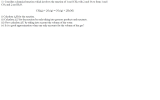 consider a chemical reaction which involves the combustion of
methane.
a) Calculate Delta rH for the reaction
b) Calculate delta rU for reaction by only taking gaseous
products and reactants
c) Calculate delta rU by taking into account the volume of the
water
d) Is it a good approxiamtion when one only accounts for the
volume of the gas?
consider a chemical reaction which involves the combustion of
methane.
a) Calculate Delta rH for the reaction
b) Calculate delta rU for reaction by only taking gaseous
products and reactants
c) Calculate delta rU by taking into account the volume of the
water
d) Is it a good approxiamtion when one only accounts for the
volume of the gas?
Question 18 1 pts Which of the following statements best describes the reaction shown as all...
 Question 18 1 pts Which of the following statements best describes the reaction shown as all four substances are mixed in a sealed container at an initial concentration of 0.10 M. CO(g) + H2O(g) + CO2(g) + H2(E) K-0.6944 The reaction will proceed toward products and favors products at equilibrium. The reaction will proceed toward products and favors reactants at equilibrium The reaction will proceed towards reactants and favors products at equilibrium. The reaction will proceed towards reactants and favors...
 Page 1 of 2 Pre-lab Questions for Experiment #4 Chemical Reactions 1) A chemical equation uses chemical symbols to show what happens during a chemical reaction: reactants → products. A chemical equation is a shorthand notation of a chemical reaction. Once the reactants and products are known, then we can balance the chemical equation by the Law of Conservation of Mass. Balance the following chemical equations: (a) Nalico, Na.co, + H2O + CO. (b) Cu + HNO, Cu(NO) + NO...
 Figure out whether the balanced chemical reaction shown below
involves oxidation reduction. If it does figure out which element
becomes oxidized by the reaction and which element becomes reduced
by the reaction. Pick the correct statement about
this reaction from the multiple choices.
4 KMnO4(aq) + 5 CH3OH(aq) + 12 HCl(aq)
4 MnCl2(aq) + 5 HCO2H(aq) +
4 KCl(aq) + 11 H2O(l)
a) This reaction is not a redox reaction.
b) In this reaction H becomes oxidized and Cl becomes...
Figure out whether the balanced chemical reaction shown below
involves oxidation reduction. If it does figure out which element
becomes oxidized by the reaction and which element becomes reduced
by the reaction. Pick the correct statement about
this reaction from the multiple choices.
4 KMnO4(aq) + 5 CH3OH(aq) + 12 HCl(aq)
4 MnCl2(aq) + 5 HCO2H(aq) +
4 KCl(aq) + 11 H2O(l)
a) This reaction is not a redox reaction.
b) In this reaction H becomes oxidized and Cl becomes...
 Question 3 1 pts Select the three best determinants for a chemical reaction to take place. The reactants are oriented correctly to allow interaction of reactive atoms The reactants are attracted to each other The collisions between atoms is occurring frequently There is enough energy available The reactants have opposite charge The reactants are higher energy than the products The reactants are both in the same phase (e.g. solid, liquid, gas) 1 pts Question 4 Calculate the rate of reaction...
 1. Which of the following is true for a chemical reaction at equilibrium? only the forward reaction stops only the reverse reaction stops both the forward and reverse reactions stop the rate constants for the forward and reverse reactions are equal the rates of the forward and reverse reactions are equal 2. A chemical equilibrium may be established by starting a reaction with reactants only. d. any quantities of reactants and products. products only. e. all the above equal quantities...
 Question 4 a) A simplified form of the open loop transfer function of a chemical process as shown in Figure 4 is 1 GO) = 2(8 + 3)(8 +20 +2) where H(s) = 1 i. Construct the root locus. (5 marks) . From the root locus in (a), show the range of gain K at the root loci so that the system will stable. Discuss your answer. (2 marks) b) State two important parameters that you got from Bode plot...
 Question 4 a) A simplified form of the open loop transfer function of a chemical process as shown in Figure 4 is 1 G(S) = S(S + 3)(S2 + 25 + 2) where H(S) = 1. i. ii. Construct the root locus. (5 marks) From the root locus in (a), show the range of gain K at the root loci so that the system will stable. Discuss your answer. (2 marks) b) State two important parameters that you got from...
 Question 4 a) A simplified form of the open loop transfer function of a chemical process as shown in Figure 4 is G(s) s(s+3)(s2 + 25 + 2) where (s) = 1. i Construct the root locus. (5 marks) . From the root locus in (a), show the range of gain at the root loci so that the system will stable. Discuss your answer. (2 marks) b) State two important parameters that you got from Bode plot method and explain...
 Question 4 a) A simplified form of the open loop transfer function of a chemical process as shown in Figure 4 is 1 G(s) = s(s + 3)(s2 + 2s + 2) where H(s) = 1. Construct the root locus. (5 marks) ii. From the root locus in (a), show the range of gain K at the root loci so that the system will stable. Discuss your answer. (2 marks) i. b) State two important parameters that you got from...
 consider a chemical reaction which involves the combustion of
methane.
a) Calculate Delta rH for the reaction
b) Calculate delta rU for reaction by only taking gaseous
products and reactants
c) Calculate delta rU by taking into account the volume of the
water
d) Is it a good approxiamtion when one only accounts for the
volume of the gas?
consider a chemical reaction which involves the combustion of
methane.
a) Calculate Delta rH for the reaction
b) Calculate delta rU for reaction by only taking gaseous
products and reactants
c) Calculate delta rU by taking into account the volume of the
water
d) Is it a good approxiamtion when one only accounts for the
volume of the gas?
 Question 18 1 pts Which of the following statements best describes the reaction shown as all four substances are mixed in a sealed container at an initial concentration of 0.10 M. CO(g) + H2O(g) + CO2(g) + H2(E) K-0.6944 The reaction will proceed toward products and favors products at equilibrium. The reaction will proceed toward products and favors reactants at equilibrium The reaction will proceed towards reactants and favors products at equilibrium. The reaction will proceed towards reactants and favors...
Most questions answered within 3 hours.
-
Where is the error in this code sequence?
String s1 = "Hello";
String s2 = "ello";...
asked 11 months ago -
Financial data for Joel de Paris, Inc., for last year
follow:
Joel de Paris, Inc.
Balance...
asked 11 months ago -
Consider this reaction:
Al2(SO4)3 (aq)+ BaCl3
(aq) Al2Cl6 (aq)- +
3BaSO4(s) . What is the...
asked 11 months ago -
Suppose that Savneet is considering increasing her
recent random sample from 20 car rentals to 40...
asked 11 months ago -
Trucks arrive at an unloading terminal at an average rate of 120
per hour.
Trucks arrive...
asked 11 months ago -
Why are methanol and ethanol completely soluble in water while
octanol is not very little soluble....
asked 11 months ago -
A facilities manager at a university reads in a research report
that the mean amount of...
asked 11 months ago -
When the CuSO4 is rehydrated by adding water to the anhydrous
compound, is this an endothermic...
asked 11 months ago -
A ray of sunlight is passing from diamond into crown glass; the
angle of incidence is...
asked 11 months ago -
A block of mass 0.249 kg is placed on top of a light, vertical
spring of...
asked 11 months ago -
how do the kidneys compensate in the presences of acidosis
a) trigger hyperventilate
b) reserve acid...
asked 11 months ago -
Question 501 pts
The rental rate of capital to the firm increases. Which of the
following...
asked 11 months ago