
Homework Answers
![-+ I ST ar 5 22 202 da2 Let a &F(a) Cr (O) = 2 + T = T(80) be solution of o T18,0) = F(2) CCO) 24F(%) (C)] + r LFCO) 64()]](http://img.homeworklib.com/questions/08e416f0-1095-11eb-b454-e37134eb089b.png?x-oss-process=image/resize,w_560)
Add Answer to:
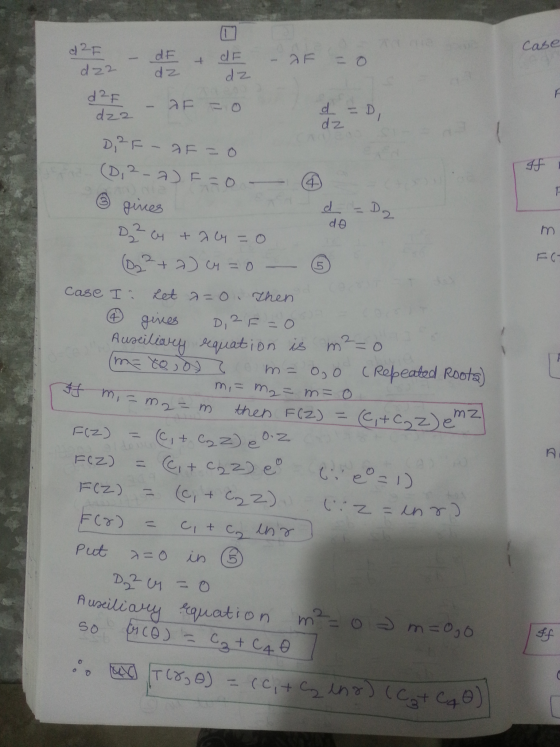
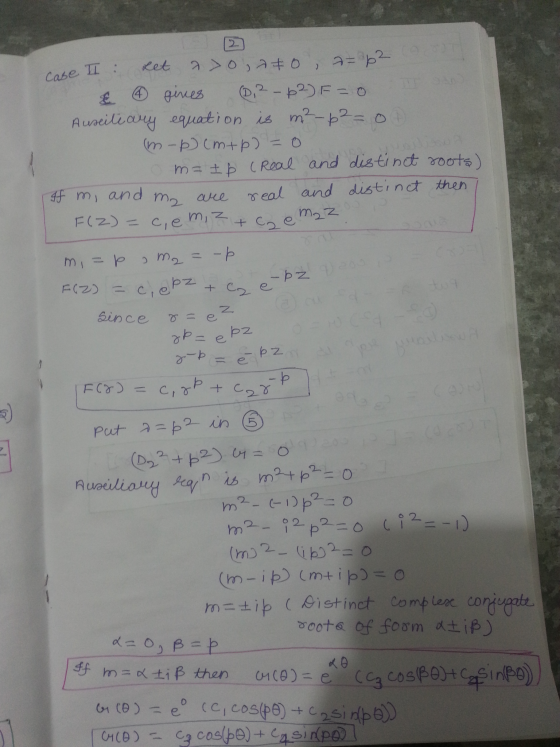
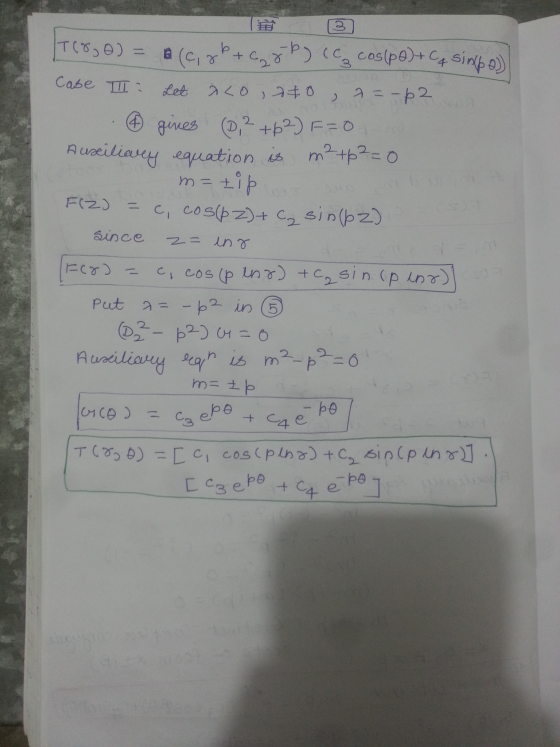
Find the solution of polar Laplace's equation: a2r101 1 02 + 0 ar2 r2 a82 Use...
FIND THE GENERAL SOLUTION. Find the solution of two dimensional Laplace's equation: 227 227 + дх2...
 FIND THE GENERAL SOLUTION.
Find the solution of two dimensional Laplace's equation: 227 227 + дх2 = 0 ay2 Use separation of variables and Fourier series.
FIND THE GENERAL SOLUTION.
Find the solution of two dimensional Laplace's equation: 227 227 + дх2 = 0 ay2 Use separation of variables and Fourier series.
(Laplace's equation in polar coordinates) (a) Find the solution to Laplace's equation on a disk with...
 (Laplace's equation in polar coordinates) (a) Find the solution to Laplace's equation on a disk with boundary condition u(1,0) = 5 + sin(40). (You do not need to derive the general solution to the polar Laplace's equation.) (b) Verify that the solution to (a) satisfies the mean value property. (Hint: compare the average value of u(r, 0) on the boundary r = 1 to the value of u(r,) at r=0.) (c) Find the minimum and maximum of the solution to...
In spherical polar coordinates (r, 0, ¢), the general solution of Laplace's equation which has cylindrical...
 In spherical polar coordinates (r, 0, ¢), the general solution of Laplace's equation which has cylindrical symmetry about the polar axis is bounded on the polar axis can be expressed as u(r, 0) = Rm(r)P,(cos 0), (A) where P is the Legendre polyomial of degree n, and R(r) is the general solution of the differential equation *() - n(n + 1)R = 0, (r > 0), dr dr where n is a non-negative integer. (You are not asked to show...
(a) Find the solution to Laplace's equation on a disk with boundary condition u(1,0) = 5...
 (a) Find the solution to Laplace's equation on a disk with boundary condition u(1,0) = 5 + sin(40). (You do not need to derive the general solution to the polar Laplace's equation.) (b) Verify that the solution to (a) satisfies the mean value property. (Hint: compare the average value of u(r, ) on the boundary r=1 to the value of u(r,() at r = 0.) (c) Find the minimum and maximum of the solution to (a) and verify they occur...
10. [18 Marks] Using separation of variables, solve Laplace's equation for {(x,y): 0 < x < 2,0 < y < 2)...
 10. [18 Marks] Using separation of variables, solve Laplace's equation for {(x,y): 0 < x < 2,0 < y < 2), subject to the boundary conditions 0 (0, y) = d(x, 2) 6 + cos(nz) = In your solution, you must consider all three cases for the separation constant λ.
10. [18 Marks] Using separation of variables, solve Laplace's equation for {(x,y): 0
10. [18 Marks] Using separation of variables, solve Laplace's equation for {(x,y): 0 < x < 2,0 < y < 2), subject to the boundary conditions 0 (0, y) = d(x, 2) 6 + cos(nz) = In your solution, you must consider all three cases for the separation constant λ.
10. [18 Marks] Using separation of variables, solve Laplace's equation for {(x,y): 0
Question 3. Separation of variables Consider Laplace's Equation in two dimensions (a) Write Ф(r,y)-F(x)G(y) and use...
 Question 3. Separation of variables Consider Laplace's Equation in two dimensions (a) Write Ф(r,y)-F(x)G(y) and use separation of variables to get ordinary differential equa- tions for F and G (b) Consider the rectangular region {(x, y) E R2: 0Ka, 0 y b with three boundary conditions on Ф об obtain conditions on F and G on those boundaries where conditions on Ф are given (c) (i) Solve the differential equations found in (a), subject to the conditions found in (b)...
b) Consider the wave equation azu azu at2 0 < x < 2, t>0, ar2 with...
 b) Consider the wave equation azu azu at2 0 < x < 2, t>0, ar2 with boundary conditions u(0,t) = 0, u(2, t) = 0, t> 0, and initial conditions u(x,0) = x(2 – x), ut(x,0) = = 0, 0 < x < 2. Use the method of separation of variables to determine the general solution of this equation. (15 marks)
Question 3. Separation of variables. Consider Laplace's Equation in two dimensions: (a) Write Φ(x,y) F(x)G(y) and u...
 Question 3. Separation of variables. Consider Laplace's Equation in two dimensions: (a) Write Φ(x,y) F(x)G(y) and use separation of variables to get ordinary differential equa- tions for F and G (b) Consider the rectangular region {(x,y) є R2 : 0 a, 0-y-b} with three boundary x conditions on Ф: obtain conditions on F and G on those boundaries where conditions on Ф are given. (c) (i) Solve the differential equations found in (a), subject to the conditions found in (b)...
Pls be clear! Use separation of variables with i =-16 to find a product solution to...
 Pls be clear!
Use separation of variables with i =-16 to find a product solution to the following partial differential equation, си y + 0 ar2 ay that also satisfies the conditions u(0,0) = 6 and ux(0,0) = 3.
Pls be clear!
Use separation of variables with i =-16 to find a product solution to the following partial differential equation, си y + 0 ar2 ay that also satisfies the conditions u(0,0) = 6 and ux(0,0) = 3.
The two-dimensional heat equation reduces to Laplace's equation to = 0 if the temperature u is...
 The two-dimensional heat equation reduces to Laplace's equation to = 0 if the temperature u is steady-state. u(x, y) is defined in 0<x<2 and 0 Sys2 and satisfy u(x,0) = u(x, 2) = u(0, y) = 0 and u(2, y) = 80 sin my. Answer the following questions. (1) Obtain two ODES (Ordinary Differential Equations) by the method of separation of variables. (2) Find u(x, y) satisfying the boundary condition. (3) Obtain the value of u(1,5).
 FIND THE GENERAL SOLUTION.
Find the solution of two dimensional Laplace's equation: 227 227 + дх2 = 0 ay2 Use separation of variables and Fourier series.
FIND THE GENERAL SOLUTION.
Find the solution of two dimensional Laplace's equation: 227 227 + дх2 = 0 ay2 Use separation of variables and Fourier series.
 (Laplace's equation in polar coordinates) (a) Find the solution to Laplace's equation on a disk with boundary condition u(1,0) = 5 + sin(40). (You do not need to derive the general solution to the polar Laplace's equation.) (b) Verify that the solution to (a) satisfies the mean value property. (Hint: compare the average value of u(r, 0) on the boundary r = 1 to the value of u(r,) at r=0.) (c) Find the minimum and maximum of the solution to...
 In spherical polar coordinates (r, 0, ¢), the general solution of Laplace's equation which has cylindrical symmetry about the polar axis is bounded on the polar axis can be expressed as u(r, 0) = Rm(r)P,(cos 0), (A) where P is the Legendre polyomial of degree n, and R(r) is the general solution of the differential equation *() - n(n + 1)R = 0, (r > 0), dr dr where n is a non-negative integer. (You are not asked to show...
 (a) Find the solution to Laplace's equation on a disk with boundary condition u(1,0) = 5 + sin(40). (You do not need to derive the general solution to the polar Laplace's equation.) (b) Verify that the solution to (a) satisfies the mean value property. (Hint: compare the average value of u(r, ) on the boundary r=1 to the value of u(r,() at r = 0.) (c) Find the minimum and maximum of the solution to (a) and verify they occur...
 10. [18 Marks] Using separation of variables, solve Laplace's equation for {(x,y): 0 < x < 2,0 < y < 2), subject to the boundary conditions 0 (0, y) = d(x, 2) 6 + cos(nz) = In your solution, you must consider all three cases for the separation constant λ.
10. [18 Marks] Using separation of variables, solve Laplace's equation for {(x,y): 0
10. [18 Marks] Using separation of variables, solve Laplace's equation for {(x,y): 0 < x < 2,0 < y < 2), subject to the boundary conditions 0 (0, y) = d(x, 2) 6 + cos(nz) = In your solution, you must consider all three cases for the separation constant λ.
10. [18 Marks] Using separation of variables, solve Laplace's equation for {(x,y): 0
 Question 3. Separation of variables Consider Laplace's Equation in two dimensions (a) Write Ф(r,y)-F(x)G(y) and use separation of variables to get ordinary differential equa- tions for F and G (b) Consider the rectangular region {(x, y) E R2: 0Ka, 0 y b with three boundary conditions on Ф об obtain conditions on F and G on those boundaries where conditions on Ф are given (c) (i) Solve the differential equations found in (a), subject to the conditions found in (b)...
 b) Consider the wave equation azu azu at2 0 < x < 2, t>0, ar2 with boundary conditions u(0,t) = 0, u(2, t) = 0, t> 0, and initial conditions u(x,0) = x(2 – x), ut(x,0) = = 0, 0 < x < 2. Use the method of separation of variables to determine the general solution of this equation. (15 marks)
 Question 3. Separation of variables. Consider Laplace's Equation in two dimensions: (a) Write Φ(x,y) F(x)G(y) and use separation of variables to get ordinary differential equa- tions for F and G (b) Consider the rectangular region {(x,y) є R2 : 0 a, 0-y-b} with three boundary x conditions on Ф: obtain conditions on F and G on those boundaries where conditions on Ф are given. (c) (i) Solve the differential equations found in (a), subject to the conditions found in (b)...
 Pls be clear!
Use separation of variables with i =-16 to find a product solution to the following partial differential equation, си y + 0 ar2 ay that also satisfies the conditions u(0,0) = 6 and ux(0,0) = 3.
Pls be clear!
Use separation of variables with i =-16 to find a product solution to the following partial differential equation, си y + 0 ar2 ay that also satisfies the conditions u(0,0) = 6 and ux(0,0) = 3.
 The two-dimensional heat equation reduces to Laplace's equation to = 0 if the temperature u is steady-state. u(x, y) is defined in 0<x<2 and 0 Sys2 and satisfy u(x,0) = u(x, 2) = u(0, y) = 0 and u(2, y) = 80 sin my. Answer the following questions. (1) Obtain two ODES (Ordinary Differential Equations) by the method of separation of variables. (2) Find u(x, y) satisfying the boundary condition. (3) Obtain the value of u(1,5).
Most questions answered within 3 hours.
-
Where is the error in this code sequence?
String s1 = "Hello";
String s2 = "ello";...
asked 11 months ago -
Financial data for Joel de Paris, Inc., for last year
follow:
Joel de Paris, Inc.
Balance...
asked 11 months ago -
Consider this reaction:
Al2(SO4)3 (aq)+ BaCl3
(aq) Al2Cl6 (aq)- +
3BaSO4(s) . What is the...
asked 11 months ago -
Suppose that Savneet is considering increasing her
recent random sample from 20 car rentals to 40...
asked 11 months ago -
Trucks arrive at an unloading terminal at an average rate of 120
per hour.
Trucks arrive...
asked 11 months ago -
Why are methanol and ethanol completely soluble in water while
octanol is not very little soluble....
asked 11 months ago -
A facilities manager at a university reads in a research report
that the mean amount of...
asked 11 months ago -
When the CuSO4 is rehydrated by adding water to the anhydrous
compound, is this an endothermic...
asked 11 months ago -
A ray of sunlight is passing from diamond into crown glass; the
angle of incidence is...
asked 11 months ago -
A block of mass 0.249 kg is placed on top of a light, vertical
spring of...
asked 11 months ago -
how do the kidneys compensate in the presences of acidosis
a) trigger hyperventilate
b) reserve acid...
asked 11 months ago -
Question 501 pts
The rental rate of capital to the firm increases. Which of the
following...
asked 11 months ago