
Homework Answers
Solution -
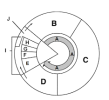
a) A drawing is mentioned in the figure which is a fraction of the original part and is continues in the both left and right directions. Different dimensions of the parts are mentioned and some are left blank (A,B,C,D,E).
b) we are required to analyse the name of the unknown parts of the drawing.
c) A - Inside distance, edge to edge between two outings running in south direction.
B - Center to center distance between two outings.
C - Dimensions of right side part (radius)
D - Details of the tapper region and it.s dimension.
E - Dimensions of the left part (radius)
Add Answer to:
By referring to the figure below: a) Explain what is illustrated in the figure. b) What...
In the process illustrated by the pV diagram in (Figure 1) , the temperature of the...
 In the process illustrated by the pV diagram in (Figure 1) , the
temperature of the ideal gas remains constant at 170 ?C .
Part A
How many moles of gas are involved?
Part B
What volume does this gas occupy at a?
Part C
How much work was done by or on the gas from a to
b?
Part D
By how much did the internal energy of the gas change during
this process?
In the process illustrated by the pV diagram in (Figure 1) , the
temperature of the ideal gas remains constant at 170 ?C .
Part A
How many moles of gas are involved?
Part B
What volume does this gas occupy at a?
Part C
How much work was done by or on the gas from a to
b?
Part D
By how much did the internal energy of the gas change during
this process?
Referring to Parts A & B in the experiment, indicate whether the following compounds are polar...
 Referring to Parts A & B in the experiment, indicate whether the following compounds are polar or non-polar. Compound Polar or Non-Polar ethylene glycol ___ oil ___ biphenyl ___ hexane ___ sugar ___ Referring to Part C in the experiment, indicate the stronger attractive force by circling one choice below. Water-plastic refers to the attraction of water to plastic while water-glass refers to the attraction of water to glass. Explain your choice. water- plastic or water-glass Referring to Part C...
Complete the table by identifying each component in the Cell Cycle illustrated below.  
 Complete the table by identifying each component in the Cell
Cycle illustrated
below.
(5 marks)
Label shown on diagram
Identification as it pertains to Cell Cycle
A
B
C
D
E
F
G
H
I
J
If 2n = 6, provide a labelled diagram of an animal cell
representing ‘F’ from the above diagram.
Hint: Cell before ‘F’ and then when
cell is in
‘F’
(7
marks)
We were unable to transcribe this imageQuestiull 2. Cell Cycle dilu...
Complete the table by identifying each component in the Cell
Cycle illustrated
below.
(5 marks)
Label shown on diagram
Identification as it pertains to Cell Cycle
A
B
C
D
E
F
G
H
I
J
If 2n = 6, provide a labelled diagram of an animal cell
representing ‘F’ from the above diagram.
Hint: Cell before ‘F’ and then when
cell is in
‘F’
(7
marks)
We were unable to transcribe this imageQuestiull 2. Cell Cycle dilu...
BLOCK DIAGRAMS Below are sample block diagrams. Block 1 shows horizontal (flat lying) rock layers...
 BLOCK DIAGRAMS Below are sample block diagrams. Block 1 shows horizontal (flat lying) rock layers; block 2 shows dipping rock layers, Block 3 is an anticline and block 4 is a syncline. Remember from the Lecture Notes that the top of a block diagram is the map view and the sides are the cross section views. A GUIDE TO BLOCK DIAGRAMS Shows What's Happening n MAP VIEW ton Top t0 Shown Whats Happening n NORTH-SOUTH direction Shows What's Haccening EAST-WEST...
Please fill out the chart and explain Complete the table below, using the diagram of an...
 Please fill out the chart and explain
Complete the table below, using the diagram of an atom shown at right. Properties of subatomic particles approximate mass location on diagram charge name symbol (in multiples of e) (arhu) -1 0.0005 +1 1.0 choose one) (choose one) electron
Please fill out the chart and explain
Complete the table below, using the diagram of an atom shown at right. Properties of subatomic particles approximate mass location on diagram charge name symbol (in multiples of e) (arhu) -1 0.0005 +1 1.0 choose one) (choose one) electron
Complete the table by identifying each component in the Cell Cycle illustrated below. Label
 Complete the table by identifying each component in the Cell
Cycle illustrated
below.
Label shown on diagram
Identification as it pertains to Cell Cycle
A
B
C
D
E
F
G
H
I
J
If 2n = 6, provide a labelled diagram of an animal cell
representing ‘F’ from the above diagram.
Hint: Cell before ‘F’ and then when
cell is in ‘F’
Complete the table by identifying each component in the Cell
Cycle illustrated
below.
Label shown on diagram
Identification as it pertains to Cell Cycle
A
B
C
D
E
F
G
H
I
J
If 2n = 6, provide a labelled diagram of an animal cell
representing ‘F’ from the above diagram.
Hint: Cell before ‘F’ and then when
cell is in ‘F’
(16] Question 3 uestions that follow. Figure 1 Food web 3.1.1 3.1.2 3.1.3 Explain what a...
 (16] Question 3 uestions that follow. Figure 1 Food web 3.1.1 3.1.2 3.1.3 Explain what a food web is. Distinguish between autotrophs and heterotrophs. Name two groups that are absolutely essential to the functioning of an ecosystem and explain why. Name three groups of heterotrophs and explain the difference among them. Explain why only 10% of energy is passed along to the next level in the food chain. Identify the type of symbiotic relationship illustrated in diagrams A-C below: 3.2...
2. Referring to the structure at the right, answer/do the following: CH2OH a. Label each ring...
 2. Referring to the structure at the right, answer/do the following: CH2OH a. Label each ring as locked (L) or unlocked. (U) OH O b. Circle the glycoside linkage. OH C. What type of glycoside linkage (e.g., a-1,2) is it? CH2OH HO OH HO 2MCL d. Explain the significance to humans of the type of glycoside linkage in this disaccharide.Why does it matter to some humans who consume sobi-C this sugar? Hbonvib no tiowall OH OH What is the name...
12. What is the configuration analysis defined by transistor Q2 in Figure 4? 20v 18 68...
 12. What is the configuration analysis defined by transistor Q2 in Figure 4? 20v 18 68 C Ver 02 ce lu 56 WI HE C 4760 150 Figure 4 A Common Collector B. Common Base C. Common Emitter D. Emitter Follower 13. Refer on Figure 4 also, what is the type of connection on this design? A Cascade amplifier B. Cascode amplifier C. Darlington amplifier D. Transformer amplifier 14. Based on Figure 4, state the name of circuit diagram applied...
Referring to the circuit in Figure 2 and the corresponding function table in Table 5 on...
 Referring to the circuit in Figure 2 and the corresponding function table in Table 5 on page 5, answer the following questions: a) Draw the state diagram of the circuit (b) (5 Marks) Work out the logic circuit for the Output Block using only NAND gates and inverters. (5 Marks) (c) Give a brief description on the functional characteristics of the circuit in Figure 2 (2 Marks) (d) Redesign the circuit using only one flip-flop and some logic gates. You...
 In the process illustrated by the pV diagram in (Figure 1) , the
temperature of the ideal gas remains constant at 170 ?C .
Part A
How many moles of gas are involved?
Part B
What volume does this gas occupy at a?
Part C
How much work was done by or on the gas from a to
b?
Part D
By how much did the internal energy of the gas change during
this process?
In the process illustrated by the pV diagram in (Figure 1) , the
temperature of the ideal gas remains constant at 170 ?C .
Part A
How many moles of gas are involved?
Part B
What volume does this gas occupy at a?
Part C
How much work was done by or on the gas from a to
b?
Part D
By how much did the internal energy of the gas change during
this process?
 Referring to Parts A & B in the experiment, indicate whether the following compounds are polar or non-polar. Compound Polar or Non-Polar ethylene glycol ___ oil ___ biphenyl ___ hexane ___ sugar ___ Referring to Part C in the experiment, indicate the stronger attractive force by circling one choice below. Water-plastic refers to the attraction of water to plastic while water-glass refers to the attraction of water to glass. Explain your choice. water- plastic or water-glass Referring to Part C...
 Complete the table by identifying each component in the Cell
Cycle illustrated
below.
(5 marks)
Label shown on diagram
Identification as it pertains to Cell Cycle
A
B
C
D
E
F
G
H
I
J
If 2n = 6, provide a labelled diagram of an animal cell
representing ‘F’ from the above diagram.
Hint: Cell before ‘F’ and then when
cell is in
‘F’
(7
marks)
We were unable to transcribe this imageQuestiull 2. Cell Cycle dilu...
Complete the table by identifying each component in the Cell
Cycle illustrated
below.
(5 marks)
Label shown on diagram
Identification as it pertains to Cell Cycle
A
B
C
D
E
F
G
H
I
J
If 2n = 6, provide a labelled diagram of an animal cell
representing ‘F’ from the above diagram.
Hint: Cell before ‘F’ and then when
cell is in
‘F’
(7
marks)
We were unable to transcribe this imageQuestiull 2. Cell Cycle dilu...
 BLOCK DIAGRAMS Below are sample block diagrams. Block 1 shows horizontal (flat lying) rock layers; block 2 shows dipping rock layers, Block 3 is an anticline and block 4 is a syncline. Remember from the Lecture Notes that the top of a block diagram is the map view and the sides are the cross section views. A GUIDE TO BLOCK DIAGRAMS Shows What's Happening n MAP VIEW ton Top t0 Shown Whats Happening n NORTH-SOUTH direction Shows What's Haccening EAST-WEST...
 Please fill out the chart and explain
Complete the table below, using the diagram of an atom shown at right. Properties of subatomic particles approximate mass location on diagram charge name symbol (in multiples of e) (arhu) -1 0.0005 +1 1.0 choose one) (choose one) electron
Please fill out the chart and explain
Complete the table below, using the diagram of an atom shown at right. Properties of subatomic particles approximate mass location on diagram charge name symbol (in multiples of e) (arhu) -1 0.0005 +1 1.0 choose one) (choose one) electron
 Complete the table by identifying each component in the Cell
Cycle illustrated
below.
Label shown on diagram
Identification as it pertains to Cell Cycle
A
B
C
D
E
F
G
H
I
J
If 2n = 6, provide a labelled diagram of an animal cell
representing ‘F’ from the above diagram.
Hint: Cell before ‘F’ and then when
cell is in ‘F’
Complete the table by identifying each component in the Cell
Cycle illustrated
below.
Label shown on diagram
Identification as it pertains to Cell Cycle
A
B
C
D
E
F
G
H
I
J
If 2n = 6, provide a labelled diagram of an animal cell
representing ‘F’ from the above diagram.
Hint: Cell before ‘F’ and then when
cell is in ‘F’
 (16] Question 3 uestions that follow. Figure 1 Food web 3.1.1 3.1.2 3.1.3 Explain what a food web is. Distinguish between autotrophs and heterotrophs. Name two groups that are absolutely essential to the functioning of an ecosystem and explain why. Name three groups of heterotrophs and explain the difference among them. Explain why only 10% of energy is passed along to the next level in the food chain. Identify the type of symbiotic relationship illustrated in diagrams A-C below: 3.2...
 2. Referring to the structure at the right, answer/do the following: CH2OH a. Label each ring as locked (L) or unlocked. (U) OH O b. Circle the glycoside linkage. OH C. What type of glycoside linkage (e.g., a-1,2) is it? CH2OH HO OH HO 2MCL d. Explain the significance to humans of the type of glycoside linkage in this disaccharide.Why does it matter to some humans who consume sobi-C this sugar? Hbonvib no tiowall OH OH What is the name...
 12. What is the configuration analysis defined by transistor Q2 in Figure 4? 20v 18 68 C Ver 02 ce lu 56 WI HE C 4760 150 Figure 4 A Common Collector B. Common Base C. Common Emitter D. Emitter Follower 13. Refer on Figure 4 also, what is the type of connection on this design? A Cascade amplifier B. Cascode amplifier C. Darlington amplifier D. Transformer amplifier 14. Based on Figure 4, state the name of circuit diagram applied...
 Referring to the circuit in Figure 2 and the corresponding function table in Table 5 on page 5, answer the following questions: a) Draw the state diagram of the circuit (b) (5 Marks) Work out the logic circuit for the Output Block using only NAND gates and inverters. (5 Marks) (c) Give a brief description on the functional characteristics of the circuit in Figure 2 (2 Marks) (d) Redesign the circuit using only one flip-flop and some logic gates. You...
Most questions answered within 3 hours.
-
Where is the error in this code sequence?
String s1 = "Hello";
String s2 = "ello";...
asked 10 months ago -
Financial data for Joel de Paris, Inc., for last year
follow:
Joel de Paris, Inc.
Balance...
asked 10 months ago -
Consider this reaction:
Al2(SO4)3 (aq)+ BaCl3
(aq) Al2Cl6 (aq)- +
3BaSO4(s) . What is the...
asked 10 months ago -
Suppose that Savneet is considering increasing her
recent random sample from 20 car rentals to 40...
asked 10 months ago -
Trucks arrive at an unloading terminal at an average rate of 120
per hour.
Trucks arrive...
asked 10 months ago -
Why are methanol and ethanol completely soluble in water while
octanol is not very little soluble....
asked 10 months ago -
A facilities manager at a university reads in a research report
that the mean amount of...
asked 10 months ago -
When the CuSO4 is rehydrated by adding water to the anhydrous
compound, is this an endothermic...
asked 10 months ago -
A ray of sunlight is passing from diamond into crown glass; the
angle of incidence is...
asked 10 months ago -
A block of mass 0.249 kg is placed on top of a light, vertical
spring of...
asked 10 months ago -
how do the kidneys compensate in the presences of acidosis
a) trigger hyperventilate
b) reserve acid...
asked 10 months ago -
Question 501 pts
The rental rate of capital to the firm increases. Which of the
following...
asked 10 months ago