
Homework Answers
Add Answer to:
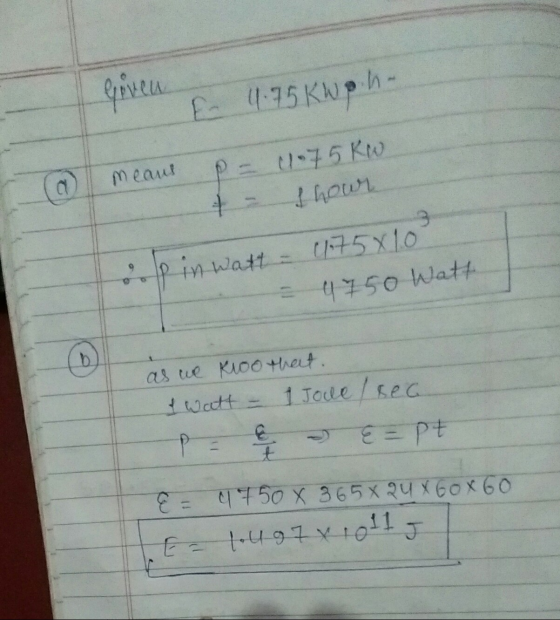
(13%) Problem 6: Consider an appliance that consumes 4.75 kW.h of energy per day. > A...
(13%) Problem 7: Consider a parallel plate capacitor having plates of area 1 .25 cmŕ that...
 (13%) Problem 7: Consider a parallel plate capacitor having plates of area 1 .25 cmŕ that are separated by 0.016 mm of neoprene rubber. You may assume the rubber has a dielectric constant x- 6.7. > 50% Part (a) What is the capacitance in μF? Grade Summary Deductions Potential 0% 100% cotan atan cosh acos sinh( tanh) cotanhh 4 5 6 1 2 3 0 Submissions Attempts remaining: 6 (3% per attempt) detailed view asin acotan o Degrees oRadians DELCLEA...
(906) Problem 8: Light of wavelength -536 nm passes through a single slit of width w...
 (906) Problem 8: Light of wavelength -536 nm passes through a single slit of width w =2.1 um and illuminates a screen L= 1.7 m away. t material, 50% Part (a) What is the maximum number of dark fringes neinges of light could this setup produce on the sereen? Grade Summar fringes 8 Deductions Potential sin() cos) tan) 7 HOME Submissions asin) acos) cotan) E 1 4 5 6 Attempts remains (4%% per attempt) detailed view atan) sinh) d acotan)...
- 13.4 cm (13%) Problem 3: A ray of light, emitted beneath the surface of an...
 - 13.4 cm (13%) Problem 3: A ray of light, emitted beneath the surface of an unknown liquid with air above it, undergoes total internal reflection as shown in the figure. 15.0 cm Otheexpertta.com >> A 50% Part (a) What is the minimum index of refraction for the liquid? n1 min = 1 Grade Summary Deductions Potential 100% 0% ( o E sin() cos() tan() cotan() asin() acos() atan() acotan() sinh() cosh) | tanh() | cotanh) | Degrees Radians 7...
(25%) Problem 2: Consider a person whose body temperature has risen because of a fever. A...
 (25%) Problem 2: Consider a person whose body temperature has risen because of a fever. A What is the temperature, in degrees Fahrenheit, of a person with a 39.2°C fever? T[°F] = 1 o ( 7 8 9 HOME E ^^ 4 5 6 sin() cos() tan() cotan() asin() acos() atan) acotan() sinh cosh() tanh) | cotanh() Degrees Radians * 1 2 3 .. → END 0 BACKSPACE DEL CLEAR Submit Hint Feedback I give up!
(13%) Problem 7: An object 1.4 cm high is held 2.95 cm from a person's cornea,...
 (13%) Problem 7: An object 1.4 cm high is held 2.95 cm from a person's cornea, and its reflected image is measured to be 0.169 cm high. > 33% Part (a) What is the magnification? m= 1 Grade Summary Deductions Potential 100% 0% o E sin() cos() tan() cotan() asin() acos() atan() acotan() sinh() cosh) | tanh() | cotanh() | Degrees Radians ( 7 8 9 HOME 4 5 6 1 2 3 | + |-| 0 | || END...
(13%) Problem 5: An object of height 2.9 cm is placed 29 cm in front of...
 (13%) Problem 5: An object of height 2.9 cm is placed 29 cm in front of a diverging lens of focal length 17 cm. Behind the diverging lens, and 11 cm from it, there is a converging lens of the same focal length. - A 50% Part (a) Find the location of the final image, in centimeters beyond the converging lens. Grade Summary Deductions 0% Potential 100% 1 E sin( cos() tan() cotan() asin() acos atan acotan sinh cosh() |...
(10%) Problem 8: Consider the terminal voltage of a 3.00 V lithium cell in a digital...
 (10%) Problem 8: Consider the terminal voltage of a 3.00 V lithium cell in a digital wristwatch that draws 18 mA. ► What is the terminal voltage, V, in volts, if the cell's internal resistance is 2.4 2 ? V= na HOME E sin() cos cotan asin atan) acotan cosh tanh( Degrees tan acos sinh() cotanh Radians 7 8 | 4 5 1 2 0 BACKSPACE 9 6 3 . END DEL CLEAR (10%) Problem 9: Consider an automobile battery...
(17%) Problem 6: A 65-kg skydiver jumps out of an airplane and falls 490 m, reaching...
 (17%) Problem 6: A 65-kg skydiver jumps out of an airplane and falls 490 m, reaching a maximum speed of 59 m/s before opening her parachute. Randomized Variables m= 65 kg h= 490 m v=59 m/s 50% Part (a) How much work, in joules, did air resistance do on the skydiver before she opened her parachute? Grade Summary Deductions 0% Potential 100% ( | E sin() cos() tan() cotan asin() acos atan) acotan sinh) cosh tanh cotanh Degrees O Radians...
(11%) Problem 8: Suppose you want an oboe to produce a fundamental frequency of 116 Hz...
 (11%) Problem 8: Suppose you want an oboe to produce a fundamental frequency of 116 Hz (which is below the range of a typical oboe) on a day when the temperature is 14.5°C. DA If you treat the oboe as a perfect air column which is open at both ends, how long, in meters, should the oboe be? L=1 Grade Summary Deductions 0% Potential 100% ( E sin cos t an() cotan asin() acos() atan) acotan sinh) cosh() tanh( cotanh()...
(14%) Problem 2: The "lead" in pencils is a graphite composition with a Young's modulus of...
 (14%) Problem 2: The "lead" in pencils is a graphite composition with a Young's modulus of about 1.10 N/m. * Calculate how much shorter (in mm) the length of the lead becomes in an automatic pencil if you tap it straight into the pencil with a force of 4.8 N. The lead is 0.55 mm in diameter and 61 mm long. Grade Summary AL = 3.391 Deductions 12% Potential 88% sin() cos t an() cotan) asin() acos() atan) acotan sinh)...
 (13%) Problem 7: Consider a parallel plate capacitor having plates of area 1 .25 cmŕ that are separated by 0.016 mm of neoprene rubber. You may assume the rubber has a dielectric constant x- 6.7. > 50% Part (a) What is the capacitance in μF? Grade Summary Deductions Potential 0% 100% cotan atan cosh acos sinh( tanh) cotanhh 4 5 6 1 2 3 0 Submissions Attempts remaining: 6 (3% per attempt) detailed view asin acotan o Degrees oRadians DELCLEA...
 (906) Problem 8: Light of wavelength -536 nm passes through a single slit of width w =2.1 um and illuminates a screen L= 1.7 m away. t material, 50% Part (a) What is the maximum number of dark fringes neinges of light could this setup produce on the sereen? Grade Summar fringes 8 Deductions Potential sin() cos) tan) 7 HOME Submissions asin) acos) cotan) E 1 4 5 6 Attempts remains (4%% per attempt) detailed view atan) sinh) d acotan)...
 - 13.4 cm (13%) Problem 3: A ray of light, emitted beneath the surface of an unknown liquid with air above it, undergoes total internal reflection as shown in the figure. 15.0 cm Otheexpertta.com >> A 50% Part (a) What is the minimum index of refraction for the liquid? n1 min = 1 Grade Summary Deductions Potential 100% 0% ( o E sin() cos() tan() cotan() asin() acos() atan() acotan() sinh() cosh) | tanh() | cotanh) | Degrees Radians 7...
 (25%) Problem 2: Consider a person whose body temperature has risen because of a fever. A What is the temperature, in degrees Fahrenheit, of a person with a 39.2°C fever? T[°F] = 1 o ( 7 8 9 HOME E ^^ 4 5 6 sin() cos() tan() cotan() asin() acos() atan) acotan() sinh cosh() tanh) | cotanh() Degrees Radians * 1 2 3 .. → END 0 BACKSPACE DEL CLEAR Submit Hint Feedback I give up!
 (13%) Problem 7: An object 1.4 cm high is held 2.95 cm from a person's cornea, and its reflected image is measured to be 0.169 cm high. > 33% Part (a) What is the magnification? m= 1 Grade Summary Deductions Potential 100% 0% o E sin() cos() tan() cotan() asin() acos() atan() acotan() sinh() cosh) | tanh() | cotanh() | Degrees Radians ( 7 8 9 HOME 4 5 6 1 2 3 | + |-| 0 | || END...
 (13%) Problem 5: An object of height 2.9 cm is placed 29 cm in front of a diverging lens of focal length 17 cm. Behind the diverging lens, and 11 cm from it, there is a converging lens of the same focal length. - A 50% Part (a) Find the location of the final image, in centimeters beyond the converging lens. Grade Summary Deductions 0% Potential 100% 1 E sin( cos() tan() cotan() asin() acos atan acotan sinh cosh() |...
 (10%) Problem 8: Consider the terminal voltage of a 3.00 V lithium cell in a digital wristwatch that draws 18 mA. ► What is the terminal voltage, V, in volts, if the cell's internal resistance is 2.4 2 ? V= na HOME E sin() cos cotan asin atan) acotan cosh tanh( Degrees tan acos sinh() cotanh Radians 7 8 | 4 5 1 2 0 BACKSPACE 9 6 3 . END DEL CLEAR (10%) Problem 9: Consider an automobile battery...
 (17%) Problem 6: A 65-kg skydiver jumps out of an airplane and falls 490 m, reaching a maximum speed of 59 m/s before opening her parachute. Randomized Variables m= 65 kg h= 490 m v=59 m/s 50% Part (a) How much work, in joules, did air resistance do on the skydiver before she opened her parachute? Grade Summary Deductions 0% Potential 100% ( | E sin() cos() tan() cotan asin() acos atan) acotan sinh) cosh tanh cotanh Degrees O Radians...
 (11%) Problem 8: Suppose you want an oboe to produce a fundamental frequency of 116 Hz (which is below the range of a typical oboe) on a day when the temperature is 14.5°C. DA If you treat the oboe as a perfect air column which is open at both ends, how long, in meters, should the oboe be? L=1 Grade Summary Deductions 0% Potential 100% ( E sin cos t an() cotan asin() acos() atan) acotan sinh) cosh() tanh( cotanh()...
 (14%) Problem 2: The "lead" in pencils is a graphite composition with a Young's modulus of about 1.10 N/m. * Calculate how much shorter (in mm) the length of the lead becomes in an automatic pencil if you tap it straight into the pencil with a force of 4.8 N. The lead is 0.55 mm in diameter and 61 mm long. Grade Summary AL = 3.391 Deductions 12% Potential 88% sin() cos t an() cotan) asin() acos() atan) acotan sinh)...
Most questions answered within 3 hours.
-
Where is the error in this code sequence?
String s1 = "Hello";
String s2 = "ello";...
asked 10 months ago -
Financial data for Joel de Paris, Inc., for last year
follow:
Joel de Paris, Inc.
Balance...
asked 10 months ago -
Consider this reaction:
Al2(SO4)3 (aq)+ BaCl3
(aq) Al2Cl6 (aq)- +
3BaSO4(s) . What is the...
asked 10 months ago -
Suppose that Savneet is considering increasing her
recent random sample from 20 car rentals to 40...
asked 10 months ago -
Trucks arrive at an unloading terminal at an average rate of 120
per hour.
Trucks arrive...
asked 10 months ago -
Why are methanol and ethanol completely soluble in water while
octanol is not very little soluble....
asked 10 months ago -
A facilities manager at a university reads in a research report
that the mean amount of...
asked 10 months ago -
When the CuSO4 is rehydrated by adding water to the anhydrous
compound, is this an endothermic...
asked 10 months ago -
A ray of sunlight is passing from diamond into crown glass; the
angle of incidence is...
asked 10 months ago -
A block of mass 0.249 kg is placed on top of a light, vertical
spring of...
asked 10 months ago -
how do the kidneys compensate in the presences of acidosis
a) trigger hyperventilate
b) reserve acid...
asked 10 months ago -
Question 501 pts
The rental rate of capital to the firm increases. Which of the
following...
asked 10 months ago