
Homework Answers
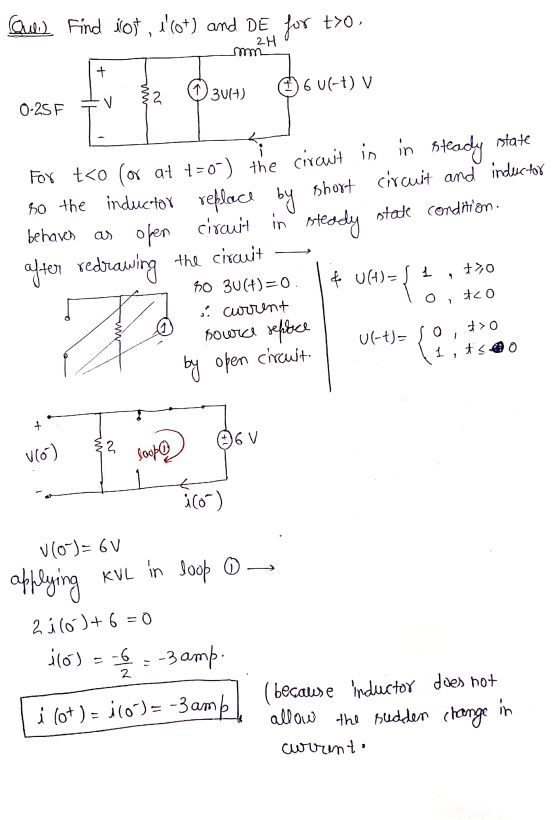
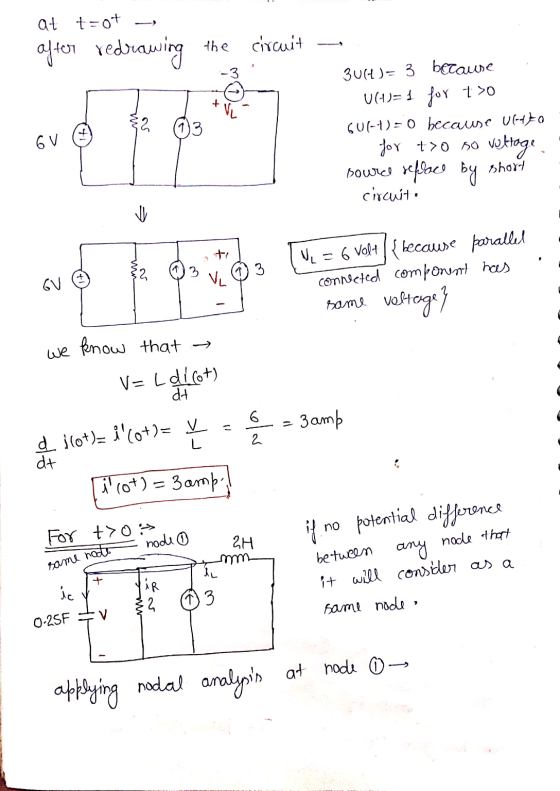
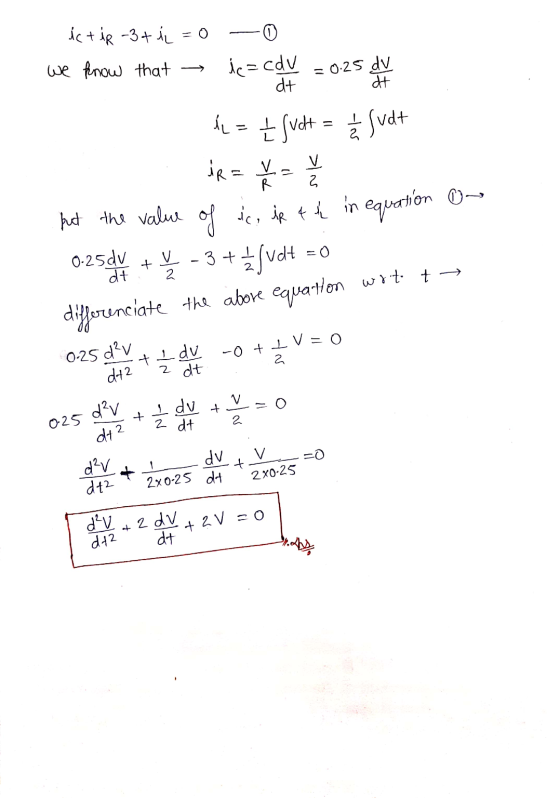
Find v for t>O if the circuit is under de condition at t=0-. t = 0...
 Find v for t>O if the circuit is under de condition at t=0-. t = 0 w 16 Ω 82 + 242 1/36 F + + 20V 8V Annor.
(2) Let De = {1, 0, 02, 03, 04, 0%, 7, OT, O2T, 07,041, 0 T}...
 (2) Let De = {1, 0, 02, 03, 04, 0%, 7, OT, O2T, 07,041, 0 T} where o = 1 2 3 4 5 6 2 3 4 5 6 1 and T = 2 3 4 5 6 6 5 4 3 2 so that De is the dihedral group of degree 6. (i) (2 marks) Calculate to. (ii) (2 marks) Give two elements of De that have order 3. No explanation required. (iii) (4 marks) Give two subgroups...
(7) The following circuit is at steady state for t<o. Find i(t) for both t<o and...
 (7) The following circuit is at steady state for t<o. Find i(t) for both t<o and t-0 and you must include a sketch showing the current value waveform for both t<0 and t>o 0.2H 4 i(t) 12 4 t-o 4
At t = 0 s, the current in the circuit in the figure is I0. At...
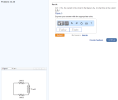 At t = 0 s, the current in the circuit in the figure is I0. At what time is the current 1/2 I0? Express your answer with the appropriate units.
Part A Find vC(0+) . Part B Find vC(∞) Part C Find τ for t>0 Part D Find i(0+). Part F Find i(t),t≥0+. Problem 7.51 MasteringEngineering MasteringCo... 5 of 5 Assume that the...
 Part A
Find vC(0+) .
Part B
Find vC(∞)
Part C
Find τ for t>0
Part D
Find i(0+).
Part F
Find i(t),t≥0+.
Problem 7.51 MasteringEngineering MasteringCo... 5 of 5 Assume that the switch in the circuit in 40 k2 a 50 kn 2.5 k 120 V 150 kn 25 nF Tap image to zoom has been in position a for a long time and that at t0 it is moved to position b. Part E Choose the correct expression...
Part A
Find vC(0+) .
Part B
Find vC(∞)
Part C
Find τ for t>0
Part D
Find i(0+).
Part F
Find i(t),t≥0+.
Problem 7.51 MasteringEngineering MasteringCo... 5 of 5 Assume that the switch in the circuit in 40 k2 a 50 kn 2.5 k 120 V 150 kn 25 nF Tap image to zoom has been in position a for a long time and that at t0 it is moved to position b. Part E Choose the correct expression...
voltage Is 40 volts 15 3 N Find ilt) 612 412 2(t) IF 320 t=0 sec...
 voltage Is 40 volts
15 3 N Find ilt) 612 412 2(t) IF 320 t=0 sec I OV I (25) Find ilt) two ways:
voltage Is 40 volts
15 3 N Find ilt) 612 412 2(t) IF 320 t=0 sec I OV I (25) Find ilt) two ways:
Let G be the following grammar: 1. S T 2. T O 3. T T 4. O V = E i [ E ] 5. V i 6. V i 7. E ( E) 8. E Construct the LR(0...
 Let G be the following grammar: 1. S T 2. T O 3. T T 4. O V = E i [ E ] 5. V i 6. V i 7. E ( E) 8. E Construct the LR(0) DFA for this grammar a) b) Construct the LR(0) parsing table. Is it LR(o)? Why and why not?
Let G be the following grammar: 1. S T 2. T O 3. T T 4. O V = E i [ E...
Let G be the following grammar: 1. S T 2. T O 3. T T 4. O V = E i [ E ] 5. V i 6. V i 7. E ( E) 8. E Construct the LR(0) DFA for this grammar a) b) Construct the LR(0) parsing table. Is it LR(o)? Why and why not?
Let G be the following grammar: 1. S T 2. T O 3. T T 4. O V = E i [ E...
Find the laplace transform of g(t) | t', 0< t<2 7, 2< t 2 C(s): -25...
 Find the laplace transform of g(t) | t', 0< t<2 7, 2< t 2 C(s): -25 + )e-23 fe + 2 c(s): -25 25=e - 23 + e(܊ -(;)c co)- .+ )e-23 C(o)= - + + $)e +;e-23 -25
6: In the circuit shown in Figure-6, input voltage of 15V de was switched ON at t-o. (a) Convert the circuit its Laplace equivalent at t >0, if ILO)-2A and vc (0)-6V. b) Find the capacitor voltage...
 6: In the circuit shown in Figure-6, input voltage of 15V de was switched ON at t-o. (a) Convert the circuit its Laplace equivalent at t >0, if ILO)-2A and vc (0)-6V. b) Find the capacitor voltage, Ve (s) in the frequency domain (c) Solve Ve (t) in the time domain. Switch L= 5H t-o 15V (0 ) = 2A V (o =6V 0.1F
6: In the circuit shown in Figure-6, input voltage of 15V de was switched ON at...
6: In the circuit shown in Figure-6, input voltage of 15V de was switched ON at t-o. (a) Convert the circuit its Laplace equivalent at t >0, if ILO)-2A and vc (0)-6V. b) Find the capacitor voltage, Ve (s) in the frequency domain (c) Solve Ve (t) in the time domain. Switch L= 5H t-o 15V (0 ) = 2A V (o =6V 0.1F
6: In the circuit shown in Figure-6, input voltage of 15V de was switched ON at...
(2) a) An RLC circuit has the following differential equation (DE) for t > 0. d’v(t)/dt...
 (2) a) An RLC circuit has the following differential equation (DE) for t > 0. d’v(t)/dt + 10 dv(t)/dt + 16 v(t) = 0) Determine the value of the damping ratio 5, the type of damping, and the form of the natural response for t > 0. Include all values where possible. (7 pts.) b) An RLC circuit has the following differential equation (DE) for t> 0. d’i(t)/dt? +4 di(t)/dt + 9 i(t) = 0 Determine the value of the...
 Find v for t>O if the circuit is under de condition at t=0-. t = 0 w 16 Ω 82 + 242 1/36 F + + 20V 8V Annor.
 (2) Let De = {1, 0, 02, 03, 04, 0%, 7, OT, O2T, 07,041, 0 T} where o = 1 2 3 4 5 6 2 3 4 5 6 1 and T = 2 3 4 5 6 6 5 4 3 2 so that De is the dihedral group of degree 6. (i) (2 marks) Calculate to. (ii) (2 marks) Give two elements of De that have order 3. No explanation required. (iii) (4 marks) Give two subgroups...
 (7) The following circuit is at steady state for t<o. Find i(t) for both t<o and t-0 and you must include a sketch showing the current value waveform for both t<0 and t>o 0.2H 4 i(t) 12 4 t-o 4
 At t = 0 s, the current in the circuit in the figure is I0. At what time is the current 1/2 I0? Express your answer with the appropriate units.
 Part A
Find vC(0+) .
Part B
Find vC(∞)
Part C
Find τ for t>0
Part D
Find i(0+).
Part F
Find i(t),t≥0+.
Problem 7.51 MasteringEngineering MasteringCo... 5 of 5 Assume that the switch in the circuit in 40 k2 a 50 kn 2.5 k 120 V 150 kn 25 nF Tap image to zoom has been in position a for a long time and that at t0 it is moved to position b. Part E Choose the correct expression...
Part A
Find vC(0+) .
Part B
Find vC(∞)
Part C
Find τ for t>0
Part D
Find i(0+).
Part F
Find i(t),t≥0+.
Problem 7.51 MasteringEngineering MasteringCo... 5 of 5 Assume that the switch in the circuit in 40 k2 a 50 kn 2.5 k 120 V 150 kn 25 nF Tap image to zoom has been in position a for a long time and that at t0 it is moved to position b. Part E Choose the correct expression...
 voltage Is 40 volts
15 3 N Find ilt) 612 412 2(t) IF 320 t=0 sec I OV I (25) Find ilt) two ways:
voltage Is 40 volts
15 3 N Find ilt) 612 412 2(t) IF 320 t=0 sec I OV I (25) Find ilt) two ways:
 Let G be the following grammar: 1. S T 2. T O 3. T T 4. O V = E i [ E ] 5. V i 6. V i 7. E ( E) 8. E Construct the LR(0) DFA for this grammar a) b) Construct the LR(0) parsing table. Is it LR(o)? Why and why not?
Let G be the following grammar: 1. S T 2. T O 3. T T 4. O V = E i [ E...
Let G be the following grammar: 1. S T 2. T O 3. T T 4. O V = E i [ E ] 5. V i 6. V i 7. E ( E) 8. E Construct the LR(0) DFA for this grammar a) b) Construct the LR(0) parsing table. Is it LR(o)? Why and why not?
Let G be the following grammar: 1. S T 2. T O 3. T T 4. O V = E i [ E...
 Find the laplace transform of g(t) | t', 0< t<2 7, 2< t 2 C(s): -25 + )e-23 fe + 2 c(s): -25 25=e - 23 + e(܊ -(;)c co)- .+ )e-23 C(o)= - + + $)e +;e-23 -25
 6: In the circuit shown in Figure-6, input voltage of 15V de was switched ON at t-o. (a) Convert the circuit its Laplace equivalent at t >0, if ILO)-2A and vc (0)-6V. b) Find the capacitor voltage, Ve (s) in the frequency domain (c) Solve Ve (t) in the time domain. Switch L= 5H t-o 15V (0 ) = 2A V (o =6V 0.1F
6: In the circuit shown in Figure-6, input voltage of 15V de was switched ON at...
6: In the circuit shown in Figure-6, input voltage of 15V de was switched ON at t-o. (a) Convert the circuit its Laplace equivalent at t >0, if ILO)-2A and vc (0)-6V. b) Find the capacitor voltage, Ve (s) in the frequency domain (c) Solve Ve (t) in the time domain. Switch L= 5H t-o 15V (0 ) = 2A V (o =6V 0.1F
6: In the circuit shown in Figure-6, input voltage of 15V de was switched ON at...
 (2) a) An RLC circuit has the following differential equation (DE) for t > 0. d’v(t)/dt + 10 dv(t)/dt + 16 v(t) = 0) Determine the value of the damping ratio 5, the type of damping, and the form of the natural response for t > 0. Include all values where possible. (7 pts.) b) An RLC circuit has the following differential equation (DE) for t> 0. d’i(t)/dt? +4 di(t)/dt + 9 i(t) = 0 Determine the value of the...
Most questions answered within 3 hours.
-
Where is the error in this code sequence?
String s1 = "Hello";
String s2 = "ello";...
asked 11 months ago -
Financial data for Joel de Paris, Inc., for last year
follow:
Joel de Paris, Inc.
Balance...
asked 11 months ago -
Consider this reaction:
Al2(SO4)3 (aq)+ BaCl3
(aq) Al2Cl6 (aq)- +
3BaSO4(s) . What is the...
asked 11 months ago -
Suppose that Savneet is considering increasing her
recent random sample from 20 car rentals to 40...
asked 11 months ago -
Trucks arrive at an unloading terminal at an average rate of 120
per hour.
Trucks arrive...
asked 11 months ago -
Why are methanol and ethanol completely soluble in water while
octanol is not very little soluble....
asked 11 months ago -
A facilities manager at a university reads in a research report
that the mean amount of...
asked 11 months ago -
When the CuSO4 is rehydrated by adding water to the anhydrous
compound, is this an endothermic...
asked 11 months ago -
A ray of sunlight is passing from diamond into crown glass; the
angle of incidence is...
asked 11 months ago -
A block of mass 0.249 kg is placed on top of a light, vertical
spring of...
asked 11 months ago -
how do the kidneys compensate in the presences of acidosis
a) trigger hyperventilate
b) reserve acid...
asked 11 months ago -
Question 501 pts
The rental rate of capital to the firm increases. Which of the
following...
asked 11 months ago