
Homework Answers
Add Answer to:
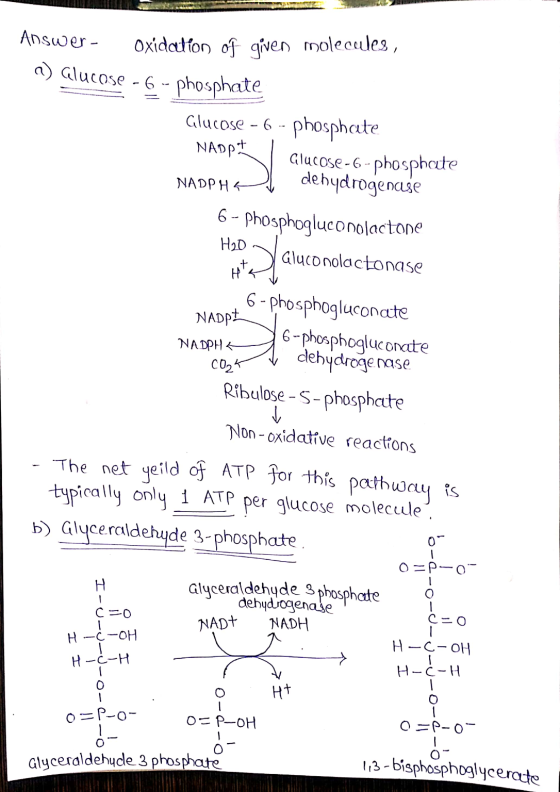
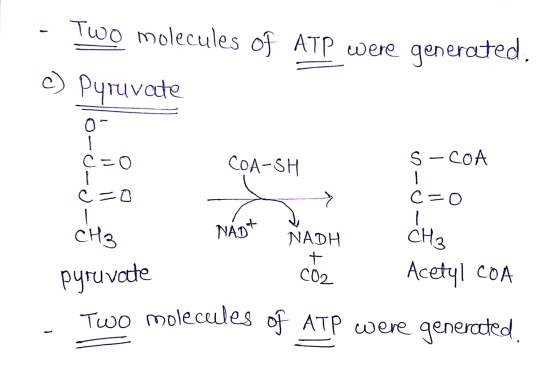
1. Calculate the number of ATPs resulting from the complete oxidation of the following. SHOW ALL...
12/25 answered Click on glycolysis if would like to review it in details. Glucose Preparatory phase...
 12/25 answered Click on glycolysis if would like to review it in details. Glucose Preparatory phase first ATP Phosphorylation of glucos and its conversion to glyceraldehyde 3-phosphat Priming © > ADP Glucose 6-phosphate 1-0 Hz Hexokinase ΝΟΗ Η e Phosphohexose isomerase Fructose 6-phosphate ATP (8 Phospho- fructokinase-1 primins и он -OCH, CH-OH HOH он и ©--CH, CH-0- Кинон Aldolase ADP Fructose 1,6-bisphosphate (6) Triose phosphate somerase eleava oferte suar phosphate to two carbon sur phosphate Glyceraldehyde 3-phosphate udehyde a phosphate...
Show how 129 ATPs are produced from the complete oxidation of each Palmitic acid.
Show how 129 ATPs are produced from the complete oxidation of each Palmitic acid.
1) Regarding the products and reactants in glycolysis (Choose All) A) although 4 ATPs are synthesized...
1) Regarding the products and reactants in glycolysis (Choose All) A) although 4 ATPs are synthesized for every glucose molecule, there is a net gain of only 2 ATPs/glucose B) ATP is both a reactant and a product C) NAD+ is a product; NADH is a reactant D) glucose is a reactant that is converted to 2 pyruvate products 2) Glycolysis...(Choose All) A) is anaerobic; no oxygen is required B) is probably the most widespread metabolic pathway among organisms C)...
please calculate and show work 10. Metabolism. Which of the following reactions is favorable under standard-state...
 please calculate and show work
10. Metabolism. Which of the following reactions is favorable under standard-state conditions (1 M reactants and products; pH = 7)? Calculate the value of AGⓇ for each phosphate transfer reaction. A) ATP + pyruvate ---> phosphoenolpyruvate + ADP B) 3-phosphoglycerate + ATP ---> 1,3-bisphosphoglycerate + ADP C) 1,3-bisphosphoglycerate + creatine ---> creatine phosphate + 3-phosphoglycerate D) glucose 6-phosphate --> glucose 1-phosphate not favorable noer standard
please calculate and show work
10. Metabolism. Which of the following reactions is favorable under standard-state conditions (1 M reactants and products; pH = 7)? Calculate the value of AGⓇ for each phosphate transfer reaction. A) ATP + pyruvate ---> phosphoenolpyruvate + ADP B) 3-phosphoglycerate + ATP ---> 1,3-bisphosphoglycerate + ADP C) 1,3-bisphosphoglycerate + creatine ---> creatine phosphate + 3-phosphoglycerate D) glucose 6-phosphate --> glucose 1-phosphate not favorable noer standard
1(a) The complete metabolic oxidation of glucose to CO2 and O2 yields 38 ATPs. What is...
1(a) The complete metabolic oxidation of glucose to CO2 and O2 yields 38 ATPs. What is the yield of ATP from Glc if it is first added to a glycogen polymer before being converted to CO2 and O2? What is the FRACTIONAL energetic cost in terms of ATP (eg., 1%, 2%, 10%, etc.) of storing glucose as glycogen and later metabolizing the glycogen rather than directly metabolizing the glucose? Be sure to show your work and state any assumptions being...
5. ( pts) Draw the complete B-oxidation pathway of the following short chain fatty Acyl-CoA. Show...
 5. ( pts) Draw the complete B-oxidation pathway of the following short chain fatty Acyl-CoA. Show the structures of all reactants and products, as well as the names of the enzymes. You do not need to draw the structures of ATP, NADT, COA, etc., but do show them as reactants or products in the appropriate places. You do not need to show the mechanisms of the enzymes. (b) (3 pts) How many ATPs would be generated by the complete oxidation...
Rank from the first to the last steps to describe the correct order of events of...
 Rank from the first to the last steps to describe the
correct order of events of glycolysis.
Rank from the first to the last steps to describe the correct order of events of glycolysis. Reset Help Glyceraldehyde- 3-phosphate COOP 3-phosphoglycerate ooo ATP This reaction happens Glucose-6-phosphate OOOOOO Rearrangement P + ADP Glucose GOOOOO NAD* - Fructose-16-bisphosphate POOOOOO twice, once ADP for each glyceraldehyde- 3.phosphate bisphosphoglycerate OOOP + NADH Fructose-6-phosphate ССССССР 2-phosphoglycerate This GOO reaction happens Rearrangement twice, once Phosphoenolpyruvate for...
Rank from the first to the last steps to describe the
correct order of events of glycolysis.
Rank from the first to the last steps to describe the correct order of events of glycolysis. Reset Help Glyceraldehyde- 3-phosphate COOP 3-phosphoglycerate ooo ATP This reaction happens Glucose-6-phosphate OOOOOO Rearrangement P + ADP Glucose GOOOOO NAD* - Fructose-16-bisphosphate POOOOOO twice, once ADP for each glyceraldehyde- 3.phosphate bisphosphoglycerate OOOP + NADH Fructose-6-phosphate ССССССР 2-phosphoglycerate This GOO reaction happens Rearrangement twice, once Phosphoenolpyruvate for...
Calculate the number of ATP generated from the complete oxidation of one molecule of glucose to...
 Calculate the number of ATP generated from the complete oxidation of one molecule of glucose to carbon dioxide and water. Calculate the number of ATP generated from the complete oxidation of one molecule of palmitic acid (18.0) Now calculate the number of ATP that can be produced by the complete oxidation of one gram of glucose, and one gram of palmitic acid, and compare the two numbers. which type of fuel is generating more ATP. And how much is the...
Calculate the number of ATP generated from the complete oxidation of one molecule of glucose to...
 Calculate the number of ATP generated from the complete oxidation of one molecule of glucose to carbon dioxide and water. Calculate the number of ATP generated from the complete oxidation of one molecule of palm tic acid Now calculate the number of ATP that can be produced by the complete oxidation of one gram of glucose, and one gram of palm tic acid, and compare the two numbers. Which type of fuel is generating more ATP. And how much is...
please show work and not just answers, help. Name: Date: 4 December 2018 Gibbs free energy:...
 please show work and not just answers, help.
Name: Date: 4 December 2018 Gibbs free energy: AG = AH-TAS For the reaction: A + bB =cC + dD Gibbs free energy: AG = AG" + RT In Q Reaction quotient: Q = [ CD] [A] [8] Equilibrium constant: AG" = -RT in Ke 28) (4 pts) The equilibrium constant for the isomerization of dihydroxyacetone phosphate to glyceraldehyde 3-phosphate is: Keq = 4.85 x 10⁻² DHAP = GAP Will this reaction...
please show work and not just answers, help.
Name: Date: 4 December 2018 Gibbs free energy: AG = AH-TAS For the reaction: A + bB =cC + dD Gibbs free energy: AG = AG" + RT In Q Reaction quotient: Q = [ CD] [A] [8] Equilibrium constant: AG" = -RT in Ke 28) (4 pts) The equilibrium constant for the isomerization of dihydroxyacetone phosphate to glyceraldehyde 3-phosphate is: Keq = 4.85 x 10⁻² DHAP = GAP Will this reaction...
 12/25 answered Click on glycolysis if would like to review it in details. Glucose Preparatory phase first ATP Phosphorylation of glucos and its conversion to glyceraldehyde 3-phosphat Priming © > ADP Glucose 6-phosphate 1-0 Hz Hexokinase ΝΟΗ Η e Phosphohexose isomerase Fructose 6-phosphate ATP (8 Phospho- fructokinase-1 primins и он -OCH, CH-OH HOH он и ©--CH, CH-0- Кинон Aldolase ADP Fructose 1,6-bisphosphate (6) Triose phosphate somerase eleava oferte suar phosphate to two carbon sur phosphate Glyceraldehyde 3-phosphate udehyde a phosphate...
 please calculate and show work
10. Metabolism. Which of the following reactions is favorable under standard-state conditions (1 M reactants and products; pH = 7)? Calculate the value of AGⓇ for each phosphate transfer reaction. A) ATP + pyruvate ---> phosphoenolpyruvate + ADP B) 3-phosphoglycerate + ATP ---> 1,3-bisphosphoglycerate + ADP C) 1,3-bisphosphoglycerate + creatine ---> creatine phosphate + 3-phosphoglycerate D) glucose 6-phosphate --> glucose 1-phosphate not favorable noer standard
please calculate and show work
10. Metabolism. Which of the following reactions is favorable under standard-state conditions (1 M reactants and products; pH = 7)? Calculate the value of AGⓇ for each phosphate transfer reaction. A) ATP + pyruvate ---> phosphoenolpyruvate + ADP B) 3-phosphoglycerate + ATP ---> 1,3-bisphosphoglycerate + ADP C) 1,3-bisphosphoglycerate + creatine ---> creatine phosphate + 3-phosphoglycerate D) glucose 6-phosphate --> glucose 1-phosphate not favorable noer standard
 5. ( pts) Draw the complete B-oxidation pathway of the following short chain fatty Acyl-CoA. Show the structures of all reactants and products, as well as the names of the enzymes. You do not need to draw the structures of ATP, NADT, COA, etc., but do show them as reactants or products in the appropriate places. You do not need to show the mechanisms of the enzymes. (b) (3 pts) How many ATPs would be generated by the complete oxidation...
 Rank from the first to the last steps to describe the
correct order of events of glycolysis.
Rank from the first to the last steps to describe the correct order of events of glycolysis. Reset Help Glyceraldehyde- 3-phosphate COOP 3-phosphoglycerate ooo ATP This reaction happens Glucose-6-phosphate OOOOOO Rearrangement P + ADP Glucose GOOOOO NAD* - Fructose-16-bisphosphate POOOOOO twice, once ADP for each glyceraldehyde- 3.phosphate bisphosphoglycerate OOOP + NADH Fructose-6-phosphate ССССССР 2-phosphoglycerate This GOO reaction happens Rearrangement twice, once Phosphoenolpyruvate for...
Rank from the first to the last steps to describe the
correct order of events of glycolysis.
Rank from the first to the last steps to describe the correct order of events of glycolysis. Reset Help Glyceraldehyde- 3-phosphate COOP 3-phosphoglycerate ooo ATP This reaction happens Glucose-6-phosphate OOOOOO Rearrangement P + ADP Glucose GOOOOO NAD* - Fructose-16-bisphosphate POOOOOO twice, once ADP for each glyceraldehyde- 3.phosphate bisphosphoglycerate OOOP + NADH Fructose-6-phosphate ССССССР 2-phosphoglycerate This GOO reaction happens Rearrangement twice, once Phosphoenolpyruvate for...
 Calculate the number of ATP generated from the complete oxidation of one molecule of glucose to carbon dioxide and water. Calculate the number of ATP generated from the complete oxidation of one molecule of palmitic acid (18.0) Now calculate the number of ATP that can be produced by the complete oxidation of one gram of glucose, and one gram of palmitic acid, and compare the two numbers. which type of fuel is generating more ATP. And how much is the...
 Calculate the number of ATP generated from the complete oxidation of one molecule of glucose to carbon dioxide and water. Calculate the number of ATP generated from the complete oxidation of one molecule of palm tic acid Now calculate the number of ATP that can be produced by the complete oxidation of one gram of glucose, and one gram of palm tic acid, and compare the two numbers. Which type of fuel is generating more ATP. And how much is...
 please show work and not just answers, help.
Name: Date: 4 December 2018 Gibbs free energy: AG = AH-TAS For the reaction: A + bB =cC + dD Gibbs free energy: AG = AG" + RT In Q Reaction quotient: Q = [ CD] [A] [8] Equilibrium constant: AG" = -RT in Ke 28) (4 pts) The equilibrium constant for the isomerization of dihydroxyacetone phosphate to glyceraldehyde 3-phosphate is: Keq = 4.85 x 10⁻² DHAP = GAP Will this reaction...
please show work and not just answers, help.
Name: Date: 4 December 2018 Gibbs free energy: AG = AH-TAS For the reaction: A + bB =cC + dD Gibbs free energy: AG = AG" + RT In Q Reaction quotient: Q = [ CD] [A] [8] Equilibrium constant: AG" = -RT in Ke 28) (4 pts) The equilibrium constant for the isomerization of dihydroxyacetone phosphate to glyceraldehyde 3-phosphate is: Keq = 4.85 x 10⁻² DHAP = GAP Will this reaction...
Most questions answered within 3 hours.
-
Where is the error in this code sequence?
String s1 = "Hello";
String s2 = "ello";...
asked 11 months ago -
Financial data for Joel de Paris, Inc., for last year
follow:
Joel de Paris, Inc.
Balance...
asked 11 months ago -
Consider this reaction:
Al2(SO4)3 (aq)+ BaCl3
(aq) Al2Cl6 (aq)- +
3BaSO4(s) . What is the...
asked 11 months ago -
Suppose that Savneet is considering increasing her
recent random sample from 20 car rentals to 40...
asked 11 months ago -
Trucks arrive at an unloading terminal at an average rate of 120
per hour.
Trucks arrive...
asked 11 months ago -
Why are methanol and ethanol completely soluble in water while
octanol is not very little soluble....
asked 11 months ago -
A facilities manager at a university reads in a research report
that the mean amount of...
asked 11 months ago -
When the CuSO4 is rehydrated by adding water to the anhydrous
compound, is this an endothermic...
asked 11 months ago -
A ray of sunlight is passing from diamond into crown glass; the
angle of incidence is...
asked 11 months ago -
A block of mass 0.249 kg is placed on top of a light, vertical
spring of...
asked 11 months ago -
how do the kidneys compensate in the presences of acidosis
a) trigger hyperventilate
b) reserve acid...
asked 11 months ago -
Question 501 pts
The rental rate of capital to the firm increases. Which of the
following...
asked 11 months ago