
Homework Answers
Add Answer to:
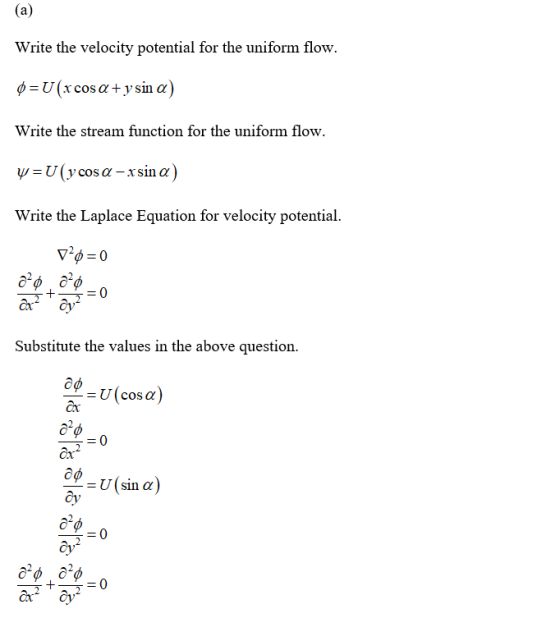
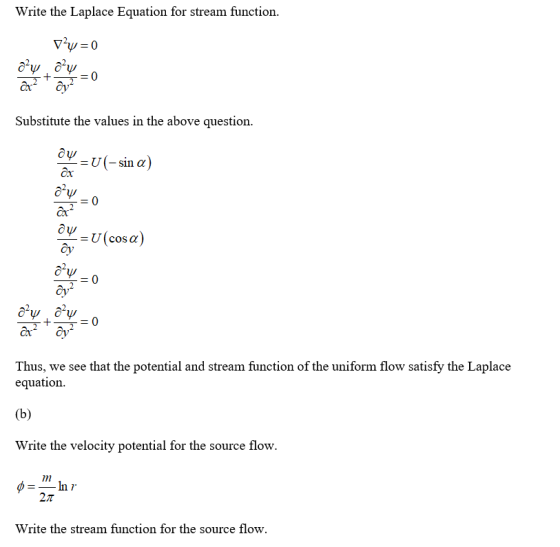
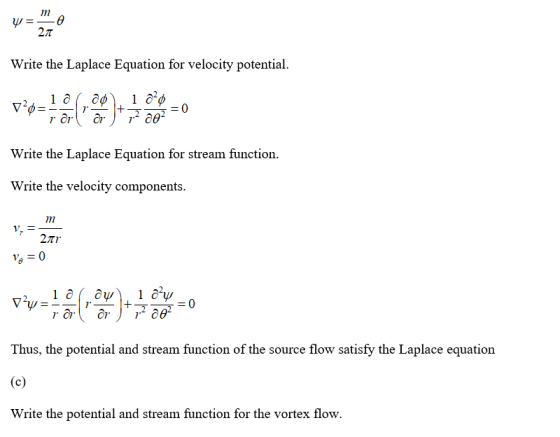
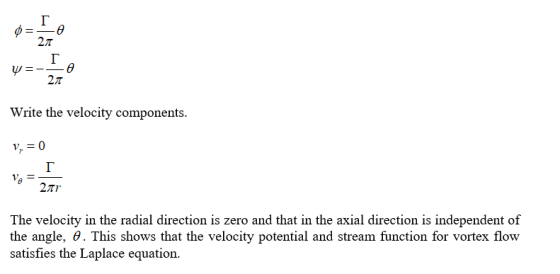
By substituting the elemental solutions to the Laplace equation, you do the following problems (a) Show...
Can you do (b) and (c) only thank you PrOBleM: SoLuTiONS To THE WAvE EQuATION a)...
 Can you do (b) and (c) only thank you
PrOBleM: SoLuTiONS To THE WAvE EQuATION a) By direct substitution determine which of the following functions satisfy the wave equation 1. g(z, t)-A cos(kr - wt) where A, k, w are positive constants 2. h(z,t)-Ae-(kz-wt)2 where A, k, ω are positive constants 3. p(x, t) A sinh(kx-wt) where A, k,w are positive constants 4. q(z, t) - Ae(atut) where A,a, w are positive constants 5. An arbitrary function: f(x, t) -...
Can you do (b) and (c) only thank you
PrOBleM: SoLuTiONS To THE WAvE EQuATION a) By direct substitution determine which of the following functions satisfy the wave equation 1. g(z, t)-A cos(kr - wt) where A, k, w are positive constants 2. h(z,t)-Ae-(kz-wt)2 where A, k, ω are positive constants 3. p(x, t) A sinh(kx-wt) where A, k,w are positive constants 4. q(z, t) - Ae(atut) where A,a, w are positive constants 5. An arbitrary function: f(x, t) -...
5. (20 pts) For the differential equation: sume the following information (you don't need to show this). e roots of the indicial equation are ri 4 and 2--2. In addition, after substituting y...
 5. (20 pts) For the differential equation: sume the following information (you don't need to show this). e roots of the indicial equation are ri 4 and 2--2. In addition, after substituting y t and its derivatives into the differential equation and reindexing we get: Given this information, find all Frobenius solutions for x >0. Make sure you include the "nth" term in your solution(s). If a solution does not exist for an exponent, show why.
5. (20 pts) For...
5. (20 pts) For the differential equation: sume the following information (you don't need to show this). e roots of the indicial equation are ri 4 and 2--2. In addition, after substituting y t and its derivatives into the differential equation and reindexing we get: Given this information, find all Frobenius solutions for x >0. Make sure you include the "nth" term in your solution(s). If a solution does not exist for an exponent, show why.
5. (20 pts) For...
PrOBleM: SoLuTiONS To THE WAvE EQuATION a) By direct substitution determine which of the following functions...
 PrOBleM: SoLuTiONS To THE WAvE EQuATION a) By direct substitution determine which of the following functions satisfy the wave equation 1. g(z, t)-A cos(kr - wt) where A, k, w are positive constants 2. h(z,t)-Ae-(kz-wt)2 where A, k, ω are positive constants 3. p(x, t) A sinh(kx-wt) where A, k,w are positive constants 4. q(z, t) - Ae(atut) where A,a, w are positive constants 5. An arbitrary function: f(x, t) - f(kx -wt) where k and w are positive constants....
2. In these problems, determine a differential equation of the form dy/dt = ay+b whose solutions...
 2. In these problems, determine a differential equation of the form dy/dt = ay+b whose solutions have the required behavior as t →00. Hint: If y=3 is the equilibrium solution, find an equation to relate a and b to each other. There are many answers that satisfy this, but one governing principle that belies them (a) All solutions approach y = 3. (h) All solutions diverge from u = 1/3
Show work by hand please. no matlab 1. Solve the following Laplace Transform problems: (a) (20...
 Show work by hand please. no matlab
1. Solve the following Laplace Transform problems: (a) (20 points) Given the following function f(t) = [10+ (4e-2+ + 3te-4t)e2t]u(t) A Find F(s) = C[f(t) as a proper rational function. F(8) must be in fully factored form. (b) (20 points) Let: f(t) = Ś(n + 2)!e=n(+36)(t – 3n) Find F(s) = [f(t) as a proper rational function.
Show work by hand please. no matlab
1. Solve the following Laplace Transform problems: (a) (20 points) Given the following function f(t) = [10+ (4e-2+ + 3te-4t)e2t]u(t) A Find F(s) = C[f(t) as a proper rational function. F(8) must be in fully factored form. (b) (20 points) Let: f(t) = Ś(n + 2)!e=n(+36)(t – 3n) Find F(s) = [f(t) as a proper rational function.
Bonus (Abel's formula) a) Show that if y1 and y2 are solutions to the differential equation...
 Bonus (Abel's formula) a) Show that if y1 and y2 are solutions to the differential equation y"p(t)y(t)y 0 where p and q are continuous on an interval I, then the Wronskian of y and y2, W(y1,y2) (t) is given by - Sp(t)dt ce W(y1, y2)(t) where c depends on y and y2 (b) Use Abel's formula to find the Wronskian of two solutions to the differential equation ty"(t 1)y 3y 0 Do not solve the differential equation
Please solve using eigenvalues and vectors (Please do not use laplace transforms!) Please show all steps neatly and in detail, will rate quickly! 7. Find all the solutions to the following system of...
 Please solve using eigenvalues and vectors (Please do not use
laplace transforms!) Please show all steps neatly and in detail,
will rate quickly!
7. Find all the solutions to the following system of differential equations . ,-[1-21
7. Find all the solutions to the following system of differential equations . ,-[1-21
Please solve using eigenvalues and vectors (Please do not use
laplace transforms!) Please show all steps neatly and in detail,
will rate quickly!
7. Find all the solutions to the following system of differential equations . ,-[1-21
7. Find all the solutions to the following system of differential equations . ,-[1-21
1. (20 pts.) In the following Problems: (a) Seek power series solutions of the given differential...
 1. (20 pts.) In the following Problems: (a) Seek power series solutions of the given differential equation about the given point xo ; find the recurrence relation. (b) Find the first four terms in each of two solutions yi and y2 (unless the series terminates sooner). (c) By evaluating the Wronskian W(y1, y2)(xo), show that yı and y2 form a fundamental set of solutions. (d) If possible, find the general term in each solution. i) y" +k+x+y = 0, 40...
Happy Elroy-maticTM announcement: You must base your solutions for these problems equation vapor pressure correlations in...
 Happy Elroy-maticTM announcement: You must base your solutions for these problems equation vapor pressure correlations in the form of Antoine's on Pat Ba =Ai-T+Ci Hg 1 mm with the following parameter values: compound i A B (K) 15.9008 2788.51 -52.36 16.0137 3096.52-53.67 16.0195 3279.47-59.95 Ci (K) benzene toluene ethylbenzene 11-propylbeuzene | 16.0062 3433.84 -66.01 -butylbenzene 16.0793 3633.40-71.77 Note tlhat T is in K and Pt is in mm Hg. More data are need (just as, in real life, more data...
You should be able to do the following problems: Exercise 8.3 Problems 11 - 28 Hand in the follow...
 You should be able to do the following problems:
Exercise 8.3 Problems 11 - 28
Hand in the following problems:
Problems 1 - 3 are to be solved by the method of infinite
series. This means that you must obtain
a solution of the form Panx
n
. You must solve for an so that the sum solves the given
differential
equation. Try to express your final answer in summation
notation.
1. y
00− y = 0 where y(0) =...
You should be able to do the following problems:
Exercise 8.3 Problems 11 - 28
Hand in the following problems:
Problems 1 - 3 are to be solved by the method of infinite
series. This means that you must obtain
a solution of the form Panx
n
. You must solve for an so that the sum solves the given
differential
equation. Try to express your final answer in summation
notation.
1. y
00− y = 0 where y(0) =...
 Can you do (b) and (c) only thank you
PrOBleM: SoLuTiONS To THE WAvE EQuATION a) By direct substitution determine which of the following functions satisfy the wave equation 1. g(z, t)-A cos(kr - wt) where A, k, w are positive constants 2. h(z,t)-Ae-(kz-wt)2 where A, k, ω are positive constants 3. p(x, t) A sinh(kx-wt) where A, k,w are positive constants 4. q(z, t) - Ae(atut) where A,a, w are positive constants 5. An arbitrary function: f(x, t) -...
Can you do (b) and (c) only thank you
PrOBleM: SoLuTiONS To THE WAvE EQuATION a) By direct substitution determine which of the following functions satisfy the wave equation 1. g(z, t)-A cos(kr - wt) where A, k, w are positive constants 2. h(z,t)-Ae-(kz-wt)2 where A, k, ω are positive constants 3. p(x, t) A sinh(kx-wt) where A, k,w are positive constants 4. q(z, t) - Ae(atut) where A,a, w are positive constants 5. An arbitrary function: f(x, t) -...
 5. (20 pts) For the differential equation: sume the following information (you don't need to show this). e roots of the indicial equation are ri 4 and 2--2. In addition, after substituting y t and its derivatives into the differential equation and reindexing we get: Given this information, find all Frobenius solutions for x >0. Make sure you include the "nth" term in your solution(s). If a solution does not exist for an exponent, show why.
5. (20 pts) For...
5. (20 pts) For the differential equation: sume the following information (you don't need to show this). e roots of the indicial equation are ri 4 and 2--2. In addition, after substituting y t and its derivatives into the differential equation and reindexing we get: Given this information, find all Frobenius solutions for x >0. Make sure you include the "nth" term in your solution(s). If a solution does not exist for an exponent, show why.
5. (20 pts) For...
 PrOBleM: SoLuTiONS To THE WAvE EQuATION a) By direct substitution determine which of the following functions satisfy the wave equation 1. g(z, t)-A cos(kr - wt) where A, k, w are positive constants 2. h(z,t)-Ae-(kz-wt)2 where A, k, ω are positive constants 3. p(x, t) A sinh(kx-wt) where A, k,w are positive constants 4. q(z, t) - Ae(atut) where A,a, w are positive constants 5. An arbitrary function: f(x, t) - f(kx -wt) where k and w are positive constants....
 2. In these problems, determine a differential equation of the form dy/dt = ay+b whose solutions have the required behavior as t →00. Hint: If y=3 is the equilibrium solution, find an equation to relate a and b to each other. There are many answers that satisfy this, but one governing principle that belies them (a) All solutions approach y = 3. (h) All solutions diverge from u = 1/3
 Show work by hand please. no matlab
1. Solve the following Laplace Transform problems: (a) (20 points) Given the following function f(t) = [10+ (4e-2+ + 3te-4t)e2t]u(t) A Find F(s) = C[f(t) as a proper rational function. F(8) must be in fully factored form. (b) (20 points) Let: f(t) = Ś(n + 2)!e=n(+36)(t – 3n) Find F(s) = [f(t) as a proper rational function.
Show work by hand please. no matlab
1. Solve the following Laplace Transform problems: (a) (20 points) Given the following function f(t) = [10+ (4e-2+ + 3te-4t)e2t]u(t) A Find F(s) = C[f(t) as a proper rational function. F(8) must be in fully factored form. (b) (20 points) Let: f(t) = Ś(n + 2)!e=n(+36)(t – 3n) Find F(s) = [f(t) as a proper rational function.
 Bonus (Abel's formula) a) Show that if y1 and y2 are solutions to the differential equation y"p(t)y(t)y 0 where p and q are continuous on an interval I, then the Wronskian of y and y2, W(y1,y2) (t) is given by - Sp(t)dt ce W(y1, y2)(t) where c depends on y and y2 (b) Use Abel's formula to find the Wronskian of two solutions to the differential equation ty"(t 1)y 3y 0 Do not solve the differential equation
 Please solve using eigenvalues and vectors (Please do not use
laplace transforms!) Please show all steps neatly and in detail,
will rate quickly!
7. Find all the solutions to the following system of differential equations . ,-[1-21
7. Find all the solutions to the following system of differential equations . ,-[1-21
Please solve using eigenvalues and vectors (Please do not use
laplace transforms!) Please show all steps neatly and in detail,
will rate quickly!
7. Find all the solutions to the following system of differential equations . ,-[1-21
7. Find all the solutions to the following system of differential equations . ,-[1-21
 1. (20 pts.) In the following Problems: (a) Seek power series solutions of the given differential equation about the given point xo ; find the recurrence relation. (b) Find the first four terms in each of two solutions yi and y2 (unless the series terminates sooner). (c) By evaluating the Wronskian W(y1, y2)(xo), show that yı and y2 form a fundamental set of solutions. (d) If possible, find the general term in each solution. i) y" +k+x+y = 0, 40...
 Happy Elroy-maticTM announcement: You must base your solutions for these problems equation vapor pressure correlations in the form of Antoine's on Pat Ba =Ai-T+Ci Hg 1 mm with the following parameter values: compound i A B (K) 15.9008 2788.51 -52.36 16.0137 3096.52-53.67 16.0195 3279.47-59.95 Ci (K) benzene toluene ethylbenzene 11-propylbeuzene | 16.0062 3433.84 -66.01 -butylbenzene 16.0793 3633.40-71.77 Note tlhat T is in K and Pt is in mm Hg. More data are need (just as, in real life, more data...
 You should be able to do the following problems:
Exercise 8.3 Problems 11 - 28
Hand in the following problems:
Problems 1 - 3 are to be solved by the method of infinite
series. This means that you must obtain
a solution of the form Panx
n
. You must solve for an so that the sum solves the given
differential
equation. Try to express your final answer in summation
notation.
1. y
00− y = 0 where y(0) =...
You should be able to do the following problems:
Exercise 8.3 Problems 11 - 28
Hand in the following problems:
Problems 1 - 3 are to be solved by the method of infinite
series. This means that you must obtain
a solution of the form Panx
n
. You must solve for an so that the sum solves the given
differential
equation. Try to express your final answer in summation
notation.
1. y
00− y = 0 where y(0) =...
Most questions answered within 3 hours.
-
Where is the error in this code sequence?
String s1 = "Hello";
String s2 = "ello";...
asked 10 months ago -
Financial data for Joel de Paris, Inc., for last year
follow:
Joel de Paris, Inc.
Balance...
asked 10 months ago -
Consider this reaction:
Al2(SO4)3 (aq)+ BaCl3
(aq) Al2Cl6 (aq)- +
3BaSO4(s) . What is the...
asked 10 months ago -
Suppose that Savneet is considering increasing her
recent random sample from 20 car rentals to 40...
asked 10 months ago -
Trucks arrive at an unloading terminal at an average rate of 120
per hour.
Trucks arrive...
asked 10 months ago -
Why are methanol and ethanol completely soluble in water while
octanol is not very little soluble....
asked 10 months ago -
A facilities manager at a university reads in a research report
that the mean amount of...
asked 10 months ago -
When the CuSO4 is rehydrated by adding water to the anhydrous
compound, is this an endothermic...
asked 10 months ago -
A ray of sunlight is passing from diamond into crown glass; the
angle of incidence is...
asked 10 months ago -
A block of mass 0.249 kg is placed on top of a light, vertical
spring of...
asked 10 months ago -
how do the kidneys compensate in the presences of acidosis
a) trigger hyperventilate
b) reserve acid...
asked 10 months ago -
Question 501 pts
The rental rate of capital to the firm increases. Which of the
following...
asked 10 months ago