
Homework Answers

Find r'(t), r(t0), and r'(t0) for the given value of t0
Find r'(t), r(t0), and r'(t0) for the given value of t0. Then sketch the space curve represented by the vector-valued function, and sketch the vectors r(t0) and r'(t0). r(t) = ti + t2j + 3/2K, t0 = 2
2. (1 point) At t0, an object starts accelerating from rest at 4.5 m/s2 to the...
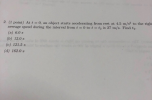 2. (1 point) At t0, an object starts accelerating from rest at 4.5 m/s2 to the right average speed during the interval from t 0 to t- (a) 6.0 s (b) 12.0 s (c) 121.5 s t2 is 27 m/s. Find t2. (d) 162.0 s
The Following source code has a stalling problem: lw $st3, 4($t0) lw $st4, 8($t0) sub $s1,...
The Following source code has a stalling problem: lw $st3, 4($t0) lw $st4, 8($t0) sub $s1, $st3, $st4 sw $s1, 12($t0) lw $t5,16($t0) add $s2, $t3,$t5 sw $s2,20($t0) Rearrange the code sequence that does exactly the same job without stalling:
MATLAB code starts here --------- clear T0=2; w0=2*pi/T0; f0=1/T0; Tmax=4; Nmax=15; %--- i=1; for t=-Tmax: .01:Tmax...
 MATLAB
code starts here ---------
clear
T0=2;
w0=2*pi/T0;
f0=1/T0;
Tmax=4;
Nmax=15;
%---
i=1;
for t=-Tmax: .01:Tmax
T(i)=t;
if t>=(T0/2)
while (t>T0/2)
t=t-T0;
end
elseif t<=-(T0/2)
while (t<=-T0/2)
t=t+T0;
end
end
if abs(t)<=(T0/4)
y(i)=1;
else
y(i)=0;
end
i=i+1;
end
plot(T,y),grid, xlabel('Time (sec)'); title('y(t) square wave');
shg
disp('Hit return..');
pause
%---
a0=1/2;
F(1)=0; %dc freq
C(1)=a0;
for n=1:Nmax
a(n)=(2/(n*pi))*sin((n*pi)/2);
b(n)=0;
C(n+1)=sqrt(a(n)^2+b(n)^2);
F(n+1)=n*f0;
end
stem(F,abs,(C)), grid, title(['Line Spectrum: Harmonics = '
num2str(Nmax)]);
xlabel('Freq(Hz)'), ylabel('Cn'), shg
disp('Hit return...');
pause
%---
yest=a0*ones(1,length(T));
for n=1:Nmax
yest=yest+a(n)*cos(2*n*pi*T/T0)+b(n)*sin(2*n*pi*T/T0);...
MATLAB
code starts here ---------
clear
T0=2;
w0=2*pi/T0;
f0=1/T0;
Tmax=4;
Nmax=15;
%---
i=1;
for t=-Tmax: .01:Tmax
T(i)=t;
if t>=(T0/2)
while (t>T0/2)
t=t-T0;
end
elseif t<=-(T0/2)
while (t<=-T0/2)
t=t+T0;
end
end
if abs(t)<=(T0/4)
y(i)=1;
else
y(i)=0;
end
i=i+1;
end
plot(T,y),grid, xlabel('Time (sec)'); title('y(t) square wave');
shg
disp('Hit return..');
pause
%---
a0=1/2;
F(1)=0; %dc freq
C(1)=a0;
for n=1:Nmax
a(n)=(2/(n*pi))*sin((n*pi)/2);
b(n)=0;
C(n+1)=sqrt(a(n)^2+b(n)^2);
F(n+1)=n*f0;
end
stem(F,abs,(C)), grid, title(['Line Spectrum: Harmonics = '
num2str(Nmax)]);
xlabel('Freq(Hz)'), ylabel('Cn'), shg
disp('Hit return...');
pause
%---
yest=a0*ones(1,length(T));
for n=1:Nmax
yest=yest+a(n)*cos(2*n*pi*T/T0)+b(n)*sin(2*n*pi*T/T0);...
throw a baseball directly upward at time t0 at an initial speed of 13.5 m/s. What...
 throw a baseball directly upward at time t0 at an initial speed of 13.5 m/s. What is the maximum eight the ball reaches above where it leaves your hand? At what times does the ball pass through half the maximum height? Ignore air resistance and take g 9.80 m/s Maximum height: Number Earlier time at half maximum height: Number Later time at half maximum height Number
Find the solution of the heat conduction problem u(0,0, 11 (x, 0) =sinOxx)-sin (m), u(1,1)0, t0...
 Find the solution of the heat conduction problem u(0,0, 11 (x, 0) =sinOxx)-sin (m), u(1,1)0, t0 0 1 x
T0) ramp 10 A SSm
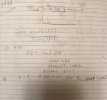 T0) ramp 10 A SSm
A particle starts from x0 = 15 m at t0 = 0 and moves with the velocity graph shown in (Figure 1)
 A particle starts from x0 = 15 m at t0 = 0 and moves with the
velocity graph shown in (Figure 1)Part B You may want to review (Pages 41 - 43) What is the object's position at t 2s? Part C What is the object's position at t 4s?
A particle starts from x0 = 15 m at t0 = 0 and moves with the
velocity graph shown in (Figure 1)Part B You may want to review (Pages 41 - 43) What is the object's position at t 2s? Part C What is the object's position at t 4s?
can you please do 11,12,and 13 8 The Following teaction is elassified as: T 3HT T0...
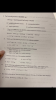 can you please do 11,12,and 13
8 The Following teaction is elassified as: T 3HT T0 333LIO 283 D 2HCI (aq)+ Ba(OH)p(ag) BaCh (aq)+2 Hy0) d lo C00-10 M a) oxidation-reduction reaction b) precipitation reaction e) single replacement d) acid-base neutralization reaction What is the volume of 0.1220 M HNO, solution required to completely neutralize 17.50 ml. of 0.1211 M NaOH? 9. ors NaNO, (aq) +HO (aq) e a) 17.37 ml. b) 16.31 mL c) 15.39 ml. d) 17.84 m...
can you please do 11,12,and 13
8 The Following teaction is elassified as: T 3HT T0 333LIO 283 D 2HCI (aq)+ Ba(OH)p(ag) BaCh (aq)+2 Hy0) d lo C00-10 M a) oxidation-reduction reaction b) precipitation reaction e) single replacement d) acid-base neutralization reaction What is the volume of 0.1220 M HNO, solution required to completely neutralize 17.50 ml. of 0.1211 M NaOH? 9. ors NaNO, (aq) +HO (aq) e a) 17.37 ml. b) 16.31 mL c) 15.39 ml. d) 17.84 m...
5.(20 pts) Starting with an empty tree T0, show the set of BSTs T0⇒T1⇒T2⇒... ⇒T6resulting from...
5.(20 pts) Starting with an empty tree T0, show the set of BSTs T0⇒T1⇒T2⇒... ⇒T6resulting from performing the following sequenceof operations (in that order): Insert(5), Insert(10), Insert(2), Insert(7), Insert(6), Remove(5).
 2. (1 point) At t0, an object starts accelerating from rest at 4.5 m/s2 to the right average speed during the interval from t 0 to t- (a) 6.0 s (b) 12.0 s (c) 121.5 s t2 is 27 m/s. Find t2. (d) 162.0 s
 MATLAB
code starts here ---------
clear
T0=2;
w0=2*pi/T0;
f0=1/T0;
Tmax=4;
Nmax=15;
%---
i=1;
for t=-Tmax: .01:Tmax
T(i)=t;
if t>=(T0/2)
while (t>T0/2)
t=t-T0;
end
elseif t<=-(T0/2)
while (t<=-T0/2)
t=t+T0;
end
end
if abs(t)<=(T0/4)
y(i)=1;
else
y(i)=0;
end
i=i+1;
end
plot(T,y),grid, xlabel('Time (sec)'); title('y(t) square wave');
shg
disp('Hit return..');
pause
%---
a0=1/2;
F(1)=0; %dc freq
C(1)=a0;
for n=1:Nmax
a(n)=(2/(n*pi))*sin((n*pi)/2);
b(n)=0;
C(n+1)=sqrt(a(n)^2+b(n)^2);
F(n+1)=n*f0;
end
stem(F,abs,(C)), grid, title(['Line Spectrum: Harmonics = '
num2str(Nmax)]);
xlabel('Freq(Hz)'), ylabel('Cn'), shg
disp('Hit return...');
pause
%---
yest=a0*ones(1,length(T));
for n=1:Nmax
yest=yest+a(n)*cos(2*n*pi*T/T0)+b(n)*sin(2*n*pi*T/T0);...
MATLAB
code starts here ---------
clear
T0=2;
w0=2*pi/T0;
f0=1/T0;
Tmax=4;
Nmax=15;
%---
i=1;
for t=-Tmax: .01:Tmax
T(i)=t;
if t>=(T0/2)
while (t>T0/2)
t=t-T0;
end
elseif t<=-(T0/2)
while (t<=-T0/2)
t=t+T0;
end
end
if abs(t)<=(T0/4)
y(i)=1;
else
y(i)=0;
end
i=i+1;
end
plot(T,y),grid, xlabel('Time (sec)'); title('y(t) square wave');
shg
disp('Hit return..');
pause
%---
a0=1/2;
F(1)=0; %dc freq
C(1)=a0;
for n=1:Nmax
a(n)=(2/(n*pi))*sin((n*pi)/2);
b(n)=0;
C(n+1)=sqrt(a(n)^2+b(n)^2);
F(n+1)=n*f0;
end
stem(F,abs,(C)), grid, title(['Line Spectrum: Harmonics = '
num2str(Nmax)]);
xlabel('Freq(Hz)'), ylabel('Cn'), shg
disp('Hit return...');
pause
%---
yest=a0*ones(1,length(T));
for n=1:Nmax
yest=yest+a(n)*cos(2*n*pi*T/T0)+b(n)*sin(2*n*pi*T/T0);...
 throw a baseball directly upward at time t0 at an initial speed of 13.5 m/s. What is the maximum eight the ball reaches above where it leaves your hand? At what times does the ball pass through half the maximum height? Ignore air resistance and take g 9.80 m/s Maximum height: Number Earlier time at half maximum height: Number Later time at half maximum height Number
 Find the solution of the heat conduction problem u(0,0, 11 (x, 0) =sinOxx)-sin (m), u(1,1)0, t0 0 1 x
 T0) ramp 10 A SSm
 can you please do 11,12,and 13
8 The Following teaction is elassified as: T 3HT T0 333LIO 283 D 2HCI (aq)+ Ba(OH)p(ag) BaCh (aq)+2 Hy0) d lo C00-10 M a) oxidation-reduction reaction b) precipitation reaction e) single replacement d) acid-base neutralization reaction What is the volume of 0.1220 M HNO, solution required to completely neutralize 17.50 ml. of 0.1211 M NaOH? 9. ors NaNO, (aq) +HO (aq) e a) 17.37 ml. b) 16.31 mL c) 15.39 ml. d) 17.84 m...
can you please do 11,12,and 13
8 The Following teaction is elassified as: T 3HT T0 333LIO 283 D 2HCI (aq)+ Ba(OH)p(ag) BaCh (aq)+2 Hy0) d lo C00-10 M a) oxidation-reduction reaction b) precipitation reaction e) single replacement d) acid-base neutralization reaction What is the volume of 0.1220 M HNO, solution required to completely neutralize 17.50 ml. of 0.1211 M NaOH? 9. ors NaNO, (aq) +HO (aq) e a) 17.37 ml. b) 16.31 mL c) 15.39 ml. d) 17.84 m...
Most questions answered within 3 hours.
-
Where is the error in this code sequence?
String s1 = "Hello";
String s2 = "ello";...
asked 10 months ago -
Financial data for Joel de Paris, Inc., for last year
follow:
Joel de Paris, Inc.
Balance...
asked 10 months ago -
Consider this reaction:
Al2(SO4)3 (aq)+ BaCl3
(aq) Al2Cl6 (aq)- +
3BaSO4(s) . What is the...
asked 10 months ago -
Suppose that Savneet is considering increasing her
recent random sample from 20 car rentals to 40...
asked 10 months ago -
Trucks arrive at an unloading terminal at an average rate of 120
per hour.
Trucks arrive...
asked 10 months ago -
Why are methanol and ethanol completely soluble in water while
octanol is not very little soluble....
asked 10 months ago -
A facilities manager at a university reads in a research report
that the mean amount of...
asked 10 months ago -
When the CuSO4 is rehydrated by adding water to the anhydrous
compound, is this an endothermic...
asked 10 months ago -
A ray of sunlight is passing from diamond into crown glass; the
angle of incidence is...
asked 10 months ago -
A block of mass 0.249 kg is placed on top of a light, vertical
spring of...
asked 10 months ago -
how do the kidneys compensate in the presences of acidosis
a) trigger hyperventilate
b) reserve acid...
asked 10 months ago -
Question 501 pts
The rental rate of capital to the firm increases. Which of the
following...
asked 10 months ago